
Former Suez Canal advisor: New fund aims to separate ownership, management of canal assets
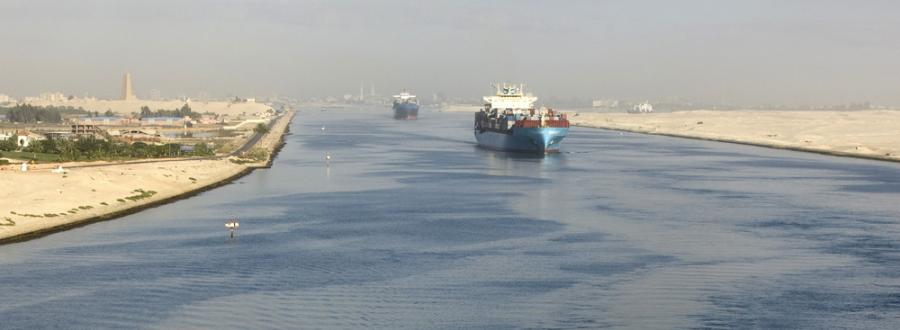
“The state is looking to separate ownership of the Suez Canal from its management. We need foreigners to manage the facility’s assets in commercial, promotional and technical terms,” is how Ahmed al-Shamy, a former advisor to the Suez Canal Authority chairperson, defined the goal of establishing the Suez Canal Fund.
Last month, the government put forward legislation, which is under discussion in Parliament, to create a fund under the Suez Canal Authority that would “establish companies, invest, buy, sell, lease, rent, and utilize” the assets entrusted to it.
The proposed changes to the economic management of the nationalist symbol — which was nationalized by former President Gamal Abdel Nasser, setting off the 1956 conflict that saw Israel and the canal’s two primary shareholders in France and the United Kingdom invade Egypt — was met with a rare wave of wide disapproval amid the lack of clarity over the definition of assets under the control of the proposed fund and how they will be managed.
Figures, including MPs and even former authority chair Mohab Mamish, whose comments in the press were later retracted, have aired their opposition to the establishment of the fund, expressing worries that it would lead to “the sale of the canal,” foreign nationals taking control of its management, or taking a cut from the state’s share of the facility’s sizable revenues.
Current chair Osama Rabie dismissed these worries in a press conference last Thursday, stressing that state revenues will not be affected, that the fund will not own any of the Suez Canal assets, and that the authority is already partnership with multiple foreign investors while continuing to maintain majority representation on the board of directors of any joint venture to ensure national control over the canal.
However, Rabie’s intervention did not put the matter to rest, as several questions remained unanswered. To understand the matter further, Mada Masr sat down with Shamy.
Shamy, who was an advisor to the authority under Mamish, told Mada Masr that the use of the authority’s resources to establish companies or enter into partnerships with Arab or foreign investors is something that began before the fund was an idea. This is “because the performance of shipbuilding, maintenance and repair across Egypt’s shipyards are far below international levels,” he said.
During Mamish's tenure, the former advisor noted, the authority established companies from its resources including a dredging company and the Suez Canal Company for Investment in East Port Said.
What the fund is trying to achieve, then, according to Shamy, is to make these ventures into official policy and remove them from the authority’s remit. Instead of the authority’s chair having the power to exploit all of the assets, he explained, some will be allocated to the fund, whose board of directors will be able to offer these assets for investors to manage through a usufruct system.
A presidential decree will also give the fund the sole power to establish new companies, taking it away from the authority chair, Shamy said. From that point, the fund’s chair will have the power to initialize agreements with investors, which must then receive approval from the president and the prime minister. Contracts will determine the investor’s share and stipulate a revenue threshold that must be reached for the investor to be paid, he added.
As for the fund’s resources, Shamy gave a breakdown of where the Suez Canal revenues go. While all transit fees for ships passing through the navigational corridor belong entirely to the state, other revenues from canal activities such as rescue and guidance services, tugboats, training and simulation performed by the authority or performed for others are sent in foreign currency to the Finance Ministry, to be paid back to the authority in Egyptian pounds. Those funds are then spent on maintaining the canal, meeting its mandated spending contributions that mostly go to infrastructure in governorates lining the canal, paying taxes, salaries and bonuses for workers. Any surplus is deposited in banks.
The new fund will be financed from those surpluses, returns on these deposits, and movable assets, in addition to fixed assets including lands, buildings or companies owned by the authority or others that the government approves to be annexed by the fund.
Shamy noted that the authority has already offered some of its companies, including the Suez and Port Said shipyards, the Canal Naval Construction Company, and the Canal Ropes Company, on the Egyptian Exchange. According to Shamy, these companies are making a profit, while others are operating at a loss and will be included in the newly-introduced state ownership policy document to be offered for partnership with Gulf or international investors.
*
Writing by Ahmed Bakr

أخبار ذات صلة

Between rising inflation and shrinking foreign currency: What is the state doing?
The Egyptian pound resumed its slide on Thursday, reaching LE52.42 for the dollar, after a brief rise in value to LE51.92 the previous day. The currency’s slide had begun in…
Land-for-dollars Beit al-Watan scheme marred by profiteering, leaving diaspora applicants empty-handed
Analysts warn the dollar-based land sales are pushing prices higher and limiting housing options
IMF in Cairo to discuss privatization, over-reliance on short-term borrowing
A delegation from the International Monetary Fund touched down in Cairo on Monday to begin its final review of the US$8 billion…
Residents confront demolition team in Matrouh village days after conclusion of Qatari development deal
A man was injured on Wednesday in Semella, Alam al-Roum as residents sought to prevent the forced demolition of a house in…
Your support is the only way to ensure independent, progressive journalism survives.
You have a right to access accurate information, be stimulated by innovative and nuanced reporting, and be moved by compelling storytelling. Subscribe now to become part of the growing community of members who help us maintain our editorial independence.
Join us