
Former political detainee prevented from granting power of attorney
Labor activist and former detainee Hassan Barbary learned this week that he is unable to grant power of attorney to any lawyer, as consequence, he was told, of an active asset freeze against him.
A judicial decision taken in 2021 added Barbary and other political activists to national terrorist lists and has barred them from disposing of their assets, as a function of charges levied against them following their 2019 arrests for forming the Coalition for Hope opposition group to contest the 2020 parliamentary elections.
On Tuesday, Barbary went to a local branch of the national notarization authority to grant power of attorney to lawyer Khaled Ali, in order for the latter to petition the public prosecutor on his behalf to renew his car registration. But an employee told him that the electronic system blocked him from accessing that procedure. When Barbary’s national ID data was entered into “the system,” he was told, it showed that he is listed as being implicated in a case in which a decision was issued to bar him from disposing of his assets, rendering all public registry services unavailable to him on the electronic platform.
This is an unprecedented occurrence, lawyer Khaled Ali told Mada Masr, and amounts to a denial of the constitutionally guaranteed right to litigation. Noting that he would file a complaint with the head of the notarization authority, Ali said, “I hope it is a clerical error and not a new procedure that will be implemented systemwide.”
Asset freezes like those imposed against defendants in the Coalition for Hope case should not prevent them from being able to delegate a lawyer, Ali explained, though it does bar them from concluding purchase, sale or disposal transactions for assets that require official registration, such as cars or real estate. Many other recently released defendants, including those on terrorist lists, Ali added, have not faced any difficulty in granting power of attorney.
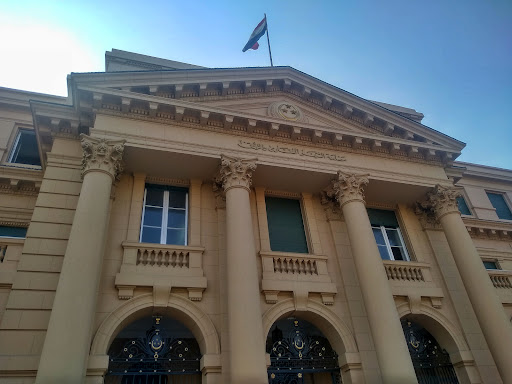
The Authority of Real Estate Proclamation and Notarization is the sole administrative body that authenticates and certifies contracts in Egypt, including contracts between individuals and lawyers, which are only valid when certified by the authority.
Barbary was told by the notarization registry employees that he has no option but to submit a request to the public prosecutor, either to compel the authority to certify his power of attorney request on a paper document, or to amend the electronic system to allow his request to be processed.
Mada Masr reached out to authority head Gamal Yaqout for comment and sent him a copy of Barbary’s complaint but did not receive a response as of the date of publication.
While the block on granting power of attorney at the notarization authority appears to be a new occurrence, many defendants in political cases have encountered bureaucratic and administrative obstacles compromising their civil rights.
For example, the mother of another Coalition of Hope defendant, the former MP Zyad Elelaimy, told Mada Masr that the government has refused to issue a birth certificate for her son.
Political activist Sharif al-Rouby, meanwhile, was unable to obtain a passport upon his release in March this year after two years in remand detention, lawyer Mahienour al-Massry told Mada Masr. Rouby was vocal about the obstacles faced by himself and other defendants returning to day-to-day life after being released from detention, publishing regular posts on his personal Facebook page. He was rearrested in September and is still being held without trial.
Massry, who herself has been arrested and held in detention while undertaking humanitarian work, also described difficulty in issuing a passport, telling Mada Masr that what is normally a 24-hour procedure, ultimately took five months to complete, a problem also encountered by journalist Ezzedine Fishere. Even after receiving her passport, Massry, like many others, found that she was unable to leave the country due to an active travel ban against her.

أخبار ذات صلة

Douma in new remand detention cycle as court rejects appeal
Prominent Egyptian activist and writer Ahmed Douma has entered a new cycle of remand detention, with a court rejecting an appeal against…
Politicians, students, 130 former prisoners call for Sisi to release Alaa Abd El Fattah immediately
Urgent appeals have mounted in the last hours for the immediate release of detained activist and wri
New terrorism charges leveled against Abouel Fotouh as he serves current prison sentence
Former presidential candidate and head of the Strong Egypt Party Abdel Moneim Abouel Fotouh was summoned on Wednesday by the Supreme State…

The weeks of dispute around reforms to the Criminal Procedures Code
Amid an ongoing political conversation around the use and abuse of remand detention to hold political detainees, legislators have dusted off a…
Your support is the only way to ensure independent, progressive journalism survives.
You have a right to access accurate information, be stimulated by innovative and nuanced reporting, and be moved by compelling storytelling. Subscribe now to become part of the growing community of members who help us maintain our editorial independence.
Join us