
First court date set in case to ban Facebook, Twitter in Egypt

The Cairo Administrative Court will hear the first session in the case to ban Facebook and Twitter in Egypt on November 18, the state-owned Middle East News Agency (MENA) reported on Thursday.
Lawyer Mohamed Hamed Selim filed a lawsuit in late August to temporarily ban the popular social media sites until they acquired legal permission to operate in Egypt. The lawsuit cited security concerns and warned that the websites could be used as tools in intelligence plots against the state.
The lawsuit also called for a ban on all social media accounts created under fake identities or without identifying information, demanding that all users be forced to register verifiable personal details when they sign up for such websites.
Foreign intelligence services and terrorist organizations used social media websites in the lead-up to the January 25, 2011 revolution to incite chaos in the country and provoke protests against the state, Selim claimed.
“It does not make sense to leave these two [Facebook and Twitter] websites without official and legal permission to operate, so we can locate whoever commits a crime using them. The state should ban all unknown entities according to Article 31 of the Constitution, as they have manipulated the Egyptian state and placed millions of spies everywhere that threaten the country’s security,” Selim said regarding the lawsuit, according to the state-owned newspaper Al-Ahram.
Article 31 in the recently ratified Constitution could provide major support for Selim’s case, with its stipulation that, “The security of digital space is an essential part of the economy and national security, and the state is obliged to take necessary measures to protect it.”
Critics say the article threatens freedom of speech and freedom of privacy, and allows the state to control digital content using national security as a justification.
Mahmoud al-Banhawy, the head of the digital freedoms unit at the Support Center for Information Technology, told Mada Masr that a court ruling to ban Twitter and Facebook seemed unlikely, but the lawsuit is a part of the larger moment of "ambiguity" Egypt is currently experiencing.
However, Banhawy pointed to the Constitution’s Article 31 as a real cause for alarm, as it gives the government wide latitude to control cyberspace due to “national security” concerns, without clearly defining those concerns.
Even more worrying is the issuing of new laws and regulations pertaining to the freedom to access information, and government efforts to monitor Internet usage, especially social media, Banhawy said.
The state must protect user privacy and safeguard the freedom to access information in the midst of these rising concerns regarding security, he added.
In June, reports surfaced that the Interior Ministry would implement a new surveillance system to monitor social media activity, imposing an “electronic grip” on cyberspace.
The Interior Ministry said it set up a “monitoring instrument” to contain security risks on social media, such as published material that is in contempt of religion, or that spreads rumors, slander, incites violence and rebellion, calls for protests and sit-ins, encourages debauchery and “liaising with the enemy,” among other threats listed by the ministry in the leaked report.
In February 2013, the Administrative Court ruled to impose a month-long ban on YouTube after a video was posted to the website that was deemed offensive to Islam and the Prophet Mohamed.
Amnesty International slammed the decision.
“This ruling is a clear assault of freedom of expression and has far-reaching consequences in a country where activists have relied heavily on YouTube to expose human rights abuses,” said Hassiba Hadj Sahraoui, deputy director for the Middle East and North Africa.
But the Ministry of Communication later appealed the verdict, referring to the technical impossibility of banning YouTube, which would also require banning the Google search engine and lead to severe financial losses.

أخبار ذات صلة
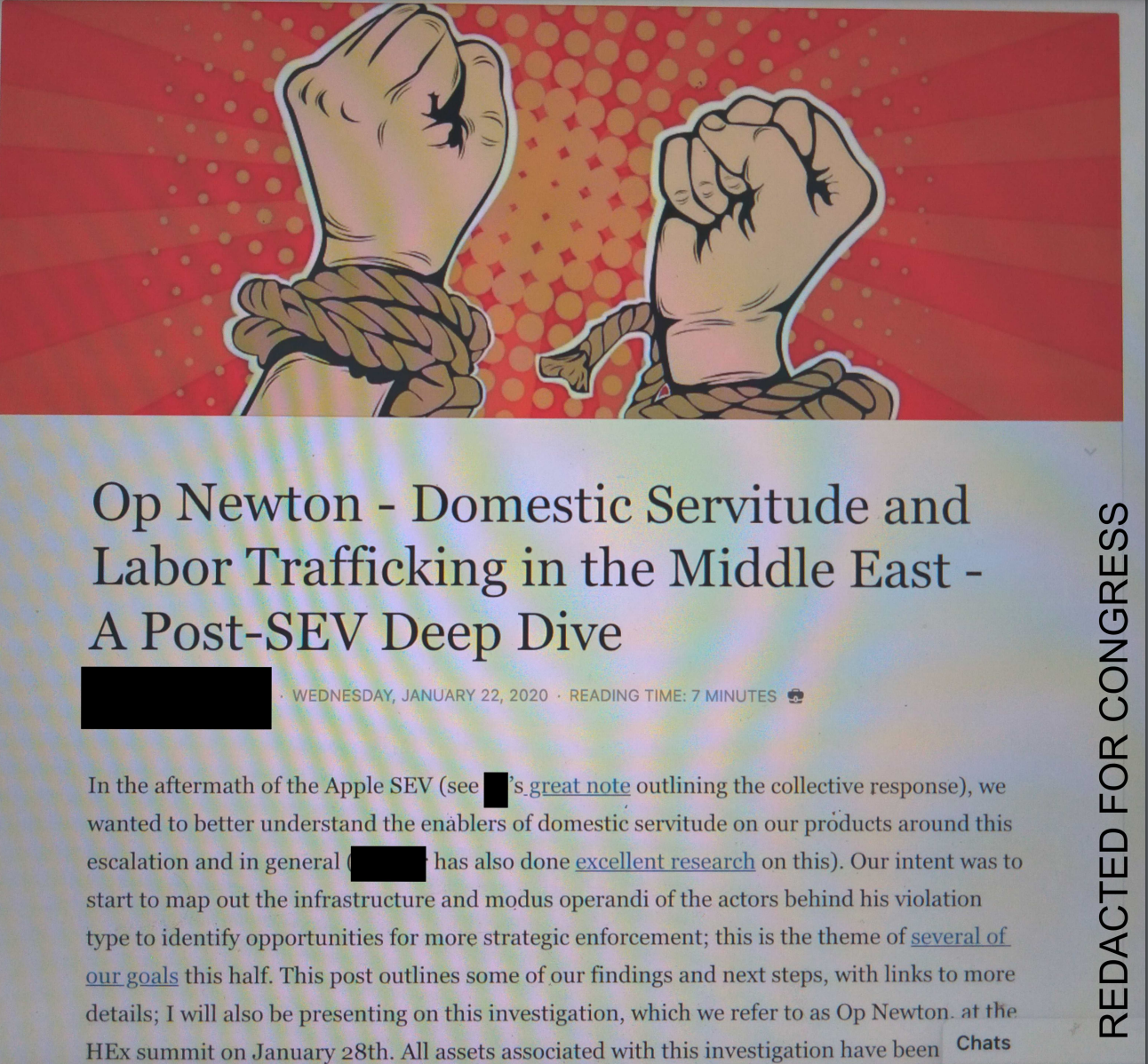
The Facebook Papers: Saudi and Egyptian companies involved in domestic worker trafficking network
Facebook platforms were being used by a Saudi recruitment agency to facilitate labor trafficking.

A three-step guide to becoming a model Facebook citizen in Egypt
I don’t remember exactly when I decided to create a parallel identity for myself on Facebook.

Data mining, privacy and the case of ‘the International’
The case has raised questions about data mining, privacy and Egypt's cybersecurity laws

Activists call for Facebook blackout after accounts of Palestinian journalists disabled
Activists and news agencies are calling for a Facebook blackout after the social media platform temporarily disabled the accounts of several prominent…
Your support is the only way to ensure independent, progressive journalism survives.
You have a right to access accurate information, be stimulated by innovative and nuanced reporting, and be moved by compelling storytelling. Subscribe now to become part of the growing community of members who help us maintain our editorial independence.
Join us