
Finance Ministry wants to formalize informal sector, but not clear how
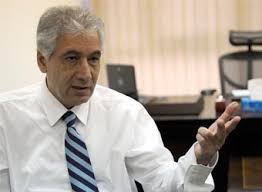
The Finance Ministry plans to launch a package of financial incentives and exemptions in a bid to bring the informal sector into the formal economy, reported on Monday the state-owned Middle East News Agency (MENA).
The vast informal sector makes up 30 percent of Egypt’s economy and employees 40 percent of the country’s labor force, according to Finance Minister Ahmed Galal.
He did not, however, specify what kind of measures would be implemented to entice those operating in the informal sector to join the formal economy.
Over the years, economists have labored to measure the breadth of Egypt’s informal economy, but the range is rather wide, estimated at anywhere between 30 and 60 percent of the GDP.
The informal economy provides a broad swathe of products and services, and so the government’s failure to formalize these business dealings is seen as a huge loss to the country’s overall economy.
On the other hand, the informal economy is so extensive due to a myriad of restrictions and red tape surrounding starting and operating a business, as well as the associated costs that make it unfeasible for many to work in the formal economy.
On Monday, Galal also said that in the future subsidies would be targeted toward individuals and families, as opposed to commodities and services.
Egypt’s inefficient and costly subsidy system has long been an issue of contention. Many have called for reform and restructuring so it can better target those most in need of financial support.
Supply Minister Mohamed Abu Shady has said that bread and food subsidies amount to at least LE35 billion. Fuel subsidies take up about a fifth of the country’s annual budget.
Despite the apparent need to restructure the subsidy system, the sensitive issue has been viewed as too thorny to handle by successive government and has therefore been left to weigh on the country’s widening budget deficit. Even though talk about subsidy reform is prevalent, little has been done to tackle the issue in any practical way.

أخبار ذات صلة

Economic recovery may need more than a second stimulus
Egypt introduced a second stimulus package worth LE33.9 billion (US$4.87 billion) on February 10 in a bid to shore up the country’s…
Economy in a week: Debt levels reach historic highs
Debt levels in Egypt have reached historic highs as the government finds itself dependent on borrowing to finance citizens’ needs. Fitch Ratings…
Economy in a week: Power cuts and financial stimulus
Egypt has been experiencing another wave of blackouts throughout the country, caused by energy shortages and a deeply indebted Ministry of Electricity. Meanwhile, Finance Minister Ahmed Galal says the Gulf…
Economy in a week: Slow growth, no problem, says finance minister
Finance Minister Ahmed Galal explains why the GDP scored a mere one percent in the first quarter, while Prime Minister Hazem al-Beblawi…
Your support is the only way to ensure independent, progressive journalism survives.
You have a right to access accurate information, be stimulated by innovative and nuanced reporting, and be moved by compelling storytelling. Subscribe now to become part of the growing community of members who help us maintain our editorial independence.
Join us