
Economic recovery may need more than a second stimulus
Egypt introduced a second stimulus package worth LE33.9 billion (US$4.87 billion) on February 10 in a bid to shore up the country’s ailing finances, invest in infrastructure projects and fund the new minimum wage.
The package is being unfolded as part of the interim government’s decision to avoid austerity measures by pursuing an expansionary policy. Most of the money for the second stimulus package is sourced from aid pledged by the United Arab Emirates, according to Finance Minister Ahmed Galal.
Though this round of financing and talk of stimulating the economy is meant to restore business and investor confidence, it remains unclear exactly how the money from the first stimulus package was injected into the economy, what specific projects were invested in and their progress to date.
In a recent statement, Galal said that LE21.7 billion of the new package would go towards investments, of which LE19.7 billion would go to financing developmental projects agreed upon with the UAE.
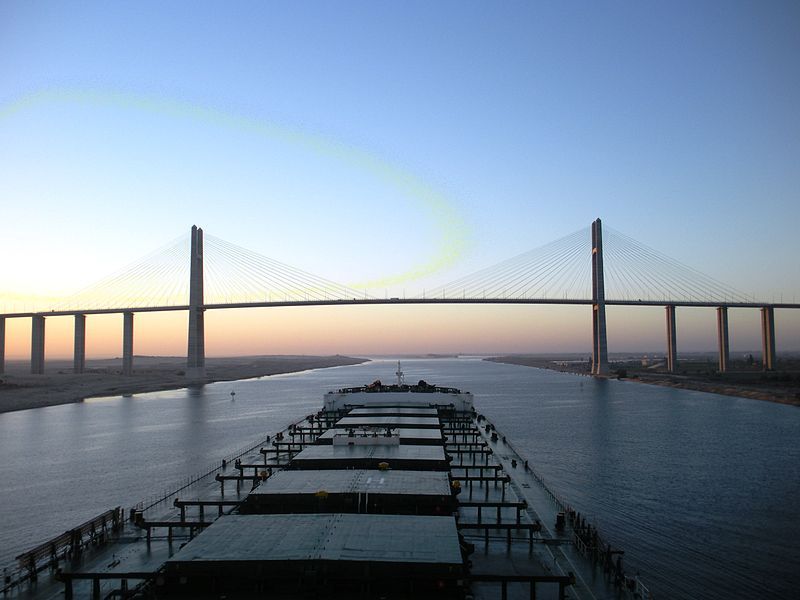
Meanwhile, LE2 billion would go to developing the Suez Canal corridor, a mega-scale infrastructure project touted by the current and previous governments. The remaining LE12 billion are meant to finance social programs, namely the higher minimum wage for the public sector, which was set at LE1,200 and is expected to cost the state LE21.36 billion.
It would also support increasing teachers’ salaries, developing a program for energy subsidies for the next fiscal year and increasing pensions, while a sum would also be invested in building 50,000 new residential units.
Another LE1 billion would be injected in a number of economic authorities to improve their financial structure, namely the Radio and Television Union, according to a statement issued by the Cabinet earlier in February.
With three years of political unrest weighing heavily on the economy, making tourists and investors wary as well as depleting the country’s foreign reserves, Egypt has come to rely on financing from friendly states to keep the economy afloat.
During deposed President Mohamed Morsi’s brief one year in power, Qatar and Turkey were major financiers. In the aftermath of Morsi's military-backed removal from power, Saudi Arabia, Kuwait and the United Arab Emirates have come to play a major role in providing aid to Egypt.
But Reda Eissa, an independent economist, has little faith in how much these stimulus packages can actually move the economy towards recovery.
“Introducing these stimulus packages means that you agree to the path the economy is on and want to further stimulate that. The problem is that there are fundamental structural problems with Egypt’s economy which successive governments have not addressed,” Eissa says.
The money that is being invested in infrastructure projects goes to specific construction and real estate companies, and takes an “aspirin approach to state financing … attempting to fix the problem without diagnosing it properly,” he explains.
“A lot of the work being carried out is maintenance to roads and bridges that has been delayed for three years. It also went to repaying some government debt,” Eissa says, adding that the problem is Egypt is incurring more debt in the process.
The UAE has given Egypt a US$1 billion grant and a $2 billion loan in the form of an interest-free deposit at the Central Bank of Egypt. Qatar had followed a similar financing support model, but post-Morsi, Egyptian officials reportedly gave the deposits back.
The UAE is reportedly contributing another US$1.8 billion in fuel shipments, officials said in late January, as Egypt struggles with renewed reminders of its persistent energy crisis.
Introduced in August, the first stimulus package amounted to LE30 billion. The government said it completed the implementation of a number of infrastructure projects, which took up 30 percent of this package.
These projects include the delivery of natural gas to 340,000 residential units and renovating 180 railway crossings, according to the state-owned Middle East News Agency (MENA).
In a recent note on Egypt, Moody’s ratings agency said, “The new supplementary budget contains more capital expenditure than current expenditure, which will improve Egypt’s economic growth prospects.”
Real GDP growth fell to a two-year low of around 1 percent in the third quarter of 2013, Moody’s said, down from 2.5 percent the year prior.
New domestic investments in the first quarter of the current fiscal year 2013/14 have reached LE36 billion, while foreign investment totaled US$1.3 billion, the Cabinet said in a recent statement.
“Investment spending, the largest portion of the package at LE19.8 billion, will help to rebuild infrastructure after three years of economic disruption following the revolution,” the note said, also citing LE2 billion allocated for developing the Suez Canal axis.
According to the note, government investment spending for fiscal year 2012/13 was LE39.5 billion, or about 6.7 percent of total expenditures, down from LE48.4 billion the previous year.
Commenting on the amount allocated to the higher public sector minimum wage and increasing pensions, Moody’s said, “This will positively affect private consumption.”
As for the other Gulf aid, Saudi Arabia has reportedly provided US$3.6 billion out of the US$5 billion it pledged, while Kuwait has given another US$2.7 billion out of US$4 billion.
However, planning how to invest the stimulus package can only take things so far. As Moody’s points out, reiterating concerns of analysts and investors, “Despite the likely positive effect on growth and the fiscally neutral financing from the UAE, Egypt continues to face fiscal challenges.”
Egypt’s Finance Ministry had said that it is targeting a fiscal deficit of 10 percent of GDP this fiscal year, but by all accounts, the target will most likely be exceeded.
“Until the economy grows again, Egypt will continue to rely on external grants to finance its large deficits,” Moody’s said.
In an earlier Cabinet statement, officials had clarified that in total, Egypt has received only US$10.93 billion in aid from the Gulf States so far: US$3.93 billion in the form of fuel shipments, a US$1 billion grant from the UAE and US$6 billion in the form of Central Bank deposits, which eventually have to be repaid.
The Cabinet also said that Egypt’s external debt did not exceed US$45.8 billion as of December 2013.

Amira Salah-Ahmed
Leave it to Amira to poeticize a stock market crash or an inflation hike. Her creative writing skills put a silver lining on the cloud that is Egypt’s economy. …
أخبار ذات صلة
Economy in a week: Debt levels reach historic highs
Debt levels in Egypt have reached historic highs as the government finds itself dependent on borrowing to finance citizens’ needs. Fitch Ratings…
Economy in a week: Power cuts and financial stimulus
Egypt has been experiencing another wave of blackouts throughout the country, caused by energy shortages and a deeply indebted Ministry of Electricity. Meanwhile, Finance Minister Ahmed Galal says the Gulf…
Finance Ministry wants to formalize informal sector, but not clear how
The Finance Ministry plans to launch a package of financial incentives and exemptions in a bid to bring the informal sector into…
Economy in a week: Slow growth, no problem, says finance minister
Finance Minister Ahmed Galal explains why the GDP scored a mere one percent in the first quarter, while Prime Minister Hazem al-Beblawi…
Your support is the only way to ensure independent, progressive journalism survives.
You have a right to access accurate information, be stimulated by innovative and nuanced reporting, and be moved by compelling storytelling. Subscribe now to become part of the growing community of members who help us maintain our editorial independence.
Join us