
FestBeat: Nostalgia for celluloid at Panorama (day 3)
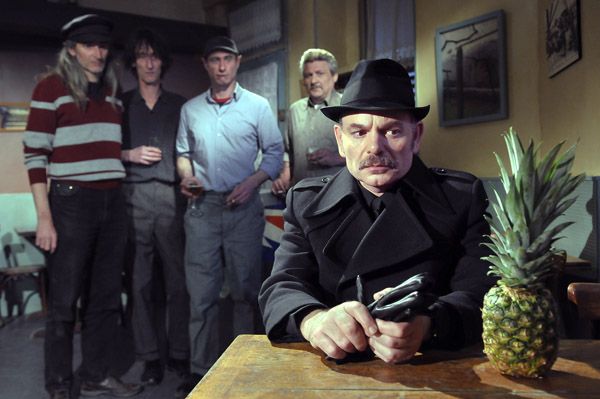
Yesterday was the first of the “Carte Blanche” screenings with Hala Galal’s pick Le Havre (Aki Kaurismäki, 2011) rolling to a full house. Carte Blanche invites three directors from Egypt to each choose one film to screen and discuss with the audience. It's an opportunity for us to have an informed discussion with a filmmaker who has been influenced by that particular film or director.
Le Havre is a clever choice because Carte Blanche is built on the assumption that filmmakers influence one another and Kaurismäki’s film is full of references to other directors and films. I'll tread lightly here because no doubt there are film geeks out there who have made lists of all the filmic quotations in Le Havre, but I spotted an Yasujirō Ozu reference in the last scene, also some Marcel Carné references, especially in the frame compositions and mise-en-scene of the outdoor scenes. Carné made the first film set in the French city of le Havre in 1938 for his film Port of Shadows. One of the first “noir” films according to some, Port of Shadows plays with light and dark, explores the grey zone between good and evil, and has a brooding tone. Le Havre recycles some of these noir tropes, attitudes and techniques.
My generation grew up on mixtapes and fashion bricolage in the 1990s, so we expect a degree of recycling and re-contextualizing to be part of the creative process. I’d like to think that Le Havre is the filmic equivalent of the mixtape and as such very much a product of a present, post-modern attitude. Galal raised a question about creativity and artistic production within the context of this film. Do filmmakers, artists in general, inevitably recycle the canon in some way as they create their own work?

As the audience rightly pointed out during the discussion, the images in this film hark back to classical French and even Hollywood cinema in its choice of locations, its costumes in some cases, its acting style, and its narrative logic — especially concerning visuals. Although there is dialogue, you could take it all out and still understand what's going on. Le Havre takes us closer to the moment when film was very anxious to separate itself from literature and theater in the 1920s, looking for its identity as an art medium distinct in its abilities and tools. So there is a sense of asynchrony that hits the spectator while watching this film. It takes you back to a different time on the spectrum of film history, a different language of cinema perhaps.
With the move to digital in cinema recently, Kaurismäki, among others like British artist Tacita Dean, have been quite vocal about their frustration with the loss of the “medium of film.” Film to them means celluloid film, with its materiality and unique abilities to capture light contrasts and color in ways that digital will never be able to. I would recommend Dean’s Green Ray (2001), which is an attempt to capture the “green ray” celluloid is said to be the only material capable of capturing — you cannot see it on a digital camera.

So when people cry that “film is dead,” something that Hala Galal mentioned, what they mean is film as it was invented, celluloid film. Using 35 mm, as Kaurismäki does with Le Havre, is a rare practice these days (although arguably increasing numbers of filmmakers are making a statement and using film). Le Havre is a film for those feeling nostalgia for a material and medium that is in some ways disappearing. A medium that we will celebrate again with the first French sound film L’eau du nile (Marcel Vadal, 1928 — showing on Sunday at 1 pm at Zawya) and Marius (Alexander Korda, 1931 — Sunday at 3.45 at Cinema Karim), so make sure to go watch them if you share Kaurismäki’s nostalgia for celluloid or just want to know what the hype is all about.
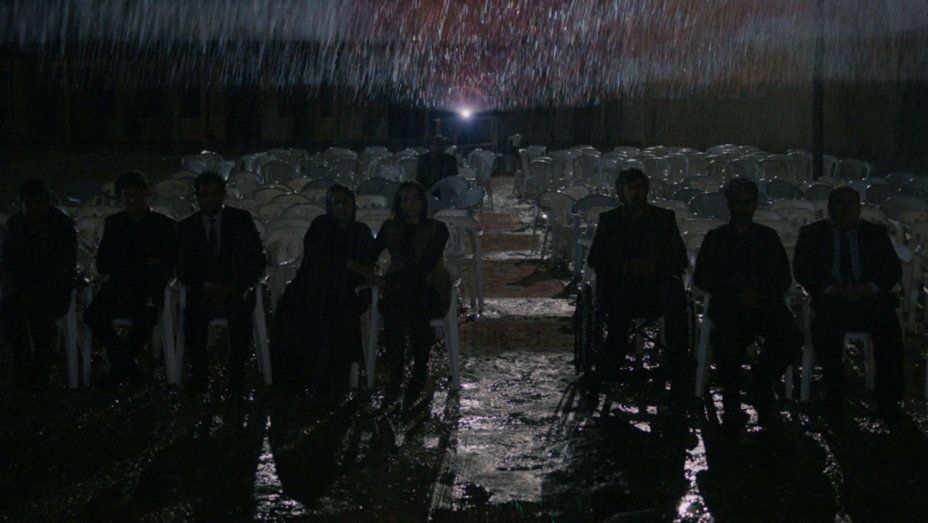
I also saw Shawkat Amin Korki's Memories on Stone (2014) last night, which is part of the very exciting Crossroads section. It is phenomenal and deserves a post on its own, so consider watching it when it screens again at 1 pm on December 5 at Zawya.
Also make sure to check out the other Carte Blanche screenings. Today at 3.45 at Zawya, Mohamed Khan will discuss Karel Reisz's 1960s British film Saturday Night and Sunday Morning, which is shot in black and white and explores, like Le Havre, the conditions of working-class labor.
That theme runs through the Panorama this year and I think Khan’s screening will be a good opportunity to explore the very long relationship between the camera and labor.
أخبار ذات صلة
Festbeat: Looking back at this year’s Panorama (day 11)
What does it mean to screen what has historically been the cinema of European auteurs in Egypt, given the assemblages of power…
FestBeat: Public space and Goodnight Sarajevo (day 10)
The film refuses the sensationalized, bloody images of death the media thrives on and gives us a more human side of war.
FestBeat: A rare chance to see The Magic Mountain on the big screen
We're nearing the end of the Panorama. It's getting quieter, with fewer people appearing even for the evening and night screenings. I…
FestBeat: Why you should watch Memories on Stone (Day 8)
Can images offer us ruptures from the past that free us from the past traumas and allow us to reclaim our future?
Your support is the only way to ensure independent, progressive journalism survives.
You have a right to access accurate information, be stimulated by innovative and nuanced reporting, and be moved by compelling storytelling. Subscribe now to become part of the growing community of members who help us maintain our editorial independence.
Join us