
Festbeat: Looking back at this year’s Panorama (day 11)
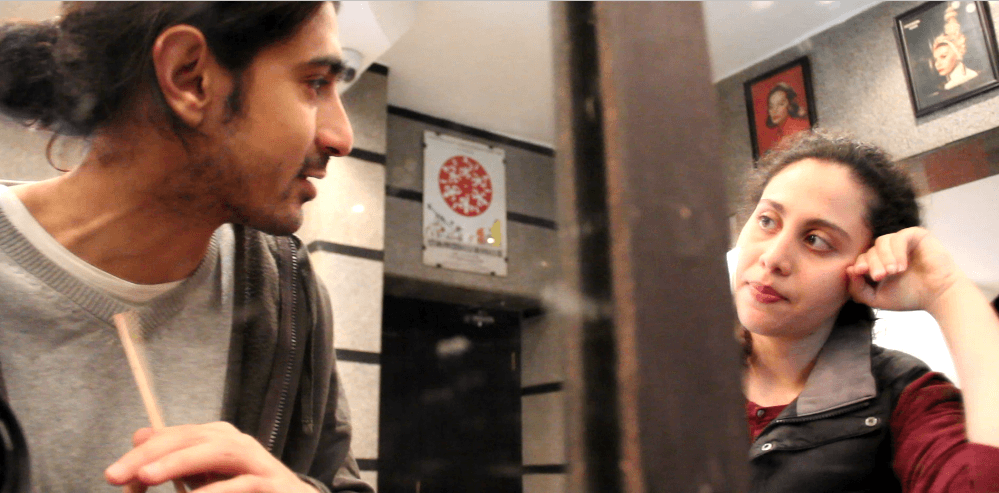
To conclude my blog on the Panorama of the European Film, I spoke with Ahmed Refaat for some reflections on the event and on the larger film ecosystem in Egypt. Refaat is a film programmer at the Contemporary Image Collective and he occasionally writes for Mada Masr. Here are some of the points our discussion raised for me.
This year the Panorama's new Crossroads section focused on coproductions — mostly between European institutions and filmmakers of Arab descent — as well as on themes like migration and exile. Such elements have long been part of the discussion on Third Cinema, especially in the 21st century.
A movement spearheaded in Latin America, Cuba specifically, in the 1960s, Third Cinema attempts to challenge the Hollywood hegemony in the local film market. Its pioneers thought about alternative networks of production and distribution, forming an informal network alongside formal networks for film exchange such as cinema houses and big festivals. Makeshift street and home basement cinemas became sites for challenging official networks of production and the distribution of moving images.
Today moving images are no longer only the preserve of film. They have proliferated across many screens, from TVs and billboards to computers and phones. They have also become global in their exchange and even their visual language and cues. So how can we, as Egyptians interested in cinema, find alternative networks for image production and distribution that would allow us to find our own image aesthetic in this global image economy? It’s an economy that favors the western and the white, the non-Arab and the non-African. This was a point Refaat and I both agreed was very important.
Another point that Refaat raised concerns the term “art house cinema,” which some use to describe Zawya (a key Panorama venue, produced by the same team) and the Panorama festival itself. Does Panorama bring us art house cinema straight from Cannes? Art house, which lies between Third Cinema and Hollywood cinema, is a very ideologically charged category of film. What does it mean to screen what has historically been the cinema of European auteurs in Egypt, given the assemblages of power that mark globalization today?
I should also say though that in the Panorama I saw films, like Queens of Syria and Memories on Stone, that raise questions about the workings of the cinematic apparatus, the idea of image globality, and the assemblages of power that influence what type of communities emerge around screens. These two films are examples of cinematic and artistic practices trying to create significant interventions in the knowledge production of current networks of image exchange. This is worth mentioning — the Crossroads section has exciting potential.
Refaat and I both agreed, however, that more critical discussion must happen around events like the Panorama and the Cairo International Film Festival if we are really to find our aesthetic voice in today’s cinema world. I think the Panorama gave us a rich program and it's no fault of the organizers if critical discourse is lagging behind.
I hope to revisit some of the above questions and concerns in the future. Medrar's Cairo Video Festival is coming up soon and I will also be blogging it daily for Mada’s FestBeat. So stay tuned for more reflections, recommendations, surprises and perhaps the odd incoherent rant.
The Panorama of the European Film ended yesterday. See all our film festival blog entries here.
أخبار ذات صلة
FestBeat: Public space and Goodnight Sarajevo (day 10)
The film refuses the sensationalized, bloody images of death the media thrives on and gives us a more human side of war.
FestBeat: A rare chance to see The Magic Mountain on the big screen
We're nearing the end of the Panorama. It's getting quieter, with fewer people appearing even for the evening and night screenings. I…
FestBeat: Why you should watch Memories on Stone (Day 8)
Can images offer us ruptures from the past that free us from the past traumas and allow us to reclaim our future?

FestBeat: The value of an uncertain gaze at Panorama (day 7)
A caring look, one that shows us our vulnerability as human beings attempting to connect with one another in a dangerous world,…
Your support is the only way to ensure independent, progressive journalism survives.
You have a right to access accurate information, be stimulated by innovative and nuanced reporting, and be moved by compelling storytelling. Subscribe now to become part of the growing community of members who help us maintain our editorial independence.
Join us