
Family informed researcher died in psychiatric hospital 2 months after disappearance
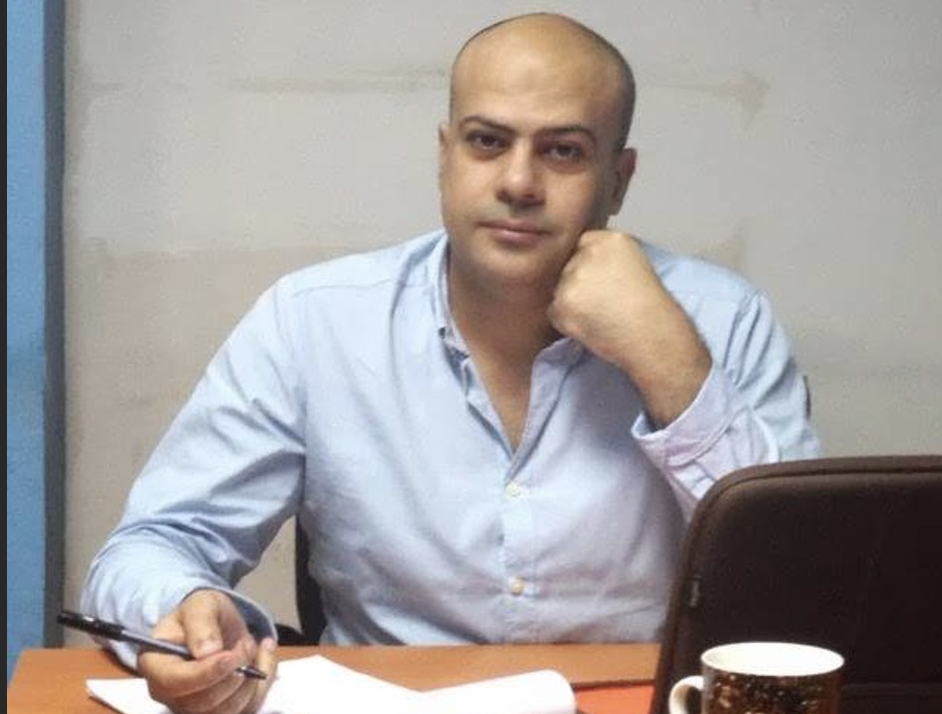
A month after his family say he was forcibly disappeared, economic researcher Ayman Hadhoud died for unknown reasons in early March while being held in custody at Abbasseya Psychiatric Hospital, his brother told Mada Masr.
They were only notified of his death on Saturday, April 9. A branch of the Public Prosecution in Cairo’s Nasr City gave the order for an autopsy to be conducted on the body on Sunday afternoon.
The National Council for Human Rights is to hold an emergency session tomorrow to investigate the circumstances of Hadhoud’s death, said council member Georges Ishaq.
Hadhoud, who was a member of the liberal Reform and Development Party, went missing on February 5. His family was informed by a member of the police force that he was detained at a site at Amiriya Police Station belonging to the National Security Agency, his brother, Omar, told Mada Masr. Officials in the department denied that Hadhoud was in their possession at the time.
Authorities gave divergent accounts of the events surrounding Hadhoud’s detention in February. The Interior Ministry denied on Sunday that Hadhoud was forcibly disappeared, stating that Hadhoud was arrested in Zamalek, Cairo, after a doorman reported that he was trying to break into an apartment and “initiating irresponsible behavior.” In a statement, the ministry said that due legal process was followed at the time, after which the Public Prosecution referred him to the psychiatric hospital for evaluation.
However, hospital records said that Hadhoud was detained for attempting to steal a car in the city of Senbellawein in Daqahlia, an account which prosecutors at Nasr City Police Station 2 speaking with the Hadhoud family on Saturday repeated.
Dismissing the two contradictory accounts, Omar said that the Public Prosecution and other security authorities had until Saturday denied knowledge of Hadhoud’s whereabouts, despite the family’s requests to see him over recent weeks.
A week after his February disappearance, Hadhoud’s family learned that he had been transferred to Abbasseya Psychiatric Hospital to be placed under observation for 45 days.
At the time, and in hope of gaining further information, the family reached out to Mohamed Anwar al-Sadat, a member of the National Council for Human Rights and the leader of the Reform and Development Party of which Hadhoud was a member, a family friend told Mada Masr.
Omar said that Sadat filed a report to the public prosecutor, the interior minister and human rights council chair Moushira Khattab. Sadat also met with the public prosecutor on Friday to talk about Hodhoud's disappearance, according to Omar.
According to the family friend, the family tried to visit Hadhoud at the hospital, but their request was rejected by the hospital administration, which asked them to obtain permission from the prosecution. The family was unable to do so, as the prosecution denied having any information regarding Hadhoud at the time.
At the end of March, the family was able to communicate with a member of staff at the Abbasseya hospital, who informed them on Monday that Hadhoud had died in March. On Saturday, they received a call from Nasr City Police Station 2 telling them they could come to pick his body up from the hospital.
Omar added that while obtaining a burial permit on Sunday, Hadhoud’s family learned that the Public Prosecution had issued an order for Hadhoud to be buried in a charity cemetery as an unidentified body, even though they say he was in possession of his national ID card at the time of his disappearance.
أخبار ذات صلة
Court to rule on appeal against closure of Hadhoud case on June 23, allows family lawyers access to case files for 1st time
The lawyers have repeatedly complained about the prosecution's refusal to keep them informed
Family requests surveillance footage from final weeks of economic researcher Ayman Hadhoud’s life
Lawyers for Hadhoud's family have yet to be granted access to case files
What’s missing from the Public Prosecution’s statement on Ayman Hadhoud’s death
Despite being notified on March 5, the Public Prosecution decided on April 11 to order an autopsy.
Prosecution summons brother of researcher who died after 2-month disappearance
Though the researcher died in March, his family were not informed until this weekend
Your support is the only way to ensure independent, progressive journalism survives.
You have a right to access accurate information, be stimulated by innovative and nuanced reporting, and be moved by compelling storytelling. Subscribe now to become part of the growing community of members who help us maintain our editorial independence.
Join us