
What’s missing from the Public Prosecution’s statement on Ayman Hadhoud’s death
Several government bodies have issued vague statements in the wake of last week’s revelation that economic researcher Ayman Hadhoud died in custody at Abbasseya Psychiatric Hospital in early March. Early on Tuesday morning, the Public Prosecution issued a statement regarding what transpired in the time between Hadhoud’s arrest in early February and his death in early March in an attempt to present an official narrative.
According to the prosecution’s statement, a doorman in Zamalek accosted Hadhoud on February 6 as he was trying to break into an apartment at the property. Hadhoud, the statement reads, was “raving in incomprehensible words.” The doorman informed the police, who referred Hadhoud to the prosecution, which began investigating him on charges of attempted theft.
However, according to the statement, the investigation could not be carried out because he was “incomprehensible.” The prosecution thus submitted a request for a court order to place him at Abbasseya Psychiatric Hospital for evaluation.
A month later, on March 5, the statement reads, the Public Prosecution was notified of Hadhoud's death in custody at the hospital due to a sharp drop in blood pressure and cardiac arrest. The prosecution said it examined the body and found no injuries. The health inspector who examined the body also found no evidence of a criminal act, which the investigations subsequently ruled out, the statement said.
Despite being notified on March 5, the Public Prosecution only decided on April 11 to task the Forensic Medicine Authority with conducting an autopsy on Hadhoud’s body to determine the cause of death, without explicitly noting in the statement that the decision came more than a month after his death.
Looking into the various narratives that have tried to explain what happened to Hadhoud during the past two months reveals that the prosecution’s statement tells only half the truth and ignores significant questions about what happened to him in the weeks leading up to his death. Nor does the prosecution’s statement address the pressing question as to why there was a month of delay in informing the family of Hadhoud’s death, despite legal requirements that necessitate informing the family within 24 hours.
The prosecution’s statement indicated that two of Ayman's brothers, Adel and Abu Bakr, told investigators that Ayman had previously exhibited troubling behavior in two previous incidents. One incident took place on the main road in the Salam area in 10th of Ramadan City, and the brothers said they had to take Ayman home after residents apprehended him. The second involved him lying on the ground outside a hotel room.
Both incidents, according to Ayman's lawyer Fatma Serag, his friend Abdullah Helmy and another friend who requested anonymity, occurred during the week before his arrest, when there was significant change in Ayman's psychological state and his behavior.
The first incident saw him attempt to break into a car near the 10th of Ramadan transport hub near Salam. A group of residents apprehended him and called one of his brothers, who came to pick him up. The second incident occurred at the Four Seasons Hotel in Cairo’s Garden City neighborhood, where Ayman tried to break into one of the rooms. The incident ended with Ayman being handed over to his family. In both incidents, he was searching for a woman.
Ayman was arrested on February 6 in Zamalek, sometime after having dinner with his brother Omar. Omar left Ayman and headed home, and he later tried to to call him several times, to no avail.
The sources, as well as the prosecution, agree on these details. But the narratives begin to diverge from there. According to the researcher's family and friends, his brothers tried every possible way to find him in the following days. They went to the public security sector services authority, where all arrest reports from all over the country are recorded, but found no information on his fate.
Days later, according to the sources, an officer from the National Security Agency came to the family’s home and asked one of the brothers to come to their site in Amiriya to pick up Hadhoud. Omar went there and spoke to an officer, who then asked him to leave, telling him that Ayman would stay with them for two more days and then be released.
When Hadhoud was not released, the family tried various mediators to expedite his release. One of those mediators was Mohamed Anwar al-Sadat, the head of the Reform and Development Party, a member of the government-appointed National Council for Human Rights, and a public figure who has risen to prominence in recent months for holding talks with security agencies to inquire about the fate of some of the disappeared and to negotiate the release of detainees.
For the family, the choice to turn to Sadat also made sense due to his strong relationship with Hadhoud, who used to be a member of his party's high committee and an economic advisor to Sadat. According to one of the sources, Sadat learned that Ayman was transferred to Abbasseya Psychiatric Hospital. The sources believe his transfer took place within a week of his arrest. Mada Masr tried to contact Sadat to confirm this, but, as of publishing, he had not responded to all calls and messages.
Persistent attempts by family and friends to visit Hadhoud or check on him through various mediators were all unsuccessful. On one occasion, the director of the hospital, Hatem Nagy, told the family that a visit required a permit from the prosecution, because Ayman was being held in the hospital pending a criminal case. Weeks later, the same director denied that Ayman was present in the hospital. “I do not have him, alive or dead,” one of the sources quoted Nagy as saying.
The confusion continued for the following weeks until Helmy, Ayman's friend, was able on April 4 to reach a member of the hospital staff, who told him that, if he was asking about “Ayman Mohamed Ali Hadhoud,” he had died in the hospital a month prior, in early March.
Until that point, none of these parties had announced Ayman's disappearance or death. For his part, Helmy, after consulting with a number of friends, decided to post a statement declaring Ayman's disappearance since early February and asking for his whereabouts to be disclosed without providing further details.
With the spread of the news, Ayman's brother Omar, accompanied by a number of Ayman's friends, went to Zeinhom morgue on Saturday morning, April 9, to search for his brother's body, but did not find it there.
Later that evening, an officer from the Nasr City Police Station 2 — the precinct that has jurisdiction overAbbasiya Hospital — called Omar and said his brother had died in the hospital. Omar went to the hospital on Sunday morning and asked about his brother, only to be told by an employee in its patients affairs department that Ayman had died naturally in his sleep.
Adel and Abou Bakr, Ayman’s other brothers, obtained documentation from the hospital and went to the Nasr City prosecution office to acquire a burial permit. Once they did, they realized that the permit specifies he be buried at a charity ceremony — where unidentified bodies are laid to rest. Accordingly, they returned to the prosecution’s office to inquire and amend the location.
The Public Prosecution’s statement ignored all of these details. It did not mention Hadhoud’s period of detention by the National Security Agency and merely affirmed that the prosecution was the authority that decided to place Ayman in the hospital after his arrest.
The wording of the statement also implies that Hadhoud’s family was promptly informed of his death following the forensic examination: “The Public Prosecution then carried out the photographing and publication procedures that are normally followed with regards to deceased persons, in order to reach their family and hand over the body for burial. Two of his brothers — Adel and Abou Bakr — attended and stated in the course of the investigation that they do not suspect the cause of death to have been criminal in nature” However, the death certificate and burial permit, photos of which were published yesterday by Al-Manassa, state otherwise. The burial permit was issued on April 11, while the death certificate is dated March 5.
Nothing in the prosecution's statement explains what happened in the intervening month, even though article 35 of the psychiatric patient care law stipulates that a patient’s family must be informed of their death within 24 hours.
The statement also did not explain why Hadhoud’s body was labeled as unidentified and slated for burial in the charity cemetery, despite the hospital's knowledge of his identity, as confirmed by the patient affairs staff member.
Various possible reasons for Hadhoud’s death were mentioned in the prosecutor’s statement. The hospital informed the prosecution that the cause of death was a drop in blood pressure and cardiac arrest. The statement also mentioned symptoms of schizophrenia and delusion, which may have led to his death, according to experts in the tripartite evaluation committee summoned by the prosecution for opinion. The statement also talked about a rise in his body temperature that led the prosecution to suspect Hadhoud had COVID-19, which may have led to his death.
A medical source at the hospital who spoke to Mada Masr on condition of anonymity says that Ayman’s temperature was indeed elevated, and the hospital suspected he had coronavirus. But various other medical sources have ruled out this scenario due to the short period between the temperature rise and his death.
According to psychiatric experts, some of whom work in hospitals affiliated with the General Secretariat of Mental Health and Addiction Treatment, there are several scenarios that may lead to the death of a patient in such a case. Some of these scenarios are related to them taking different types of medication that may have caused their death. But one scenario suggests that the psychosis itself could cause death without pharmacological intervention. The specialists believe that this scenario is the most likely one, since the policy of Abbasseya’s forensic medicine department — which receives detainees pending psychiatric evaluation — prevents patients from receiving any medication for the first 45 days, in order to conduct an assessment without the interference of drugs.
Some specialists also pointed out that the forensic medicine department is distinct from the other departments in the hospital in that it falls under the tripartite supervision of the Public Prosecution, the Interior Ministry and the mental health secretariat. In practice, however, the department is a prison or place of detention under the supervision of the Interior Ministry, like any other detention facility.
The fact that the hospital did not inform Hadhoud’s family of his death, in violation of the law, cannot be explained by hospital officials’ claim that they did not know his identity, since Hadhoud was transferred to the hospital by the prosecution — according to its statement — pending a criminal case. Thus, they would have had all of his information.
Why did the hospital not inform Hadhoud’s family? And why did the Public Prosecution decide that he should be buried in the charity cemetery?
The most likely explanation is that Hadhoud’s transfer to the hospital for psychological evaluation took place away from the official legal avenues, something that can only be done by a security agency with wide-ranging authority. This is consistent with the accounts of Ayman's family and friends of what happened in the days following his disappearance. After that, Ayman's sudden death may have caused confusion within the hospital, which led to delays in informing his family for weeks, despite their insistence and mediation efforts.


تقارير ذات صلة

Shady Habash’s slow death
“Prison doesn’t kill, loneliness does. I need your support so I don’t die.”
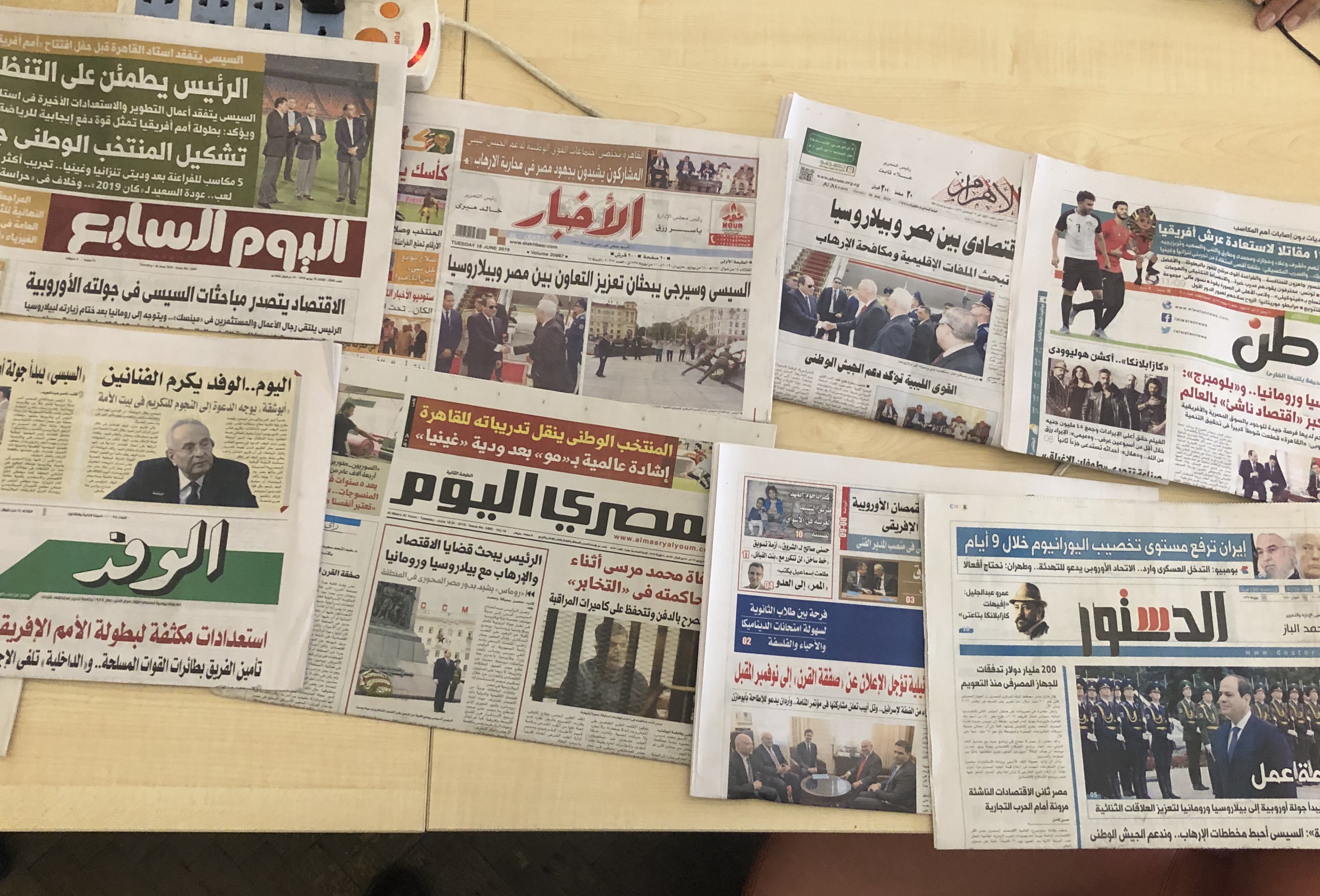
42 words on page 3: How Morsi died in Egyptian newspapers
Newspapers published the same 42-word article to announce the former president's death
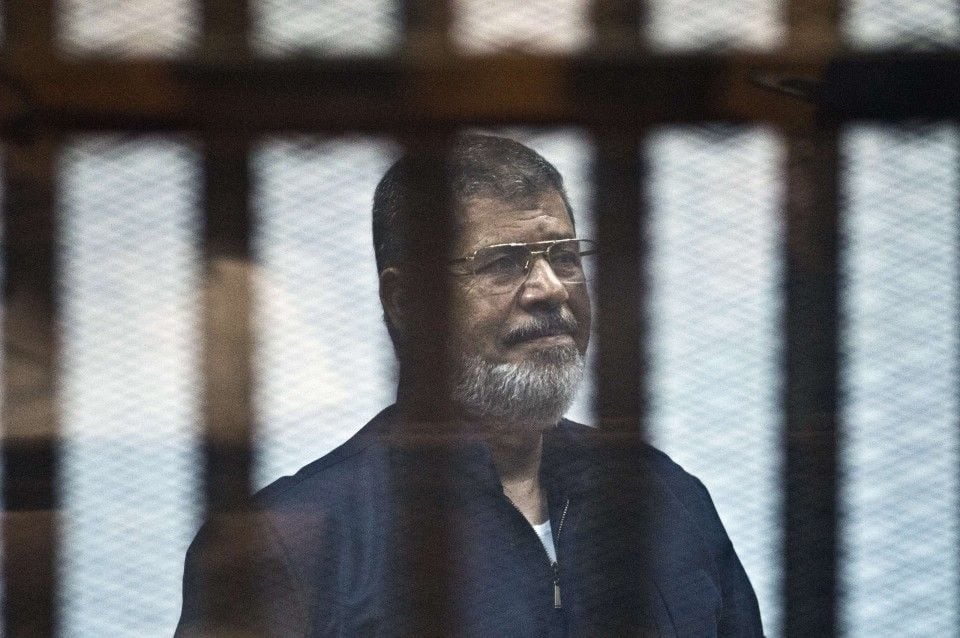
Former president Mohamed Morsi dies in court session, rights groups point to lack of proper medical care in detention
Former President Mohamed Morsi collapsed and died on Monday while attending a court hearing
Your support is the only way to ensure independent, progressive journalism survives.
You have a right to access accurate information, be stimulated by innovative and nuanced reporting, and be moved by compelling storytelling. Subscribe now to become part of the growing community of members who help us maintain our editorial independence.
Join us