
Expert: Damage to King Tut mask can be fixed
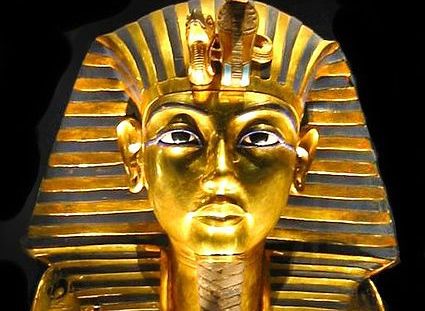
After examining King Tutankhamun's burial mask on Saturday, German restoration specialist Christian Eckmann told reporters that it could be "properly restored."
The announcement, made at a Saturday press conference at the Egyptian Museum, came as a relief after images emerged this week showing evidence that a piece of the priceless antiquity had been hastily glued back on.
In the images circulating online, a solid, translucent substance can be seen between the gold face mask and the re-attached beard.
The story was reported on January 18 by UK-based Al-Araby Al-Jadeed and picked up by the Associated Press on January 21, igniting an international media frenzy. Many outlets reported that the damage could be permanent.
According to media reports, the mask was damaged last year when museum workers knocked it over during cleaning, prompting a hasty repair job.
Initial reports also suggested that the mask was scratched during the repair attempt, but museum officials said Saturday they are still investigating whether scratches on the mask are new or old.
A report filed last October notified the museum's general manager that a fracture was detected in the mask, specifically in the beard area, and that an excess of adhesive material was also found during the same inspection. The report described the flaw as "contemptible."
Privately owned Al-Masry Al-Youm published a copy of the report and stated that 10 restoration experts had signed it. Later, the report was sent to the head of conservators to start a proper process.
The botched restoration attempt of the beard of the iconic mask caused an outcry from Egyptian archeologists. Egyptologist Monica Hanna told Mada Masr her colleagues plan to file a complaint with the public prosecutor demanding that a committee of professional Egyptian conservators be brought in from outside the Ministry of Antiquities.
While "glue cannot damage metal, especially gold," Hanna said, conservators should only use easily removable glue on precious antiquities.
The epoxy adhesive used to re-attach the beard does not meet this standard, Hanna said.
"Epoxy is very hard to reverse. It is like super glue,” she explained, adding that adhesive used in restoration work should be invisible, which, as seen in the images of the glued mask, was not the case.
During Saturday’s press conference, Minister of Antiquities Mamdouh al-Damaty confirmed that the mask was not permanently damaged. Damaty explained that there are various schools of thought about using epoxy in the restoration of metal and stone relics, but that the restorers responsible for the use of the adhesive would be investigated.
The minister also said media coverage of the incident was exaggerated and inaccurate. He added that many of the photographs published of the mask were taken from social media and were altered using Photoshop.
Eckmann, the German expert, will meet with a team of conservators to remove the adhesive and restore the ancient Pharaonic artifact.
King Tutankhamun's burial mask, perhaps Egypt's most recognizable archeological relic, is more than 3,000 years old and a huge draw for tourists. With the country's ailing tourism industry struggling to recover, Egypt can ill afford a scandal involving its high-profile attractions.
News of poor conservation practices in Egypt could also hamper the country's attempt to repatriate artifacts held by museums and collectors abroad.

أخبار ذات صلة
How the discovery in King Tut’s tomb is changing the field of Egyptology
Part 2 of Meredith Brand's article on what the recent scan results tell us about ancient Egypt and Egyptology today.
How the discovery in King Tut’s tomb could change the history of ancient Egypt
On how the recent scan results could help clear up major mysteries about Ancient Egypt, part 1.
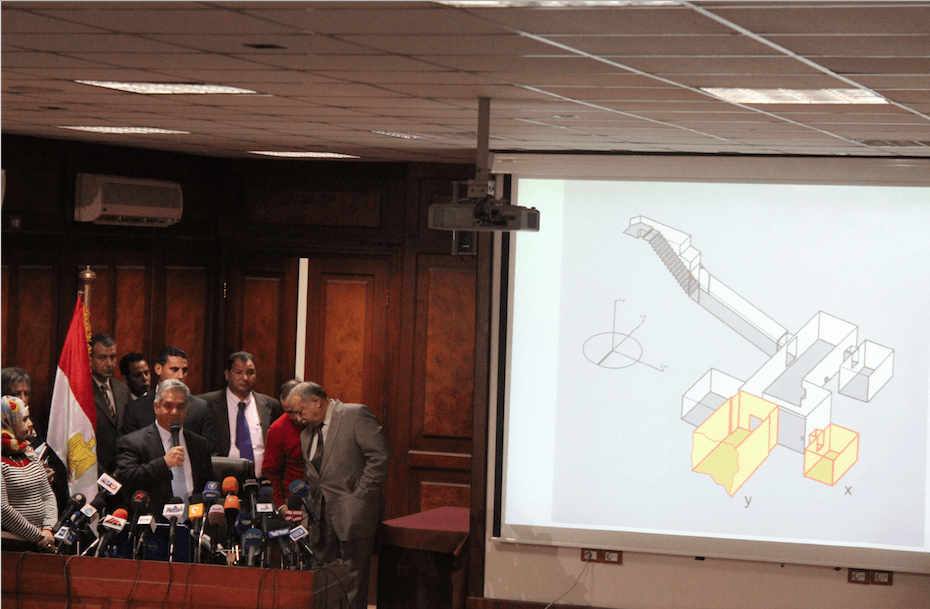
Scans reveal possible burial chambers concealed within King Tut’s tomb
On Thursday, the results of radar scans strongly indicated the existence of secret hidden chambers within the royal tomb of Pharaoh Tutankhamun…
After 3,300 years, tomb of King Tut’s wet-nurse opens to visitors
For the first time since it was constructed, during the 18th Dynasty of the New Kingdom (circa 1320 BC), the tomb of…
Your support is the only way to ensure independent, progressive journalism survives.
You have a right to access accurate information, be stimulated by innovative and nuanced reporting, and be moved by compelling storytelling. Subscribe now to become part of the growing community of members who help us maintain our editorial independence.
Join us