
After 3,300 years, tomb of King Tut’s wet-nurse opens to visitors
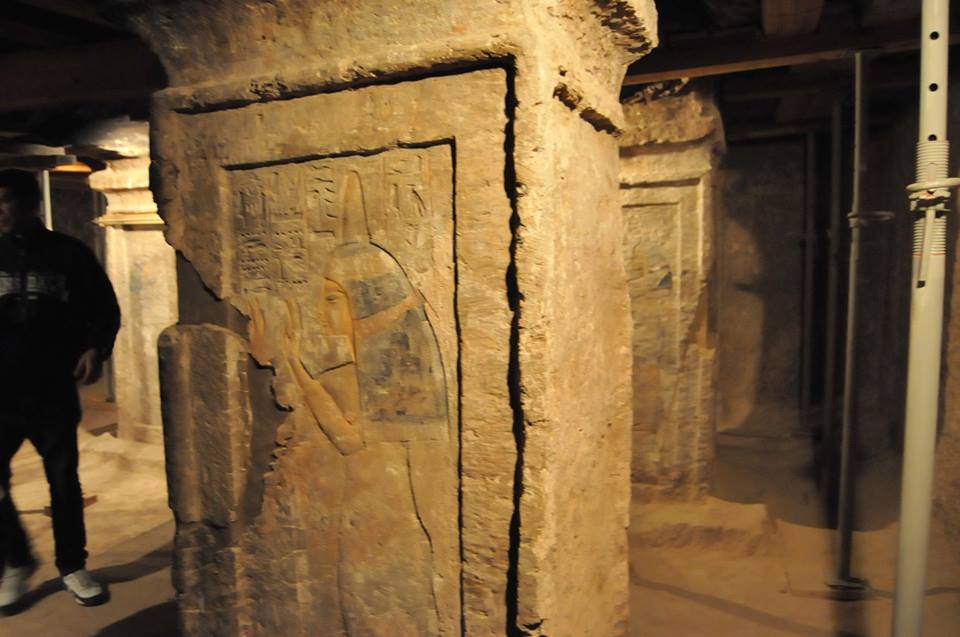
For the first time since it was constructed, during the 18th Dynasty of the New Kingdom (circa 1320 BC), the tomb of Tutankhamun’s wet-nurse was opened to visitors on Sunday. The official opening – to all public visitors – is due to take place over the next few days. Located in Giza governorate, the tomb of King Tut’s wet-nurse, Maia, was built in the Bubastian Necropolis of Saqqara.
According to a statement issued by the Ministry of State for Antiquities, Maia’s tomb was first discovered in 1996 by French Egyptologist Alain Zivie. The ministry announced that the tomb was being opened to visitors following a lengthy process of renovations and restoration efforts.
Celebrating its inauguration 19 years after it was unearthed, the state-owned Middle East News Agency (MENA) posted photos of Maia’s tomb. The tomb of King Tut’s wet-nurse is reported to be carved into earthen rock, with four columns supporting it, and hieroglyphs covering its chamber walls.
MENA reported that Maia’s tomb was temporarily used as a pet cemetery for cats and other felines during the Greco-Roman rule of Egypt (circa 332 BC – 395 AD). Foreign archaeological findings confirm these claims of feline catacombs – perhaps even containing the remains of a lion – within Maia’s burial chambers.
According to the Ministry of Antiquities, the remains of these revered ancient felines were removed from Maia’s tomb as part of the restoration process.
The statement issued by the Ministry of Antiquities read: “This inauguration of Maia’s tomb comes at a time when the tomb of the golden pharaoh in Luxor’s Valley of the Kings is being scanned.”
The statement added that the results of the infrared scanning of King Tut’s tomb will be analyzed and compared with the studies conducted on Maia’s tomb, for further cross-analysis regarding the young pharaoh’s lineage.
An Egyptologist from the UK, Nicholas Reeves, has put forth a theory that King Tut’s tomb may actually contain other chambers dedicated to Queen Nefertiti, the wife of his father and predecessor Pharaoh Akhenaton, although she was not Tutankhamun’s mother. Nefertiti’s remains have not yet been unearthed.
In late November, preliminary results of these infrared-scanning efforts indicated a 90 per cent likelihood that there are other chambers hidden within King Tut’s tomb – although it is not known what purpose these potential chambers served.
Other claims suggest that Maia may have been related to Tutankhamun – perhaps being his eldest sister. However, this claim has not (yet) been verified.
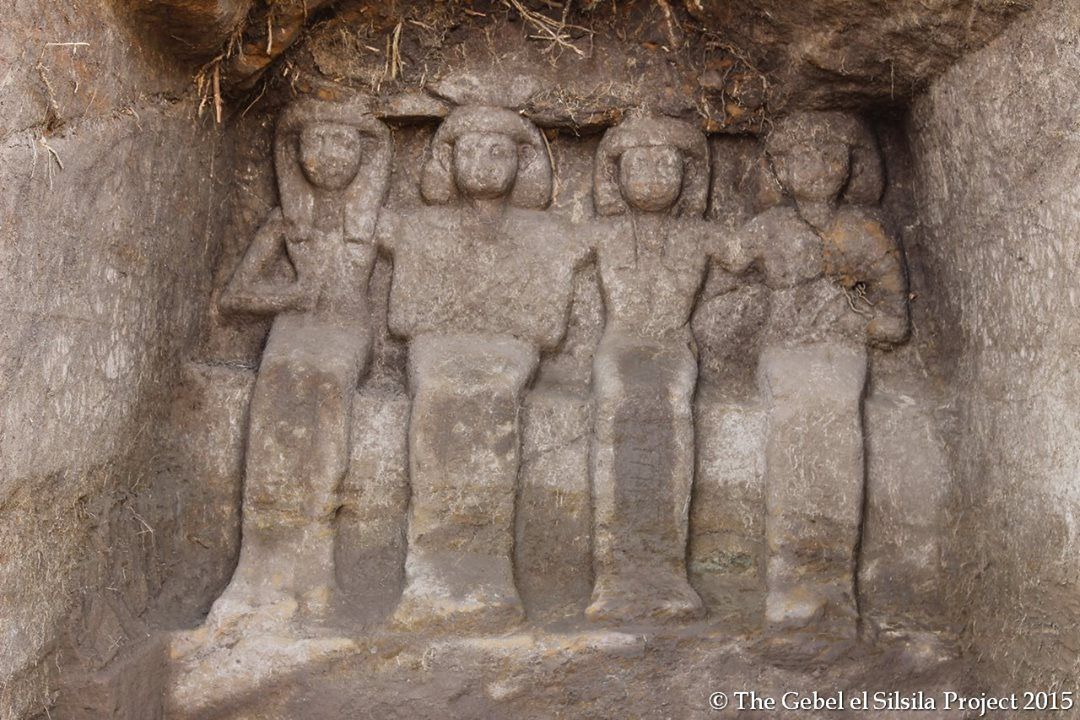
The privately-owned Al-Fagr news outlet posted an online video showing the inauguration of this ancient tomb, led by Minister of State for Antiquities Mamdouh al-Damaty. The interior of Maia’s tomb includes an inscription of her name, along with hieroglyphs of offerings to the gods. Another hieroglyph within this tomb is reported to be that of Tutankhamun seated on Maia’s lap.
A minor pharaoh, King Tut’s brief reign of nearly 10 years (circa 1332 – 1323 BC) came to an abrupt end when he was just around 18 or 19 years old.
King Tut’s tomb remained intact and undisturbed for nearly 3,200 years, until its riches were discovered by archaeologist Howard Carter in November 1922.
The young pharaoh’s vast array of riches, including his recently repaired golden funerary mask, is on display at the Egyptian Museum in Cairo.

أخبار ذات صلة
Staging a grand opening for the grand museum
In Cairo, sidewalks have been repainted, screens set-up and security measures tightened. People living nearby say fireworks have been test-run in Giza.…
Financial arrangements spanning Egypt, Saudi Arabia, UAE behind illicit antiquities smuggling trial
The artifacts were extracted from five separate tunnels dug under urban residential areas
German archaeologists discover prehistoric rock art in Aswan, 9 statues in Luxor
Two separate teams of German archeologists have made important discoveries in southern Egypt over the past week, unearthing prehistoric rock art panels in…
6 statues dating back over 3,400 years unearthed in Aswan
A team of archaeologists from Sweden has unearthed six ancient Egyptian statues in the Gebel al-Silsila area of Aswan. These intact statues…
Your support is the only way to ensure independent, progressive journalism survives.
You have a right to access accurate information, be stimulated by innovative and nuanced reporting, and be moved by compelling storytelling. Subscribe now to become part of the growing community of members who help us maintain our editorial independence.
Join us