
EU based 1 billion euro payout to Egypt on ‘credible steps’ regarding human rights, democracy
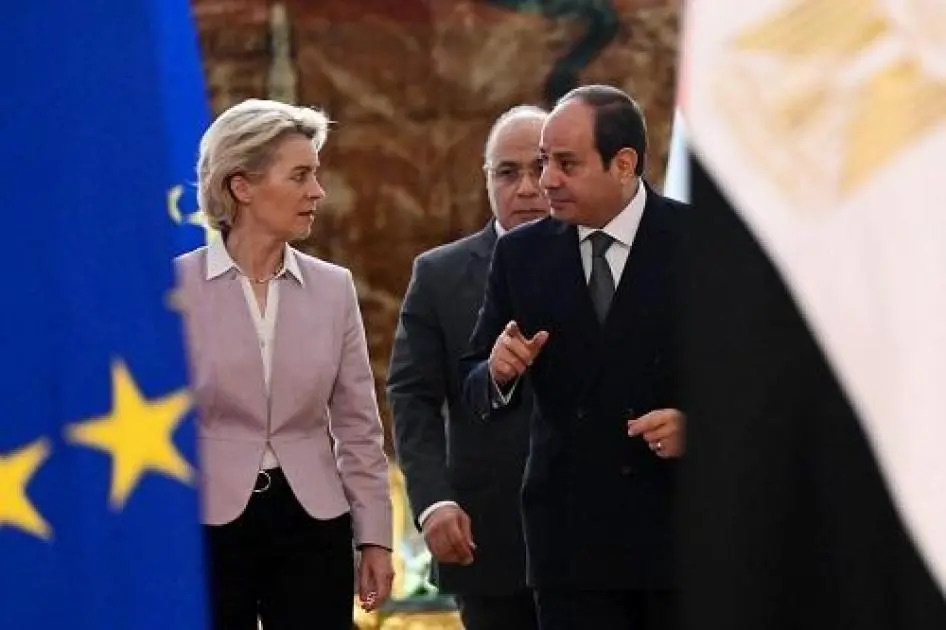
The European Commission said that it found Egypt took "concrete and credible steps" with regard to respecting effective democratic mechanisms, human rights and the rule of law, in an assessment document, viewed by Mada Masr, that endorsed the transfer of 1 billion euros in economic assistance to Egypt at the end of last year.
The commission's assessment cited public consultations on remand detention and the criminal procedures law, despite strong criticism from actors who participated in those talks and who say that the discussions have been sidelined in ongoing legislative change.
The 1 billion euros are part of the unprecedented 7.4 billion euro deal the European Union concluded with Egypt in 2023. Out of that sum, 5 billion euros are to be granted in the form of budgetary loans.
While 4 billion euros will be dispensed over the next three years subject to approval from the European Parliament, the initial 1 billion euros were transferred based on a review mission conducted by an EU delegation in October of last year. The mission looked into political and economic developments.
Positive political developments included, according to the assessment, the National Dialogue and the policy reforms it has addressed. “There have been many deliberations in the National Dialogue, whose second round this year addressed key policy reforms such as on pre-trial detention, criminal procedures law,” the document read. “In August 2024, the National Dialogue put forward recommendations for the reform of pre-trial detention, which were subsequently endorsed by the president, thus allowing moving forward with Parliamentary deliberations.”
“Desperate, factually incorrect and deliberately misrepresenting” is how Hossam Bahgat, director of the Egyptian Initiative for Personal Rights (EIPR), described the assessment on the National Dialogue and remand detention reform discussions.
Bahgat told Mada Masr that EIPR participated in a full day closed discussion on remand detention as part of the National Dialogue in July of last year. Before the dialogue session sent its recommendations to the president, Parliament had moved ahead with its first discussion of the criminal procedures bill on August 20, with the government endorsing the draft prepared by one of the specialized committees in the House of Representatives.
The trustees of the National Dialogue issued a statement the following month, making public the dialogue’s recommendations and saying that many had been ignored in the working draft in debate in Parliament.
“Claiming that the National Dialogue recommendations were a prelude to parliamentary debates is blatantly false and deliberately dishonest,” said Bahgat.
The current criminal procedures draft law under discussion in Parliament has been the subject of criticism locally and internationally, including from a group of United Nations human rights experts, for expanding the powers of the police, the courts and the prosecution to the detriment of defendants, and for allowing detainees to be held in remand indefinitely.
Further positive developments, according to the European assessment, included the draft labor law and the asylum law. The asylum law has equally received criticism for conditioning refugee status on such notions as “protecting national security” and “general order.”
The assessment also reported that Egyptian authorities “have taken steps toward further implementing the National Human Rights Strategy, in particular with regard to building the capacity of civil servants, judiciary and law enforcement officers on human rights and cultivating human rights awareness.”
The commission presented Egypt's economic progress in greater detail in its assessment, tethering it to the implementation of the International Monetary Fund’s revamped US$8 billion loan program, signed in March 2024. The IMF sent a letter to the European Commission in December, according to the EU document, presenting its review of Egypt’s progress.
Positive developments pointed to by the IMF and included in the European assessment mentioned the unification of the exchange rate after the pound’s floatation in March and the easing of public debt using half the proceeds from the Ras al-Hikma deal with the United Arab Emirates.
The commission further noted progress on the evaluation of the efficiency and cost-effectiveness of large-scale public investments, by pointing to the “Manual for the Preparation of the Annual General Economic and Social Development Plan,” which provides a public investment evaluation framework.
Regarding the state’s footprint in the economy, a contentious issue with international donors and lenders, including the IMF, the commission pointed to the 2023 law abolishing exemptions granted to state-owned companies for their economic and investment activities. The assessment also cited the database created by the Information Decision and Support Center (IDSC), mapping state-owned companies.
The IDSC, the assessment said, also published in August the second progress report on the implementation of the State Ownership Policy, including an update on the implementation status of the government's offerings program.
“You get what you measure,” said Salma Hussein, an economic researcher focused on social justice, commenting on the above indicators mentioned by the European Commission and the IMF. “The EU loan to Egypt is a budget consolidation loan, so it is money that can be spent in broad ways and without transparency. It’s more of a political endorsement to Egypt. There is no need to take note of economic reforms really.”
For example, Hussein said that rather than holding up exchange rate unification as a measure of reform, it would be more useful to analyze the money exiting the country legally and illegally in order to preserve the balance of payments and prevent further indebtment.
Hussein acknowledged that the state has decreased its degree of investment in the economy, but “this is not the question. The question should be: is the government overspending or mispending?” she says, noting that underspending on education and overspending on megaprojects can be considered, ultimately, a form of mispending from a developmental perspective.
In terms of social welfare, the European Commission’s assessment referred to the ongoing targeted cash transfer system, namely the Takaful and Karama programs, allocated to over 4.6 million low-income families. The assessment noted the removal of over 350,000 families for not meeting the eligibility criteria, saying that the recertification only occurs every several years, and hence the reduction in beneficiaries is a cumulative number over these years.
The cash subsidy programs have become a regular feature of assessments by donors and lenders, from the EU to the IMF, when commenting on social welfare. When Mada Masr asked her about the focus on the programs, Hussein said the Europeans might need to look at their own system.
“There are different tools for different needs. It’s never one size fits all, especially that poverty is very dynamic. Why does targeted cash assistance have to be the only form of social welfare?” she said.
Similarly, Bahgat concluded that “this is not a case of the Europeans being misinformed or misled, but rather EU bureaucrats understanding their assignment both from their leadership and from member states to simply clear Egypt to get the loan even if that was to mean painting an imaginary picture of Egypt being on a trajectory of reform.”
The political assessment was always going to be flawed, given there were no criteria established with Egypt on which progress could be measured, according to Hussein Bayoumy, EU advocacy officer with Amnesty International. He notes that in other deals involving the Macro-Finance Assistance (MFA) mechanism that has been signed with Egypt, and which includes a political precondition to meet human rights and democratic standards, such as with Georgia and Ukraine, there are clear criteria based on which progress is checked.
“The [Commission’s] decision is political. They want to release the 1 billion euros,” he said.
Following the disbursement of the 1 billion euros, EU Parliament President Roberta Metsola visited Egypt in January, and in her meeting with Foreign Minister Badr Abdel Atty, he stressed Egypt’s keenness on parliamentary approval of the remaining 4 billion euros of the MFA.

أخبار ذات صلة
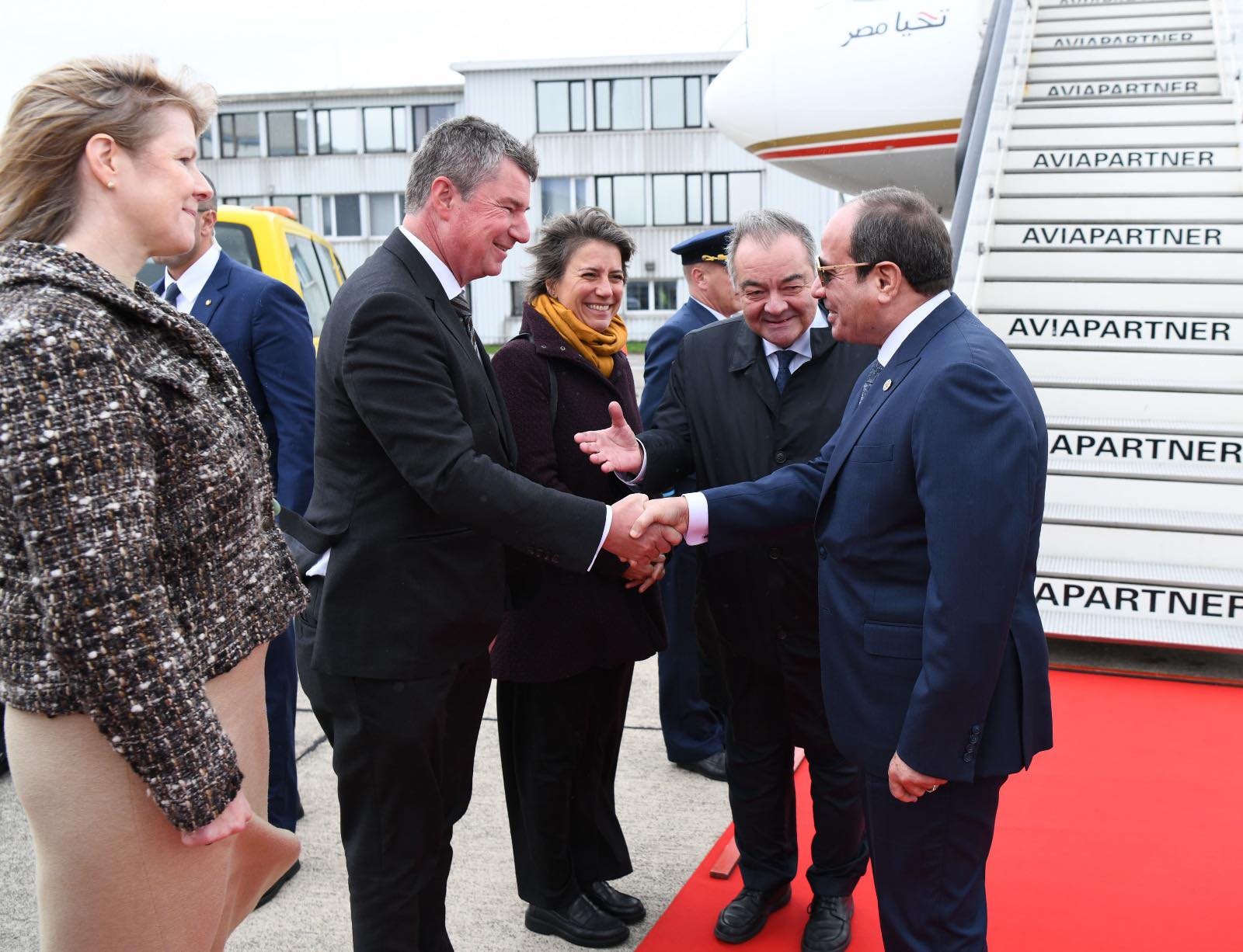
Europe hosts Sisi at ‘strategic partnership’ summit expected to pave way for disbursal of 4 billion euros
President Abdel Fattah al-Sisi landed in Brussels on Tuesday to attend the European and Egyptian leaders summit, an event where he is…

The Pylos shipwreck, the disappearing blue rope, and the trial ‘to determine the kind of world we want to live in’
A boat carrying hundreds of migrants, including 200 Egyptians, sank off the coast of Pylos in 2023

Greek coast guard officials face criminal investigation 2 years after deadly shipwreck
A naval court in Greece has referred 17 members of the country’s coast guard to criminal investigation for causing the deaths of…
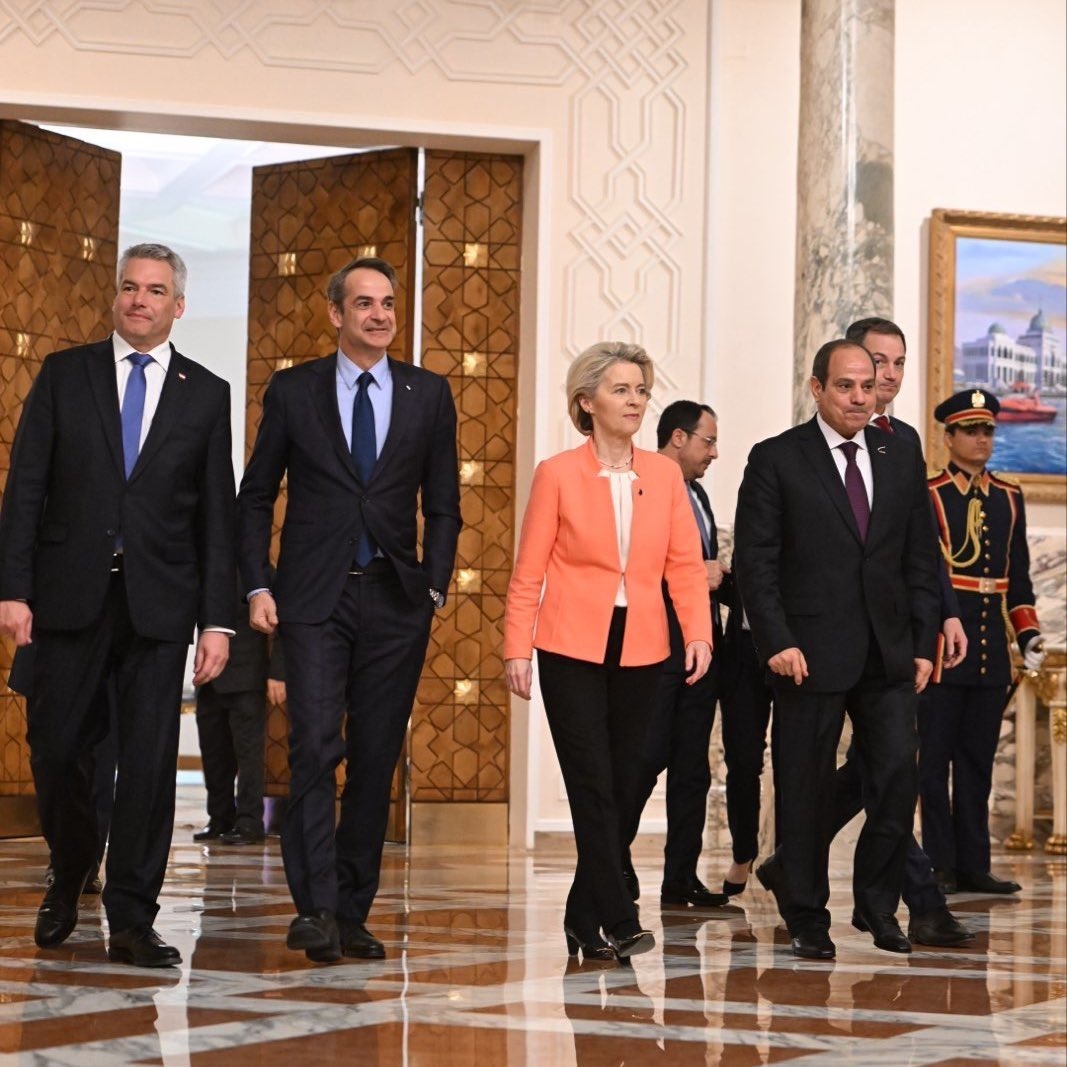
The billions of euros deal reshaping Egypt-EU relations
The partnership is set to be in effect between 2024 and 2027.
Your support is the only way to ensure independent, progressive journalism survives.
You have a right to access accurate information, be stimulated by innovative and nuanced reporting, and be moved by compelling storytelling. Subscribe now to become part of the growing community of members who help us maintain our editorial independence.
Join us