
Egyptian Sumud Flotilla: Sailing through politics and security pressures

Barely a week after opening registration for participants, the steering committee of the Egyptian Sumud Flotilla initiative has already received hundreds of applications, a committee member told Mada Masr on condition of anonymity.
Preparations unfolded in quick succession for Egypt’s bid to join the Global Sumud Flotilla, which began departing for Gaza in late August as the largest fleet yet to attempt to break Israel’s blockade during its genocidal war that killed more than 65,000 Palestinians.
On Wednesday, just four days after launching, the Egyptian initiative announced receiving its first equipped boat with its crew — one of five vessels the committee initially envisioned for the flotilla, according to the committee source. The following day, collection points were designated for in-kind donations to prepare a medical convoy accompanying the fleet. This came after the youth union of the Egyptian Social Democratic Party opened its offices to receive contributions for the flotilla.
Despite the momentum, the Egyptian steering committee is still awaiting responses to requests submitted to the presidency, Cabinet and the ministries of transport, foreign affairs and interior, as well as the Alexandria and Damietta port authorities.
The committee said it also extended “official invitations to participate to the heads of the journalists’, lawyers’, doctors’ and engineers’ syndicates, as well as to the Grand Imam of Al-Azhar Ahmed al-Tayeb and Pope Tawadros II,” stressing the importance of “national and societal mobilization” to support the cause.
Yet the initiative’s relative success doesn’t mean it was spared security hurdles entangled with broader political considerations.
On Monday, the committee was forced to cancel a press conference at its temporary office at the Karama Party headquarters following security threats of possible arrests targeting both the organizers and attendees, a source familiar with the committee’s work told Mada Masr last week.
The threats began arriving in the early hours of the day the conference was due to take place, the source said. As the event drew closer, “it became clear to the steering committee members that many of the parties represented in the preparatory committee had received various warnings, even if they didn’t admit it outright — something that was easily deduced from the stream of withdrawals from attending.”
These warnings were likely not just about the threat of arrest, the source suggested — some, they said, were linked to the political calculations of forces within the preparatory committee, including parties with their eyes on the upcoming parliamentary elections.
Political forces involved in the discussions around the Egyptian flotilla are drawn from the opposition. But these forces, particularly the Civil Democratic Movement, are already divided over how far to engage in the elections — a matter that has fractured the movement in the Senate election in August and has only deepened since. At the core of the rift is the extent of coordination with majority parties and, inevitably, with the security agencies that manage the process.
Unlike the smaller steering committee, the preparatory committee has a broader makeup, encompassing representatives of political parties, movements and prominent activists. “In other words, it brings together a wide spectrum of political forces — something reflected in how they responded to the warnings,” the source said.
The preparatory committee includes 23 members so far, according to a member of the steering committee, which is composed of five young activists.
This dual structure was the outcome of a meeting at the Journalists Syndicate that gathered party representatives and activists. The session sought to give organizational form to the idea of an Egyptian flotilla joining the international campaign, building on an earlier initiative in the form of a statement signed by 55 public figures, activists and supporters, along with 15 parties and movements, according to the steering committee member.
The meeting, the source said, set out two main criteria for forming the steering committee. The first was to exclude veteran political figures. “While their popularity could lend strength to the initiative,” the source explained, “it could also detract from it given the controversy that may arise around these figures.” The second was that volunteering steering committee members had to take on a highly visible role — their names would be made public and they would represent the initiative in the media — exposing them to potential security pressures. They are also required to handle a heavy daily workload.
Even before the initiative was announced, “discussions within broader Palestine solidarity circles were intense over how to support the Global Sumud Flotilla,” the source said. Two party leaders — Hamdeen Sabahi and Medhat al-Zahed — then reached out to security bodies in an attempt to secure permission for launching an Egyptian flotilla.
Zahed, the head of the Socialist Popular Alliance Party, told Mada Masr that his communication with a representative of a security agency, made in the context of seeking authorization, yielded a reply that approval was virtually impossible. Israel, the official argued, would seize on Egyptian participation to escalate regional tensions, and any harm to participants would compel Egypt to respond, even if those involved pledged to accept personal responsibility.
While Egyptian-Israeli diplomatic relations have publicly grown more strained amid broader pressures to enforce scenarios of Palestinian forced relocation, the statement calling for the launch of the Egyptian flotilla emphasized that signatories were acting at their own risk.
Israel has a long record of intercepting Freedom Flotilla Coalition voyages over the past two decades, during which participants were arrested, detained and in some cases subjected to mistreatment before being deported. One ship was attacked, with several participants killed.
Zahed said that he had proposed a compromise to the security official, “not as a collective position, but as my personal opinion at the time,” suggesting to allow a solidarity demonstration in the form of a flotilla sailing in Egyptian waters as the international fleet passed by, while calling on Egyptians to hang Palestinian flags from their balconies and stage sit-ins at party headquarters that day. “The response was that the matter required study, and that I would receive an answer later. I haven’t yet,” he said.
Beyond preparations for the flotilla, Zahed said he also raised with the security official “the need to release those detained for showing solidarity with Palestine.” On that point, he added, the response was “more positive, though without any clear promises.”
According to the Egyptian Initiative for Personal Rights, since the start of Israel’s genocidal war on Gaza in 2023, security forces have arrested 186 people in connection with 16 separate Supreme State Security Prosecution cases. All face terrorism-related charges for peaceful acts of solidarity with Palestinians in Gaza — whether through demonstrations, carrying banners or taking part in fundraising for relief efforts.
Zahed argued that an initiative like the Egyptian flotilla stands apart from other forms of solidarity demonstrations. Instead of arrests, “I believe the authorities would prefer to simply deny the security permits needed for the flotilla to sail if they want to stop the initiative,” he said. “This initiative doesn’t involve mass organization that could spill into street protests. If it succeeds, it will remain an organized action.”
Zahed gave as an example the authorities’ rejection of a request party leaders put forward in August to protest outside the Israeli embassy, a decision that appeared to serve as a sufficient alternative for security bodies instead of resorting to arrests. Zahed stressed that they had pledged from the outset to abide by the law and ultimately respected the Urgent Matters Court’s ruling that denied their request.
For Zahed, the flotilla initiative’s importance lies in its symbolism, even if it never departs from Egypt’s coastline. “Above all,” he says, “it is necessary for public mobilization against Israel as Egypt’s foremost enemy and for countering calls to surrender to submit to it.”
So, despite the surge in popular momentum, the boats must wait for the rising tide that is state approval, a wait that so far doesn’t have an end on the horizon.
أخبار ذات صلة
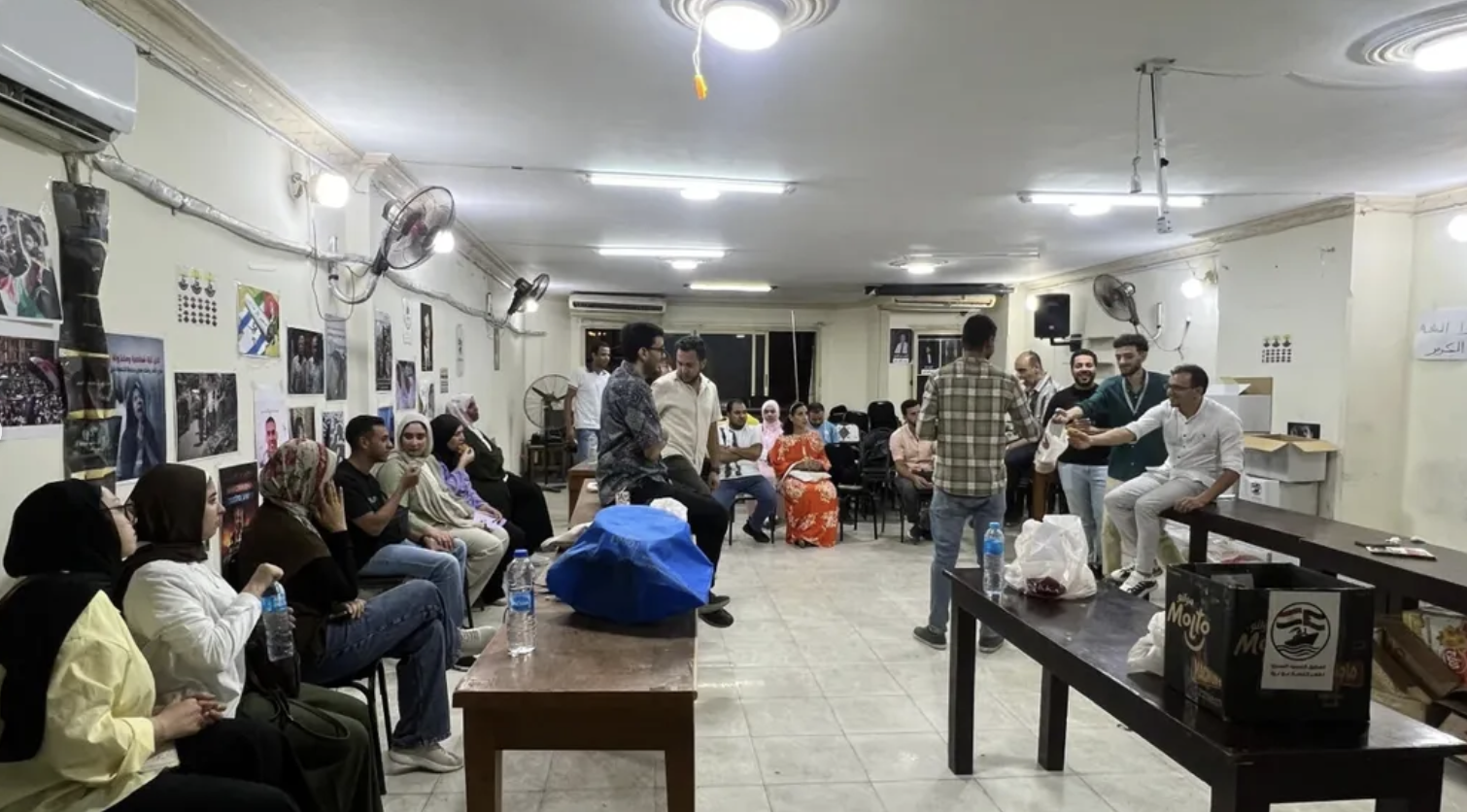
Authorities arrest 3 Egyptian Sumud Flotilla members
Authorities arrested at least three members of the Egyptian Sumud Flotilla on Monday evening, the flotilla’s media spokesperson, Hossam Mahmoud, told Mada…
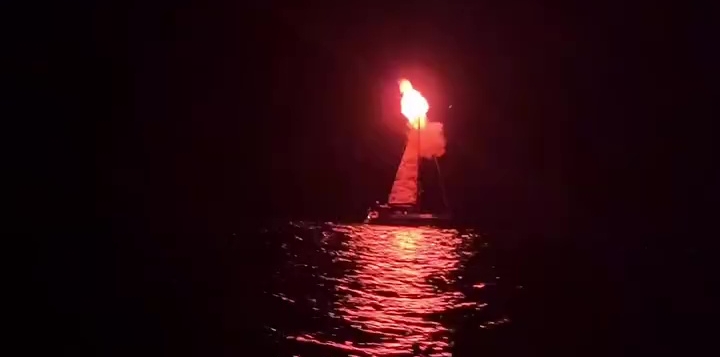
Global Sumud Flotilla targeted by drones amid Israeli smear campaign
Multiple vessels taking part in the Global Sumud Flotilla were attacked in the early hours of Wednesday by unidentified drones, explosions and…
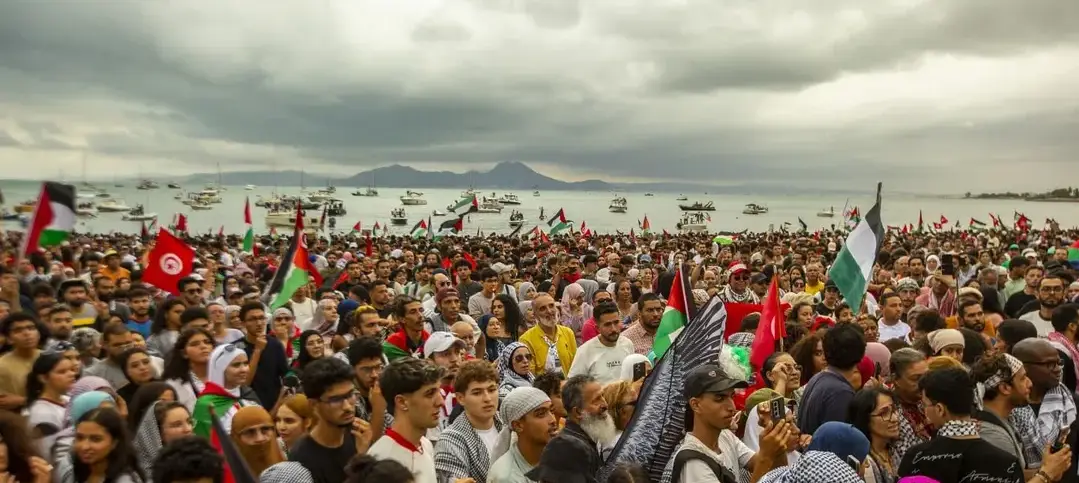
Breaking the siege on Gaza and our political imaginary: Ali Kniss on sailing with the Maghreb Sumud Flotilla
"Despair is not the problem. The problem is what we will do"

‘What happened showed the world what we’re dealing with:’ Global Sumud Flotilla will still sail to Gaza after drone strikes activist vessel
The Global Sumud Flotilla (GSF) said on Tuesday that one of its main boats was struck by a drone overnight while in…
Your support is the only way to ensure independent, progressive journalism survives.
You have a right to access accurate information, be stimulated by innovative and nuanced reporting, and be moved by compelling storytelling. Subscribe now to become part of the growing community of members who help us maintain our editorial independence.
Join us