
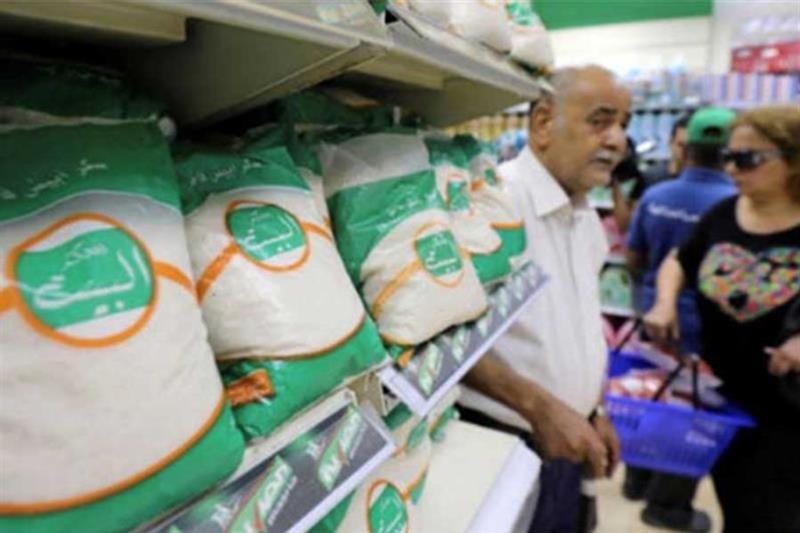
A value-added tax will be levied on sugar sales starting in the new fiscal year, according to a government decision that has yet to be officially announced but was relayed to Mada Masr by several informed sources. Until now, sugar has been one of the essential staple foods exempted from VAT.
The tax will drive up the price of sugar, a staple commodity for buyers across the country who have already struggled with years of rapidly rising living costs.
The new tax is one of several moves the government has planned for fiscal year 2025/26 to increase revenues — an objective it has committed to under its ongoing program with the International Monetary Fund.
According to the analytical statement of the general budget for the coming fiscal year, which Mada Masr obtained, along with information from three sources within the government and House of Representatives, sugar will be subject to a lower tax rate than the general VAT rate of 14 percent in FY 2025/26.
Taxing sugar after it was previously exempted will require an amendment to the tax law, which the Finance Ministry is currently preparing, according to the sources.
Sugar is currently subject to a withholding tax of LE55.60 per ton. The current market price stands at around LE30,000 per ton, according to Hassan Kamal, the chair of the Nubaria Sugar Factory.
Levying VAT on sugar is likely to have severe knock-on effects for lower-income groups, given how essential the commodity is to everyday life, according to former Supply Minister Gouda Abdel Khalek. "The poor don't get enough calories from healthy sources like protein, so they substitute sugar, which becomes the primary source of calories,” he told Mada Masr.
Bakeries are already preparing for increased costs. The Bakeries Division of the Federation of Egyptian Chambers of Commerce was informed that a tax worth around 10 percent was on the way, according to Khaled Sabry, the division’s spokesperson.
However, both Sabry and the division's secretary, Khaled Fikry, said that the application of VAT will not impact bakeries producing “tourist” bread or the subsidized baladi loaves that millions of Egyptians buy daily, as neither baking process requires sugar.
Fikry told Mada Masr that the tax will impact the "tourist bread" bakeries, which work outside the subsidy system to produce various types of unsubsidized bread and pastries. These bakeries use between five and six kilograms of sugar per sack of flour.
Abdel Khalek anticipated that the impact of the sugar tax on supply chains would worsen existing inflation. "Sugar is a production requirement for industries like halva and sweets," he said, noting that "this will directly trigger new price waves."
Consumers are already grappling with the effects of the recent fuel price hike, and supply chains, lacking government oversight, are in a deplorable state, the former minister said.
Inflation peaked at 40 percent at the start of last year before falling below 30 percent in recent months.
The surge in prices came as Egyptians felt the impact of a sharp depreciation in the national currency, coupled with soaring costs on global markets.
The government is also gradually reducing its spending on subsidies that once helped control living costs — a move aligned with policy recommendations tied to the ongoing IMF loan program.
The same loan program recommended that the government remove 19 items from the list of 58 commodities it currently exempts from VAT, as outlined in the IMF’s third review of the US$8 billion program, which it published in August.
The measure aims to increase total tax revenues as a percentage of GDP by 3 percent over the duration of the program, which ends in late 2026.
The logic is echoed in the analytical statement on the state budget, which Mada Masr reviewed. Projected revenues for the new line item are estimated at LE443 million.
The government has struggled for years to boost its fiscal revenues, forcing it to rely heavily on borrowing to fund the budget.
Last year’s revenues from Suez Canal fees, normally the largest proportion of fiscal inflows to the treasury, were severely impacted by a decline in the number of vessels travelling through the channel. The slowdown followed Houthi attacks in the Red Sea targeting ships affiliated with Israel aiming to deter its genocidal war on Palestinians in Gaza.
Egypt's annual urban consumer price inflation rose to 13.6 percent in March, up from 12.8 percent in February, with prices continuing to climb steadily following the government’s April fuel price hike of up to 30 percent.
أخبار ذات صلة
Cigarettes are the most recent target for tax hikes, but consumption is not expected to be affected
Previous data shows that cigarette consumption has not been affected by price hikes in the past
Smokers fuming after cigarette tax jumps 50% overnight
Cigarette prices jumped dramatically on Monday, just a day after the state-owned Egyptian Gazette published a presidential decree announcing a 50 percent…
Gov’t announces official cigarette prices
Following an increase in cigarette taxes announced July 2, Egypt’s government released new official prices for cigarettes on Tuesday. The…
Sources: Despite EGX listings, govt unlikely to launch offerings in current economic conditions
The Cabinet announced on Tuesday evening that 10 state-owned companies had been temporarily listed on the Egyptian Exchange, one of several measures…
Your support is the only way to ensure independent, progressive journalism survives.
You have a right to access accurate information, be stimulated by innovative and nuanced reporting, and be moved by compelling storytelling. Subscribe now to become part of the growing community of members who help us maintain our editorial independence.
Join us