
Egypt agrees to buy Qatari LNG ‘at preferential price’ as Cairo seeks to diversify import sources
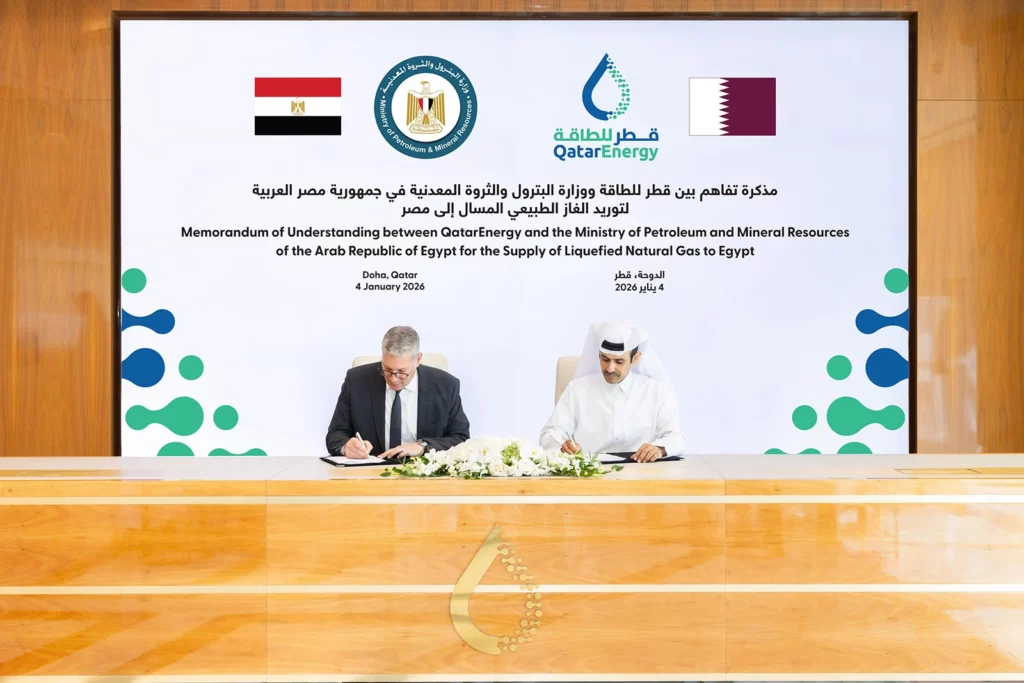
Egypt is to purchase short-term supplies of natural gas from Qatar as per a draft agreement signed by the two energy ministers in Doha on Sunday night.
A former Petroleum Ministry official told Mada Masr the terms include “preferential pricing,” both through relatively low prices and extended payment periods.
According to the Qatar News Agency, the memorandum of understanding paves the way for Egypt to secure an agreement for additional long-term gas supplies from Qatar in future.
The agreement comes as Egypt, increasingly dependent on imports to meet its growing energy demand, seeks to secure cheap sources of natural gas to protect its fragile balance of payments.
The memorandum of understanding is to see QatarEnergy supply the Egyptian Natural Gas Holding Company (EGAS) with up to 24 cargoes of liquefied natural gas (LNG) during the coming summer, Qatar Energy said Sunday evening.
Egypt’s Petroleum Ministry said in a statement on Sunday night that the agreement with the Qatari side seeks to “enhance cooperation in the fields of natural gas sales and imports.”
The statement did not disclose the agreed volumes, only saying that the two sides agreed on the terms of the implementation mechanism for supplying “a number of Qatari LNG cargoes,” to be delivered to the ports of Ain Sokhna and Damietta.
The ministry source, speaking on condition of anonymity, estimated the agreed price at between US$8 and $10 per million British thermal units, rising to $10-$12 once transportation, regasification and other costs are included.
Egypt has become more reliant than ever on natural gas imports since 2019, with gas piped from Israel or delivered in LNG cargoes from other suppliers.
Import costs have accordingly reached record levels, with expenditure reaching $6.34 billion during the first nine months of 2025.
What Egypt will attempt to secure with Qatar in the future, according to the source, is a five-year supply agreement.
The step comes in line with the ministry’s stated objective of diversifying its natural gas portfolio, as outlined in its Sunday statement.
Concerns around Egypt’s dependency on natural gas imports from Israel, with which it shares import infrastructure, have heightened since 2023 amid mounting political differences arising from its genocidal assault on the Gaza Strip.
As the countries have embarked on a $35 billion deal under which Cairo is to purchase around 130 billion cubic meters of Israeli gas by 2040, television commentators have raised questions around the reliability of the partnership.
The government has in turn insisted that energy talks with Israel are “purely economic” and denied that the deal will heighten Cairo’s political vulnerability to the government of Israeli Prime Minister Benjamin Netanyahu.
At the same time, officials speaking to Mada Masr have increasingly voiced energy diversification as a priority.
National statistics show that the United States overtook Israel to become Egypt’s largest gas supplier for the first time in 2025. US supplies accounted for 49.1 percent of total imports, compared to a 45.5 percent share for Israel, according to the Central Agency for Public Mobilization and Statistic (CAPMAS). Of Egypt’s total LNG imports, US gas represented an even higher share, at 91 percent.

This marks a significant shift from 2024, when the US share of total imports stood at 22.7 percent, while Israeli imports represented 71.6 percent of the total.
As Israel delayed the issuance of an export license for the $35 billion deal over the tail end of last year, Egypt signaled that it was not without alternatives to Israeli gas — whether from Qatar, the US or Greece — particularly given its investment in substantial regasification infrastructure capacity, as previously confirmed by three sources who spoke to Mada Masr.
Reports also indicated that if Netanyahu were to withhold the license, Washington would be willing to offset the deficit by supplying Egypt with whatever volumes of gas it required, agreeing in November to supply Egypt with 80 LNG cargoes worth $4 billion during 2026 at an estimated price of $9.80, according to the energy platform MEES.
The deal reportedly fell within the $100 million in credit insurance guarantees allocated by the US Export-Import Bank to reinforce US energy dominance.
Egypt ranks among the world’s top ten LNG importers and accounts for around two percent of global LNG trade.
The United States, which has prioritized its LNG exports under President Donald Trump, is among the world’s top three natural gas exporters, alongside Qatar and Australia.
The Cabinet has said that Petroleum Minister Karim Badawy is invited to travel to Doha again in February, while Egypt invited Qatari Energy Minister Saad bin Sherida al-Kaabi to Cairo in March.
أخبار ذات صلة

Israel finally approves Egypt’s gas deal after nail-biting battle
In an unexpected move, Israeli Prime Minister Benjamin Netanyahu announced on Wednesday Israel’s final approval of a controversial gas export deal with Egypt, months after Israeli hesitation following the initial…
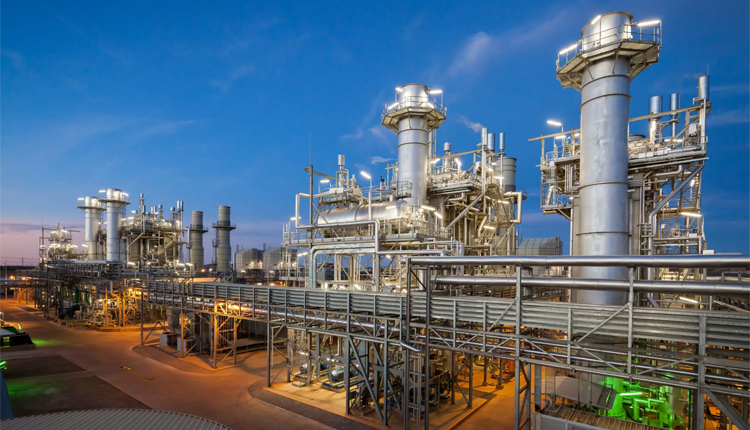
Egypt to boost fertilizer exports to offset planned slash to industrial energy subsidies
The government will raise natural gas prices for industrial use in Egypt in the coming weeks by around US$1-2 per million British…
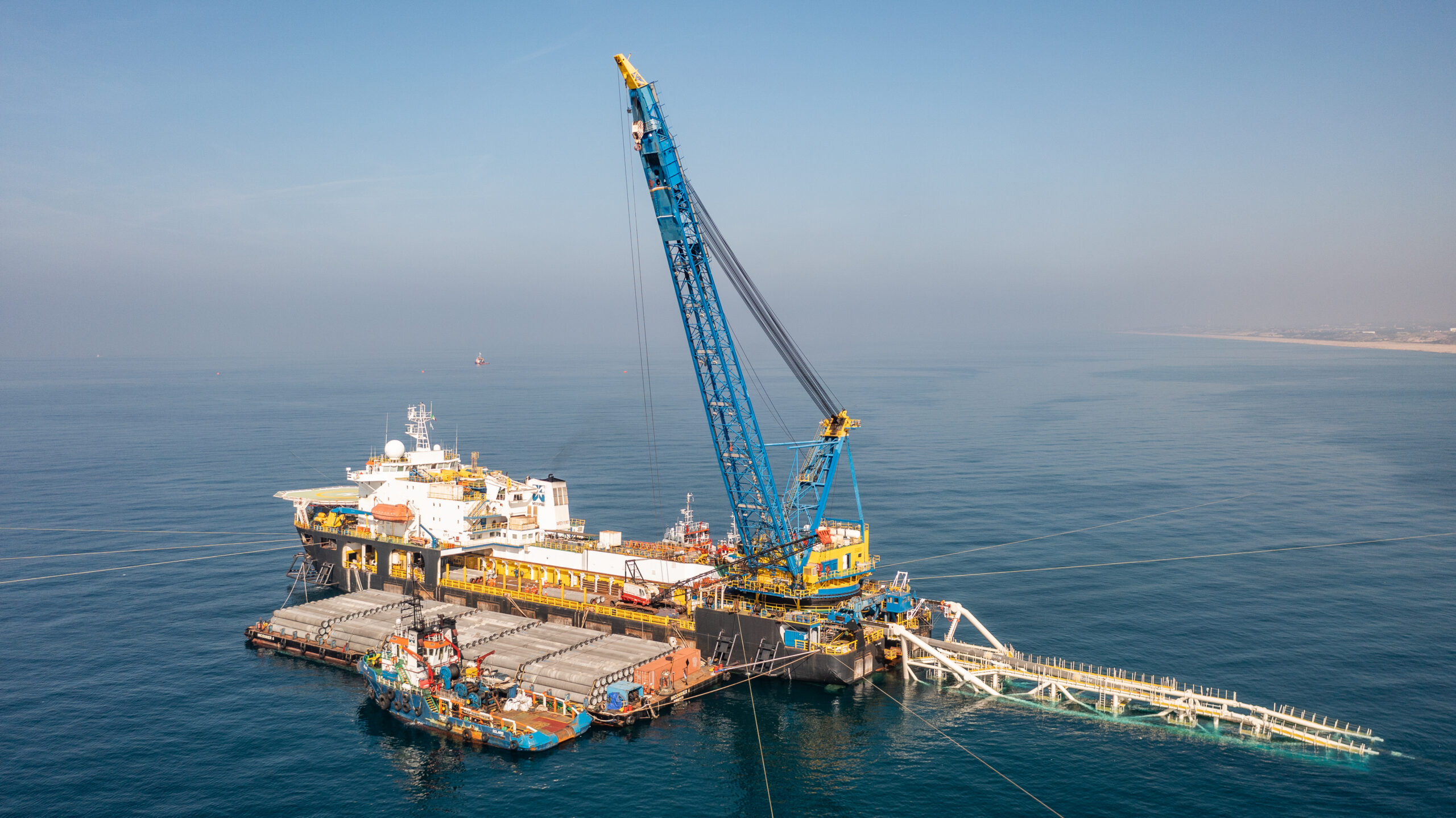
Egypt doubles down on Israeli natural gas imports in US$35 bn deal with 14% price increase
A US$35 billion gas deal announced on Thursday will see Egypt redouble its energy dependence on Israeli fields as an expansion of…

Govt imposes country-wide power rationing plan after complete halt in Israeli gas supply
With war breaking out between Iran and Israel and knock-on effects disrupting regional and international energy supplies, the government has decided on…
Your support is the only way to ensure independent, progressive journalism survives.
You have a right to access accurate information, be stimulated by innovative and nuanced reporting, and be moved by compelling storytelling. Subscribe now to become part of the growing community of members who help us maintain our editorial independence.
Join us