
Drop of value in household savings could reflect decreasing confidence in currency, experts say
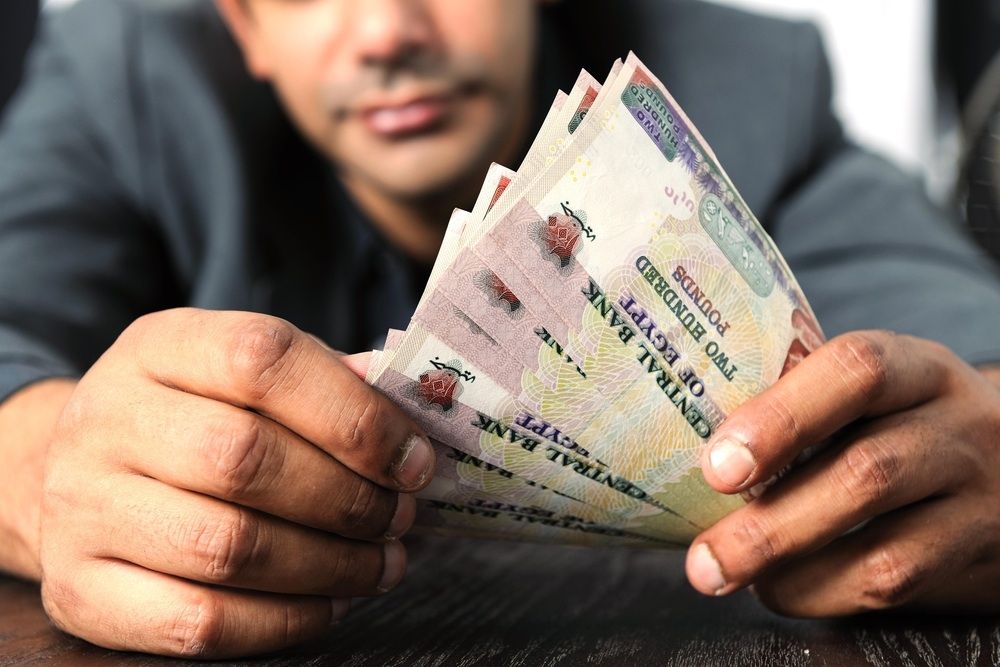
Savings held by individuals and families represent less value in the Egyptian banking sector than they did at the beginning of the year, according to recent data released by the Central Bank of Egypt.
The dip in the value of savings deposits could demonstrate how the economic crisis is affecting members of the public and their spending habits, according to two financial sector professionals who spoke to Mada Masr. If the trend is due to increased consumption, said the sources, it’s likely to exacerbate the dynamics already hampering Egypt’s domestic economy.
Some households could be withdrawing savings under pressure to meet their basic needs, with standard goods like food becoming increasingly expensive after annual inflation hit its highest rate in five years earlier in 2023.
But others, the financial sector professionals said, are likely withdrawing money from savings accounts to speculate elsewhere, given decreasing confidence in the value of the Egyptian pound — which has depreciated by over 50 percent against the dollar since this time last year.
The trend should be a “wakeup call,” according to former BLOM Bank Vice Chairman Tarek Metwally, who told Mada Masr that the central bank should intervene to stabilize the economy and restore public trust in the banking system.
The net value of deposits dropped around LE23 billion since February, with central bank figures released June 1 showing that the total amount saved by households and individuals dropped from LE5.614 trillion (almost US$181.7 billion) in March to LE5.610 trillion ($181.5 billion) in April.
The majority of the decline came from fixed-term savings deposits — deposits that people place in banks for a mandatory period and which can only be cashed out after a minimum of a year — which represent 95 percent of household deposits. These were worth LE4.3 trillion in February; dropping by LE47 billion to reach LE4.26 trillion in March; and dropping again by around LE26 billion to reach LE4.23 trillion in April.
Over the same period, demand deposits — a different category of savings deposits which can be withdrawn by depositors following the elapse of less than a year — increased by around LE55 billion, closing the net drop in value to LE23 billion.
“Ergo, the declining percentage rate is not significant” to the economy in macro terms, said Metwally, “but it’s an indication of an issue that could soar with time.”
It’s possible that people are withdrawing their money from the banking system to speculate in non-traditional assets, said a financial analyst, speaking to Mada Masr on condition of anonymity.
Over the past two months, said Metwally, market data shows that people are speculating less in traditional forms of investment like gold or the dollar and are speculating instead in expensive consumer goods like electronics or cars.
It’s the devaluation of the Egyptian pound that’s at the heart of the matter, he continued.
While the Egyptian pound currently stands at LE30.9 against the dollar, black market rates sit higher, at around LE35–36. Yet dollar resources are scarce in banks, Metwally explained, a shortage that has pushed market estimates of the value of the pound down to LE40 against the dollar in the gold market, futures contracts, or even indices like that for Commercial International Bank shares on the London Stock Exchange.
When people see such negative outlooks for the pound’s value, that encourages speculation, Metwally said. “Imagine someone wanted to buy a refrigerator within two months' time, but instead of waiting, they decided to buy it now. That person feels sure that either the value of the pound will decrease in those two months or the price of the refrigerator will increase.”
Consumption cycles like this become a “self-fulfilling prophecy,” said the financial analyst, and ultimately contribute to suppressing the pound’s value. “If we’re talking about people withdrawing money to spend it, that means people will consume more, leading to an increase in demand and supply.” The dynamic will contribute to further inflation in prices, said the analyst, thereby redoubling the decline in the pound’s value.
The only way to increase demand for the Egyptian pound and put a stop to the cycle, said the analyst, is for the central bank to increase interest rates.
أخبار ذات صلة

Govt’s ‘national economic narrative’ lays bare constitutional breaches in spending, signals continued limits to survey data
The Planning Ministry released on Sunday the National Narrative for Economic Development, a document first announced last week as the government’s program…
Lawmakers approve inclusion of economic agencies in state budget, accommodating IMF criteria
A new law approved by Parliament on Sunday is intended, in name at least, to incorporate Egypt’s economic agencies — bodies which…

Domestic natural gas declines further as govt increases imports from Israel
Natural gas produced at Egypt’s largest field, Zohr, continued to decline over the course of 2023, according to reporting by the Middle…
Sources: US, Egypt and Israel agree to reduce the Israeli input in QIZ agreement products
Egypt, Israel and the United States have agreed to lower the required Israeli component in duty-exempt Egyptian exports to the US from…
Your support is the only way to ensure independent, progressive journalism survives.
You have a right to access accurate information, be stimulated by innovative and nuanced reporting, and be moved by compelling storytelling. Subscribe now to become part of the growing community of members who help us maintain our editorial independence.
Join us