
Despite continuing impact of COVID-19, Senate elections date set for August

Despite the ongoing effects of the COVID-19 pandemic, Egypt’s National Elections Committee announced on Saturday that elections for the Senate will go ahead in August, nearly a year after the upper house of Parliament was voted to be restored in a constitutional referendum.
However, the impact of the coronavirus will be palpable in the leadup to the elections. According to a source in the elections authority, candidates will only be able to campaign on social media and will be barred from holding any public rallies.
The elections commision will monitor social media campaign activity, doling out punishments for any violations, the source added.
The details of the election rollout were announced by Lasheen Ibrahim, the chairman of the National Elections Authority, in a televised news conference on Saturday. According to Ibrahim, elections will be held on August 9 and 10 for Egyptian expatriates outside the country and on August 11 and 12 domestically. The election results will be announced on August 19.
If necessary, runoff elections will be held for expatriates from September 6 to 7 and domestically from September 8 to 9, Ibrahim stated.
The Senate, which is a recasting of the Shura Council, the upper house of Parliament that was dissolved by the 2014 Constitution, will be made up of 300 members, two thirds of which will be elected and a third which will receive their posts by presidential decree. One hundred members will be independent and 100 others will be members of lists formed by political parties. The quota for women is set at 10 percent.
Independent nominees must have Egyptian nationality, be listed in electoral databases, be at least 35 years old on the day of the application, hold a university degree and have done military service or received an official exemption, according to Ibrahim.
Saturday’s announcement follows weeks of coverage that pointed to the possibility of in-person voting. Despite some MPs calling for digital voting, MP Hossam al-Kholy, the deputy head of the pro-Sisi Nation’s Future Party, stated that the Senate elections can be held during the COVID-19 pandemic and that social distancing can be implemented at polling stations.
The Nation’s Future Party has been working to form a joint list in recent weeks that will include several parties, including the Ghad, Egyptian Social Democrat and Tagammu, the Conference, the Adl and the Republican People's parties.
Despite the elections being months away and the date not yet officially announced as of this writing, Cairo24 wrote on June 21 that the Nation’s Future Party expects to win a majority of around 40 percent of the Senate, while the Republican People’s Party will come in second with around 30 percent of the seats.
Meanwhile, Wafd Party Head MP Bahaa Abou Shoqa has stated that his party is in talks with others to form an alliance to field candidates in elections to the both the Senate and the House of Representatives.
Parliament lists have historically been curated by Egypt’s intelligence bodies to ensure that the candidates being fielded are satisfactorily pro-Sisi. In October 2019, Sisi issued a directive to freeze the current Parliament, which was elected in 2015, after sources told Mada Masr that he was dissatisfied with its performance.
In 2019, a wave of arrests targeted several political figures who were involved in discussions to form a new political alliance meant to stand in 2020 parliamentary elections.
The Shura Council, which the Senate revives in everything but name, was roundly criticized by many in the 50-member committee that wrote the 2014 Constitution as a backdoor to corruption and a tool used by those in power to keep allies onside. This was a major reason for its dissolution in the Constitution.
According to the meeting minutes of the 50-member committee, Sameh Ashour, head of the Lawyers Syndicate, said the public’s impression of the Shura Council was that it was a way to “reward and distribute offices to members of the [ruling] National Democratic Party who had electoral weight, who could not be satisfied through the House of Representatives.”
This was reflected in the turnout for Shura Council elections, Ashour said: It had not exceeded 6 percent of eligible voters in the last election.
Gaber Nassar, former head of Cairo University and a constitutional law professor, told fellow constitutional committee members that the Shura Council had two main purposes: Poisoning the partisan experience through its power to approve or reject the formation of new parties, and allowing the ruling party and government to control the press.
Nonetheless, a constitutional amendment to revive the upper house of Parliament was pushed through in 2019 as part of a package of amendments that will allow Abdel Fattah al-Sisi to remain president until 2030.

أخبار ذات صلة
Elections watch: Phase 2 results voided at just 2 polling stations despite widespread violations
The National Elections Authority announced on Tuesday the preliminary results for the second phase of this year’s parliamentary elections, cancelling the results…
Elections results voided in most constituencies after ‘massive’ number of elections appeals
Voting is set to be repeated in two-thirds of the districts that took part in the parliamentary elections’ first phase, following a…
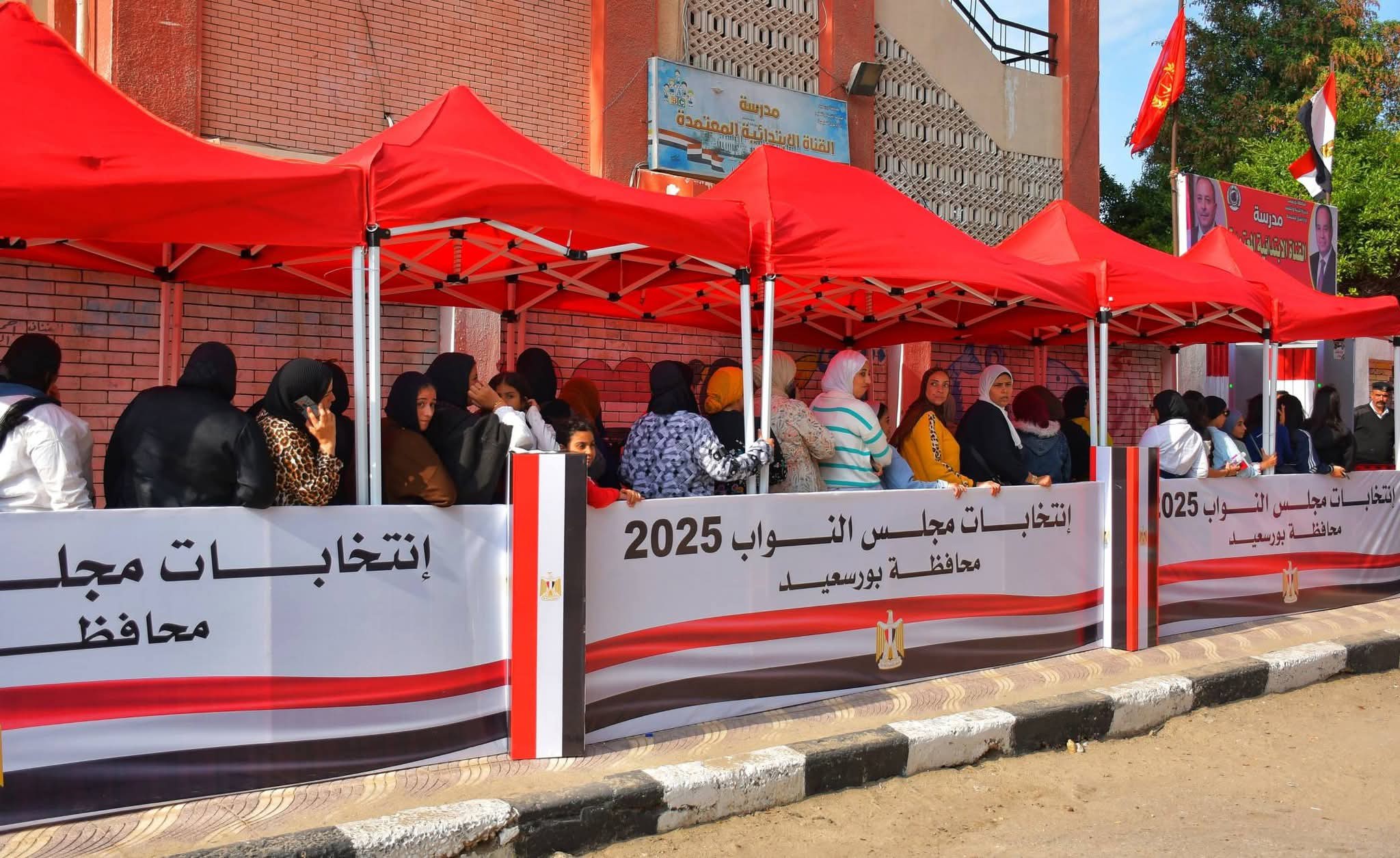
Voter coercion on display in Port Said parliamentary elections
Electoral violations visible on day two of voting in this year’s parliamentary elections saw clear incidents of voter bribery in Port Said.…
Campaign supporters assaulted at Shubra polling stations, electoral candidates say
Two candidates running for parliamentary election in the Shubra constituency reported incidents of physical violence on Tuesday, perpetrated against their team members…
Your support is the only way to ensure independent, progressive journalism survives.
You have a right to access accurate information, be stimulated by innovative and nuanced reporting, and be moved by compelling storytelling. Subscribe now to become part of the growing community of members who help us maintain our editorial independence.
Join us