
Central Bank continues to allow the pound to slide

After almost eight months of holding the pound steady at LE7.14 to the US dollar, Egypt’s Central Bank has allowed the official exchange rate for the currency to slide every day this week.
The Egyptian pound hit a record low of 7.34 to the US dollar in Wednesday’s Central Bank auction.
This follows Sunday’s auction, when the pound dropped from 7.14 to 7.19 to the dollar; Monday, when the pound fell to 7.24 to the dollar; and Tuesday, when it dropped to 7.29 to the dollar.
The CBE effectively controls the official exchange rate by offering dollars to banks at both regularly scheduled and exceptional forex auctions, a practice introduced in December 2012 under former President Mohamed Morsi, when the pound stood at around LE6.24 to the dollar.
The banks, in turn, can supply their corporate clients with the dollars they need to import goods and keep their businesses running.
Officially, Egypt does not peg its currency to the US dollar, but in practice it is clear that the bank has sought to keep a steady exchange rate since May 2014.
During this time, the US dollar has been stronger than many global currencies, including the Euro. With the pound held steady against the dollar, this has meant that, at least according to official rates, the pound has actually outperformed the Euro throughout the summer and fall.
Meanwhile, the pound’s black-market value—which shows how many pounds people are actually willing to pay per dollar in an unregulated setting—has fallen. According to the Associated Press, Wednesday’s black-market exchange rate was around LE7.94 per dollar.
Propping up the official rate comes at a price: the Central Bank has to spend out its own dollar reserves to supply currency for its auctions, and in doing so sells off its dollars at below market price.
In the meantime, Egypt’s foreign reserves are falling to critical levels. Grants from its allies in the Arab Gulf are drying up, and tourism and investment still slow to recover, leaving the country with a widening balance of payments deficit.
Maintaining an artificially high exchange rate can also, in itself, discourage investment. If potential foreign investors feel their dollars are not stretching as far as they should in Egypt, they are more likely to pursue opportunities in countries with more favorable exchange rates.
However, Egypt is highly dependent on imports for food and other basic consumer needs, so any devaluation of the currency can increase the cost of living for citizens. This comes on top of high inflation, which reached an annual rate of 10.3 percent in December.
A cheaper pound can help Egypt’s export industries, by making local products cheaper on the global market. However, since many of Egypt’s manufacturers depend on imported equipment and raw materials, the impact even on exporters is not necessarily positive.

أخبار ذات صلة

Govt’s launch of ‘Citizen Bonds’ challenges domestic banks, sources say
The Finance Ministry’s new “Citizen Bond” is being rolled out today, available for individuals exclusively through Egypt Post branches. The 18-month savings and investment instrument offers a fixed annual return…
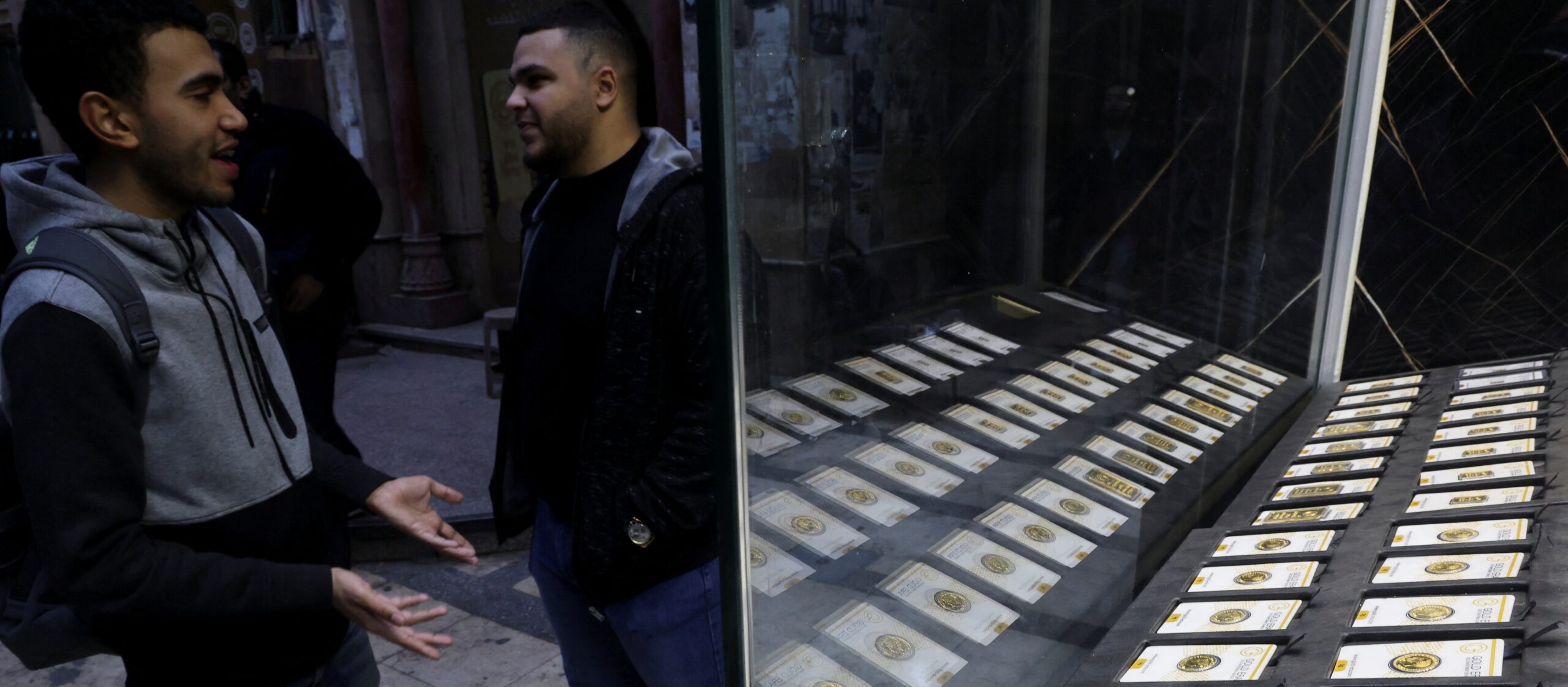
Queuing for gold
Gold remains a trusted option for people looking to invest their savings despite a volatile market
Sources: Hot money exits from govt debt markets in waves amid expectation of devaluation
Yields on one of the Egyptian government’s primary debt instruments hit record levels on Sunday.
United Bank of Egypt announces listing on EGX after 2 years of stalled offerings
The United Bank, a financial institution fully owned by the Central Bank of Egypt (CBE), announced its plan to list 30 percent…
Your support is the only way to ensure independent, progressive journalism survives.
You have a right to access accurate information, be stimulated by innovative and nuanced reporting, and be moved by compelling storytelling. Subscribe now to become part of the growing community of members who help us maintain our editorial independence.
Join us