
Cartoonist Islam Gawish released from custody; lawyer decries ‘unconstitutional’ arrest
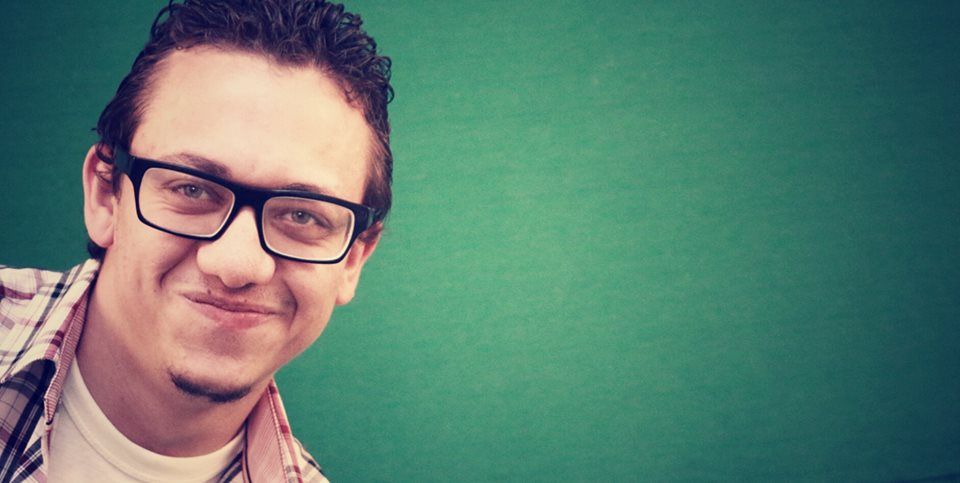
Cartoonist Islam Gawish was released from custody on Monday after the National Security Agency (NSA) dismissed charges of misusing communication networks, defense lawyer Mahmoud Othman told Mada Masr Monday evening.
Gawish is best known for his work with Al-Waraqa comics and has a popular Facebook page with over 1 million followers. His comics focus mainly on social issues in Egyptian society, and he often draws storyboards for popular songs. A collection of Gawish’s drawings were printed in a book last year.
According to the case files, prosecutors accused Gawish of publishing on a website without the necessary permit. Othman said that first of all, the defense team proved to the NSA’s satisfaction that the state’s Internal Trade Development Authority had formally issued a license for his website, Al-Waraqa. Secondly, his client was not in fact that site's administrator, Othman said, and therefore could not be held responsible for licensing issues.
Addressing rumors circulating online that Gawish was arrested for publishing cartoons on Facebook without a permit, Othman explained that “my client does not administer any website on the internet."
Hassan al-Azhary, a lawyer with the Association for Freedom of Thought and Expression, told Mada Masr that the telecommunications regulation law does indeed stipulate that the administrators of websites must have official permits from the National Telecommunication Regulatory Authority, though this stipulation is largely disregarded in practice.
“When taking into consideration the immense number of websites being administered from Egypt, only a negligible percentage of these sites have actually received such official permits of administration,” Azhary said. “This is due to the slow and very time-consuming process associated with the issuing of such permits.”
Despite Gawish's release on Monday, “it is still unclear whether prosecutors will decide to put aside the investigation, or push ahead on the basis of new evidence,” Othman warned.
Gawish was arrested at his office on Sunday by forces from the Interior Ministry’s Department for the Investigation of Artistic Products and Intellectual Property Rights, a body that has conducted several searches of arts and culture spaces in downtown Cairo in recent weeks.
His colleague Mohamed al-Ziyat and lawyer Sameh Samir told Mada Masr on Sunday that the arrest pertained to drawings critical of President Abdel Fattah al-Sisi and the Egyptian state, though local media outlets had issued conflicting accounts regarding the charges. Several news reports perpetuated claims that Gawish was suspected of running unlicensed websites and Facebook pages, disseminating false news and possessing pirated software.
After being held in custody overnight, Gawish was referred to the prosecution on Monday, which remanded him into detention pending further investigations. The cartoonist refused to sign the official investigations report while he was detained, Othman told Mada Masr, as the investigations were conducted without his lawyer present.
Othman argues that the actions taken against Gawish were a violation of his basic freedoms, pointing to Article 67 of the Constitution safeguarding the freedom of artistic expression.
“Freedom of literary and artistic creativity shall be guaranteed, and the state shall commit to advancing literature and the arts, supporting creators and protecting their artistic output, and to providing the necessary means of encouragement to do so,” the Constitution stipulates.
The article goes on to state that “it is not permitted to raise or file lawsuits to stop or confiscate literary, intellectual or artistic work, or against its creators, except through the public prosecution. No custodial sentences may be imposed for crimes committed due to the public display of literary, intellectual or artistic work.”
Othman said that under this language, prosecutors only had the power to summon Gawish for investigations, but could not order his arrest and remand him into custody.

أخبار ذات صلة
Abdel Rahman al-Qaradawi’s defense: Lebanese judge recommended poet’s extradition to UAE
Egyptian poet Abdel Rahman Yusuf al-Qaradawi could face extradition from Lebanon to the United Arab Emirates, according to his lawyer, Mohamed Sablouh. …
State security prosecution to detain cartoonist Ashraf Omar for 15 days
The State Security Prosecution decided on Wednesday evening to detain cartoonist and translator Ashraf Omar for 15 days, according to defense lawyer…
Cartoonist and translator Ashraf Omar arrested from home late at night
Security authorities arrested caricaturist for independent news outlet Al-Manassa and translator Ashraf Omar in the early hours of Monday morning from his…
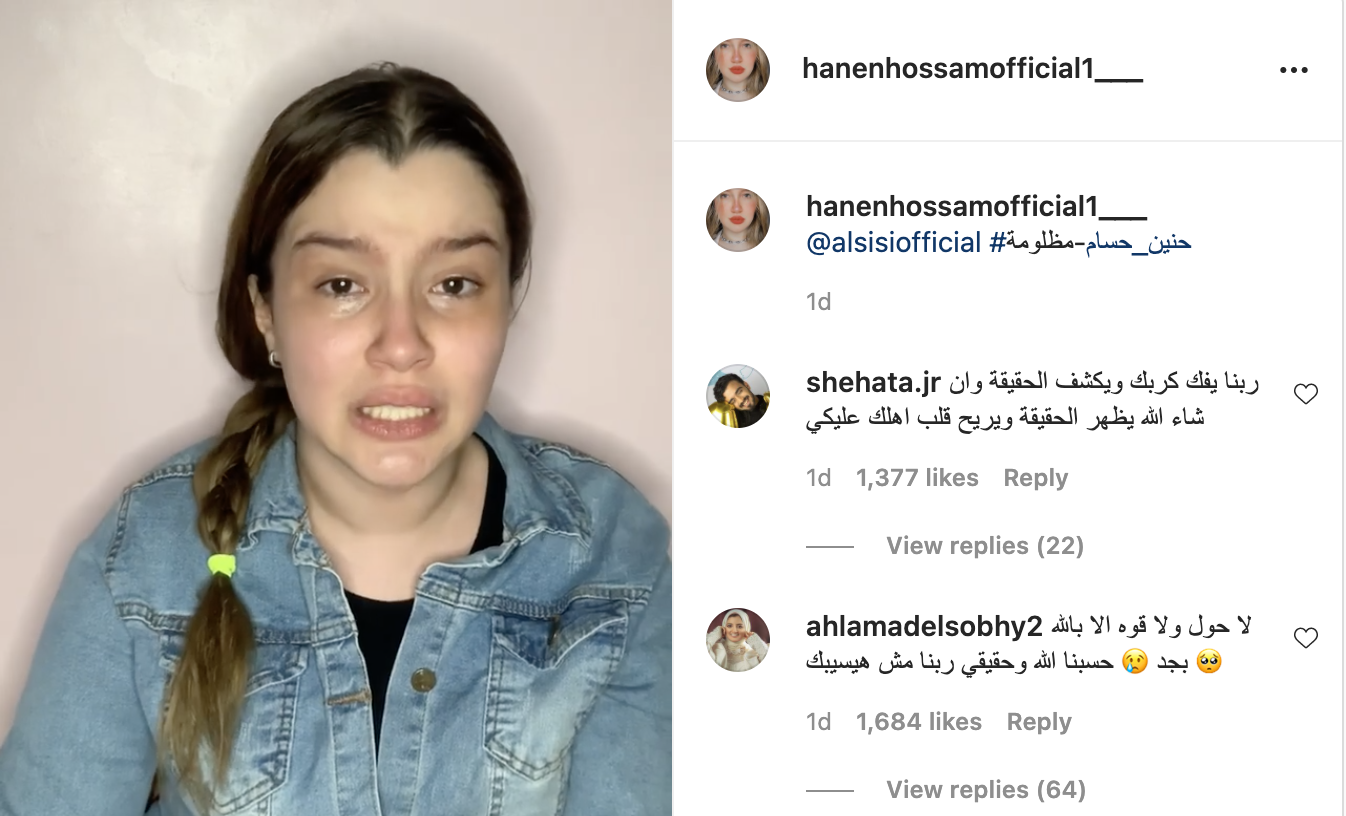
Haneen Hossam arrested after emotional video as rights groups condemn harsh prison sentences against content creators
The cases against Hossam and Adham came on the heels of a 2020 security campaign targeting women
Your support is the only way to ensure independent, progressive journalism survives.
You have a right to access accurate information, be stimulated by innovative and nuanced reporting, and be moved by compelling storytelling. Subscribe now to become part of the growing community of members who help us maintain our editorial independence.
Join us