
Cairo on alert to play a role as viable deal emerges for Lebanon-Israel maritime demarcation, say sources

A viable solution is on the table to demarcate Lebanon and Israel's respective territories in the Mediterranean Sea and settle a maritime dispute that has simmered for over a decade, two diplomatic sources told Mada Masr on condition of anonymity.
With both countries vying to exploit the area for natural gas excavation amid increasing global demand for energy resources, the sources said there is potential for an agreement to be signed before the end of September after two years of intermittent US-led negotiations.
Yet with a state of political paralysis debilitating Lebanon, and Hezbollah threatening to target the Karish field if Israel begins drilling for natural gas in the territory before an agreement is concluded, the deal is not yet high and dry, the sources clarified.
Upcoming elections in both countries over the fall could also hamper a timely agreement, with an Egyptian government official telling Mada Masr on condition of anonymity that Egypt could engage as a player in negotiations lest further instability exacerbate tensions in the region to an untenable point.
Friction in the disputed area of the Mediterranean spiked in June, when Israel placed a gas production vessel at the Karish offshore field, part of which is claimed by Lebanon. The geopolitical implications of the bilateral dispute were outlined clearly by the Israeli energy minister at the time, when she stated that “the connection of the Karish platform positions Israel as a natural gas power,” as it will allow for “increasing the export of natural gas to Egypt and Jordan.” The minister added, “the export of natural gas serves as a political leverage and benefits Israel from a geopolitical standpoint.”
While Lebanon is in the depths of a power crisis that sees most households in the country receive a just a few hours of grid electricity per day, Israel’s ambitions to expand its natural gas market have grown, with Tel Aviv signing off on a June deal to increase its supply of gas to Egypt for re-export to the European Union as further steps are taken toward an arrangement for gas to be routed through Egypt to Lebanon via Syria and Jordan.
Beirut immediately called for US mediation, warning that any gas exploration or production by Israel in the waters would be “an act of aggression” and provocation.
But now, according to a foreign diplomatic source based in Beirut, the ongoing negotiations between the two countries led by the US State Department’s Senior Advisor for Energy Security Amos Hochstein could well come to a conclusion before the end of September.
The final resolution, which the source said is currently being drafted, would entail delineating a maritime border between Lebanon and Israel at a point north of Line 29, which Lebanon has until now insisted demarcates the edge of its territorial waters. The Karish field, in which Energean — a UK-based company with an Israeli subsidiary — stationed its vessel in June, straddles Line 29 to fall within disputed territory.

The consensus mediated by Hochstein, the source continued, has been approved by all political and military factions in Lebanon, and would see Lebanon control territory that includes the Qana prospect — whose excavation potential remains unknown — while Israel is set to have complete control over a territory including Karish.
Lebanon, Israel, the US and some European countries, said the source, are trying to finalize the deal before the end of September in order to ensure it is approved by the Lebanese parliament ahead of its suspension of legislative activity in preparation for the presidential elections slated for October, when incumbent President Michel Aoun's second term comes to an end.
According to another regional diplomatic source following the negotiations, the agreement would establish the demarcation point at Line 23. Hezbollah was willing to concede territory up to Line 29 under Hochstein’s proposal, said the second diplomatic source, on condition that Israel commit to not interfering with prospecting or extraction operations beyond Line 23 and within the Qana field.
It’s unlikely that the delineation agreement will be announced via a joint Lebanese-Israeli statement any time soon, said the second source. Israel and Lebanon would first need to file independent claims with the United Nations, declaring their acceptable maritime border as per the current draft deal, said the source.
Meanwhile in Cairo, an Egyptian government official told Mada Masr on condition of anonymity that, "Egypt is closely observing the developments in Lebanon," and that Cairo is inclined to make political moves so as to play a role in the September proceedings and avert a "complex situation in a political void." Further instability in Lebanon might exacerbate existing political tensions to an untenable point, said the source, particularly given concerns of heightened aggression on the West Bank and Gaza in the lead up to Israeli parliamentary elections.
أخبار ذات صلة
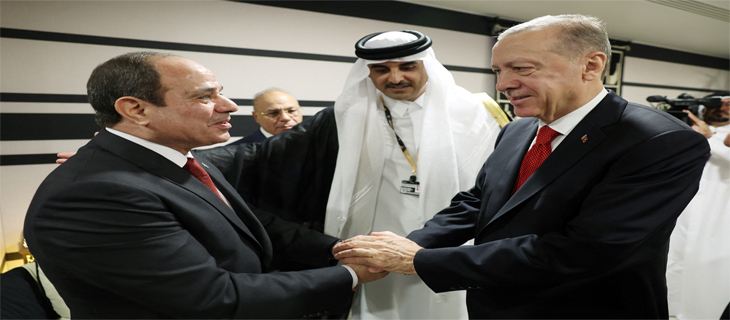
Erdogan, Sisi hold meeting in Qatar, reconciliation bolstered by Qatari financial incentives
Qatar is about to provide a generous aid package to Turkey’s flagging economy
Egyptian officials: 3 demands for rapprochement with Turkey in ongoing talks
The Turkish want to proceed quickly, and we are open, but the speed issue is different for us"
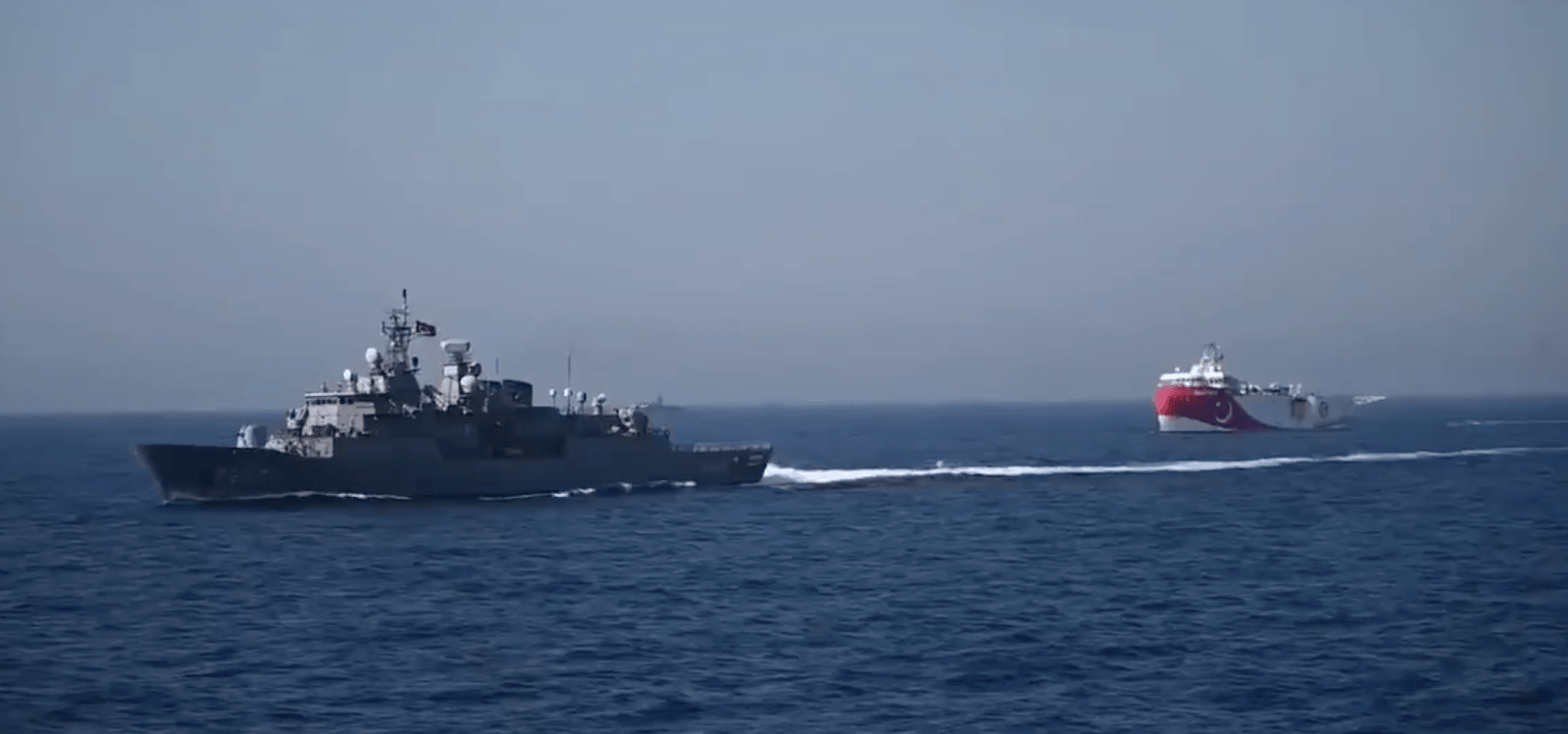
Trimming Turkey’s wings: Ankara and Cairo fight for influence in Africa and East Med
Turkey has emerged as the primary antagonist in areas where Egypt has been trying to make its mark
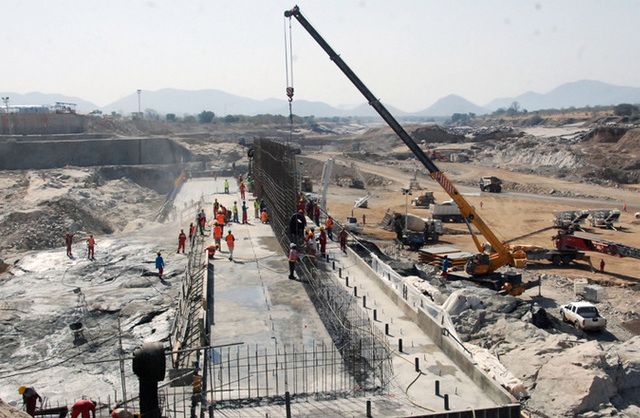
Egypt courts Sudan as time runs out in Ethiopia dam dispute
The clock is ticking in a long-running dispute over Ethiopia’s plans to build a mega-dam
Your support is the only way to ensure independent, progressive journalism survives.
You have a right to access accurate information, be stimulated by innovative and nuanced reporting, and be moved by compelling storytelling. Subscribe now to become part of the growing community of members who help us maintain our editorial independence.
Join us