
Cabinet announces higher wages for govt workers, starting 2014

The minimum wage for government workers would be raised to LE1,200 as of January 2014, the Cabinet announced late Wednesday.
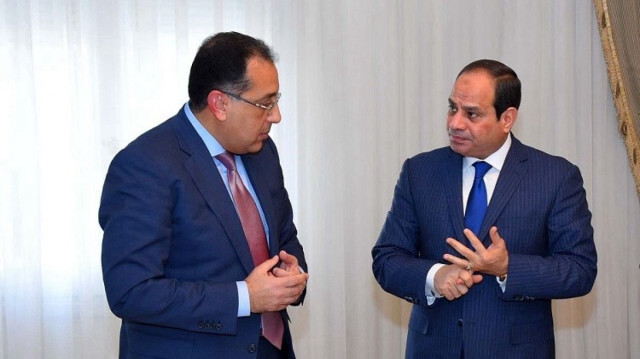
Prime Minister Hazem al-Beblawi and Minister of Higher Education Hossam Eissa — who is also a member of the ministerial committee for social justice — held a news conference to make the announcement. The decision came to meet one of the revolution’s basic demands of social justice, they claimed.
The minimum wage boost would be implemented in the governmental sector only, Beblawi clarified, adding that a decision had yet to be taken regarding raising wages in the private sector.
"The decision to implement minimum wage in the private sector will be determined by the National Council of Wages, whose members decided that further talks need to be initiated before a final decision is reached," the PM explained.
The council is made up of businessmen, workers and government representatives, and business owners and workers are currently negotiating the issue, Eissa said.
"A decision shall be taken next week," he added.
Critics expressed mounting fears that announcing a higher minimum wage without finding the proper sources to finance it could lead to a rise in inflation.
Reiterating those fears, Eissa stressed that the decision was a reaction to pressures from the public on the government.
"We were accused of being [reluctant to take firm decisions], so we decided to announce the minimum wage," he said, adding that the government has no plans yet on how it would finance the move. He added that committees would be formed to find funds from within the government budget to support the decision.
"If we do not do this, inflation will rise and the minimum wage will be meaningless. That's why we decided to push the implementation to early 2014, so that we have the time to investigate new sources to fund the minimum wages," Eissa added.
Economist and journalist Wael Gamal worried that the move could "initiate the battle towards social justice, not end it.”
In an article he published on his blog, Gamal said that the government has two solutions to afford paying for the minimum wage. One one hand, the decision could open the door for austerity measures, in which the state would cut spending on public services in health and education sectors, he cautioned.
The other option would be to restructure the taxation system and the distribution of wealth, so that the rich bear the higher burden in financing the budget, Gamal recommended. The government should also expand its investments to create more job opportunities and fight monopoly in the private sector, he asserted.
"[Implementing minimum wage] is a victory imposed by the struggles of the working class in Egypt over the past ten years, and it will never be a true victory till the pressure created by [those workers] continue. Welcome to the new struggles," he concluded.

أخبار ذات صلة
Sources on Cabinet reshuffle: Likely to affect supply, electricity, finance, foreign ministers
Mada Masr asked a number of politicians and public figures why a new government is being formed now.
Govt says it’s revising expenditure on hosting ‘guests’ as anti-migration sentiment rises
Last week, government officials revising policy on migration into Egypt took stock of the number of “guests” that currently reside in the country and estimated their impact on annual state…

Daily COVID-19 roundup: June 25
Concern remains over the feasibility of the 25 percent occupancy limit for reopened businesses
Daily COVID-19 roundup: May 17
As of Thursday night, 70 nurses had contracted COVID-19, and seven in total had died.
Your support is the only way to ensure independent, progressive journalism survives.
You have a right to access accurate information, be stimulated by innovative and nuanced reporting, and be moved by compelling storytelling. Subscribe now to become part of the growing community of members who help us maintain our editorial independence.
Join us