
As BRICS extends Egypt invitation to join economic bloc, what does Cairo stand to gain?

Egypt was among six countries that gained approval on Thursday to join the BRICS group of world economies, said the group in a closing declaration from its summit in Johannesburg.
During the annual BRICS summit which started on Tuesday, member states Brazil, Russia, India, China and South Africa also agreed that Iran, Saudi Arabia, Argentina, Ethiopia and the UAE will be invited alongside Egypt to become full members of the economic group beginning January 2024.
The approval comes as both Beijing and Moscow — the latter economically ostracized by sanctions in the wake of its 2022 invasion of Ukraine — have pushed for an expansion of BRICS to forge stronger financial cooperation between Global South nations in order to act as a counterbalance to Western economic dominance.
Egypt’s formal application to the group was announced in June by the Russian ambassador to Cairo in comments to Russian state media. In comments to Russian agency TASS this week, Mohamed al-Orabi, the head of Egypt's Council for Foreign Affairs and a former foreign minister, also stated that Egypt was “counting on Russia's support” in its suit to join the group.
Commenting on the invitation, the office of President Abdel Fattah al-Sisi said in a statement that Egypt looks forward to cooperating with BRICS member states “toward strengthening economic cooperation among us and raising the voice of the Global South with regard to the various issues and development challenges we encounter in order to promote the developing countries' rights and interests.”
To probe what Egypt stands to gain from its inclusion in BRICS, Mada Masr spoke to two economic experts, one an analyst from the Egyptian Exchange who spoke on the condition of anonymity, and Rashad Abdo, a professor of economics, investment, and international finance and the head of the Egyptian Center for Economic Studies.
Membership in BRICS, whose nations account for about 30 percent of global gross domestic profit, 43 percent of its population, and produce over a third of its grains, could help mitigate expenses around imports, said the EGX analyst.
Egypt currently imports large volumes of grains, meat, cars, electronic devices, equipment, machinery and spare parts particularly from Brazil and India, as well as from the other BRICS countries.
But a high import bill in comparison to meager exports has exacerbated the economic crisis brought about in Egypt in the wake of Russia’s invasion of Ukraine. Amid the shock to the global economy, emerging market investors pulled over $22 million from Egypt’s debt market, prompting a dollar shortage exacerbated by successive interest hikes by the US Federal Reserve.
“The foreign currency shortage makes it difficult for Egypt to meet its import needs,” said the analyst, noting that direct import relationships with BRICS nations could in theory help Egypt evade the need for dollar liquidity to lubricate imports. “With our current dependence on the dollar, and with its interest rate rising, we're currently stuck in a loop.”
Dollar hegemony was a key talking point at this year’s BRICS, with members discussing moving mutual trade exchange away from the dollar, while Brazilian President Luiz Inacio Lula da Silva supported a potential move toward a unified currency. South Africa, however, said that a unified currency was not on the 2023 BRICS summit agenda.
Regardless, the inclusion of oil-producing nations in BRICS, such as new invitees the UAE, Saudi Arabia and Iran, said Abdo, will support the bloc in challenging the dominance of the dollar as a global reserve currency, which is supported by global oil trade taking place in the US currency.
And for Egypt, Abdo continued, moving away from trade exchange in dollars could help support economic sovereignty. “We won’t be dependent on dollars and America won’t control us, neither with dollars nor with the International Monetary Fund.”
Cairo has already worked on building trade relationships that would bypass the need for dollars with BRICS members India and Russia this year.
Russia’s central bank added the Egyptian pound to its list of exchange currencies in January, allowing for direct trade exchange between the pound and the ruble, cutting out the dollar as an intermediary.
“The trade exchange [agreement which allows for direct exchange between the ruble and the Egyptian pound] with Russia means we’ll be trading with the local currency, and that could make a huge difference,” said the EGX source.
Meanwhile, a Cairo-New Delhi credit line worth millions of dollars was mulled to facilitate the exchange such as fertilizers and gas, said unnamed sources speaking to Reuters in June, with Egypt’s supply minister later confirming that while no credit line has been opened, discussions are ongoing about facilitating imports using currencies other than the dollar.
As well as mitigating the import bill, Egypt’s BRICS membership could also help create more opportunities to attract infrastructure funding with friendly member states, said the EGX analyst, adding that “it would enhance trade exchange between them.”
“Since Egypt already imports a huge percentage of grains from India, for example” the source added, “India could open up a factory branch in Egypt.”
Egypt had already gained admission to the BRICS New Development Bank, a development which, according to Finance Minister Mohamed Maiet, should open up promising prospects for Egypt to make partnerships with member states to meet its financial needs, especially through infrastructure projects.
“If we join BRICS [as a full member ]and are able to gain new investment relationships, America will also want to give us dollars to support projects in Egypt and give us funding and any improvement in dollar funding from abroad will attract more investors since whoever puts in their money will be able to take it back again later.”
But joining BRICS is not a panacea for Egypt’s economic woes. While the step could mitigate the import bill, it would not necessarily correct Egypt’s trade deficit.
Egypt’s inclusion in the BRICS will not “lead to a final solution to the dollar crisis,” said Ali Eissa, the head of the Egyptian Businessmen Association head, in comments to CNN Arabic. Cairo would still need to increase its incoming foreign exchange resources through exports, tourism, and foreign direct investment, Eissa added.
The bloc’s annual summit closed Thursday with a declaration of its ongoing commitment to “inclusive multilateralism” and improved representation for emerging markets economies and developing countries in global organizations.
While invitations were extended to the six new states, 14 other formal applicants, including Algeria, Palestine, Bahrain and Kuwait did not gain admission this year.
أخبار ذات صلة
Egypt officially withdraws from UN global grain agreement
The move is to preserve scarce foreign currency resources, said the supply minister
Devaluation drama and hot money’s return: What happened with the pound’s historic plummet?
'As long as there is more demand than supply, the price of the pound will continue to decrease.'
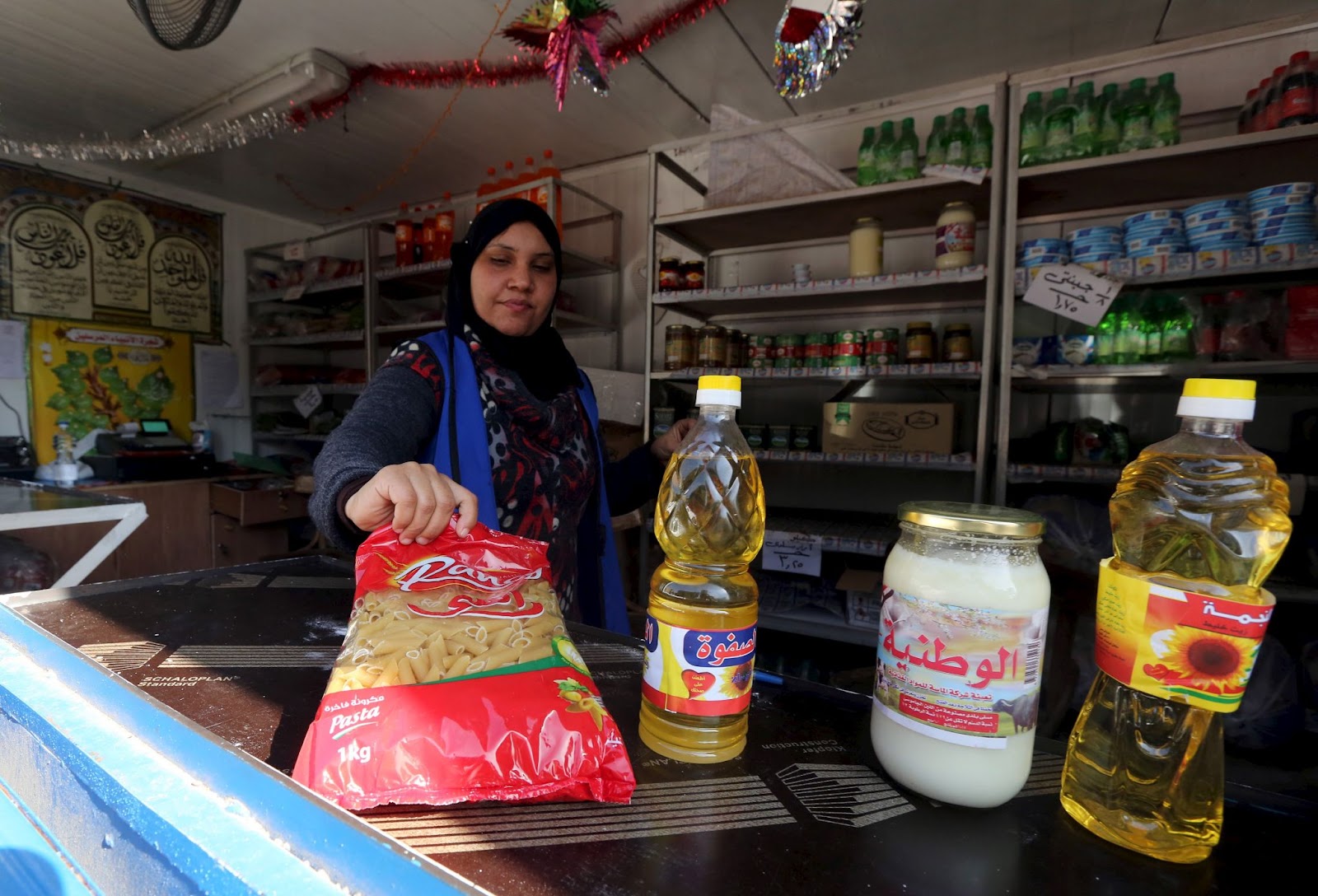
As households face soaring inflation, govt opens rare window for new sign-ups to food subsidy system
A series of shocks to the economy has compelled the state to launch successive emergency programs
Why is Egypt not on the IMF’s December public agenda?
Measures taken by Egypt in recent weeks have not been enough to push the deal across the finish line
Your support is the only way to ensure independent, progressive journalism survives.
You have a right to access accurate information, be stimulated by innovative and nuanced reporting, and be moved by compelling storytelling. Subscribe now to become part of the growing community of members who help us maintain our editorial independence.
Join us