
Analysts on the recognition of Palestinian statehood: A small step in the struggle for Palestinian liberation
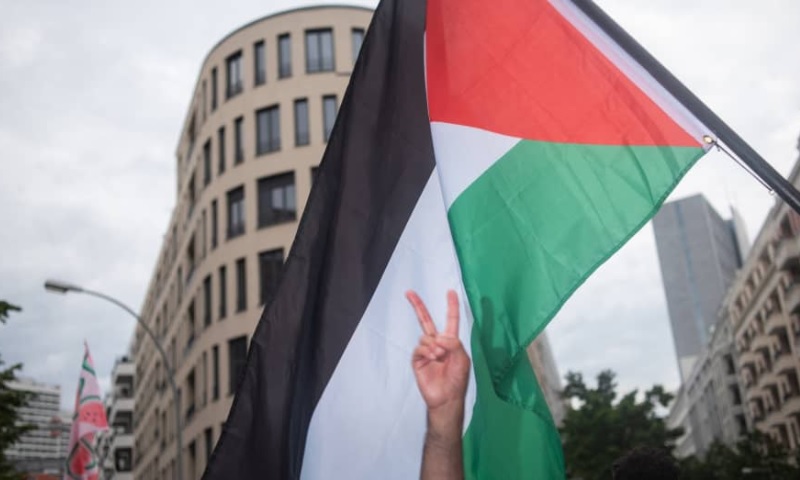
Three European countries, Spain, Ireland and Norway, officially announced their recognition of the Palestinian state on Tuesday.
The step comes as European officials increasingly express willingness, eight months into Israel’s aggression on the Gaza Strip, to challenge Israel politically.
Following the International Court of Justice’s order for Israel to halt its military campaign on Rafah, Gaza’s southernmost city, a meeting of the European Union’s Foreign Affairs Council this week saw member states say the court order should be upheld and that they will consider consequences if it is not.
And, speaking in the wake of Sunday’s deadly airstrikes on tents of displaced civilians in Rafah, Irish Foreign Minister Micheál Martin said that the meeting had seen discussion of potential sanctions on Israel “if it fails to comply with international law.”
Spain, Ireland and Norway made their recognition of Palestine official on Tuesday after saying last week that they will independently recognize Palestinian statehood given that a two-state solution with Israel is important for “lasting peace.” In response, Israel recalled its ambassadors from the countries.
For Ireland, with a strong history of support for resistance to imperialism, and Norway, with a background hosting the clandestine meetings that ultimately developed into the Oslo Accords, the step is a new development in their existing role in Palestinian diplomacy.
But to what end? To unpack whether recognition of Palestine’s statehood will mean greater support for Hamas and whether a two-state solution is a feasible or desirable route forward, Mada Masr spoke with three analysts specializing in Palestine’s international relationships: Mouin Rabbani, a Dutch-Palestinian analyst specializing in the Arab-Israeli conflict and Palestinian affairs; Rami Dajani, director of the Israel and Palestine department at the International Crisis Group; and Amr Shobaky, a specialist in Arab-European relations at the Ahram Center for Political and Strategic Studies.
Question 1: Although Norway, Spain and Ireland maintain a relationship with Hamas, the European Union does not. Does the recognition of Palestinian statehood represent the potential for greater support for Hamas in the future?
Mouin Rabbani: I don’t see this, at least if you look at the motivations of these governments, it’s certainly not intended to give legitimacy of any sort to Hamas. But having said that, if you look at virtually any other colonial struggle, the rights of the colonized begin to be taken seriously when they demonstrate themselves to be effective in resisting their colonial masters, whether it is through mass non-violence, non-cooperation, armed struggle or whatever.
So I think it is fair to say that the recognition of Palestinian statehood, while intended to strengthen the Palestinian Authority, will in practice be seen as one of the achievements of Hamas and its success at putting the Palestine question and this crisis front and center on the international agenda.
So, yes and no. On the one hand, if you look at the statements made by these three governments, they make it very clear that their purpose is to, say, promote the official agenda of the negotiated two-state settlement and, although I don't think they said this explicitly, it is also intended to empower an increasingly powerless Palestinian Authority in this context.
But, I think what it does in practice is that many Palestinians will see it, and rightfully so in my view, as the fruits of the resistance agenda. Were it not for what Palestinians have done in the past year, putting the Palestine question front and center on the international agenda, none of this would be happening. And Hamas, of course, is a main player in that. So, while I think it, in a sense, empowers that agenda quite clearly, it is not intended that way.
Rami Dajani: Not at all actually. I think it is clear from the statements of the European countries, Norway, Spain and Ireland, that this was in no way an endorsement or expression of support for Hamas’ policies.
In fact, in my assessment, it is actually the opposite. I think it goes to reinforcing the long held position of European countries in support of a “legitimate,” let’s call it this way, framework of Palestinian politics that goes through the Palestinian Authority and the Palestinian Liberation Organization.
Norway in particular has a long association with the entire kind of framework of the peace process, the Oslo Accords, and the creation of a Palestinian Authority. You know, a lot of Europeans, many in the European system, believe that there was a need to kind of reinforce the legitimacy of the Palestinian institutions.
And I think that, in a way, the recognition of a Palestinian state comes as a counter move to Hamas’ growing influence and power within Palestinian politics, not the other way around — it is not a reinforcement of it, but rather a way to reinforce the official Palestinian institutions and assert that they remain the focal point of international diplomacy in the future.
Amr Shobaky: No, because the Palestinian state, like any other, in my opinion, is the only entity capable of dismantling Hamas’ military wing, not the Israeli Occupation forces, because one of the conditions of establishing a state will be for Hamas to turn into a political party, a political project, rather than the current military organization’s presence due to the Occupation.
It is true that Hamas will not disappear. Even [High Representative of the European Union for Foreign Affairs and Security Policy, Josep] Borrell, like we say, “people from the west,” say that [Hamas] is an idea or an ideology.
So Hamas, as a political project, will prevail in my opinion, and, of course, armed resistance was one of the essential factors in reaching Palestinian statehood. We can say that armed work and the forms of armed resistance, like in all prior cases of liberation movements, will be one of the reasons behind reaching a Palestinian state. However, Hamas’ role in this Palestinian state will certainly change, and there will be no need, presumably, for the presence of an armed organization. Rather, it will transform into a political body that we agree and disagree with, and the institutions of a Palestinian state will monopolize the power and presumably live in peace, according to international agreements and guarantees, with Israel.
We understand that armed operations and the armed resistance was one of the pressure tools to reach this, however, it will not give any legitimacy to Hamas, on the contrary, it will contribute to transforming it into a political party, rather than maintaining the armed organization.
Question 2: Ireland, Spain and Norway said they will move forward with opening embassies in Ramallah as part of their move toward recognition. Given that the embassies will be in the West Bank, where the Palestinian Authority (PA) governs, is this move in support of the PA?
Mouin Rabbani: Not necessarily, I think it’s quite clear that the Palestine question has been completely marginalized during this past decade, and none of these states were even considering recognizing Palestine before this year. Clearly, what has changed is the situation on the ground, and that’s a situation where the impact of the Palestinian Authority has been absolutely zero.
One of the important motivations for these countries in the past has been to empower the Palestinian Authority, but if that was their intention, this is not going to achieve that result. I think anyone who objectively considers the step to officially recognize Palestine will see that it's a response to two things: first of all, the crisis that has erupted since October and the realization that Palestinians are not just going to disappear; and secondly, it is a response to Israel's genocidal onslaught and the explicit agenda of its government that they will never accept any political resolution that accommodates Palestinian rights.
So again, while I think strengthening the Palestinian Authority and its agenda of a negotiated two-state resolution was part of it, I don’t see that happening at all.
Rami Dajani: I think in the long run, more recognition by important countries in the international system will empower Palestine’s position and its claim for statehood and will give it more weight in the international system, in the UN and in other forums. Does it do anything immediately? I am not so sure that it has a direct impact on the Palestinian Authority itself, as it exists right now. There is a symbolic and political importance to these moves, but they don’t necessarily translate into concrete improvements for the Palestinian Authority, or they don’t necessarily strengthen it at the moment. But, let me repeat what I said: in the longer term, the cumulative effect will empower the Palestinian position in the international system.
Amr Shobaky: It is a political win, without a doubt, but I think it is a win for the Palestinian cause in the first place because what we have is a people’s issue — statehood is a legitimate right.
The fact that the recognition is in coordination with the United Nations’ decisions, however, will pose challenges for the Palestinian Authority. It will challenge the PA itself, which already has governance issues, economic crises, corruption issues and poor performance problems. However, it will force it into reform. The PA needs to pump new blood into its leadership and needs to be more transparent and competent because governing the state is important, even if it is not an easy task or easy to reach.
Therefore, I am establishing a difference: it is a political win for the Palestinian issue and the legitimate right of the Palestinian people to establish a state. Having issues with the Palestinian Authority does not deny Palestinians’ right to a state, because issues with the PA can be overcome, it can be reformed, or it needs to be reformed — a substantial reform process of the authority’s institutions.
Question 3: Does it put pressure on Israel to agree to a two-state solution on the 1967 borders? And is that a viable solution for Palestinian liberation?
Mouin Rabbani: My suspicion is that these moves, to the extent that they’re intended to promote a two-state settlement, are too little too late.
The right time to have taken such a measure would have been during the 1990’s, for example, once it became clear that Israel had absolutely no intention of withdrawing to the 1967 boundaries and cooperating with any diplomatic initiative to establish a Palestinian state.
This would have made sense at a time when Israel was using the Oslo process to expand its settlement program, at a time when most Palestinians, at least in the occupied territories, were still in support of a diplomatic process, and so on.
But to do this in 2024 — it is symbolically important, politically significant, but it’s not going to change anything on the ground. You can’t have a two-state settlement just by recognizing Palestinian statehood; you also need to take active measures to end the occupation, for example, by punishing Israel for genocide. At the pace things are going, that would take a few more decades till we get there, particularly since we are only talking about three states; add to them Sweden, that is four, out of — how many does the EU or the EEA have? — more than 30 states.
Rami Dajani: Not at the moment. In the short run, the Israeli reaction is going to be negative, it is going to, in a way, give more energy to the extreme right and will allow Prime Minister Benjamin Netenyahu to continue to develop that narrative of Israel being attacked by the rest of the world.
This happened right after the announcement of the possibility of the ICC arrest warrants, after the latest session at the ICJ ordered Israel to cease its offensive on Rafah, after the US government’s criticism of US policies in Gaza, particularly at Rafah, and after Egypt declared its position against the Israeli occupation of the Rafah crossing and the Philadelphi corridor.
So, all of the events that have been happening in succession, in the short run now, for the present, have kind of made Israeli politics, as well as much of Israeli society, become more entrenched. There is a hardening of their position as a reaction, because they see that they are under attack from the rest of the world.
However, in the long term, it will affect the way that Israelis look at the Palestinian issue. It won't happen now; it won’t happen in the next few weeks or months, but it will have an effect in the long term on the way that the Israeli political class, the political parties, think about a future resolution of the conflict on the basis of a two-state solution. I think it will give more credibility to the position that there has to be some kind of way to address the Palestinian problem with some form of two-state solution.
Historically, maybe two decades after the end of the last serious negotiations, the Israeli public and political spectrum kind of lost interest in the Palestinian issue. Most Israelis believe that you can just keep Gaza on the side, keep the status quo in the West Bank, keep building settlements and keep the Palestinian Authority as it is — that this is not a problem right now.
The Israeli system is still in a state of shock. They are trying to understand why this hasn’t worked and the natural reaction to that is more hard-line positions. They see recognition of a Palestinian state as negative, but I think that, in the long run, it will help move the Israeli political system back to the track of understanding that there needs to be a genuine political resolution with the Palestinians, ending the occupation.
This hasn’t happened yet and I don't think it will happen now, but I think that, over time, it will have that effect.
Amr Shobaky: It does put pressure on Israel. But it won’t necessarily lead to a two-state solution, because over the past eight months, Israel has completely rejected the idea of a two-state solution, saying that it will be in Hamas’ favor and that it will be a terrorist state. Even [Israeli Prime Minister Benjamin] Netanyahu announced more than once that he is against the Oslo Accords, the only path or treaty that was signed by Israel and the Palestinian Liberation Organization and could have reached a Palestinian state.
There are Security Council decisions that Israel did not respect and International Court of Justice decisions requiring it to halt military operations in Rafah, but a massacre of civilians was conducted yesterday. So, it represents a pressure point on Israel, this is certain, but it does not necessarily lead us to a Palestinian state due to the extremism of the Israeli government, which is now on the far right of the political spectrum.
أخبار ذات صلة

Hundreds of Gaza students demonstrate for right to study abroad
Hundreds of university students trapped in the besieged Gaza Strip gathered on Monday outside the Journalists Syndicate’s headquarters in western Gaza City…

In meeting with Board of Peace director-general, Hamas refuses UN disarmament plans until Israel commits to withdrawal
Hamas has refused to commit to the plans proposed by the United Nations for its disarmament, citing lack of advancement in Israel’s…

Israel agrees to limited reopening of Rafah border crossing — details pending
Israeli Prime Minister Benjamin Netanyahu’s office announced on Monday that it has agreed to a “limited reopening” of the Rafah border crossing…

Sisi touts ‘stabilization’ agenda at first Davos appearance in over 10 years
President Abdel Fattah al-Sisi advertised Egypt’s “stabilization” agenda in Davos on Wednesday, saying the country’s focus on steering away from regional conflicts…
Your support is the only way to ensure independent, progressive journalism survives.
You have a right to access accurate information, be stimulated by innovative and nuanced reporting, and be moved by compelling storytelling. Subscribe now to become part of the growing community of members who help us maintain our editorial independence.
Join us