
11 presidential advisors discharged by presidential decree including former Suez Canal head, retired military figures
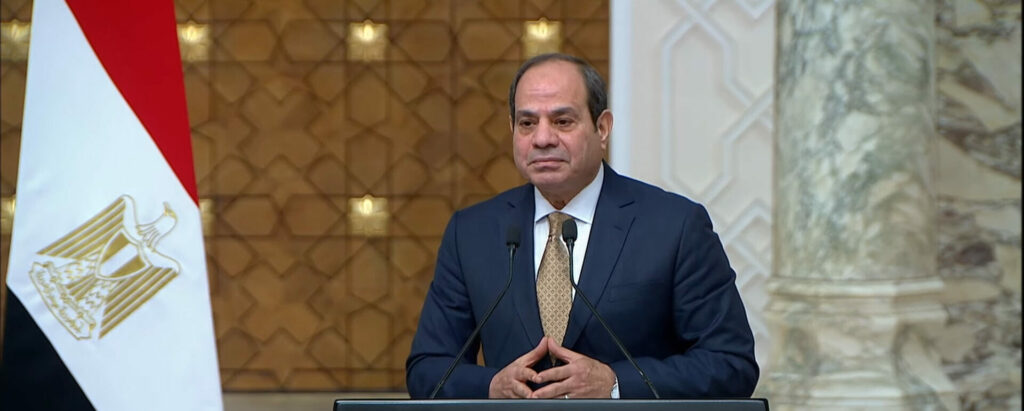
The tenure of eleven presidential advisors was ended by President Abdel Fattah al-Sisi in a decree effective August 1. Those dismissed include two former interior ministers and nine former senior military leaders with backgrounds spanning state and military regulatory, security and economic bodies.
The decree, the text of which did not disclose the reason for the decision, was the first of its kind since Sisi began to appoint former officials and retired military leaders to advisory posts after taking office in 2014.

The decree, of which Mada Masr obtained a copy, was ratified by the president on July 12 and includes former Interior Minister Major General Ahmed Gamal Eddin, who served as advisor to the president for security affairs and counterterrorism since November 2014. Gamal Eddin was appointed interior minister for three months during the Muslim Brotherhood's rule but was dismissed by ousted former President Mohamed Morsi following the Ettahidya events — clashes outside the presidential palace between supporters and opponents of Morsi. Gamal Eddin was later appointed as an advisor for internal security by interim president Adly Mansour in July 2013.
The decree also includes former Interior Minister Magdy Abdel Ghaffar, who served as the president’s advisor for security affairs and counterterrorism since June 2018 following his three-year tenure as interior minister.
The decree also removed former head of the Administrative Control Authority Mohamed Omar Wahby Heiba from his position as the president's advisor on anti-corruption — a position he had held since retiring from the authority in 2015. Heiba led the authority for three years starting 2012 during Morsi’s presidency.
Heiba’s successor as head of the Administrative Control Authority, Major General Mohamed Irfan, was also dismissed from his role as presidential advisor for digital transformation, a position he held since August 2018. Irfan was appointed by Sisi in March 2017 as the head of the Administrative Control Authority for a four-year term, originally set to end in April 2021. However, Sisi unexpectedly removed him after just one year, replacing him in August 2018 with another major general as acting head of the authority. The new appointment was for a renewable one-year term without the parliamentary approval required in the Constitution and the law on the dismissal of heads of regulatory bodies.
Former acting head of the Administrative Control Authority, Major General Hassan Abdel Shafy, was removed from a presidential advisory post he took up in August 2022. In his capacity as presidential advisor, Abdel Shafy chaired the State Land Recovery Committee, so a new head for the committee is anticipated.
Another official dismissed was Major General Mohsen Mahmoud Amin al-Selawy, who served as the president’s advisor for follow-up. Sisi appointed Selawy to the role on October 13, 2015, following his earlier role as an advisor to former Defense Minister Field Marshal Hussein Tantawi after the January 25 revolution. He previously served as secretary general of the Defense Ministry from 1997 to 2001.
The decree also ended the service of Major General Abdel Aziz Mohamed Seif Eddin al-Sayyed, former chair of the Arab Organization for Industrialization — a military industrial body. Sayyed had served as the president’s advisor for technological development since August 2018 after six years as head of the organization’s board.
Former chair of the Suez Canal Authority, Vice Admiral Mohab Mamish, was also among those dismissed. Mamish had been appointed to lead the authority in 2012 during Morsi’s rule, and held the position until Sisi named him his advisor for Suez Canal zone projects and seaports in August 2018.
In December 2012, Mamish made statements to Al-Masry Al-Youm in which he criticized a bill to establish the Suez Canal Authority Fund. “The establishment of the fund opens the door for foreign involvement in the canal’s management — a first in recent years. They would alter its system that generates record revenues and profits,” Mamish argued. “It makes no sense to change a successful system and switch to an entirely different one that permits foreigners to be on the authority’s board of directors.”
The comments were removed from the newspapers’ website the day following publication. In his remarks, Mamish had also stressed that the law was never going to pass, saying that changing the canal’s successful operating model and permitting foreign involvement would cause national panic, given what he described as “Egyptians’ emotional attachment” to the canal.
Also on the list of those removed from the presidency is Major General Mostafa Sherif Mahmoud Talaat Sabour. The decree only defined him as a presidential advisor, though national newspapers had reported his appointment as the head of the presidential office in May 2015. Media outlets later reported that Major General Ahmed Ali replaced Sabour as diwan head in late 2019.
The presidential decree also removed former Air Defense Forces Commander Lieutenant General Ali Fahmy from his position as military advisor to the president, a role he held since December 2020.
The decree also dismissed Lieutenant General Mohamed Hegazy Abdel Mawgoud Mounazea, the former Air Defense Forces commander who had served as a presidential advisor since 2023. Monazea was replaced by Major General Yasser al-Toudy, whom Sisi named as the new head of the Air Defense Forces in December 2023.
Since coming to office in June 2014, Sisi’s advisory appointments have varied between indefinite terms and one-year renewable terms. For most appointees from the military and police establishments, terms have been made open-ended.
Other presidential advisors with open-ended tenures include Fayza Abul Naga, who was appointed national security advisor in November 2014, and former Prime Minister Ibrahim Mehleb who has served as presidential assistant for national and strategic projects since September 2015. In light of the latest decree, both Abul Naga and Mehleb will remain in their positions until the president decides otherwise.
Fixed-term appointments, on the other hand, are set for one year, such as the recent ones for former Defense Minister General Mohamed Zaki as presidential assistant for defense affairs, former Chief of Staff Osama Askar as military advisor, Planning Minister Hala al-Saeed as economic advisor, and Major General Mohsen Abdel Nabi as media advisor, whose terms started on July 3, 2024.

أخبار ذات صلة
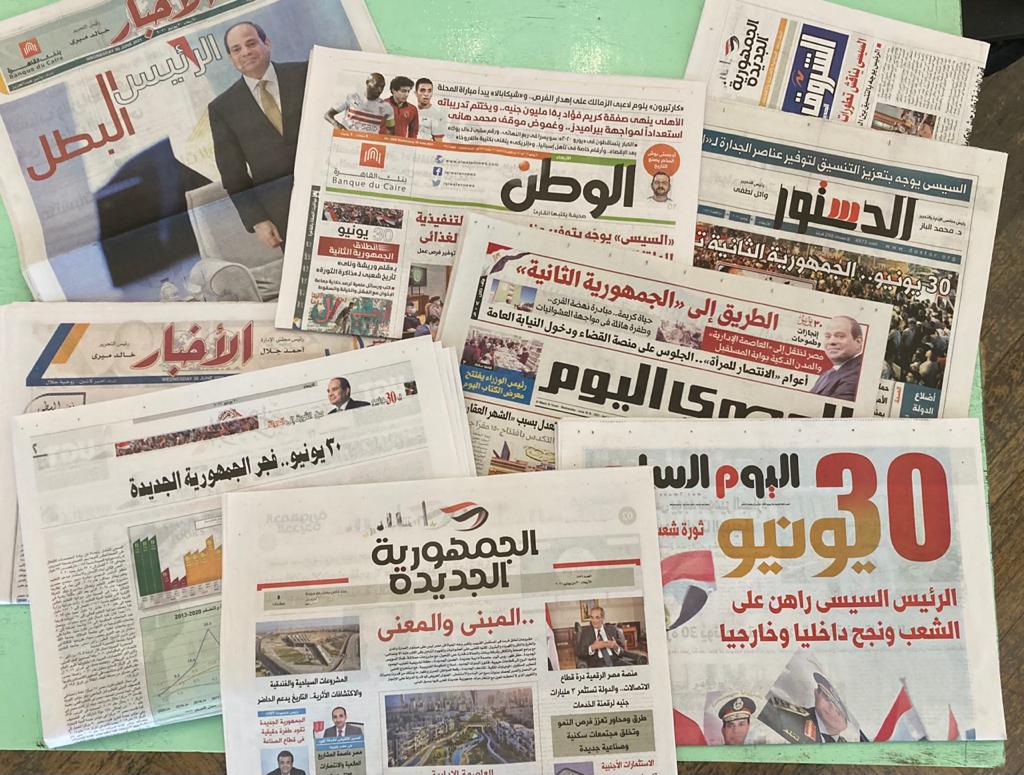
‘7 years of abundance’ — The unusual media campaign celebrating Sisi’s anniversary
Outlets were told to avoid negative news of any kind, even building collapses and train wrecks.
President’s eldest son, Mahmoud al-Sisi, sidelined from powerful intelligence position to diplomatic mission in Russia
The move seeks to alleviate growing tensions within the intelligence apparatus about his role
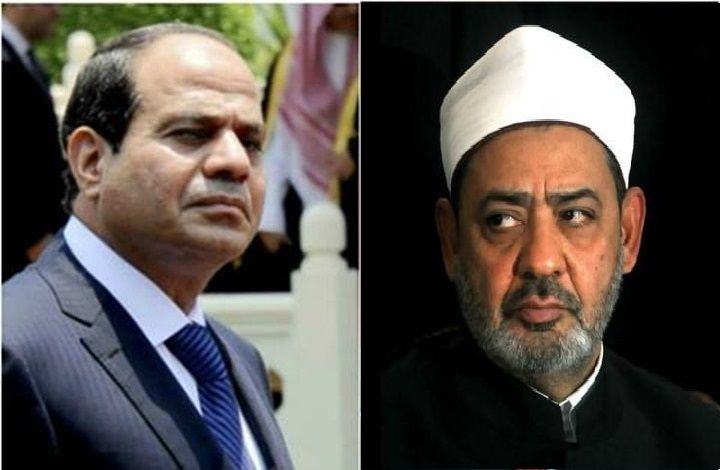
How Al-Azhar’s grand imam survived the constitutional amendments
A proposed constitutional article would have featured a less independent Al-Azhar
Parliament advances constitutional amendments by overwhelming majority, opposition speaks out
485 out of 596 lawmakers in Egypt's Parliament voted in favor of amending the Constitution
Your support is the only way to ensure independent, progressive journalism survives.
You have a right to access accurate information, be stimulated by innovative and nuanced reporting, and be moved by compelling storytelling. Subscribe now to become part of the growing community of members who help us maintain our editorial independence.
Join us