
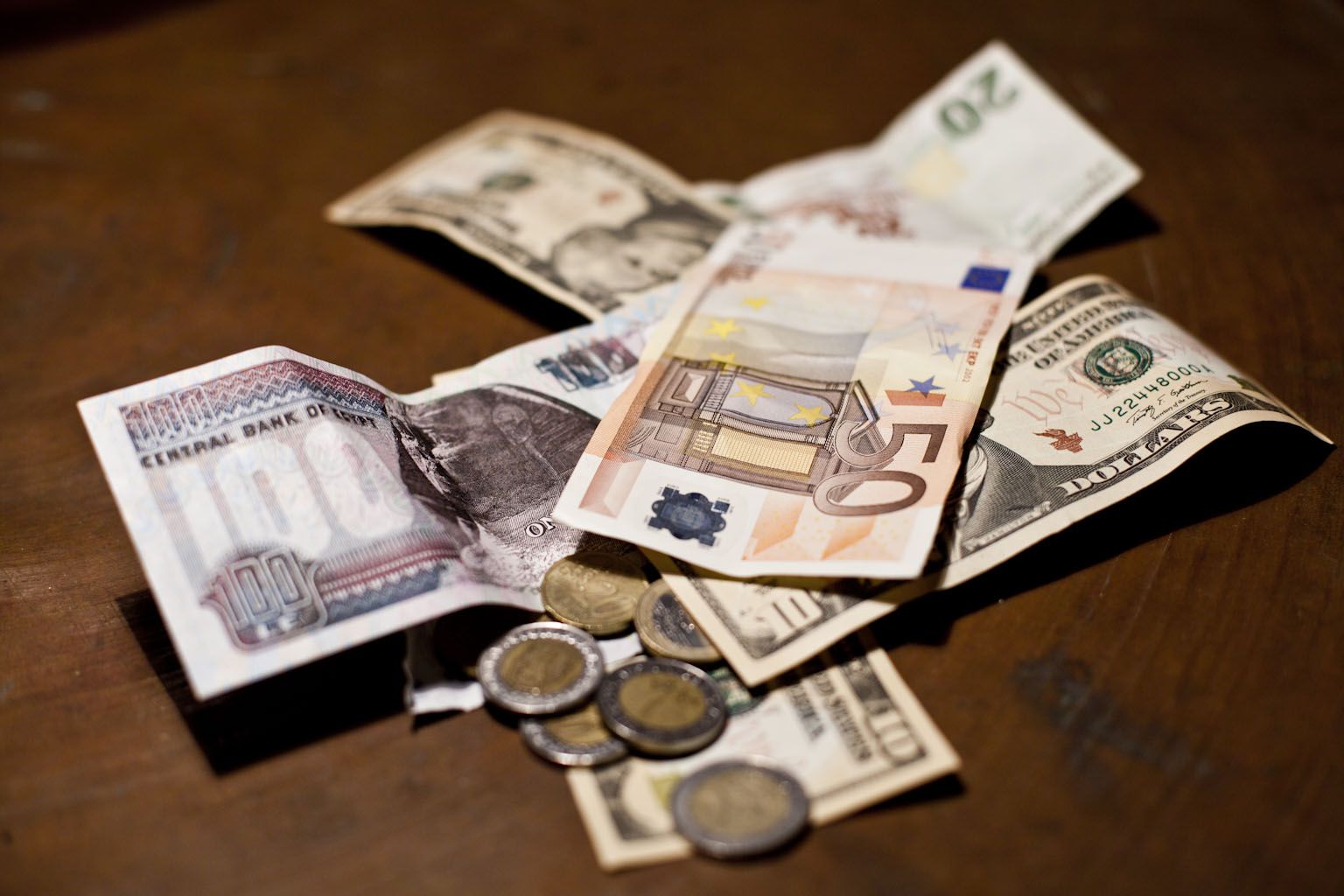
What’s the deal with the Russia-Egypt currency deal?
In the run-up to Russian President Vladimir Putin’s visit to Egypt, he told the state-owned newspaper Al-Ahram that the two countries are discussing ways to cut out the dollar and conduct bilateral trade in local currencies.
This commitment was reiterated by both Putin and his Egyptian counterpart Abdel Fattah al-Sisi during a visit to Egypt last week.
Naturally, people were left with questions. Here are answers to a few.
How will it work?
The initial stage of the plan is for Egypt to allow Russian tourists to pay for package holidays to Egypt in rubles rather than in dollars, says Mostafa Khalil, the chairman and managing director of Royal Manta Travel, one of the architects of the proposal.
In some ways, this is a return to past practices. Up until the early 2000s, prices for most Egyptian hotels were set in Egyptian pounds, and then translated into various global currencies depending on the market, explains Khalil. However, changes to the law under former Minister of Tourism Mamdouh al-Beltagy meant that companies working with foreign tourists started to set their prices in dollars or euros.
In effect, transactions between Egypt and the outside world are mediated by the dollar. A family walking into a travel agency in Moscow might pay for a trip to Sharm el-Sheikh in rubles, but how many rubles they pay will depend on the ruble-dollar exchange rate at the time.
This has had a big impact on countries outside of the euro or dollar zones, who see prices shoot up when their currency drops against the dollar. This happened to Russia in mid-2014 when the ruble started to collapse due to a double whammy of falling oil prices and Western sanctions. In 2014, the currency lost 45 percent of its value against the dollar, pushing Egypt’s dollar-denominated travel packages out of reach for budget travelers.
Under the new system, Russians will be able to pay Egyptian companies directly in rubles. Egyptian companies, in turn, will be able to deposit the rubles in their commercial bank accounts, and have them automatically converted to pounds at a rate determined by the Central Bank of Egypt (CBE).
The CBE will end up building reserves in rubles. Eventually, says Khalil, these reserves could be used to purchase Russian goods, like wheat or gas. Egypt is already a major consumer of Russian commodities, but currently pays for them in dollars.
What is the status of the plan?
“How long will this take? You cannot predict, especially in Russia and Egypt,” says Khalil.
At the moment, it’s more of an agreement in principal, with the political leadership of both countries apparently on board.
However, there are still a lot of details to finagle, most of which will have to be hammered out between the two countries’ central banks.
The most pressing question is how to set the exchange rate between the two currencies.
Khalil proposes setting the initial exchange rate based on the currencies’ respective values compared to the US dollar, and then allowing it to float depending on the fluctuations of the two currencies.
“This is our suggestion. We don’t know what the government is going to do,” he says.
Ideally, tourism operators would like to see the benchmark rate set at levels from about four months ago, Khalil says, before both the pound and the ruble declined to their current levels against the dollar.
Egypt and Russia will have some models to draw from in setting up this kind of currency swap. Russia has similar deals with China and former members of the Soviet bloc.
Egypt and Russia also have a precedent going back as far as 1948, when Egypt bartered its cotton for Russian grain. The two countries also agreed to a barter deal to settle their mutual debts in 1994.
What’s in it for Egypt?
The proposal originated among Egyptian businessmen, says Khalil, and has support from the Chamber of Tourism and the Tourism Authority.
“It is to preserve the influx of Russian tourists into the Egyptian market,” he explains.
According to government figures, Russia sends more visitors to Egypt than any other single country. In the Red Sea in particular, Russian visitors are critical for the industry’s fragile recovery, and the crash of the ruble has hit tourism companies hard.
“Obviously, the devaluation of the ruble did increase the cost of packages for Egypt, which is 100 percent based on the dollar,” says Karim al-Minabawy, president of Emeco Travel.
Although he does not have final figures for January or February, Minabawy expects to see a 30 to 40 percent decline in Russian visitors, translating to a nearly 20 percent drop in visitors to the Red Sea as a whole.
Cutting out the dollar is also a chance to stick it to the Americans, something the Egyptian government has seemed eager to do lately.
In Putin’s words, “This measure will open up new prospects for trade and investment cooperation between our countries, reducing its dependence on the current trends in the world markets.”
Will this really help tourism?
“Absolutely,” says Minabawy, as long as the pound-ruble rate is set at a level that ensures Russian money goes further in Egypt than it does at the moment.
Despite the intensifying conflict between militants and security forces in the Sinai peninsula this fall, visitor numbers to the Red Sea were increasing until the ruble began its precipitous fall.
What’s in it for Russia?
In addition to cheap holidays? Cutting the dollar out of Egypt-Russia trade fits in with Putin’s larger ambitions.
Russia is one of a number of countries — particularly the rising economic heavyweights of Brazil, India and China — trying to challenge the status of the US dollar as the global reserve currency.
This has become particularly urgent for Russia since it was slapped with US and European Union sanctions over its role in the Ukraine conflict.
Russia already trades in local currencies with members of the former Soviet bloc, and in late December it signed a currency swap deal with China worth more than US$24 billion.
Cutting out the dollar could also establish Egypt as a captive market for Russian goods, since it would have a hard time spending rubles elsewhere. However, given that the balance of trade between the two countries overwhelmingly favors Russia, this is not likely to make a huge difference.
Can I change my pounds into rubles?
In the near future, no. An official exchange rate has not yet been set, and once it is, it will likely be limited to a group of commercial banks selected by the CBE.
Whether you would want to is a more interesting question. Short answer: Nobody can predict the future, but unless you’re in the market for a few million tons of wheat, probably not.

Isabel Esterman
Isabel Esterman holds Master's degrees in Journalism and Asian Studies from the University of California, Berkeley. Before somehow winding up in Egypt in 2011, she worked and studied in Indonesia,…
تقارير ذات صلة
Amid fears sanctions will impact Egyptian-Russian cooperation, Sisi, Putin vow to find ‘solution’
Cairo seeks to avoid getting left out in the cold as global geopolitical relations shift
Amid diplomatic tug-of-war, Cairo operations room works to calibrate Egypt’s position on Russia-Ukraine conflict
Egypt has set up an operations room to follow the developing situation in Ukraine, where fighting continued on Wednesday for the seventh day since Russia launched a multi-front offensive on…
President’s eldest son, Mahmoud al-Sisi, sidelined from powerful intelligence position to diplomatic mission in Russia
The move seeks to alleviate growing tensions within the intelligence apparatus about his role
Your support is the only way to ensure independent, progressive journalism survives.
You have a right to access accurate information, be stimulated by innovative and nuanced reporting, and be moved by compelling storytelling. Subscribe now to become part of the growing community of members who help us maintain our editorial independence.
Join us