
The state and subsidized bread: Stuck between a strained budget and public anger
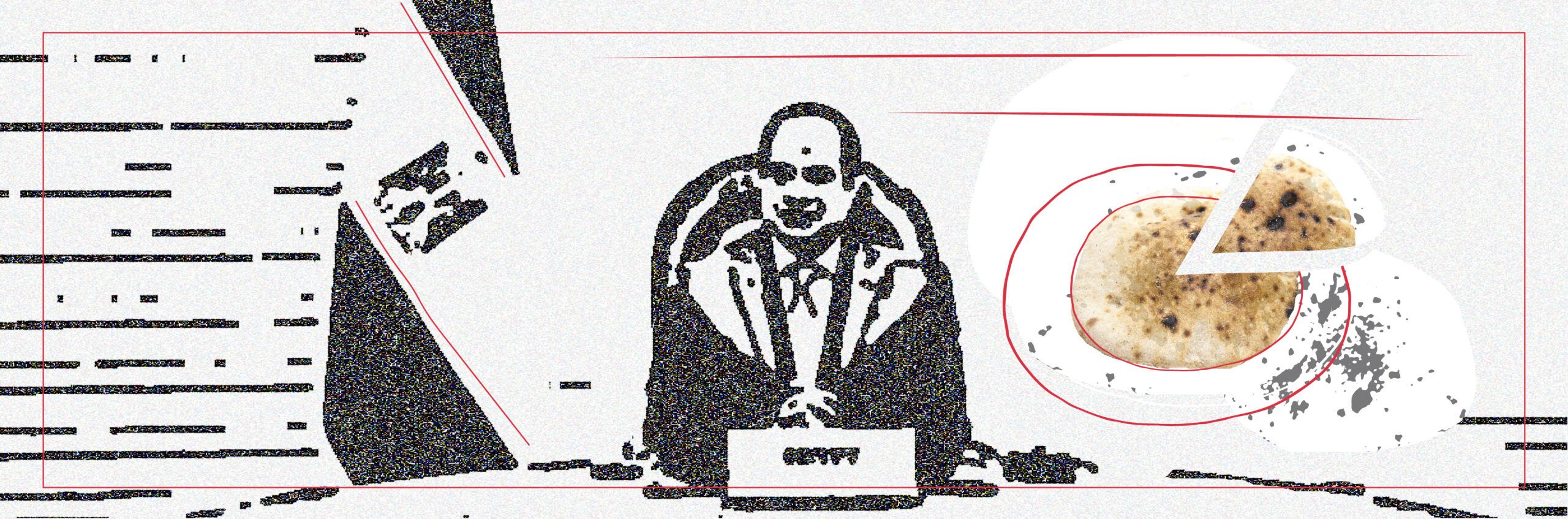
In December 2016, President Abdel Fattah al-Sisi spoke in no uncertain terms about the importance of maintaining bread subsidies in Egypt. “Bread has not been touched and never will be,” Sisi said. “The state is adamant on keeping its price the same.”
Five years later, the president is telling a different story. In August, he emphatically declared that bread subsidies should be reduced. “It’s time to raise the price of the five-piaster loaf. It doesn’t make sense for 20 loaves to cost the same as a cigarette,” Sisi said.
The turnaround in policy can be attributed to economic pressures that have come alongside a series of austerity measures put in place as part of an economic reform plan enacted several years ago, in part to secure a US$12 billion loan from the International Monetary Fund. These pressures were exacerbated when a inflationary wave that has gripped the world over the past several months triggered an unexpected rise in wheat prices, placing massive strains on the Egyptian government’s cornerstone bread subsidy program.
Yet, bread subsidies remain a highly sensitive political issue in Egypt. Sisi acknowledged as much when he announced his intention to raise prices, claiming he went against advice that it would be better to let the prime minister or supply minister shoulder the burden. “I will bear the responsibility before my people and my country,” Sisi said.
Various government sources close to decision-making circles told Mada Masr over the past several months that security agencies have advised Sisi to put off the decision to raise bread prices for fear it might trigger an unpredictable wave of social unrest.
Caught between economic pressures that have severely strained Egypt’s budget, and the potential for widespread public anger over any increase in bread prices, the government appears to be tight-lipped about any potential changes to the bread subsidy program for the time being.
More than 70 million Egyptians rely on bread subsidies, with an allotment of five loaves per person per day for 5 piasters a loaf. The total annual cost of the program in the fiscal year 2021/2022 budget comes to LE51 billion, with the government expecting to import 5.11 million tons of wheat at an average price of US$255 per ton.
However, that plan was placed under pressure, when, in late October, a global inflationary wave drove the price of wheat imported from Russia, Romania and Ukraine upwards of between US$328 and US$360 per ton. According to Sara Saada, a macroeconomic analyst, every US$10 increase in the price of a ton of wheat leads to an increase of LE2.5 billion to Egypt’s budget.
As a result of the increased prices, the General Authority for Supply Commodities canceled tenders to purchase wheat several times over the past few months. Yet as supplies dwindled, it was forced to purchase wheat at a price exceeding US$370 per ton in November.
One of the tools the government is considering to overcome high wheat prices is the use of hedging contracts, which act as insurance against prices rising above a certain level. While the government has deployed this strategy in the past to protect against rising oil prices, resorting to hedging contracts can be risky, Saada says. If the commodity continues to increase in price, hedging makes sense, but it can also be an unnecessary additional expense if predictions are wrong and prices fall.
The crisis in rising wheat prices is just the latest in a series of economic pressures that began with the adoption of austerity measures several years ago. Throughout this period, the government has explored different avenues to reduce bread subsidy expenditures.
According to two well informed sources at the Supply Ministry who spoke to Mada Masr separately at various times over the past few months, Supply Minister Ali al-Moselhi has been considering two approaches to restructure bread subsidies since he was appointed to the Cabinet position in February 2017. The first approach, which is preferred by the minister, according to the first source, involves reducing the daily allotment of subsidized bread from five loaves per person per day to three, while raising the price per loaf from 5 piasters to 20.
The “bread points” system, which allows people to forego subsidized loaves in exchange for cash support to be used on other subsidized goods, would also be modified as part of this approach. Recipients would receive 20 piasters per loaf they forego, up from 10 piasters, as cash support credit for other subsidized commodities.
In July 2017, the Supply Ministry released a study recommending the government reduce the per capita quota of subsidized bread from five loaves to three in some areas and to four loaves in other areas without raising the price. Yet, the move sparked protests in several governorates, and the proposal to be shelved.
The head of the bakeries division at the Cairo Chamber of Commerce, Attiya Hammad, says that reducing the daily per capita allotment of subsidized bread to anything less than five loaves would render the bread points system obsolete. “Everyone would just maximize their bread portion and nobody would be able to [use their points] to buy any other [subsidized] goods,” Hammad says.
The second approach, according to the same source, is to float the price of bread sold at bakeries while providing eligible subsidy recipients an amount in cash that is close to the market value of bread. The first source believes this approach solves many complexities the government faces with the bread subsidy system, such as charging diesel-powered bakeries at a different rate than gas-powered ones.
The Supply Ministry put forward a variation of this approach in early 2019, under a program called “conditional cash subsidies.” Under the program, the price of subsidized bread would remain at 5 piasters per loaf, but the LE90 per person subsidy that the government currently pays out to bakeries (calculated as 150 loaves per person per month at a price of 60 piasters per loaf) is added instead to each individual’s subsidy card, which currently also holds LE50 for subsidized goods.
In January 2020, Prime Minister Mostafa Madbuly announced that the government was working with several government agencies to implement the conditional cash subsidies program and formulate a proposed timeline, which would be submitted to the president for approval. While no official change to the price has been made, the weight of a subsidized loaf has been decreased gradually since 2013 from 130 grams, all the way down to 90 grams as of August 2020. No move was made on the previously considered proposals up until Sisi’s announcement in August of his intention to raise the price of subsidized bread.

Following Sisi’s announcement in August, the Supply Ministry submitted a study to the president that included several proposals to support the implementation of the previous two approaches, according to the second source at the ministry. One of the proposals involves raising the price of subsidized bread in bakeries as well as the bread points system value to 15 piasters per loaf. The other proposal would see the sale price raised to more than 20 piasters, with the bread points value of each loaf calculated as a percentage of the new price.
With various options to consider, the final decision is now in the hands of the president, the supply minister made clear in late October.
Several officials and other government sources who spoke to Mada Masr support replacing in-kind subsidies with cash transfers. “The government should pay people money, which they can use to buy whatever they like — bread, rice, pasta, any goods,” says Hammad.
The approach is also supported by MP Yasser Omar, a member of the pro-Sisi Nation’s Future Party and the deputy chair of the House Planning and Budget Committee. “Any commodity that has two prices [a market rate and a subsidized rate] guarantees graft,” Omar says, pointing to the practice of some bakery owners who produce loaves weighing just 70 grams, below the official 90-gram requirement, and profit from the difference.
Omar says these kinds of practices are nearly impossible to root out given an inadequate number of supply inspectors. By shifting to cash subsidies, the MP believes that the government can both reduce fraud and end the misuse of subsidized bread as animal and bird feed while shaving billions off the state budget at the same time.
The first Supply Ministry source also views cash transfers as the best solution, but they believe the policy will not be implemented due to the security risks it poses in the potential for public backlash. If the price of bread is determined by market forces, he believes the quality would improve and demand would increase, leading to shortages which would further drive up prices and lead to a crisis.
MP Magdy Malak says he was informed by officials that any decisions regarding bread subsidies have indeed been postponed, while a government source close to decision-making circles says the postponement was over security concerns. “Security assessments of the public reaction to the president’s mention of an increase in the price of bread did not encourage moving forward with implementation,” the security source said.
The source, who spoke on condition of anonymity, says that security agencies are trying to carefully assess the reaction in the street to any increase in bread prices for fear of a similar scenario to the small but significant anti-government demonstrations in September 2019 following calls by former army contractor and actor Mohamed Ali for Sisi’s overthrow. A political source close to the circles of power and the security apparatus who spoke to Mada Masr on condition of anonymity also corroborated this view.
[PIC]
According to the political source, the president harshly reprimanded the security apparatus in September 2019 over its failure to predict the demonstrations against him, though a close aide to the president told the source at the time that some security agencies had in fact anticipated that public anger over corruption and economic conditions might erupt on the street. Since then, the source says, security agencies have been under clear pressure to anticipate any form of public outcry, even if limited.
Mustapha Kamel al-Sayyid, a political science professor at Cairo University, says Sisi prides himself on taking steps his predecessors never dared to, including building a new capital, deepening relations with Israel, handing Tiran and Sanafir over to Saudi Arabia and — most recently — announcing a subsidized bread price increase.
But Sayyid believes that raising subsidized bread prices could severely affect the president’s popularity. Bread is a staple of the national diet and culture. Previous governments lowered expenditures on bread and other subsidized goods using workarounds to reduce the weight of a loaf and decrease quality without an official price hike for consumers.
With a government crackdown on any and all forms of opposition, laws that punish street demonstrations and expressions of dissent online, the lack of any serious polls or public opinion surveys to gauge the president’s popularity, and a tightly controlled media landscape, Sisi may feel secure enough to move forward with his decision to raise bread prices, Sayyid says. However, he adds, at least 10 percent of the population will take a severe hit as a result and be thrust even further into poverty.
The current government budget can cover the provision of bread at five piasters a loaf until the end of the current fiscal year on June 30, 2022, according to the Nation’s Future MP Yasser Omar. This means that the president and government will have to make a final decision on the bread subsidy program sometime between early January and late March, when the budget for fiscal year 2022/2023 is due for submission to Parliament.

تقارير ذات صلة
Bread politics
An eight-part series that takes an in-depth look at bread subsidies in Egypt
Q&A: How to save LE8 bn without raising subsidized bread prices
"This problem must be resolved within a framework of social justice"

Avant-titre | Our bread, our dignity: Bread in Egyptian cinema
This episode of Avant-titre is part of Mada Masr's Bread politics, an eight-part series that takes an in-depth look at bread subsidies in Egypt in the context of recent talk…
Your support is the only way to ensure independent, progressive journalism survives.
You have a right to access accurate information, be stimulated by innovative and nuanced reporting, and be moved by compelling storytelling. Subscribe now to become part of the growing community of members who help us maintain our editorial independence.
Join us