
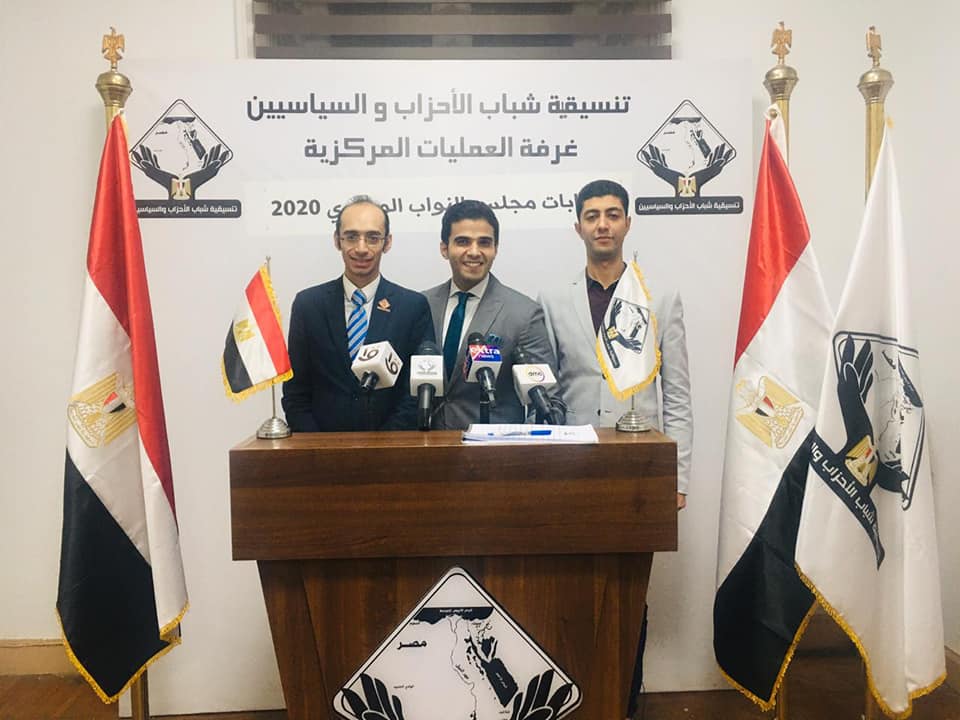
Since taking office, President Abdel Fattah al-Sisi has been keen to note how “youthful” his government is. And more importantly, he has made it clear that this is no accident. The state has cultivated a group of young political figures it can trust.
“Do we have any party that has asked the state to include the youth in its ministries or appoint them as deputy governors or governors? No, this has not happened. We did this,” Sisi told a group of leading journalists in late 2019 in a dialogue about political reform.
At that point, Sisi had presided over five National Youth Conferences and three iterations of the annual World Youth Forum, a conference whose aim is to “market Egypt” internationally and that was led by graduates of the state’s Presidential Leadership Program.
But the “youth” of Sisi’s comments were not just a marketing strategy. At the press meeting in 2019, Sisi made it clear that the state itself had laid the groundwork for youth to partake in formal governance.
Just a month before, Sisi issued a decree to appoint 16 governors and 23 deputies. Six of the deputy positions were from a little-known political organization that was founded in mid 2018: The Coordination of Youth Parties and Politicians.
These appointments represented a turning point for the organization, transforming it from its origin as an umbrella for security-sanctioned political work for younger party members into a conduit for aspiring youth to reach seats of power, according to a group member who spoke to Mada Masr on condition of anonymity. This new path has only accelerated in the last year and a half. The Coordination of Youth Parties and Politicians can count 12 of its members among the newly formed Senate and 31 in the House of Representatives (28 of whom were chosen through the state-backed National List of Egypt and three of whom were directly appointed by the president).
The exact role that the group will play in formal politics is not clear yet. Some political insiders tell Mada Masr that the group may be Sisi’s reprise of the Vanguard Organization that was established by President Gamal Abdel Nasser in the 1960s to create a class of political loyalists. Others, however, expect the organization to play the same role that insider-sanctioned youth played in the 2010 parliamentary elections, when they helped to effectively block any margins for political freedom.
How the Coordination for Youth Parties and Politicians was formed
The Coordination for Youth Parties and Politicians originated in the political reform Sisi has insisted upon since his 2014 presidential campaign. A few months after he was elected, he called on political parties to create a unified joint list to run in the 2015 parliamentary elections, which the state would support. The outcome was the Alliance to Support Egypt coalition, which included seven parties that are all affiliated with the state and its security apparatuses and which won two thirds of the House of Representatives seats in 2015.
While the state worked to unify the political front, the head of Sisi’s office at the time, Abbas Kamel, held meetings with young members of political parties to organize the first National Youth Conference, was held in Sharm El Sheikh in 2016. In those meetings, a group of youth party members from the Democratic Front Party, Geel Party, Motamar Party, and others proposed the creation of an entity to facilitate dialogue between the political parties and the state.
According to a member of the group who spoke to Mada Masr, the idea continued to be under consideration even after Kamel moved on to preside over the General Intelligence Service, because certain files, including political parties, were assigned to him. Then came the fifth National Youth Conference in mid 2018. Four party members alongside graduates of the Presidential Leadership Program presented an account of Egyptian political life, pitching a youth coordination entity to boost youth political participation and create a political elite that transcends ideologies.
Days after Sisi heard the pitch at the conference, the party members got the greenlight to establish their organization, according to the member who spoke to Mada Masr. Security bodies asked each party to nominate two members to join the group, and shortly afterward party representatives held their first meeting as “the Coordination” at the Congress Party’s headquarters.
On July 13, 2018, the youth organization issued its founding statement, introducing itself as a group of youth party members and politicians from various orientations who “took it upon themselves to align behind the homeland to achieve national goals and work for the common good.”
In its second statement, the group stated that the formation of this new entity would include representatives from 19 different parties: the Reform and Development Misruna Party, the Tagammu Party, Democratic Generation Party, the Egyptian National Movement Party, the Freedom Party, Republican People’s Party, the Ghad Party, the Conservative Party, the Egyptian Democratic Party, the Free Egyptians Party, the Conference Party, the Arab Democratic Nasserist Party, the Nour Party, the Wafd Party, the Homeland Defenders Party, the Modern Egypt Party, and the My Homeland Egypt Party, in addition to five young independent politicians.
The Coordination for Youth Parties and Politicians became a permanent guest at all youth forums headed by the president, and a fixture at state events. Members of the group were part of the national dialogue sessions held in March 2019 by Parliament to discuss a set of constitutional amendments that included extending the president’s term in office, and they had participated in the dialogue sessions organized by the Social Solidarity Ministry to amend the NGO law in January 2019.
Then came the 2019 deputy governor appointments, which the member of the organization sees as the moment when the body transformed into the youth-led political arm of the state.
“Before Sisi appointed six members from the coordination to the governorate offices, we were doing political and party work with the approval of the state apparatus. My greatest hope as a representative of one of the civil parties in the coordination was not to be arrested or harassed by the security bodies like those who did not join the coordination were. But after the presidential appointments, everything changed, and the coordination became a gateway to the regime,” the source says.
The six Coordination for Youth Parties and Politicians members among the 2019 deputy governor appointees include: Ibrahim El-Shahaby as the Giza deputy governor, Mohamed Moussa as the Monufiya deputy governor, Belal Habash as the Beni Suef deputy governor, Hazem Amr as the Qena deputy governor, Amr Othman as the Port Said deputy governor and Haitham al-Sheikh as the Daqahlia deputy governor.
The Presidential Youth Leadership Program — an academy that was launched by Sisi in September 2015 to “create a base of competent youth who are capable of assuming political, social and administrative responsibilities across the country” — was also favored in the 2019 reshuffle. Sisi chose nine members from the program, one of whom was appointed as governor and the other 8 as deputies.
Expanding membership
After the presidential governorate appointments, the Coordination for Youth Parties and Politicians’s ranks swelled, according to the member, whose party holds more than 10 seats in Parliament’s two chambers.
“Before the governor appointments, we were no more than 60 or 70 members. But after the appointments, that number grew to over 200 in just a few months,” says the member. “Everyone started promoting the coordination as an entity for the youth who have been sanctioned by the authorities and who will be granted positions that need youth representation.”
The source added that a number of young people affiliated with the state joined the organization during the leadup to the 2020 parliamentary elections, including Mahmoud Badr, the founder of the Tamarod Movement and former MP from the For the Love of Egypt alliance, whose members were carefully selected by the security forces at the time. Tarek al-Khouly, a former MP from the same alliance and the general secretary of the Nation’s Future Party also joined the youth organization, as did Mohamed Abdelaziz, a member of the Tamarod movement and the National Council for Human Rights, and Mai Karam Gabr, the daughter of the head of the Supreme Council for Media Regulation.
The coordination’s website has a form for those who want to become members, which only requests the personal information of the applicant, an explanation of their reason for applying, and a “public policy” essay in which the applicant should relay their views on the state’s policies.
The member also says that the criteria for admission to the coordination is not clearly defined. At the outset, it began with representatives of political parties and young people interested in political work. Then, employees of various ministries who were “approved of” joined. Later, journalists close to the security apparatus also joined.
Since September, members of the coordination have been emphasizing that there are existing criteria and regulations for membership, such as “the preservation of national constants, the protection of national capabilities, and the uncovering of terrorist schemes.” They also explain that applicants cannot be more than 40 years old, cannot have previously been prosecuted for morality offenses and cannot have previously been implicated in a financial conflict within a party.
“We get messages everyday on the coordination members Whatsapp group that new members have joined,” says the source, adding that the coordination does not have one director but rather three general secretaries, who are Amr Younes, a member of the House of Representatives from the National List, Soha Said, a senator from the National List, and Sabreen Hegazy, a member of the Liberal Constitutional Party. The three are responsible for coordinating with state authorities, liaising with the security officer who is responsible for the coordination’s activities, reviewing and accepting new memberships and calling for group meetings.
Apart from the general secretaries, the coordination’s administrative structure has a board of trustees, which includes the six members who were appointed as deputy governors, as well as a media unit that includes the spokespersons for the coordination, most of whom already work in the Supreme Council for Media Regulation. The latter are responsible for communicating with the media to disseminate the coordination’s statements and the articles written by its members, in addition to approving members to make TV appearances or do media interviews. “We are asked to write articles and submit them to the media unit, which reviews them for security purposes along with the general secretaries, then they are disseminated to the media,” explains the source.
A journalist who writes about political parties in a state-owned newspaper tells Mada Masr that the media unit makes sure that all the news, statements and articles submitted by members of the coordination are published as they are, without edits, deletions or additions.
A new old vanguard?
Karama Party member Emad Hamdy believes the state-supervised youth group is the current regime’s reproduction of Gamal Abdel Nasser’s Vanguard Organization experiment.
In 1963, Gamal Abdel Nasser established the Vanguard Organization as a secret entity within the Arab Socialist Union that was originally designed to aid indoctrination of party members but rapidly became an intelligence-gathering body. It was supervised by journalist Mohamed Hassanein Heikal and a few military officers, including Sami Sharif, the head of Nasser’s Presidential Bureau of Information, the intelligence agency within the president’s office. Sharaf was assigned with the task of selecting members that the authorities judged to be suitable for leadership. Those individuals were appointed in ministries, agencies, institutions, governorate offices, universities, factories and other entities. Some have estimated that Vanguard Organization membership at one point reached 30,000, with many members obtaining high-level positions in the government, including former House Speaker Ahmed Fathy Sorour and former Foreign Minister Amr Moussa.
Political insiders including Nasser Abdel Hamid, a former member of the Revolution Youth Coalition, the National Salvation Front, and the Dostour Party, believe that the Coordination of Youth Parties and Politicians acts as an incubator for a base of youth elite that are under the control of the security apparatus, “created and paraded about by the state.” But unlike the Vanguard Organization, he says, the group has not necessarily developed political cache, without bylaws, internal elections, activities, or political proposals. They cannot hold a public meeting to explain to people “who they are or what their views on different matters are,” he says. “They are just a bunch of young people who were chosen to attend the youth forums.”
Hamdy, the senior Karama Party senior member, believes that the state’s focus on youth comes from a need to abide by the constitutional stipulations on youth representation in state institutions, and in order to close off any marginal allowance of political freedom that could lead to events similar to the 2011 uprising.

تقارير ذات صلة

Sisi refutes contractor’s allegations that state funds were wasted on vanity projects at hastily organized youth conference
He accuses Sisi of wasting money on presidential palaces and the army of squandering billions

Whatever happened in the year of the youth?
Sisi declared 2016 the year of the youth, but what actually happened for young people?
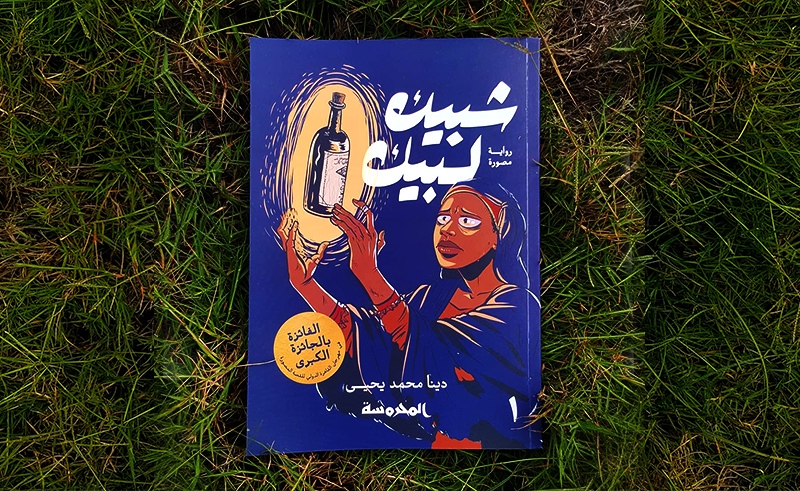
Shubeik Lubeik: An urban fantasy about wishes
In her debut graphic novel Shubeik Lubeik (2018), young graphic novelist Deena Mohamed Yehia (1994) draws a parable that evokes a fantastical present-day Cairo where the dreams and wishes of…
Your support is the only way to ensure independent, progressive journalism survives.
You have a right to access accurate information, be stimulated by innovative and nuanced reporting, and be moved by compelling storytelling. Subscribe now to become part of the growing community of members who help us maintain our editorial independence.
Join us