
The European influence on Henry James and Tawfiq al-Hakim
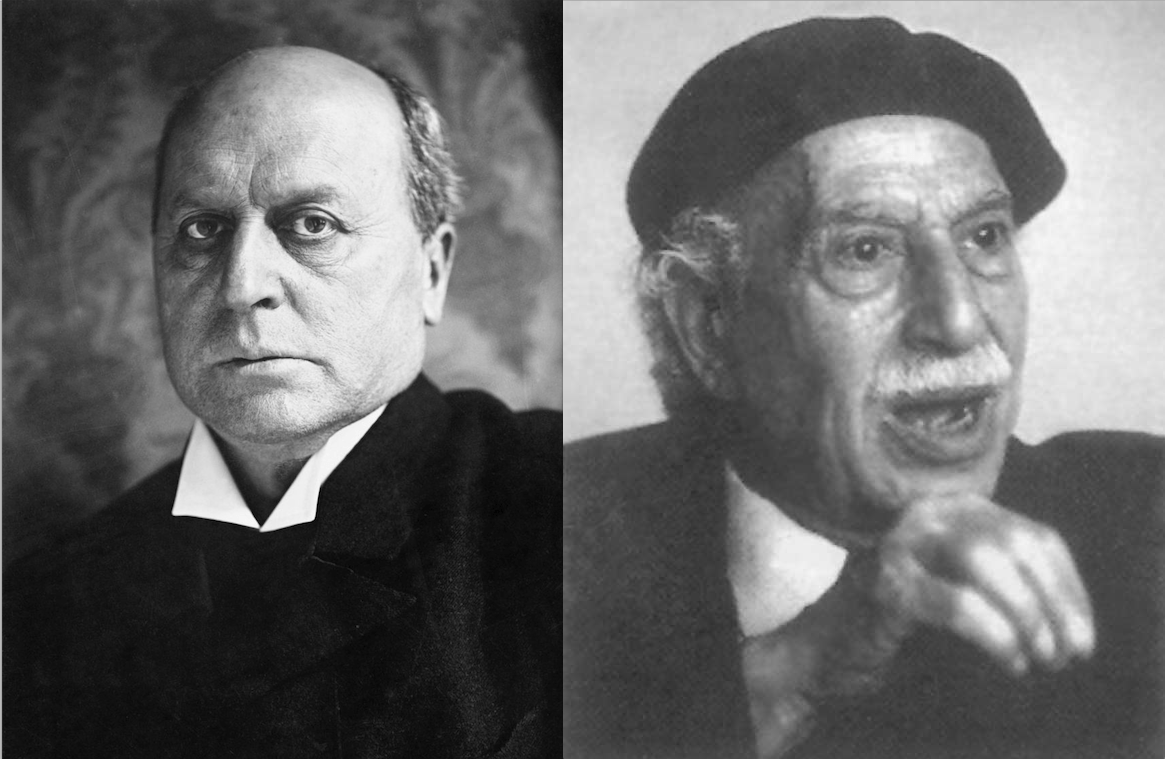
American writer Henry James’s self-image as a spider garnering stories instead of flies could equally apply to Egyptian literary giant Tawfiq al-Hakim. Both bequeathed huge literary testaments to the world, and both were shaped by their relationships with Europe and its literature. Making a comparison between them might seem unlikely, but it affords a fresh view and some unusual connections.
Wealthy fathers
Driven by a restless father bent on his children receiving a rich and different education, James (1843-1916) oscillated between America and Europe from an early age, and it was in the "old continent" that he found his inspiration. He settled in London in 1884 and became a British citizen a year before he died.
Sixty years later, the young Hakim (1898-1987) was also sent to Europe by a father who wanted to keep him away from the artists and actors with whom he had become acquainted. At the beginning of the 20th century, theater was looked-down upon in Egypt, and Hakim’s father intended for his son to obtain a PhD in law and then get a “respectable” job. But Hakim was drawn to the Parisian bohemian lifestyle, theater and concert halls. He neglected his studies and became immersed in European literature, and when he returned home three years later, he transformed Egypt’s theater scene.
Ideas of Europe
James’s protagonists are Americans like himself, traversing Europe as if it was a Jamesean version of manifest destiny. Whereas zealous settlers had pushed Westward to claim America, James, a descendant of Irish immigrants, explored Europe as a literary foil of Christopher Columbus. As America could not boast a long-established literary tradition, James was drawn to writers such as Flaubert, Maupassant and Balzac, whose magnum opus La Comédie Humaine left a deep impression on him. As a citizen of a nation deeply affected by that same European colonial zeal, Hakim, on the other hand, returned home with knowledge gained during his short stay in Europe. Expressionism, futurism, symbolism and realism fascinated him, and he was introduced to the structural art of dramaturgy.
In his Paris-set autobiographical novel Asfour men al-Sharq (Sparrow from the East, 1938) Hakim’s alter ego Mohsen is introduced to a wonderful intellectual life. But inevitably, it is not a relationship devoid of colonial tension. The 1919 revolution against British occupation is brought up early on, and a criticality toward Europe and America is present through Mohsen’s Russian communist friend Ivan, who laments Europe’s spiritual and moral decline.
Yet in letters to his French friend André that were later published, Hakim’s yearning for France is plain. In one, titled Zahret al-Omr (Flower of Life, 1943), he nostalgically writes, “You tell me what is happening on your side, oh your side, full of the light of the intellectual life …”
Novels vs theater
James was continuing a long tradition of English-language novels, and he excelled at it. Reading like a darker version of Jane Austen, his passages full of psychological self-reflection grant insight into his protagonists’ minds. His characters, notably women, possess a rare self-analytical maturity, and much of the tension lies in what’s left unspoken. A Jamesean dialogue is like a brilliant game of chess between two players conscientiously weighing their options, studying each other meticulously before making the right move.
The American (1877) is set in Paris, and in The Europeans (1878), he sends a European pair of siblings to explore Boston. Daisy Miller (1879) takes place in Vevey and Rome, and his masterpiece, Portrait of A Lady (1881), is set in London, Florence and Rome.
While James’s prose was being read in America and England, Hakim started writing in the 1930s for an Arabic audience not yet quite familiar with the form of the novel. Most of Hakim’s prose is focused on Egypt, except for Sparrow from the East. Unfortunately, it lacks some basic elements of the novel, such as continuity, climax and coherent protagonists. The most interesting characters, a Parisian worker couple and a bitter Russian communist, are left unexplored for the sake of a sentimental love story between the Egyptian hero and a Parisian ticket vendor.
Yet Hakim would excel where James, to his chagrin, failed. Both men wrote in almost every format — plays, stories, novels, literary criticism and even biographies — but it was theater that Hakim mastered and experimented with. He had the huge heritage of Arabic storytelling behind him, but prior to Hakim, Egyptian theater had largely just presented European plays in translation. In the late 1920s, poet Ahmed Shawqi had pioneered some poetic plays, but his complex language was too difficult for many to grasp.
In that context, Hakim’s Ahl al-Kahf (People of the Cave, 1933) made waves with its originality: He had adapted a story from the Quran and infused it with philosophical tones and Pharaonic motifs of eternity, people awakening from a deep slumber in a time different than their own. It introduced his preoccupation with exploring the idea of time, which would emerge repeatedly in other plays, such as Rehla Illa al-Ghad (Journey to Tomorrow, 1957).
Yet Hakim was also criticized for his overemphasis on philosophy-laden dialogues at the expense of dramaturgy. In response to this accusation of living in an ivory tower, he began focusing on social issues, as in Al-Safka (The Deal, 1956), which deals with the lives of rural workers, and the 23 plays written for the weekly newspaper Akhbar Al-Youm in the late 1940s, which were collected in Masrah al-Mogtamaa (Theater of Society) in the early 1950s.
It’s said that Hakim wrote up to 120 plays. Unfortunately, they are no longer presented on stage, as they are difficult to adapt to our modern times without modern dramaturgy, theater critic Mohammed Sheha tells me. Except for one adaptation he witnessed last year of Hakim’s collection of short plays Law Aref al-Shabab (If the Youth Only Knew) by Egyptian director Rawan El Ghaba, he has not encountered Hakim onstage for decades.
“Drama suits me as a medium of expression, for — unlike the novel which concerns itself with details — its proper scope is concepts and essences,” he wrote in his autobiography Segn al-Omr (The Prison of Life, 1964).
While James was eager to follow the footsteps of Oscar Wilde, arguably the most innovative playwright at that time in Europe, his play Guy Domville (1895) was a disaster and he was booed off stage.
Language
In order to make his work more accessible, Hakim invented what he called “a third language,” which was a blend of written Arabic and spoken Egyptian dialect. He also experimented with dialogue by presenting plays with lines containing a set number of words.
The result is that his language, like James’s, is innovative, vivid and simple — especially when compared to his contemporaries, like Ibrahim El Mazny and Taha Hussein, who opted for a classical and abstruse Arabic.
It was only toward the end of his life that James’s language grew more complicated, arduously constructed through incredibly lengthy sentences and sub-sentences, hampering the reading progress of a modern reader. This may be due to the fact that wrist pain meant he had to dictate his later, stylistically verbose work.
Women
Despite Hakim’s misogynistic remarks that women were only good to prepare potatoes and sit in Parliament because they like to chatter, his heroines actually come across as smart and sensible. In his play Shahrazad (1934), the heroine transforms her bloodthirsty husband into a just ruler, while in Isis (1955), the Egyptian goddess maneuvers her son into power with her wisdom and acumen. Hakim was paradoxical; he wrote, “If the mind of the woman withers and dies, than the mind of the whole nation will die,” but also macho clichés typical of his time, like “The faith of women is love.”
In this regard, James was ahead of his time, and created heroines far beyond any stereotypes that have still not forfeited their relevance. His heroine Isabel Archer in Portrait of A Lady arguably remains one of the most poignant and complex literary characters to date.
Two quotes
“Live all you can; it’s a mistake not to,” says James’s alter ego Strether in The Ambassadors (1903), one of his later achievements. “It doesn’t so much matter what you do in particular, so long as you have your life. If you haven’t that, what have you had?”
“Every bit of our lives we have to carve with our own hands,” says a character in what Hakim called his “educational play,” Shams al-Nahar (Midday Sun, 1965). “We cannot fully grasp or change a life that is being presented to us an silver plate … We accept it lazily with closed eyes.”

Sherif Abdel Samad
Sherif Abdel Samad holds a PhD in American Studies from the Free University of Berlin. He wrote his dissertation on "Non-violence in the Civil Rights Movement in the United States…
تقارير ذات صلة
Mai Serhan imagines Palestine and recounts life after for us
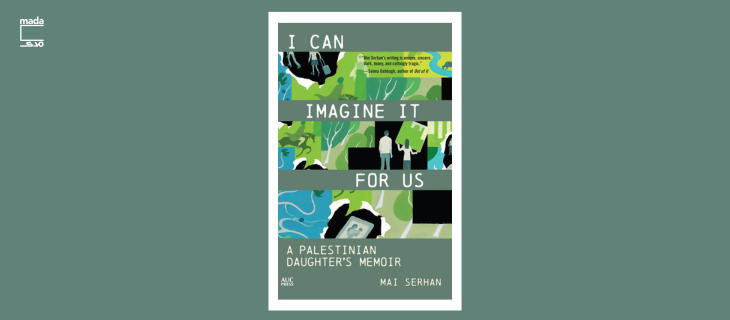
"I have never been to the place where I am from, but I can imagine it for us, Baba, for you and me." This opening line of Mai Serhan's I…
Who’s Afraid of (a) Minor Detail?
Adania Shibli and Specters of the Disaster on Literature and the Body
A conversation with Shady Lewis Botros on the genealogy of literary refusal
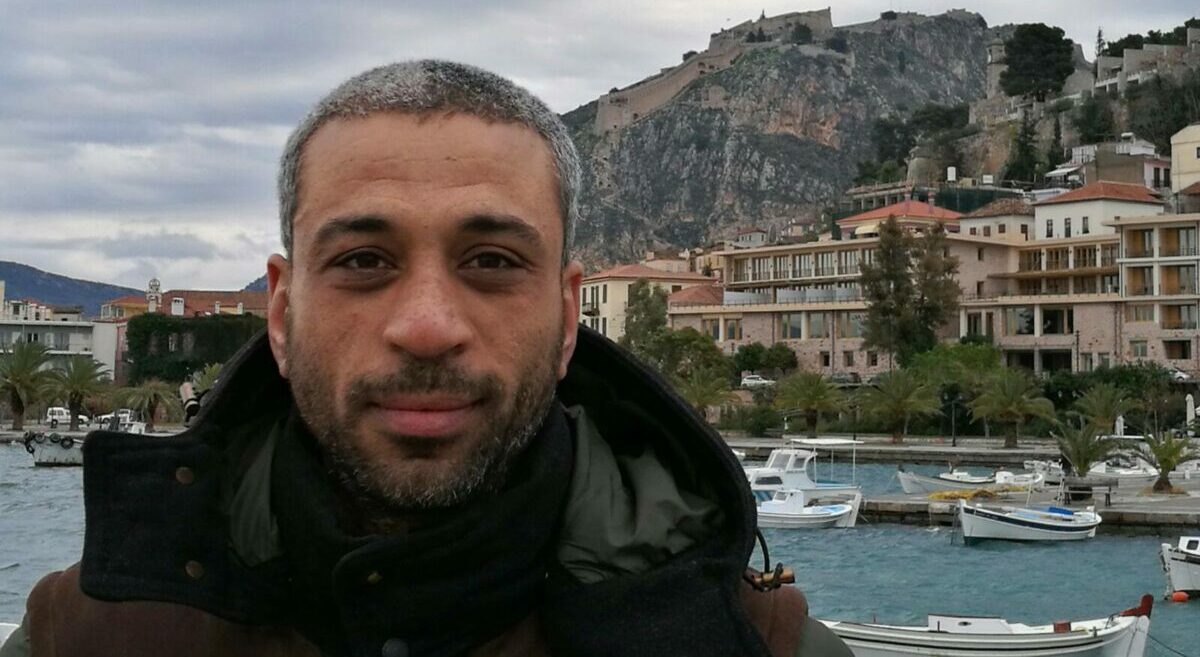
The writer discusses his decision to turn down the Sawiris Cultural Award for his recent novel
Your support is the only way to ensure independent, progressive journalism survives.
You have a right to access accurate information, be stimulated by innovative and nuanced reporting, and be moved by compelling storytelling. Subscribe now to become part of the growing community of members who help us maintain our editorial independence.
Join us