
Mohamed Raay has seen Tamarod go from popular campaign to political movement and is now the general coordinator of the party the movement is about to launch —The Popular Arab Movement Party.
Raay refers to the early days of the campaign in 2013 as “the good old days.”
Tamarod took the political scene by storm in 2013 when it launched a campaign against the rule of the Muslim Brotherhood. The movement has been largely credited with facilitating the downfall of former President Mohamed Morsi on July 3.
However, amid internal rifts and a different political climate, many are skeptical as to the movement’s ability to replicate its success in formal politics.
The committee overseeing the affairs of political parties at the Supreme Court rejected Tamarod’s party papers in December, citing violations to the Political Parties’ Law. Raay says they are in the process of amending the would-be party’s bylaws in order to apply again with the 6000 endorsements they have already collected.
This is just one of the issues Tamarod faces. Another point of contention is its polemical relationship with the state.
Mahmoud Badr, Tamarod’s co-founder and its most recognized face, explained in a recent television appearance the position the party has taken as an ally of the current government.
“We want to change the perception of parties as a platform for insulting the regime. As long as the regime is close to Egyptians, serving them and expressing their dreams, we’re with it,” he said.
Despite the fact that it hasn’t been officially launched, the Tamarod party is already part of an electoral alliance, “For the Love of Egypt,” in preparation for the upcoming parliamentary elections.
The alliance is quickly gaining a reputation for being the “regime’s list,” with names like former President Hosni Mubarak’s National Democratic Party member Akmal Kourtam, and retired military intelligence General Sameh Seif al-Yazal.
The list, in its last reported formation, also includes political analyst-turned TV presenter Emad Gad and scriptwriter Lamis Gaber, notorious for her anti-January 25 revolution stances.
The movement’s alignment with the state marked the start of severe internal rifts that eventually led to the separation of several co-founders into a parallel structure.
The first severe rift occurred in the lead up to the presidential elections, when Badr’s wing insisted on endorsing Sisi, while other leading figures in the movement supported his rival, Hamdeen Sabbahi.
Mohamed Abou Steit has been Tamarod’s coordinator in the Delta city of Monufiya since the campaign began. He is among those who split from Badr’s front, along with co-founders Moheb Dos, Walid al-Masry and Hassan Shahin.
Steit thinks the movement has lost its credibility by becoming a self-appointed government mouthpiece.
“If you decide to continue in the political arena, you have to do it with the people, not with the regime. They act as if they are the sons of the regime, they should act as its father, they’re the ones who brought it to power,” he says, commenting on the performance of the original movement.
Abou Steit’s explanation for the movement’s alignment with the state supports widespread popular suspicions.
“This happened because there are people in the movement who have no principles and just want monetary gains. Some people who came into Tamarod with nothing now have millions of pounds in their bank accounts. These people know who they are,” he says.
News that the government allocated state land to Badr to build a factory raised eyebrows in recent months. However, both Badr and the Agriculture Ministry asserted that the land and the factory remain the property of the state and are intended for public benefit.
Since its start, Tamarod has been surrounded by rumors that its success was orchestrated by Egyptian intelligence to get rid of Muslim Brotherhood rule.
The movement’s explicit support for President Abdel Fattah al-Sisi, starting from endorsing his presidential bid to voicing support for his actions, prompted further accusations that the group was instrumentalized by the state.
The extent to which this support will continue beyond Tamarod’s campaigning remains to be seen.
Spokesperson for the Free Egyptians Party, Shehab Wagyh, thinks that Tamarod’s success was very much dependent on the specific conditions of the moment in which it emerged, and that this won’t necessarily translate into success in party politics.
“It was a movement that gathered Egyptians around the idea of rejecting Morsi and the inevitability of ending his rule. This was the reason Tamarod gained credibility and found millions of supporters. Those who supported it consider it capable of uniting efforts to bring down Morsi, but not necessarily capable of creating a political alternative,” he explains.
The free Egyptians Party was one of the Tamarod campaign’s major supporters from the outset, offering their headquarters in the lead up to the June 30 protests. Wagyh says he expected the movement to dissolve itself once its goal of bringing the Brotherhood down was realized and that its members with political aspirations might fulfil them through joining already existing political parties.
However, Badr explains in his interview that starting a party was a natural next step for Tamarod, in order for them to transition from doing politics in a revolutionary context to participating in a state of law.
Badr says many of those in the movement want to be part of the third phase of the political roadmap, after participating in the constitution drafting committee and being “an essential part of Sisi’s campaign.”
“Those who roamed the country and knocked on doors to collect signatures have the right to have a role in building their country’s future,” he adds.
Despite skepticism from many, Badr believes that Tamarod as a political party can have the same uniting role that it played in 2013, maintaining that its members will not join other political parties in order to remain close to the people.
During his television appearance Badr added, “We are gathering everyone in one camp, just as the campaign succeeded in being a voice for all Egyptians. We want the party to do the same.”

Heba Afify
Heba Afify, known in journalistic circles as H, is a news reporter who traveled between working for local and international newspapers. She covers a variety of topics from high to…
تقارير ذات صلة
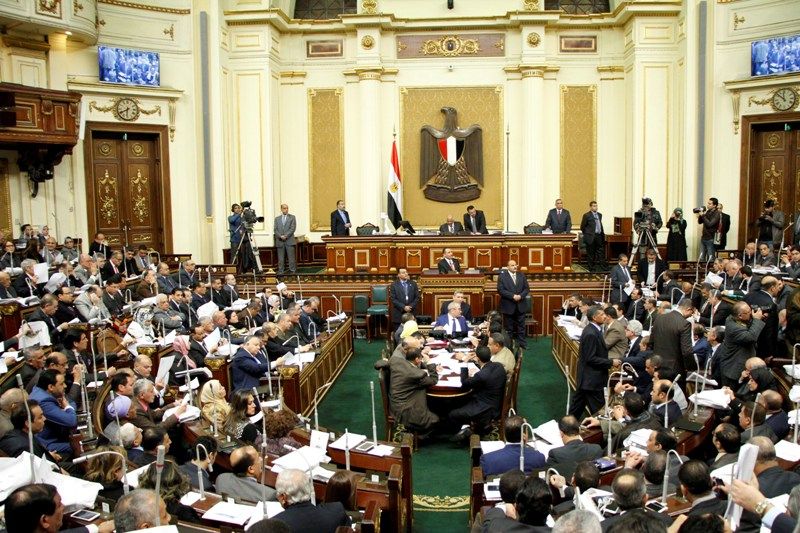
Anatomy of an election
"For the Love of Egypt … was born in this meeting. Yes, inside the Egyptian General Intelligence Agency. I was there, at the invitation of the presidency."
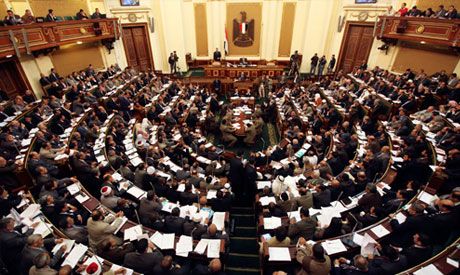
The impossible parliamentary alliance
The newly-elected parliament, which is due to convene soon, is still in a state of flux, with various parties and groups forming political alliances in a process characterized more by…
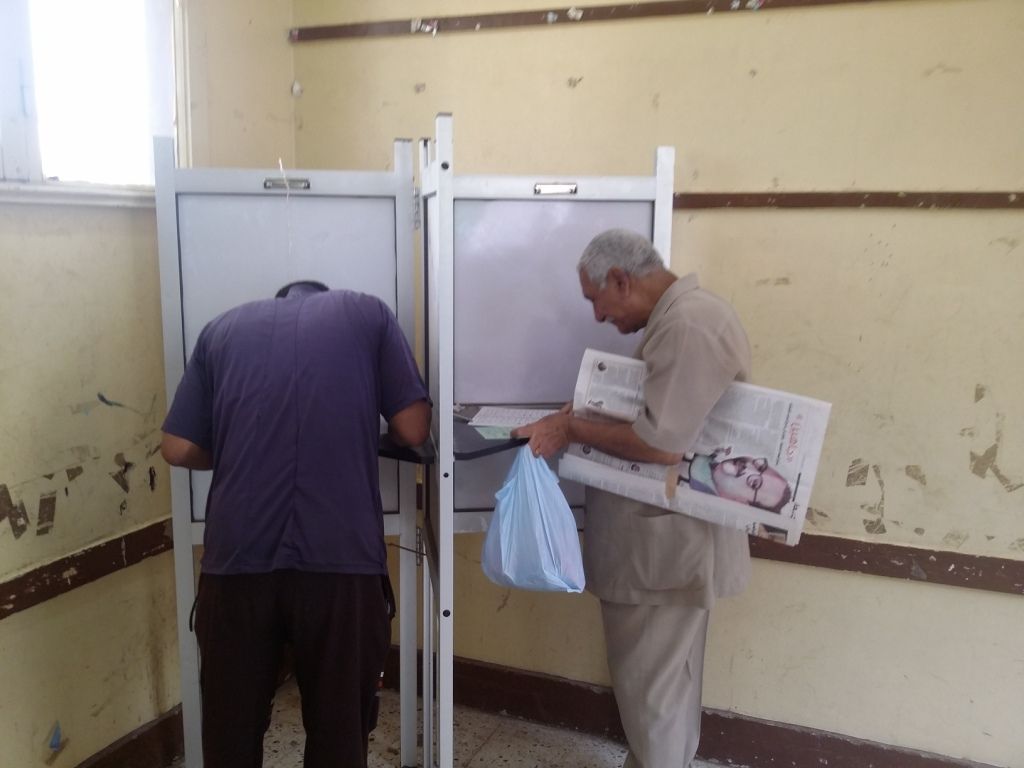
Clear winners and dark horses
Low voter turnout wasn’t the only notable feature of the first stage of parliamentary elections this week. Several leading candidates may also represent a shift in power in the new legislative body. High Elections…
Your support is the only way to ensure independent, progressive journalism survives.
You have a right to access accurate information, be stimulated by innovative and nuanced reporting, and be moved by compelling storytelling. Subscribe now to become part of the growing community of members who help us maintain our editorial independence.
Join us