
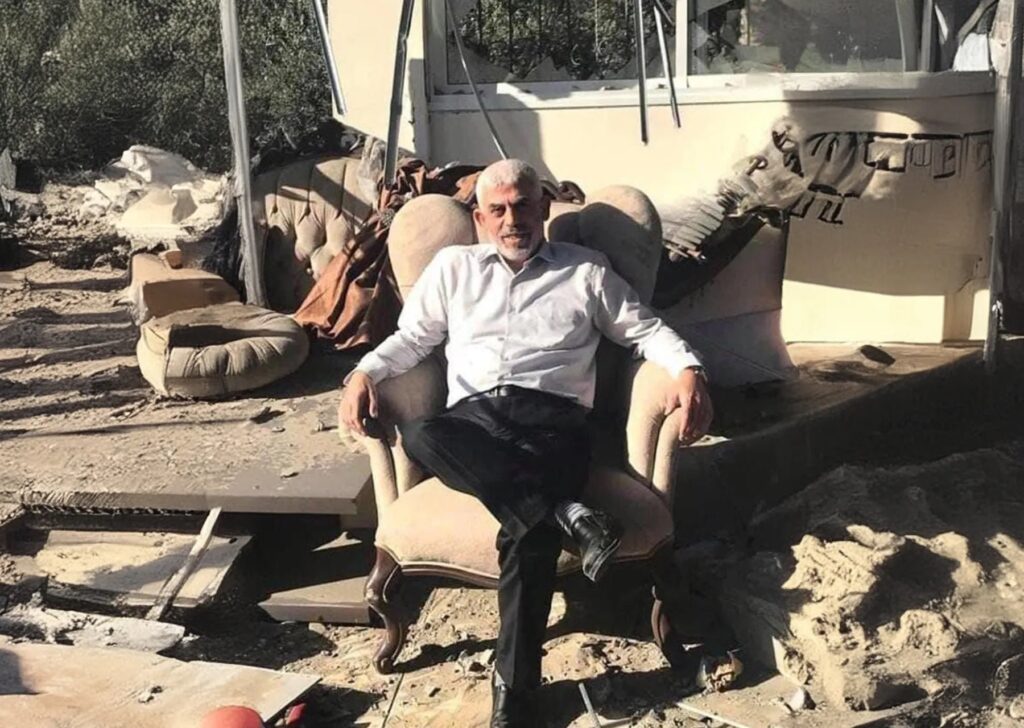
Surprise unto death: The legend of Sinwar
Even in his final moments, Yahya Sinwar was marked by all the hallmarks of a legend — for both his admirers and enemies alike.
To the millions who support armed resistance against Israel, spearheaded by Hamas under Sinwar’s leadership, he stands as an unrivaled figure in the history of this conflict, in Palestine and beyond.
And even in Israel, no Palestinian leader has sparked such obsession. Every tale surrounding him reinforces this aura — this legend.
Israeli leaders rushed to break the news of his death, knowing that this announcement specifically was a significant political win. Defense Minister Yoav Gallant raced to beat Prime Minister Benjamin Netanyahu to the punch. In a seemingly desperate move, Gallant even suggested that Sinwar had been killed while trying to flee.
But that attempt fell flat, as reports indicated the opposite. Photos of his body and video footage of the moments before his death revealed that Sinwar died a fighter, dressed in military uniform, confronting his enemies. He was not, as Israeli intelligence had long insisted for months, a commander hiding in tunnels, surrounding himself with hostages to ensure his safety, nor did he value his life over theirs. In short, his death bore all the elements necessary to cement his legendary status.
His death stunned everyone, in keeping with his reputation for surprises. CNN, quoting a US official, reported that even the Israeli military was caught off guard. His killing wasn’t the result of a targeted operation based on intelligence, nor was it executed by a special operations force. Instead, it happened during a firefight between infantry soldiers and three armed militants in Rafah's Tel al-Sultan neighborhood. After a strike hit the site, soldiers found the bodies of the three fighters — and Sinwar was among them.
This final surprise came a year after his most dramatic one: the unprecedented operation against Israel on October 7, 2023. Thousands of rockets rained down on Israeli towns and settlements while hundreds of fighters breached the Gaza barrier, storming the settlements in the Gaza envelope. Within hours, they had killed over a thousand Israelis, both soldiers and civilians, and captured hundreds more, taking them back to Gaza.
At first, no one could believe it. It took hours for the realization to dawn. Yahya Sinwar, the leader of Hamas in Gaza and later its political bureau chief, had, along with the military wing’s commanders, made a decision that no one had dared to before. From the outset, everyone agreed, whether implicitly or explicitly, that Sinwar was behind it. His character is made for such an audacious act, and his image in people’s minds seemed befitting for such a role. Whatever history may ultimately say about him, one thing is certain: Sinwar has opened a new chapter in the region’s history.

So, who is Yahya Sinwar?
Born in 1962 in the Khan Younis refugee camp in southeastern Gaza, Sinwar’s family were refugees from Majdal in eastern Gaza, now Ashkelon, following its fall under Israeli control after the 1948 Nakba.
He attended the Islamic University of Gaza, where he earned a bachelor's degree in Arabic language studies.
Sinwar’s public life began with student activism in the Islamic bloc, affiliated with the Muslim Brotherhood in Palestine. He held several positions in the university's student council and was first arrested by Israel in 1982, at just under the age of 20, for his involvement with the resistance. He spent six months in prison.
Sinwar was very close to Ahmed Yassin, the historic founding leader of Hamas who ushered in a new phase for the Islamic resistance movement in Palestine. In the 1980s, Sinwar helped establish the movement. Alongside other prominent Hamas figures, like Khaled al-Hindi and Ruhi Mushtaha, Sinwar founded Majd, Hamas's internal security apparatus. This body was tasked with, among other things, investigating suspected Israeli informants and tracking intelligence and security officers.
This was where the legend began to take shape. Majd, and Sinwar himself, gained a fearsome reputation. A lengthy profile in The New Yorker, published in August, cites Palestinian journalist Zaki Shehab, who wrote a book on Hamas, describing Sinwar’s violent approach to dealing with those collaborating with Israel. "He would drip boiling oil on people’s heads to get them to confess to collaboration," Shehab says. Michael Koubi, an Israeli security officer who interrogated Sinwar in prison, described him as the coldest man he had ever encountered, recounting how Sinwar allegedly buried a suspected collaborator alive. Although the truth of such stories is difficult to confirm, as the profile notes, their circulation spread fear, earning Sinwar the moniker “the Butcher of Khan Younis.”
Sinwar’s crackdown on collaborators, along with other resistance activities, led to his second arrest in 1988, a year after the First Intifada broke out. He was charged with killing four Palestinians and planning to kill two Israeli soldiers. Just 26 at the time, he was sentenced to four life sentences. This prison experience would profoundly shape his later reputation.

It wasn’t long before Sinwar rose to prominence among other prisoners, leading Hamas's supreme authority for prisoners for two organizational terms from inside the prison. A Palestinian prisoner who was detained with Sinwar at one point tells Mada Masr that Sinwar’s leadership, including organizing hunger strikes, brought him into conflict with prison authorities. This resulted in long stretches of solitary confinement and medical neglect — only protests by fellow Palestinian prisoners saved him.
Sinwar’s experience as a prisoner was significant in his political formation. The Palestinian political landscape is shaped by three groups: those living in Palestine (in Gaza, the West Bank and Israel), the diaspora and prisoners. The political discourse surrounding prisoners and their release is central to all factions, given its political weight and influence in shaping decisions and directions.
A journalist who famously interviewed Sinwar on Israeli television described his power, noting that from prison, Sinwar could issue orders to Ismail Haniyeh, who at the time led the Palestinian government after Hamas's electoral victory in 2006. Sinwar’s leadership among prisoners solidified his legitimacy as a Palestinian leader.
An Israeli interrogator, cited by the New Yorker, recalls a conversation he had with Sinwar after his second arrest. "You know that one day you will be the one under interrogation, and I will stand here as the government, as the interrogator," Sinwar told him. "Our roles will be reversed. The world will turn upside down for you."
During his imprisonment, Sinwar immersed himself in studying Israeli society. He consumed daily newspapers, read books on Zionist ideology and Israel’s security apparatus and its leadership, and studied Hebrew to the point of fluency. He translated tens of thousands of pages from Hebrew into Arabic and conducted interviews with Israeli journalists in their native language. In his televised interview, Sinwar insisted on speaking Hebrew. Only once did he forget a word, calmly asking his interviewer in Arabic for the term "shed light," before seamlessly continuing.
He also wrote several books during his time in prison, including a literary work that stands as a rare historical document.
Sinwar’s connection to the arts traces back to his university years when he co-founded the Returnees for Islamic Art troupe His official biography on Hamas's website notes that this initiative “had the blessing of Sheikh Ahmed Yassin.” The troupe focused on preserving Palestinian heritage and promoting resistance.
Sinwar’s relationship with the arts extended into his time in prison. After years of writing and complex efforts to smuggle his manuscripts out, involving dozens of people, he published his only novel, Thorns and Carnations, in 2004.
The choice of novel as a form is intriguing. He could have written memoirs, but instead, he opted for fiction. There was a practical aspect to this decision. Novels allow for a mix and match of characters and ideas, offering a variety of perspectives. Memoirs, by contrast, often impose a linear logic on the characters and their actions, which might have limited Sinwar’s aim to dissect Palestinian society and its relationship with the Occupation. From this perspective, the novel offered a broader canvas.

In the novel’s introduction, Sinwar wrote that "the only imagination in this work is in transforming it into a novel about specific individuals to give it the form and requirements of a fictional work. Everything else is real, lived by me, and much of it heard firsthand from those who lived it, along with their families and neighbors, over decades on the beloved land of Palestine." Being written in this way, the novel becomes more than a work of fiction and serves as a historical document, not only for Sinwar but for Palestine as a whole.
The novel's main characters represent the spectrum of Palestinian politics. The narrator — largely representing Sinwar himself as an observer — has a brother affiliated with Fatah and the Palestinian Liberation Organization, and two cousins — one an Islamist involved in founding the military wing of the resistance and the other a collaborator with Israel.
A review of the novel published by Mondoweiss in February noted that the debates between these characters, "which grow more intense at every major juncture Palestine’s recent history, reveal the depth of politicization among all classes of Palestinians, and might be regarded as a historical register of ideological debates among the Palestinian factions."
Another review from Alpheratz pointed out that while the novel avoids delving into Sinwar’s personal experiences hunting down Israeli collaborators through the Majd organization, it is heavily preoccupied with the subject. Sinwar harbored deep contempt for collaborators — the Islamist cousin eventually killed his brother, the collaborator, when he couldn’t take it anymore.
In Sinwar's interview with Israeli television, one can glean some level of understanding by Sinwar of Israel. Israel, after all, is the enemy — the Occupation — that much is clear. But what justification do collaborators have? From this perspective, the idea of a long-term truce stretching into the next generation may be acceptable, but the stance of collaborators is not.

Another point Sinwar avoids in his novel, as the first review notes, is his time in prison.
Sinwar attempted to escape from prison at least twice. In one instance at Majdal prison, he tried to dig a hole in the wall of his cell using a wire and a small saw, but the wall collapsed, exposing his attempt. He made another attempt at Ramla prison after cutting through the iron bars but was caught at the last moment. These attempts led to extended solitary confinement, lasting four years. He was also denied family visits for 18 years.
In the late 1990s, Sinwar began planning a more elaborate strategy from within prison. It involved capturing an Israeli soldier and smuggling him into Egypt, then negotiating the soldier's release in exchange for hundreds of Palestinian prisoners, according to Sinwar’s statements during interrogations, as reported by the New Yorker. The plan ultimately failed.
However, a similar plan succeeded less than a decade later. In 2006, Hamas captured Israeli soldier Gilad Shalit, sparking long years of negotiations that culminated in Shalit’s release in 2011 in exchange for over 1,000 Palestinians, including Sinwar. A source close to Hamas tells Mada Masr that Sinwar was personally involved in negotiating the deal. And there, his 23 years in prison — pivotal for Sinwar and his legend — came to an end. Sinwar emerged from the Israeli prison with big ideas about resistance and what it required.
[wonderplugin_video iframe="https://youtu.be/ng7CfNXhlzw" lightbox=0 lightboxsize=1 lightboxwidth=960 lightboxheight=540 autoopen=0 autoopendelay=0 autoclose=0 lightboxtitle="" lightboxgroup="" lightboxshownavigation=0 showimage="" lightboxoptions="" videowidth=600 videoheight=400 keepaspectratio=1 autoplay=0 loop=0 videocss="position:relative;display:block;background-color:#000;overflow:hidden;max-width:100%;margin:0 auto;" playbutton="https://www.madamasr.com/wp-content/plugins/wonderplugin-video-embed/engine/playvideo-64-64-0.png"]
But the Gaza that Sinwar returned to was very different from the one he had left. The Gaza of 2011 had been under siege for four years.
In 2005, Israel unilaterally withdrew from the Gaza Strip, shifting its strategy from internal occupation to external siege.
The following year, Hamas entered the Palestinian political arena, running in the legislative elections. The movement secured a majority of seats, which allowed it to form a Palestinian government that included various Palestinian factions.
This moment confronted the movement with existential questions. Operating as a political party requires opening dialogues and making compromises, especially with the continued occupation, expanding settlements, the region still reeling from the US-led wars after the September 11 attacks, and the complex regional political calculations for all parties. Could Hamas function as a political party while simultaneously maintaining a military wing?
Sinwar’s responses during his interview with Israeli television encapsulate the stance that Hamas would maintain moving forward. The interview took place after Hamas won the elections, and in it, Sinwar reiterated his position: the movement would never recognize Israel at any cost. However, he said that they could agree on a long-term truce with Israel, even one lasting a generation. But this would not signify any form of recognition of Israel.
When asked if this meant dismantling the Qassam Brigades, Hamas's military wing, Sinwar responded clearly that Qassam would remain as long as the Occupation continued. The journalist pressed on, pointing out what he saw as a contradiction between the men in suits representing the political party and the men of war responsible for the bombings. Sinwar insisted that this was not a contradiction — for him, Israel had never respected political processes. A truce was possible, but they would not become friendly. Politics was feasible, but the arms would remain.
This is the balance Hamas sought to uphold. In a 2018 interview with an Italian journalist Francesca Borri, Sinwar elaborated on this position. "I am not saying I won't fight anymore, indeed. I am saying that I don't want war anymore. I want the end of the siege. You walk to the beach at sunset, and you see all these teenagers, on the shore, chatting: and wondering what the world looks like across the sea. What life looks like. It's breaking. And should break everybody. I want them free."
Yet, no one accepted Hamas as a party capable of striking this balance. In his book Hamas Contained, Tareq Baconi explains that Hamas's victory created a dilemma for the American Bush administration at the time. The US had been promoting democracy as a safeguard against the infrastructure of terrorism, and now Hamas had won through democratic elections, in what partly seemed like a punitive vote against the Palestinian Authority and Fatah, with all the corruption they had come to represent.
The US — and of course, Israel — decided they would not accept a Hamas government. The Palestinian Authority capitalized on this international rejection to try and override the election results and reclaim control of the government, thus beginning what Baconi calls “strangling Hamas.”
It took a year of bickering before internal fighting between Hamas and Fatah broke out — the first of its kind in Palestine.
It didn’t take long for Hamas's viewpoint to be validated: weapons would sometimes be useful. In a swift move, the group expelled the Palestinian Authority and Fatah from Gaza, asserting its control over the strip.
The division became a geographical reality. Hamas controlled Gaza, and the Palestinian Authority controlled the West Bank. Meanwhile, Israel, backed by the US, imposed a total blockade on Gaza, with Egypt joining in by enforcing restrictions on the border, albeit allowing some unofficial movement through tunnels.
The siege was unprecedented in its severity. Israel significantly cut back access to food, water and fuel. At times, fuel shortages were so extreme that most sewage plants stopped operating, causing waste to pile up in the sea.
By the end of the following year, Israel launched one of its most brutal wars on Gaza. All subsequent national reconciliation efforts failed. Over time, Hamas found itself increasingly entangled in its dilemma: both the political party and the military wing were suffering due to the blockade, with no exit in sight.
This was the Gaza that Sinwar returned to in 2011.

It was only natural for Sinwar to transition from leading Hamas within prison to rising through the ranks of its leadership. In 2012, he was elected as a member of Hamas's political bureau in Gaza and took charge of security affairs. The following year, he was elected to the general political bureau, in charge of military affairs. In 2015, Sinwar was tasked with overseeing Israeli prisoners held by the Qassam Brigades, which had captured four Israeli soldiers since 2014.
Tarek Hamoud, a political science assistant professor at Lusail University in Qatar and researcher on Palestinian affairs, tells Mada Masr that Sinwar "did not take any time to rest. From the first days of his release from prison, his responsibilities were taking form, as though they’d been waiting for him. He became the liaison officer between the military and political apparatuses as a member of Gaza's political bureau after 2012."
At that time, the Arab Spring was ebbing away, especially in Egypt, after President Abdel Fattah al-Sisi, then defense minister, ousted President Mohamed Morsi and the Muslim Brotherhood’s government. The blockade on Gaza intensified, and Israel launched wars on the strip in 2012 and 2014. It became clear that maintaining the status quo was much the same as a slow suffocation of Gaza and Hamas.
During these years, Hamas continued to test the balance between its responsibilities as a governing political body in Gaza and its military wing — the balance Sinwar articulated in his interview.
On the political front, Hamas sought to improve relations with the new Egyptian regime under Sisi, culminating in a 2015 visit by a Hamas delegation to Cairo, months after an Egyptian court had designated the group as a terrorist organization. A second visit followed in 2016. However, this did little to change the situation in Gaza.
Meanwhile, on the military front, Sinwar began laying the foundations for his vision of resistance and its methods, a vision he discussed in detail in his novel. For him, resistance was not just a small group of armed men. It needed to aspire to become something akin to a small army.
Under his leadership, the tunnel network beneath Gaza expanded into a vast, sprawling city. Hamas’s arsenal grew in both quantity and quality, including various types of missiles and drones, most of which were locally manufactured. The group also strengthened ties with countries of the axis of resistance, particularly Iran.
In February 2017, Sinwar took another step in his rise to power, when he became the head of Hamas's political bureau in Gaza. His legend continued to grow, and it became clear to all that Sinwar was in control. No one could act without his approval.
This marked the beginning of one of the most interesting phases in Hamas's history: the experiment of openness. Contrary to his reputation as a hardliner, Sinwar demonstrated great political flexibility, sometimes exceeding all expectations.
The turning point came with the release of Hamas's historic Document of General Principles and Policies. The movement expressed a "temporary" acceptance of a state within the pre-June 4, 1967 borders, stating that its fight was not against Jews but rather a liberation struggle against colonialism. The document seemed to be a "response to regional developments and an attempt to deal with the challenges Hamas faced during a decade of sole rule in Gaza."
Sinwar made yet another unexpected move, according to an article by Hamoud, by reaching out to Mohamed Dahlan, the former head of the Palestinian Authority’s Preventive Security Force. Known for his close ties with Israel, Dahlan became a symbol of collaboration and one of the most hated figures in Palestine.
In 2018, with the start of the Great March of Return — peaceful demonstrations that Palestinians in Gaza continued to carry out for two years near the separation barrier — Sinwar declared that Hamas was committed to "avoiding the militarization of the demonstrations," describing them as "peaceful resistance" in a lengthy interview with Al-Jazeera. It seemed Hamas was trying to absorb a spontaneous popular uprising. Hamoud notes in his article that Sinwar’s use of the term "peaceful resistance" was significant, as "Hamas leaders had long avoided the word 'peaceful' to sidestep any negative associations with their stance, given the experiences of Fatah and the Palestinian Liberation Organization. Hamas typically used terms like ‘popular resistance’ or ‘comprehensive resistance,’ hinting at the continued legitimacy of armed resistance, which Hamas had never officially renounced."
However, these repeated gestures of flexibility bore no fruit. In 2020, the United Arab Emirates normalized relations with Israel, followed by Bahrain, Sudan and Morocco. Talks continued about the possibility of similar normalization with Saudi Arabia. It seemed the world was moving on from the Palestinian cause, leaving Gaza under siege.
A Palestinian source close to recent negotiations tells Mada Masr that before Operation Al-Aqsa Flood, Sinwar received a message from a group of prisoners accusing Hamas of abandoning them.
The impact of all this on Sinwar can be observed in his interview with Vice News after the Israeli assault on Gaza in 2021 came to an end. Sinwar stated that they did not want war and had resorted to peaceful popular resistance, but it brought no results. "What are we supposed to do? Should we raise the white flag? That is not going to happen. Does the world expect us to be well behaved victims while we’re getting killed? For us to be slaughtered without making a noise? That is absolutely impossible. We decided to defend our people with all the strength we have," Sinwar said.
For all parties, Sinwar’s rhetoric was seen as nothing more than repetition of empty slogans that do not go beyond launching rockets at Israel. This sparked disagreements between Sinwar and other Hamas leaders over his management approach, a source close to Hamas tells Mada Masr.
But for Sinwar, it was more than just talk. Sinwar oversaw plans that no one had dared to imagine before. “With all the strength he had,” he launched the unexpected Operation Al-Aqsa Flood on October 7, 2023.

Throughout the past year, as Israel's relentless genocidal machine persisted, Sinwar commanded the Qassam Brigades’ battles. He personally met some of the Israeli captives in the tunnels a day after the operation, speaking to them in Hebrew. He managed to outmaneuver Israeli intelligence, along with other global intelligence services that invested extensive resources to find and kill him. While Israel managed to target several Hamas leaders, they failed to locate him. Sinwar remained elusive.
Throughout all rounds of ceasefire negotiations and prisoner exchange deals, everyone waited for his final decision. His appointment as head of Hamas political bureau in July, following the assassination of former leader Ismail Haniyeh in Tehran, was merely a formalization of the de facto situation.
Opinions on his character varied. Some believed no one understood or could negotiate with the Israelis like he could. For others, he was driven by "delusions of grandeur," as an Egyptian security official close to negotiations over the past year described him.
In all cases, it became undeniable that Sinwar was in charge of everything. In the face of consecutive local and regional defeats and major disappointments, millions began to see him as a living legend. All that was missing was the final step: his death.
Sinwar often spoke of his death. In a 2021 interview, he said he preferred "to die as a martyr from an F-16 or a missile rather than from COVID-19, a stroke or a car accident. I would rather die a martyr."
While such statements might sound like the typical rhetorical gibberish of leaders, for Sinwar, it seemed different. The New Yorker profile cites CIA director William Burns saying in a closed-door meeting that although Sinwar was concerned that many in Gaza would blame him for the war, he was not worried about being killed. An officer in Israel’s Shin Bet told The New Yorker that "from [Sinwar's] point of view, he is the modern-day Salah al-Din [al-Ayyubi]."
A Palestinian in Gaza who knew Sinwar personally tells Mada Masr that "his death in this manner is a gift to us. It also sends a message that his life is no more valuable than the lives of the 41,000 martyrs killed by the Occupation so far in the genocidal war on Gaza."
***
Israel ultimately managed to kill him, but purely by chance. The final scene looked like something out of an epic film. Three soldiers from a routine patrol engaged with armed men. The militants were shelled, and a drone with a camera was sent to confirm their deaths. One of them was still alive. Despite his hand being severed, he used his remaining hand to throw a piece of wood toward the drone. This prompted the tank to fire on his position again to ensure he was killed. The soldiers approached the site, and one noticed that one of the militants bore a striking resemblance to the Hamas leader.
They carried the body away and confirmed through DNA testing that it was indeed Yahya Sinwar, dressed in military uniform and fighting on the frontlines until his last breath, even with a piece of wood.
The manner of his death felt like a fitting conclusion to his journey. Sinwar had always carried himself as someone who saw a broader angle of history, one that transcended his life. In this sense, he could foresee his death and predict what would follow. Many now wait for Sinwar’s death to signal the end of the war. But if his death marks the end of anything, it will be the end of just this round.
تقارير ذات صلة
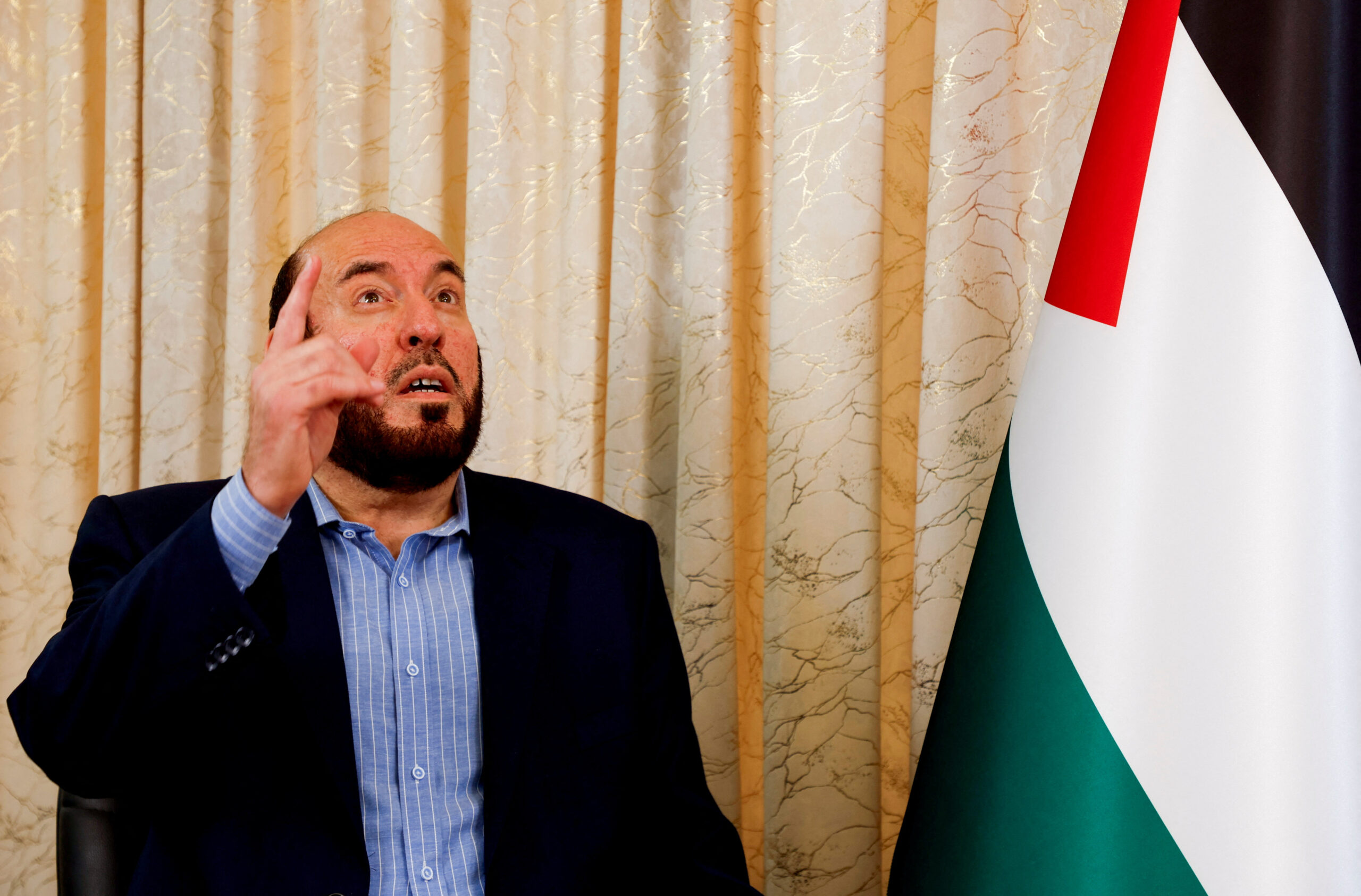
‘Resistance will persist’: Q&A with Hamas leader Mohamed Nazzal
Hamas leader discusses Qatar strike, snags in ceasefire, steps for technocratic govt
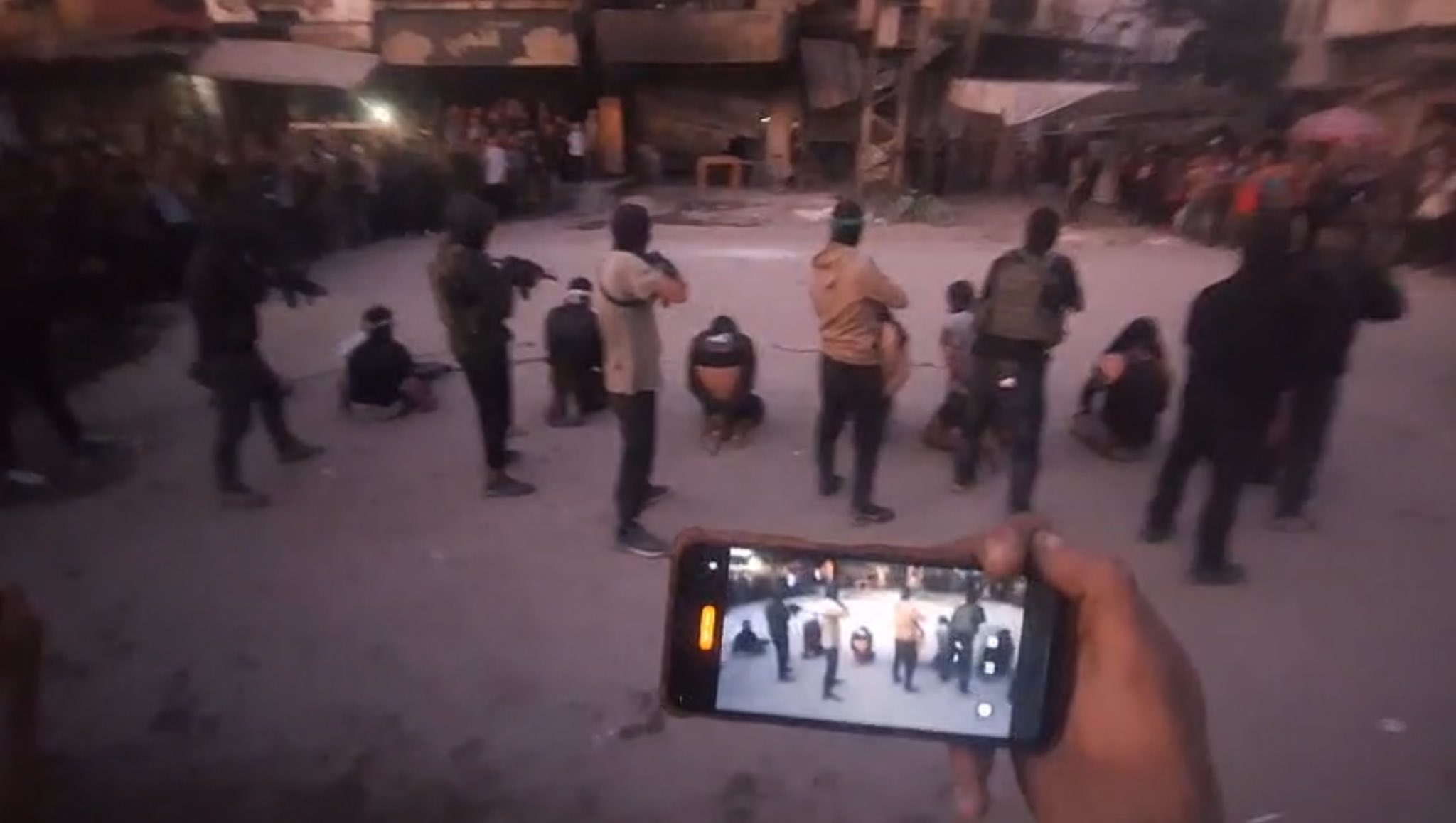
The fate of the ‘fallen’
How the ceasefire has prompted recalibration between Gaza families and Hamas
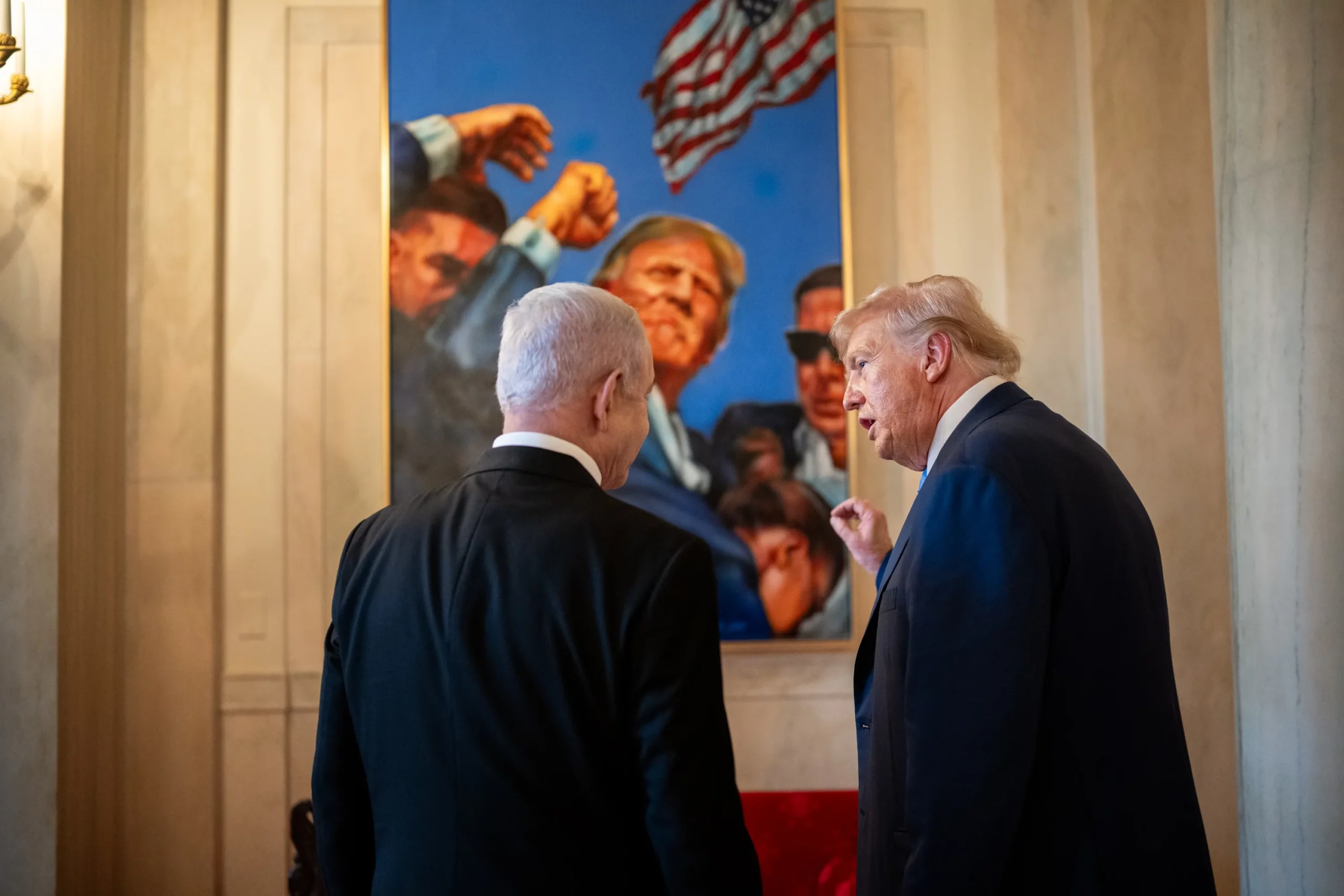
The Board of Occupation
“We call it the board of peace. Sort of a beautiful name, the Board of Peace."
Your support is the only way to ensure independent, progressive journalism survives.
You have a right to access accurate information, be stimulated by innovative and nuanced reporting, and be moved by compelling storytelling. Subscribe now to become part of the growing community of members who help us maintain our editorial independence.
Join us