
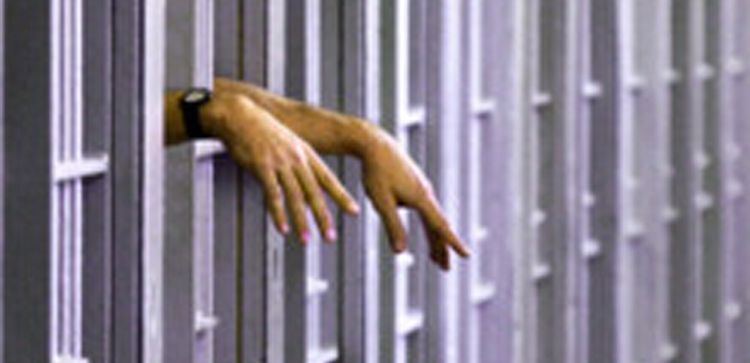
Sources: Interior Ministry building prison complex in Sinai, holding up to 20,000 detainees
The Interior Ministry is building a prison complex that can hold up to 20,000 prisoners in the Gifgafa area in central Sinai, according to two contractors working in North Sinai.
Construction began in August under the supervision of the Armed Forces Engineering Authority, they said.
Reports of the new project comes months after the president announced that the state was working on an “American style expansion” of the prison system at the inauguration of one of several new major “rehabilitation centers.”
Both of the sources, who spoke to Mada Masr on condition of anonymity, said that security conditions in the area are not stable, pointing to recent incidents in which workers on government construction projects have been targeted by militants.
The complex is being built on a stretch of land as large as five kilometers squared, which previously consisted of olive groves owned by locals that has now been bulldozed and burnt, both sources told Mada Masr on condition of anonymity.
The engineering authority is entrusted with constructing the compound, said one source. It is managing construction work through 16 contracting companies, described by the source as “first-class companies, which have a financial balance that allows them to work in giant sites without requesting payments for at least an entire year.”
This information was corroborated by engineering reports obtained by Mada Masr, including engineering designs and consultancy work provided by a consulting firm to a contracting company at the request of the engineering authority. These reports described the complex as “the Gifgafa prison area project.”
The designs show that the Gifgafa complex will consist of four standard prisons — each holding 3,360 inmates. Three of them are solely for men, while a fourth is for both men and women. There are also two maximum security prisons, each with a capacity of 3,312 inmates. The facility will thus be able to hold up to 20,064 inmates in total.
The six prisons aside, there will be a central command and observation building in the middle of the complex. It also contains a hospital featuring 300 beds, a visitation and reception building that can host up to 2,000 people and a mosque with a capacity of 800 worshipers. On top of all that, there are mechanics workshops, a slaughterhouse and an animal production unit, as well as an industrial production unit, which includes wooden and metal furniture factories and a paper factory.
The prison area also includes two court compounds, each of which consists of eight chambers, in addition to dormitories for officers, workers, security personnel, a conscript battalion, a cavalry unit and a canine unit.
Both sources asserted that the security situation in the area is secure with the presence of militants from the Province of Sinai, the Islamic State affiliate in the peninsula, in the area and its surroundings, especially Gabal al-Maghara. Construction work inside the complex is being secured by four military checkpoints, while the Interior Ministry is in charge of the site and its main gates.
About a month and a half ago, according to one of the sources, militants stole a car being used for the project before the Hama military checkpoint, one of the two sources said. This prompted senior security officials to issue instructions prohibiting workers and drivers from leaving the site after 8 pm or picking anyone up on the international road.
Security tensions in the area led the contracting companies’ work crews to evacuate the residential buildings they had rented in nearby villages for fear of being targeted by militants, said the source. While the crews moved to caravans inside the work site, according to the source, most engineers and company consultants reside in the governorate of Ismailia, west of the Suez Canal.
According to source descriptions and the obtained designs, the planned Gifgafa complex is identical to Wadi al-Natrun prison complex, which has been recently opened under the official name, Wadi al-Natrun Reform and Rehabilitation Center.
In September, President Abdel Fattah al-Sisi announced that the Wadi al-Natrun complex would be one of seven or eight “American-style prisons'' to be established in Egypt. The Wadi al-Natrun complex opened at the beginning of October 2021 and was officially inaugurated later that month. “It is one of the world’s largest correctional and rehabilitation centers, an advanced model that will be replicated away from cell blocs,” according to the Interior Ministry’s promotional video.
The “advanced model” was replicated two months later with the inauguration of the Badr City prison complex, the design of which is identical to that of the Wadi al-Natrun complex. During the same month, the interior minister published two decisions to establish three reform and rehabilitation centers in Badr City and six public prisons in Wadi al-Natrun. These are likely the six prisons inside the complex that had already been operating for two months.
The Gifgafa prison complex is the first of its kind across the entire Sinai Peninsula, both in size and capabilities. It is located between the governorates of North and South Sinai.
While it took around 10 months to complete the Wadi al-Natrun complex, one of the two sources said, the construction of the Gifgafa complex is anticipated to be rounded off this month — which would mean a total construction time of just eight months.

تقارير ذات صلة
Development plans in Arish, Sheikh Zuwayed push ahead with little public transparency
While attacks by Province of Sinai have declined, at least three officers were killed

Money and image: Framing Mohamed Ali’s face off against Sisi
Ali is a child of the post-2013 world, the world of naked conflict, stripped of any symbolism.
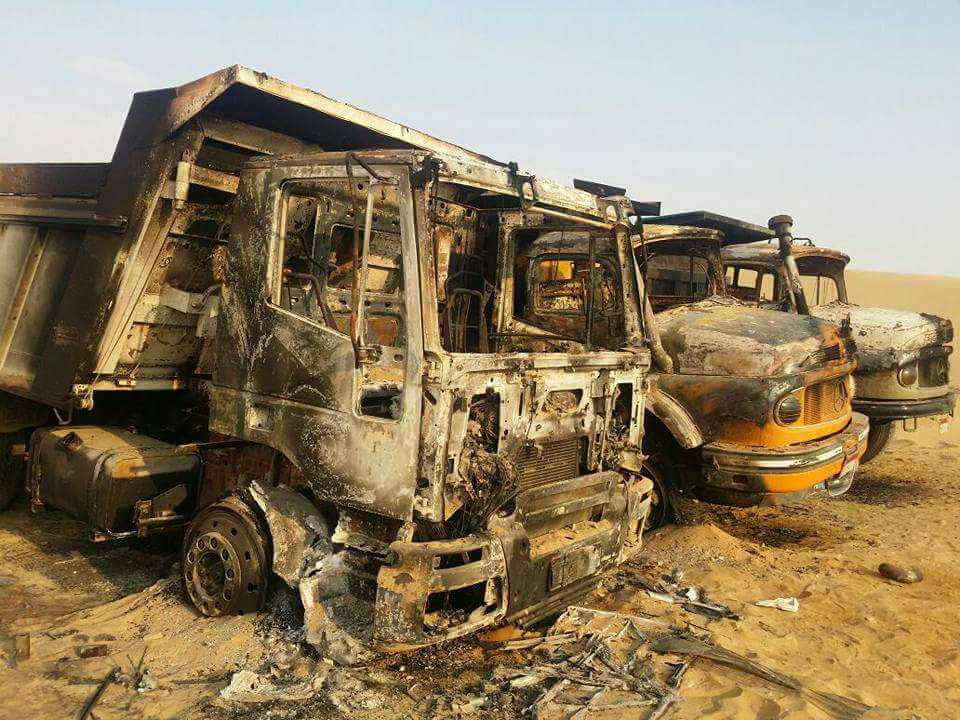
Militants target Armed Forces’ projects in Sinai, civilians pay the price
Militants carried out a series of attacks targeting equipment used for military construction projects
Your support is the only way to ensure independent, progressive journalism survives.
You have a right to access accurate information, be stimulated by innovative and nuanced reporting, and be moved by compelling storytelling. Subscribe now to become part of the growing community of members who help us maintain our editorial independence.
Join us