
Sources: Egypt seeking to maintain foothold as divergent future proposals for GERD dispute take shape
“I am telling our brothers in Ethiopia, let’s not reach the point where you touch a drop of Egypt’s water, because all options are open,” President Abdel Fattah al-Sisi said at the new administrative capital on Wednesday. “To build with each other is much better than conflict,” he continued.
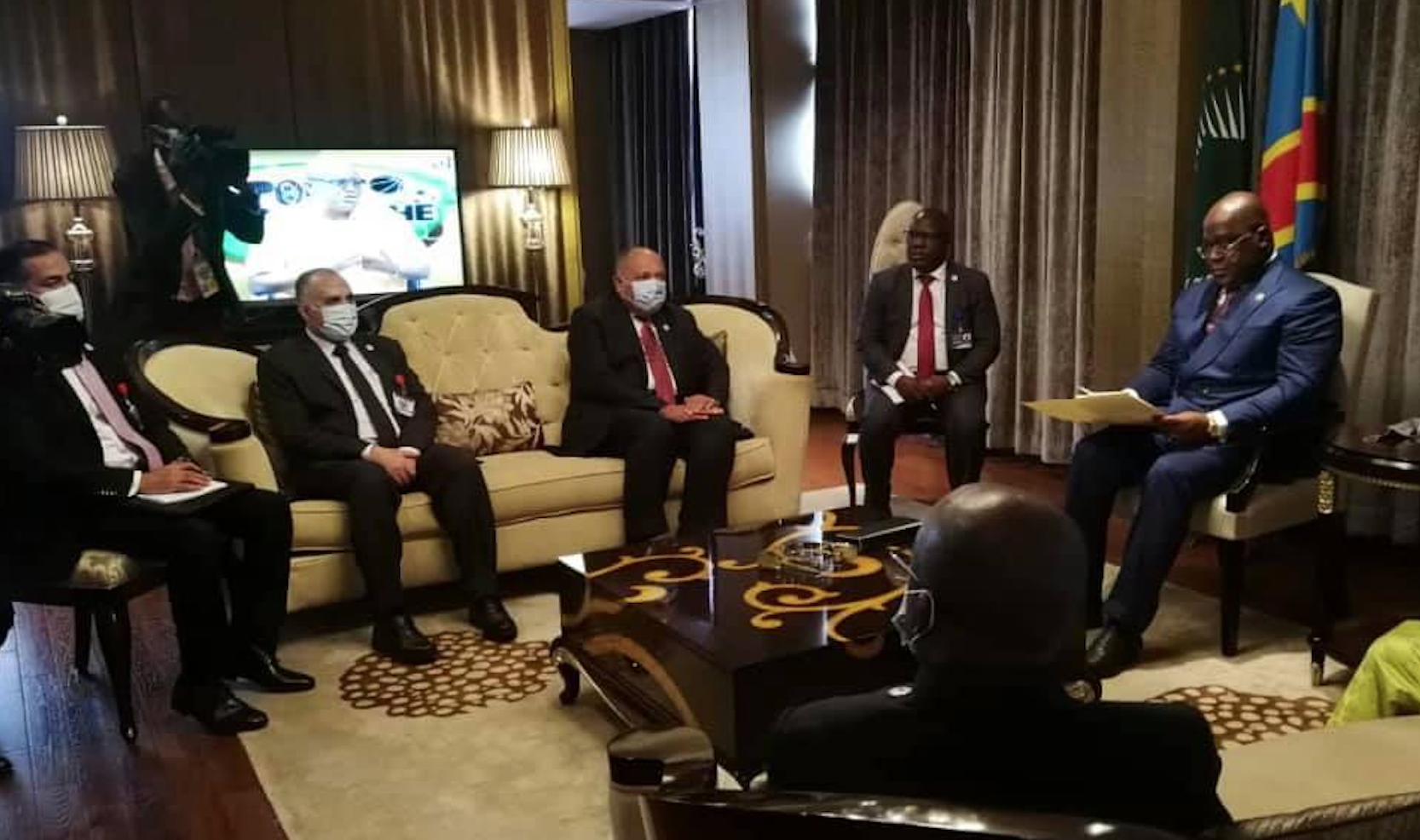
The warning came after the latest round of African Union-sponsored talks between Ethiopia, Egypt and Sudan hosted by this year’s AU chair, the Democratic Republic of Congo, ended without agreement on Tuesday.
Sudan’s Irrigation Minister Yasser Abbas echoed Sisi’s remarks, noting that “all options” are still on the table.
The alternatives that have been publicly considered thus far include continued negotiation under the African Union, which is the favored course of Ethiopia; recourse to the United Nations Security Council, for which Egypt pushed in 2020; while Sisi’s statements since March have implied that lack of cooperation could result in “regional instability,” bringing the prospect of conflict into the realm of possibility, if only in rhetoric.
Yet divergent roadmaps for going ahead with the talks are taking shape in political backchannels, Egyptian and Sudanese sources told Mada Masr, some of which could threaten Egypt’s push for coordination with Sudan to present a unified front against Ethiopia’s plans.
Among the key outstanding issues that the three countries have yet to reach an agreement on are legally binding drought mitigation protocols and a dispute resolution mechanism. While Egypt said that no progress was made in Kinshasa, an Egyptian government source told Mada Masr on Tuesday that where earlier rounds of talks have sought to establish a comprehensive trilateral agreement on the long term filling and operation of the dam, the discussions in Kinshasa “passed by” this point, to focus on “the specific point about the second filling” of the GERD, which Addis Ababa continues to insist will be carried out as scheduled in July.
An informed Egyptian source told Mada Masr on condition of anonymity that Sudanese Prime Minister Abdalla Hamdok has received an indirect offer from Ethiopian Prime Minister Abiy Ahmed to secure a bilateral agreement on the second filling in a way that would ensure no damage is incurred to Sudan’s Roseires Dam or any other water stations in Sudan, on the condition that both countries reach a satisfactory agreement to end the ongoing border dispute in the Fashaga area where periodic clashes have heightened in recent weeks.
The source added that this proposal was also offered to Sudan’s military leader, the head of the Transitional Sovereign Council Abdel Fattah Burhan, by the United Arab Emirates, which is working in coordination with the United States to separate issues regarding Sudanese-Ethiopian relations — whether with regard to the border dispute or potential GERD repercussions — from Egypt’s concerns about the dam.
The same Egyptian source and a Sudanese source with knowledge of the negotiations agreed that Sudan’s transitional government does not entirely agree on how to approach the proposal for a bilateral agreement.
On the civilian side, the two informed sources suggested Hamdok is counting on close relations between Sudan and other countries of the Horn of Africa, especially Ethiopia, which supported the political transition in Sudan. Egypt, by contrast, remained supportive of ousted former President Omar al-Bashir’s rule over Sudan until relatively late. Yet the Sudanese source said that even if Hamdok is inclined to accept a way forward that would splinter off an agreement on the second filling it could be hard for him to do so, since Abiy does not seem prepared to proffer a solution acceptable to both sides of the Sudanese government.
On the military side, the Egyptian and Sudanese sources suggested Burhan is more inclined toward Egypt, noting Egypt’s support over the past few months as Ethiopia has increased its military presence in the contested Fashaga area.
At the latest round of talks, Ethiopia rejected a Sudanese proposal backed by Egypt to include the European Union, the United States and the United Nations as mediators in addition to ongoing African Union facilitation of the talks. Ethiopia criticized Egypt and Sudan for trying to take the matter “out of Africa,” while claiming that a renewed round of talks in Kinshasa would likely be called in late April, an appointment that Cairo quickly denied as a fait accompli.
Egypt once again blamed Ethiopia for lacking the “political will” to move forward, with Foreign Minister Sameh Shoukry saying that the next step was “total coordination” with Sudan going forward. After finishing a press round in Cairo, news reports noted Shoukry flew to Khartoum overnight before attending a series of meetings in Beirut on Wednesday.
An Egyptian government source told Mada Masr on condition of anonymity that high-level talks between Sudan and Egypt are ongoing, and that they will be decisive in determining Egypt’s next steps. “Though there may not be a 100 percent agreement between Egypt and Sudan on all points,” the Sudanese source said, “there is a more or less congruent understanding” of the consequences that the two countries would face were Ethiopia to unilaterally control the Blue Nile.
A US delegation traveled to the region and was present at the latest round of talks in Kinshasa, according to the State Department. “We heard from all interested parties, including from the Congolese presidency of the African Union, about how best the United States and our European partners can support their efforts, our collective efforts, to find a path forward to constructive negotiations. The team held consultations in Kinshasa, in Addis Ababa, in Cairo, and Khartoum, and these consultations were done in conjunction with our European – with European Union representatives,” State Department spokesperson Ned Price said on Tuesday.
According to the government source, there was an “indirect and undeclared role played by the US State Department and some European countries, who know that the continuation of the current crisis without reaching a solution would create a turbulent situation in the East African and Red Sea regions, which already suffer from many tensions.”
The government source did not deny that the UAE does not support Egypt’s position on GERD, and favors the US approach to separate the negotiation tracks, adding that Egypt has been increasing contact with Washington to explain Cairo’s point of view and emphasize that US concern about ensuring stability in the East African region should not override Egypt’s concerns about water resources.
As for who will sponsor any future rounds of talks, the Egyptian government source said that "if Egypt decides to call on the United Nations Security Council to intervene again” then it would prefer to do so in partnership with Sudan.
Last year, Sudan did not express support for a demand by Egypt for the Security Council to intervene, insisting on keeping the negotiations directly or under the auspices of the AU instead. However, a Sudanese diplomatic source told Mada Masr that Sudanese officials who were previously betting on direct contact with Abiy have not seen the results they wished for.
On Wednesday, Sudan’s irrigation minister said that Khartoum has not ruled out taking the dispute to the Security Council, yet the informed Egyptian and Sudanese sources said that Khartoum would prefer not to appear to be forming a bloc against Ethiopia and the most prominent differences concern how and when to resort to the Security Council.
Despite Shoukry’s statements on Tuesday night denying Ethiopia’s claim that another round of talks will be called for in the DRC, the Egyptian government source said Cairo would not necessarily refuse additional negotiations brokered by the AU but that Kinshasa “would have to offer some kind of reason to qualify hosting an additional meeting.”

تقارير ذات صلة
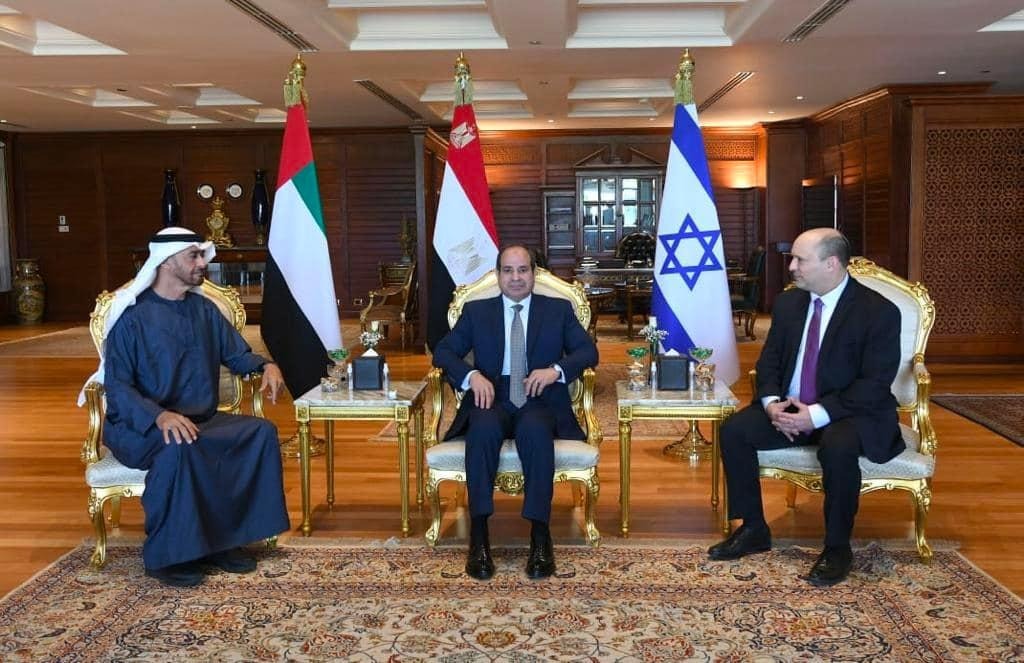
A new regional security framework? Emirati-led anti-Iran initiative plays out in Sharm
“Nothing big will come of the summit. But we could not say no,” said one Egyptian official.
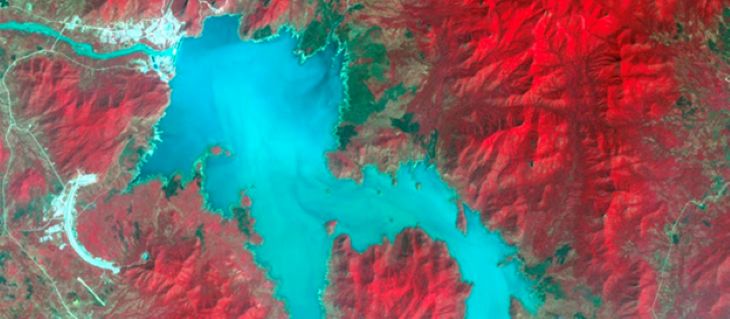
Q&A: Unpacking the environmental and economic impacts of the GERD with engineer Mohammed Basheer
Nile Basin researcher Mohammed Basheer discusses the environmental and economic impacts of the dam.
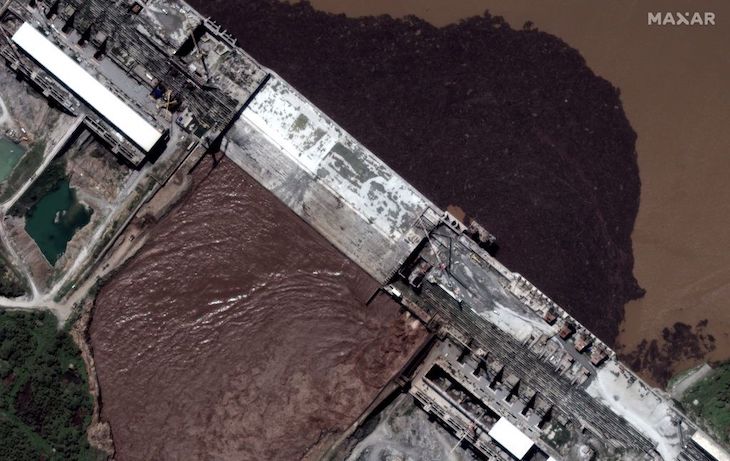
Dam deadlock: Where did Egypt go wrong in managing the GERD dispute for over a decade?
The dispute is molding Cairo’s relations within the broader Nile Basin
Your support is the only way to ensure independent, progressive journalism survives.
You have a right to access accurate information, be stimulated by innovative and nuanced reporting, and be moved by compelling storytelling. Subscribe now to become part of the growing community of members who help us maintain our editorial independence.
Join us