
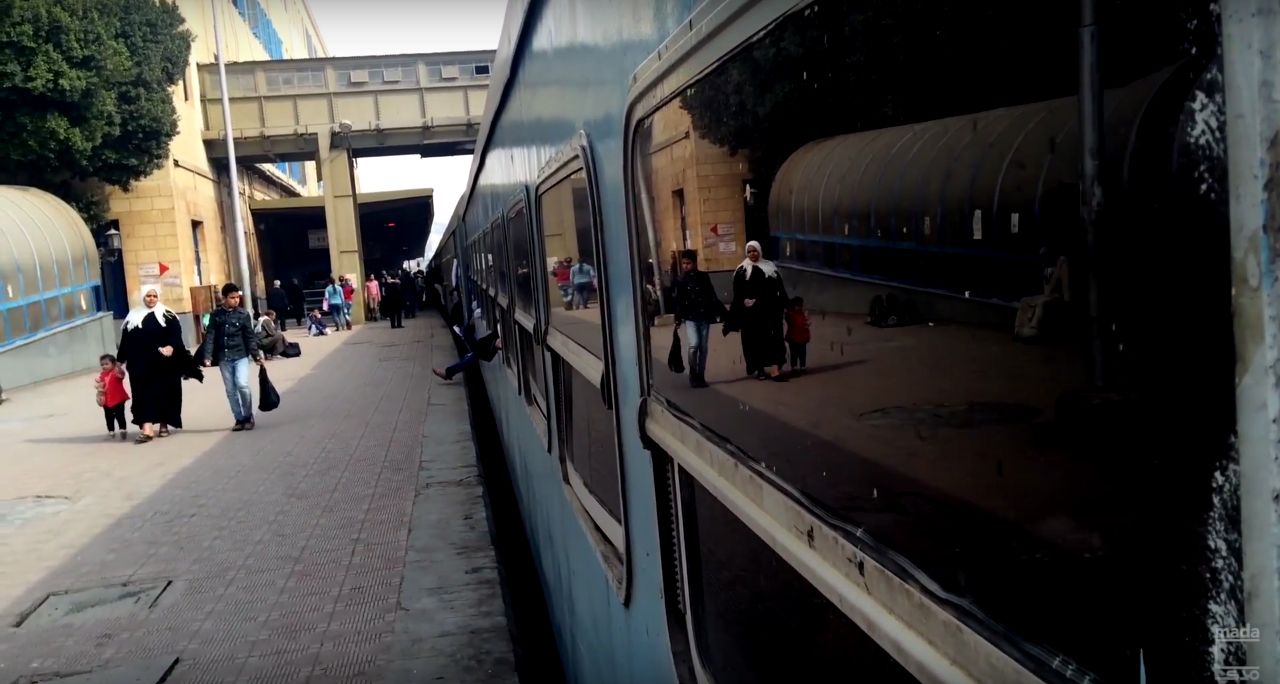
Riding the privatization train
New legislative amendment opens door to private participation and fears of price hikes
Parliament opened the door to private investment in management and operation of Egypt’s beleaguered railways on Sunday, approving amendments to the 1980 law that established the Egyptian Railway Authority.
However, stakeholders, ranging from parliamentarians to regulators, are divided on the repercussions of privatization on the infrastructure that has long been controlled by the state and is widely used by the public.
Parliament moved forward with the government-drafted bill in the aftermath of a train crash in Beheira on February 28 that left at least 15 dead and 40 injured and less than 72 hours after President Abdel Fattah al-Sisi asserted that the cost of renovations to the railway would come in at LE200-250 billion.
“I will not pay for that out of my own pocket,” Sisi said during a March 1 speech at the Alamein City inauguration ceremony.
Both the government and Parliament have emphasized that the amendments passed on Sunday do not necessarily entail privatization, opting instead to say that the legislation makes way for “the participation of the private sector,” with the state retaining ownership over the assets.
The Transportation Ministry sent the draft of the bill to Parliament on December 1, and four days later on December 5, Parliament Speaker Ali Abdel Aal referred the draft to a joint committee composed of the legislature’s committees on constitutional and legislative affairs and transport.
The bill – which consisted of one article, in addition to a mandate that applies to all legislation requiring it to be published in the Official Gazette upon approval – proposed to amend articles 2 and 4 of the original law (Law 152/1980) to allow investors to enter into contracts pertaining to the construction, management and operation of various components of the railway system, tasks which had fallen solely under the purview of the Egyptian Railway Authority. The contracts, however, would be now limited to a maximum period of 15 years, compared to the 99 years stipulated in the current version of the law.
MP Afify Kamel, a member of Parliament’s Constitutional and Legislative Affairs Committee, voiced criticism of the move toward privatization. The MP tells Mada Masr that the bill allows investors to freely control railway service prices.
The criticism was not limited to Kamel. He says that he submitted a request signed by 20 MPs to the Parliament speaker to hold another debate on the amendment to Article 4. Abdel Aal rejected the request, however, alleging that it aimed to disrupt the adoption of the law.
The amendment to Article 4 of the 1980 law grants the Egyptian Railway Authority the right, with the approval of the transportation minister, to set up joint companies and to sell the shares of these companies. Railway workers are granted the right to buy 10 percent of any joint company's shares. The railway authority is further allowed to issue public tenders to private investors (legal or natural entities) to build, manage, operate, or maintain railway utilities, outside the compliance provisions stipulated in the public utilities law and the law governing tenders on investment in natural resources and public utilities, so long as the tenders are issued in a transparent and competitive framework and that the terms of the concessions do not exceed 15 years.
For Kamel, the amendment does not contain language that would prevent investors from making unilateral decisions. To remedy this issue, he says he suggested adding a paragraph to the bill that would have mandated the Egyptian Railway Authority to maintain more than a 50-percent capital share in any joint partnership, which would have allowed it to have the final say on service prices.
Abdel Aal began Sunday’s session by striking a firm tone on the necessity of the private sector’s entrance into the rail system. “The accident in Beheira will not be the last of its kind. There is no way out of this dark tunnel, except through the participation of the private sector,” he said. “Any claim of the state’s ability to manage railway utilities efficiently is almost completely baseless. The only way out is through collaborating with the private sector, which is the case in other Arab and foreign countries.”
For MP Mohamed Zein Eddin, the deputy head of Parliament’s Transport Committee, the check on the private sector will come from the transportation minister, who he says is responsible for determining the terms of the contracts and requiring investors to ensure the interests of those who most use railway facilities (whether workers or students) are safeguarded. Investors, in his eyes, always aim to make a profit and therefore may be more interested in setting up cargo transportation lines and station restaurants and cafés, rather than establishing passenger rail lines.
In addition, given the 15-year limit on management, Zein Eddin argues that investors will aim to recoup costs and maximize profits, a fact which might influence the price of rail services but is also inescapable due to constitutional provisions.
Article 32 of the Constitution stipulates that: “Disposing of State’s public properties is prohibited. Granting the right of exploitation of natural resources or public utility concessions shall be by virtue of a law for a period not exceeding thirty (30) years. Granting the right of exploitation of quarries, small mines and slatterns, or granting public utility concession shall be based on a law for a period not exceeding fifteen (15) years.”
Samir Nawar, an adviser to the minister of transport and former head of the railway authority, believes that the amendments reflect the state’s vision to improve utility efficiency, while maintaining ownership over the assets. He tells Mada Masr that the decision to allow the private sector to participate in management and operations follows the private sector’s successful intervention in many other sectors in the country, specifically the intervention in the Port of Ain al-Sokhna.
The former railway authority head says that the Transport Ministry retreated on implementing the ticket price hikes announced in January in preparation for restructuring the utilities and evaluating the price of all rail services. The amendments are aimed at developing the sector’s resources, improving its efficiency and putting an end to the state’s steep financial losses.
After Parliament approved the amendments on Sunday, Transportation Minister Hesham Arafat announced that all passenger cars will be divided into first and second class air-conditioned cars and second class non-conditioned cars.
Sisi has struck out against the idea that the state would bear the cost of developing Egypt’s railways in the past. “You can’t ask me to spend LE10 billion to provide electricity and machinery for the railways,” he said at the opening ceremony for a number of projects in Qena on May 14, 2017. “If I were to deposit that LE10 billion in the bank, with a 10 percent interest rate, I would eventually have LE1 or 2 billion more. These utilities need more than LE100 billion to raise their efficiency in Upper Egypt and in the north. How can we come up with the money to allocate to this? How will we be able to afford to pay back our loans to Korea, France and other countries? The state can not pay for this. When we propose raising the price of tickets by a pound, people complain that it’s too much, that they can’t afford it. Well, it’s too much for me as well and I can’t afford it.”
In his Sunday address, following the Beheira train crash, he reaffirmed that the state is incapable of bearing the cost of developing rail utilities. “I need between LE200 and 250 billion in order to have a railway network that is up to standards,” he said. “This amount of money does not exist. Even if we were to borrow it, the utilities would collapse in five or 10 years. We have to face our reality.”

تقارير ذات صلة
Maadi’s Street 250 plant shop owners root in after verbal eviction orders
The shop owners were told that they would not be eligible for compensation
A train wreck foretold
Fatal accidents, like the Ramses Station crash that killed 22, do not seem to be isolated incidents
8 major railway incidents in Egypt
Mada Masr has compiled an account of major rail disasters since 2002's fire in Ayat
Your support is the only way to ensure independent, progressive journalism survives.
You have a right to access accurate information, be stimulated by innovative and nuanced reporting, and be moved by compelling storytelling. Subscribe now to become part of the growing community of members who help us maintain our editorial independence.
Join us