
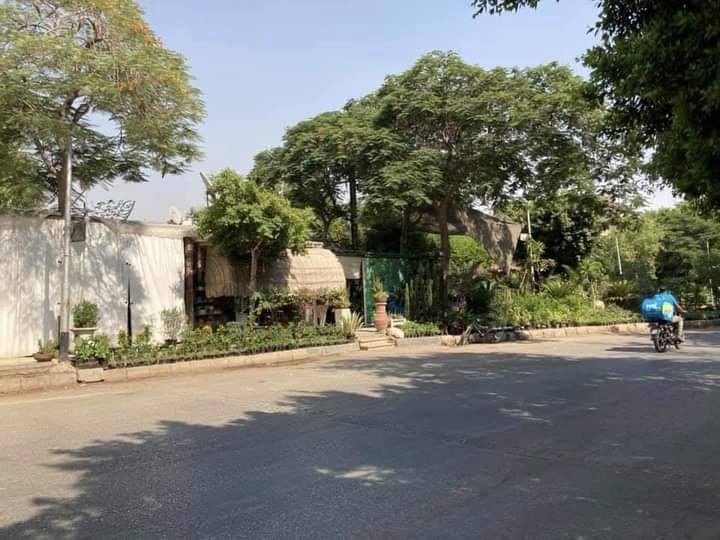
Maadi’s Street 250 plant shop owners root in after verbal eviction orders
Several small business owners in Street 250, a road in the residential south Cairo district of Maadi lined with small shops selling flowers and plants, received phone calls last week telling them their neighborhood would soon be split in two and their shops removed for a new government construction project connecting a pair of highways.
The project, called the Gazayer Corridor, is set to create a route for vehicles linking the Mariouteya Corridor with the Autostrad.
Some of the shop owners began quickly to seek new premises and to sell off their stock of plants at cut prices, after being told they could be evacuated in just two days and that they would not be eligible for compensation.
Others organized a petition, collecting signatures to support a proposal to the Transportation Ministry that would allow the majority of shop owners to stay in their place.
Yet, as is the case with a wave of urban redevelopment projects that have threatened communities in Cairo and beyond with disruption of their neighborhoods or displacement from their homes, the plans remain obscure, leaving the residents and renters in a state of confusion as to how best to proceed.

Abdel Fattah, who has owned his shop in Street 250 for 15 years, received a phone call last week from an official from MOT for Investments and Development, a subsidiary of the Egyptian Railway Authority, which owns the land in Street 250. An MOT official “warned” Abdel Fattah in the middle of last week that a decision was issued to vacate his premises and would be enforced within two days, or by July 8, Abdel Fattah told Mada Masr. Ahmed, another shop owner, told Mada Masr that he had a similar call informing him that the removal would happen within one or two days at the most.
A week later, a state of uncertainty prevails over what will happen next. A source from the railway authority told Mada Masr on condition of anonymity that demolitions are to begin right after the Eid al-Adha holidays, though the source added that areas outside of Maadi will be affected first.
Another source from MOT who spoke anonymously to Mada Masr said “it is not unlikely that the renters could see their shops suddenly confiscated and removed, adding that the owners would receive formal evacuation notices from MOT as soon as the Armed Forces Engineering Authority informs the investment body of an exact timeline for the project.
But another official, Senator Akmal Allah Farouq, who is deputy chair of the upper parliamentary chamber’s Committee for Housing, Local Administration and Transportation, said feasibility studies are still ongoing and no final decisions have been made about what will become of plant nurseries or green spaces in Maadi.
The railway authority can reclaim the contracts at any time, two governmental sources with knowledge of the contracts between the railway authority and the shop owners told Mada Masr on condition of anonymity, adding that it is not contractually obliged to compensate the shop owners.
Not all of the shops are so legally vulnerable to surprise demolitions, however. While the majority of the shop owners in the area hold newer contracts which do little to assure their stability, several sources said that a number of the shops in the area have older and more secure contracts. Those verbally informed that they would need to vacate their shops are all those who hold the newer contracts, the railway authority source told Mada Masr.
Four shop owners in the same area with the older contracts, which also tend to lease out larger areas of land, told Mada Masr that they have not been informed formally or informally that their premises could be confiscated.
It could prove a complex matter to remove these renters, according to the railway authority source who said that the renters are already in an ongoing legal dispute with the authority, which sought either to terminate their contracts or push the renters into new contracts with MOT when the public company was founded in 2004. The shop owners refused, the source added.
With the issue still making the rounds in the courts, a moratorium on evacuations prevails, meaning the railway authority is unable to order the renters to leave.
Hassan, a shop owner in his sixties who has spent almost half of his lifetime at his plant nursery in Maadi, told Mada Masr about “the effort we exerted in this place to make it as is.” “We cleaned huge amounts of trash that had accumulated in this area in the early nineties,” he said.
In a push to prevent the move, some shop owners have begun to gather signatures on a missive to the Transport Ministry, of which Mada Masr has seen a copy, which proposes a solution. The ministry should walk back its removal plans, the shop owners demand, and owners will compromise by giving up a portion of the land and returning it to the railway authority.
MP Maha Abdel Nasser has also moved in the House to request that the prime minister and the ministers of transport and culture, the governor of Cairo and the head of the Maadi district. In her request, she raises the alarm about the scope of damage that the project would inflict on the “quiet, upscale district” and the damage it would inflict to an area “with lots of parks and trees that are older than 100 years.”
تقارير ذات صلة
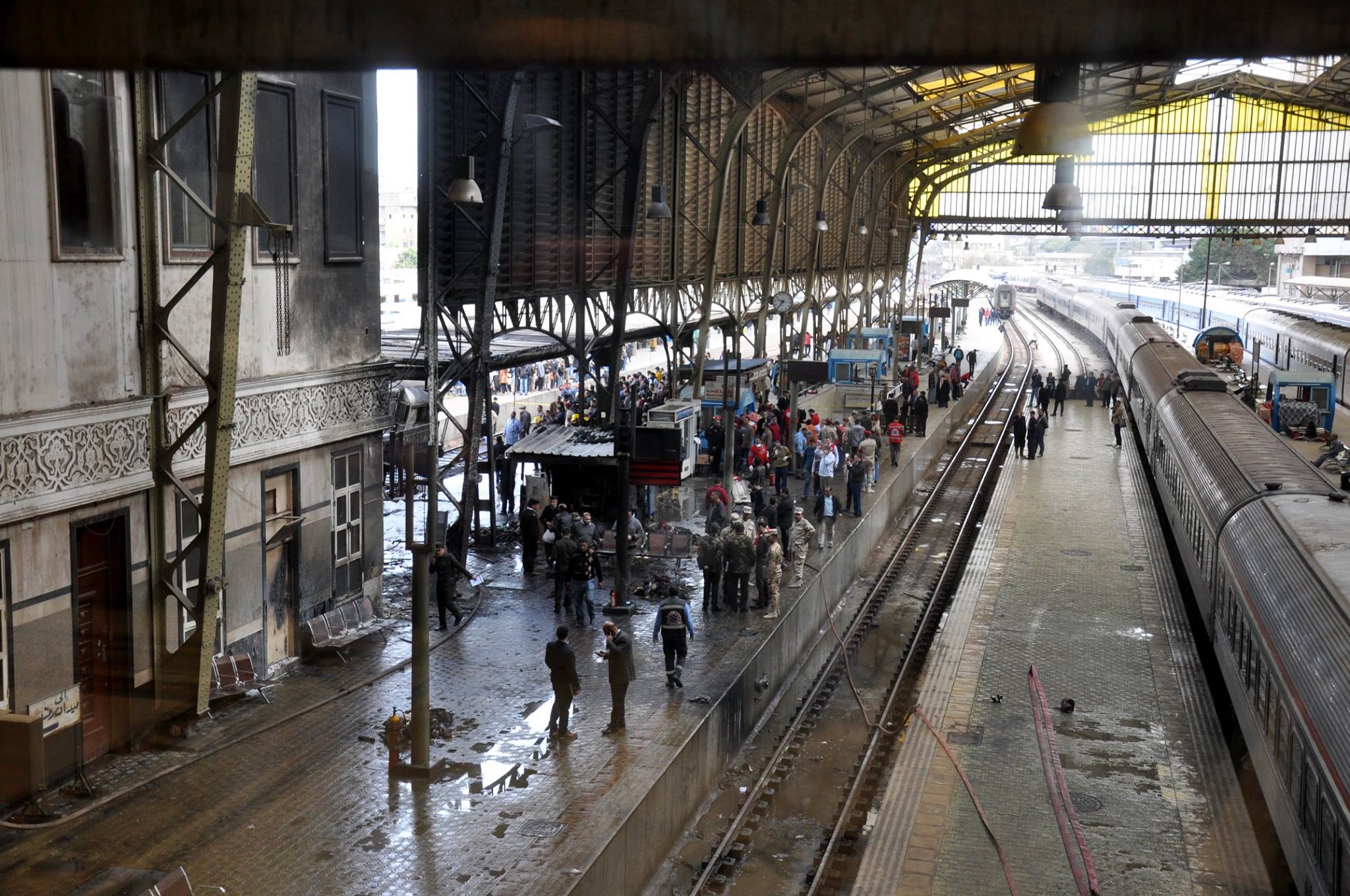
A train wreck foretold
Fatal accidents, like the Ramses Station crash that killed 22, do not seem to be isolated incidents
Riding the privatization train
New legislative amendment opens door to private participation and fears of price hikes

8 major railway incidents in Egypt
Mada Masr has compiled an account of major rail disasters since 2002's fire in Ayat
Your support is the only way to ensure independent, progressive journalism survives.
You have a right to access accurate information, be stimulated by innovative and nuanced reporting, and be moved by compelling storytelling. Subscribe now to become part of the growing community of members who help us maintain our editorial independence.
Join us