
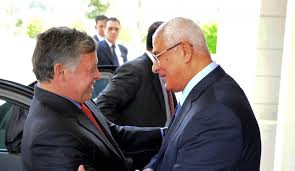
On the morning of November 22, 2012, Hamas and Israel signed a ceasefire agreement, brokered by Egypt’s Muslim Brotherhood, which put an end to eight days of the worst cross-border violence Gaza had seen in four years.
Despite Hamas’ armed resistance approach, spokesperson Ehab Hussein described the ceasefire as a victory, stating that "Israel is going to open its borders, and it's not going to be killing any of our citizens once again. And we are going to live safely." This truce was signed only five months into the reign of deposed President Mohamed Morsi, and shone next to the less successful attempts by his predecessor Hosni Mubarak, who never enjoyed an amicable relationship with Hamas.
While being celebrated locally as an Egyptian success, the deal also resulted in an international acceptance of Morsi's rule of Egypt, a position that is traditionally defined by its ability to preserve regional stability. In this context, the ceasefire reproduced and reinforced some Mubarak-era international alliances, while also unsettling others.
For one, the truce unearthed what appeared as US satisfaction with Egypt's Islamist rise to power. Many believe that the US supported Islamist governments in the Middle East in the aftermath of the 2011 revolutionary waves for two reasons: First, to establish a Sunni bloc to stand against a perceived Iranian threat, and, second, to preserve a level of regional security that guarantees a safe existence for Israel in the region. With Islamists presenting themselves as the only viable allies in the post-revolutionary period, Washington did not seem to attempt to pursue other alternatives.
Iman Hamdy, a professor of political science at the American University in Cairo and an expert on Egyptian-Israeli relations, explains how the deal brokered by Morsi represented a first step toward a longed for Israeli solution that was negotiated with the Americans and the Egyptians.
"Since 2007, Israeli Prime Minister Benjamin Netanyahu has been talking about the so-called great Gaza project, which consists of taking away part of northern Sinai to give to Hamas, and redrawing the border between Egypt and Gaza, to put an end to the Israeli-Palestinian issue with a two-state solution. Of course, such an agreement requires the support of a party within Egypt, namely the Muslim Brotherhood," she says.
"The armistice signed last November was the first step toward this arrangement. An Israeli official went out and said that his country now has a partner named Mohamed Morsi. However, in the end, the Armed Forces was a hidden player that both the United States and Israel did not pay attention to, that was on the other side demolishing tunnels between Egypt and Gaza, and prohibited the ownership of any land in Sinai.”
But not everyone shared the American-Israeli enthusiasm toward Morsi's rule. Most notably, the Gulf monarchies vocally expressed their rejection of the Muslim Brotherhood's ascent to power, raising concerns over the Brotherhood’s destabilizing effect on the region. In the past year, this has manifested in tense relations, particularly between Egypt and the United Arab Emirates, after the UAE government arrested an Egyptian Brotherhood member on charges of disturbing public order and threatening internal stability.
Abdel Khalik Abdallah, a political science professor at the Emirates University and a Gulf security affairs researcher says, "The Gulf states’ regimes, especially in Saudi Arabia and the UAE, are stable and have a lot of economic potential, making them able to resist any popular protests. They also believed that the Muslim Brotherhood at this moment was not going to achieve stability in Egypt, so they decided to support the opposition tacitly."
Unsurprisingly, the June 30 protests in Egypt that unseated Morsi with a military intervention were largely welcomed by the Gulf monarchs, particularly in Saudi Arabia and the UAE, which analysts have long argued are vying with Qatar for political influence in the Arab world. The protests and power shift in Egypt coincided with the return of a Saudi Arabian role in the region, manifested in the support of Ahmed Assi al-Jarba, president of the opposition Syrian National Coalition and successor to Moaz al-Khatib, who was a firm supporter of the Muslim Brotherhood.
The Russian weekly Argumenty i Fakty reported in early August on the visit of Saudi spy chief Bandar Ibn Sultan to Russia, where he met with President Vladimir Putin. In the meeting, Sultan reportedly asked Putin to support the military rulers in Egypt, particularly on the military front, with Saudi aid, in return for [Saudi’s] recognition of the failure of its backed military militias in Syria against the Russian-supported Bashar al-Assad regime. The paper reported that the call to help Egypt became an incentive to both Saudi Arabia and Russia as it was a countering stance to Qatar, another Syria opposition supporter.
And while the Americans and Qataris stood relatively stiff next to the Brothers in Egypt in the wake of the June 30 crisis, media reports in the Gulf spoke of threats made by Saudi Arabia and the UAE to withdraw their investments in the US and Britain, if Qatar did not halt its support for the Brotherhood.
"The problem with the United States is that it only considers its own interests, regardless of the political status of the region. The rise of the Muslim Brotherhood has a cost, especially given their belief that they would be able to create a revolutionary spring throughout the Gulf," says Abdallah. "But this is almost impossible, since the Gulf rulers belong to old families in the region, who have lived through and resisted Arab nationalism, something which [former Egyptian pan-Arab President] Gamal Abel Nasser had tried, and failed, to impose on all Arab states. Then Iran came crawling to the Gulf in the 1980s, but their attempt to penetrate the region also failed.”
And now Hamas, who seemed to enjoy the temporary Qatari-Egyptian alliance in the short heyday of Morsi, seems now, according to Tarek Fahmy, professor of political science at Cairo University, to be opting to cut relations with its other supporter, Iran, which grants it millions of dollars every month, "to ensure that the US is satisfied. And this what they have to pay after losing both sides. They are now going to minimize their suspicious relation with the Brotherhood out of fear of putting the current Egyptian administration under too much international pressure to declare Hamas a terrorist organization."
The crisis, Fahmy explains, will unfold if Hamas decides to keep supporting the Brotherhood, which can further translate into a stauncher grip from the Egyptian military regime over the tunnels connecting between the two sides, which represent an important commodities lifeline to the besieged Gaza Strip. This "may affect the truce between the two sides."
The post-Morsi period hence returns another set of Mubarak-era alliances.
Under Mubarak's rule, Egypt had been an important regional partner to Saudi Arabia and the UAE, in an alliance dubbed "The Equinox Countries." They were supporters of the Palestinian National Authority in Ramallah, represented by the Fatah movement, in opposition to Hamas, who has been backed by Iran and Qatar in recent years. This alliance was temporarily disrupted during the rule of the Brotherhood, analysts say.
And it quickly returned, with certain Gulf states openly supporting the Egyptian Armed Forces in deposing Morsi. In the past month, Saudi Arabia, the UAE, and Kuwait have given Egypt US$12 billion worth of aid, half of the sum in the form of grants, and the other half as interest-free loans and petroleum products. Saudi's King Abdallah bin Abdel Aziz was also the first to congratulate Adly Mansour on becoming the Egyptian interim-president, even before he swore his oath.
Tarek Fahmy, a political science professor at Cairo University, sees these initiatives as signs of the return of the pact, but only to contend with other positions, most notably those of Qatar and the US.
“I think that the alliance is going to be an Egyptian Saudi Jordanian Emirati pact this time. This is because the domestic policies and attitudes with neighboring countries are nearly identical," he says explaining that this could be seen after the change in relations between these countries following Morsi's ouster. "In addition King Abdullah, the Jordanian monarch was the first ruler to visit Egypt after the June 30 revolution," Fahmy says. Jordan itself has been staunchly resisting Brotherhood-led opposition politics at home.
Fahmy explains that there are four important factors that bring these countries together – the national security of the Gulf, their desire to prevent the Muslim Brotherhood from rising to power again by supporting Brotherhood opposition in the states they rule, and their wish to contain the Iranian role, while undermining the Turkish role that has emerged to support the Muslim Brotherhood.
But while these issues seemed threatening during Morsi's rule, particularly the Iran and Turkey rapprochement, Fahmy argues that Egypt didn't go that far there. "When Morsi was in power, Egypt did not have good relations with countries surrounding it. Egypt has not developed strong diplomatic relations with Iran, even after Morsi's visit to Tehran and [former President Mahmoud] Ahmadinejad’s visit to Cairo. And we cannot also say that the relationship between Egypt and Turkey has gone beyond the standard level of diplomatic courtesy, a result of Turkey’s fear of the removal of the regime in Egypt replicating itself in Turkey. Thus, diplomatic relations are going to return to the state they were in before the January 25 revolution.”
تقارير ذات صلة
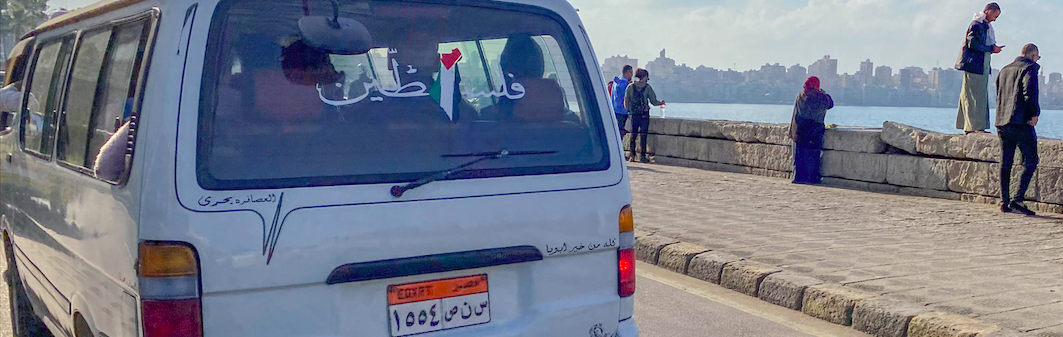
Reminding each other of Palestine
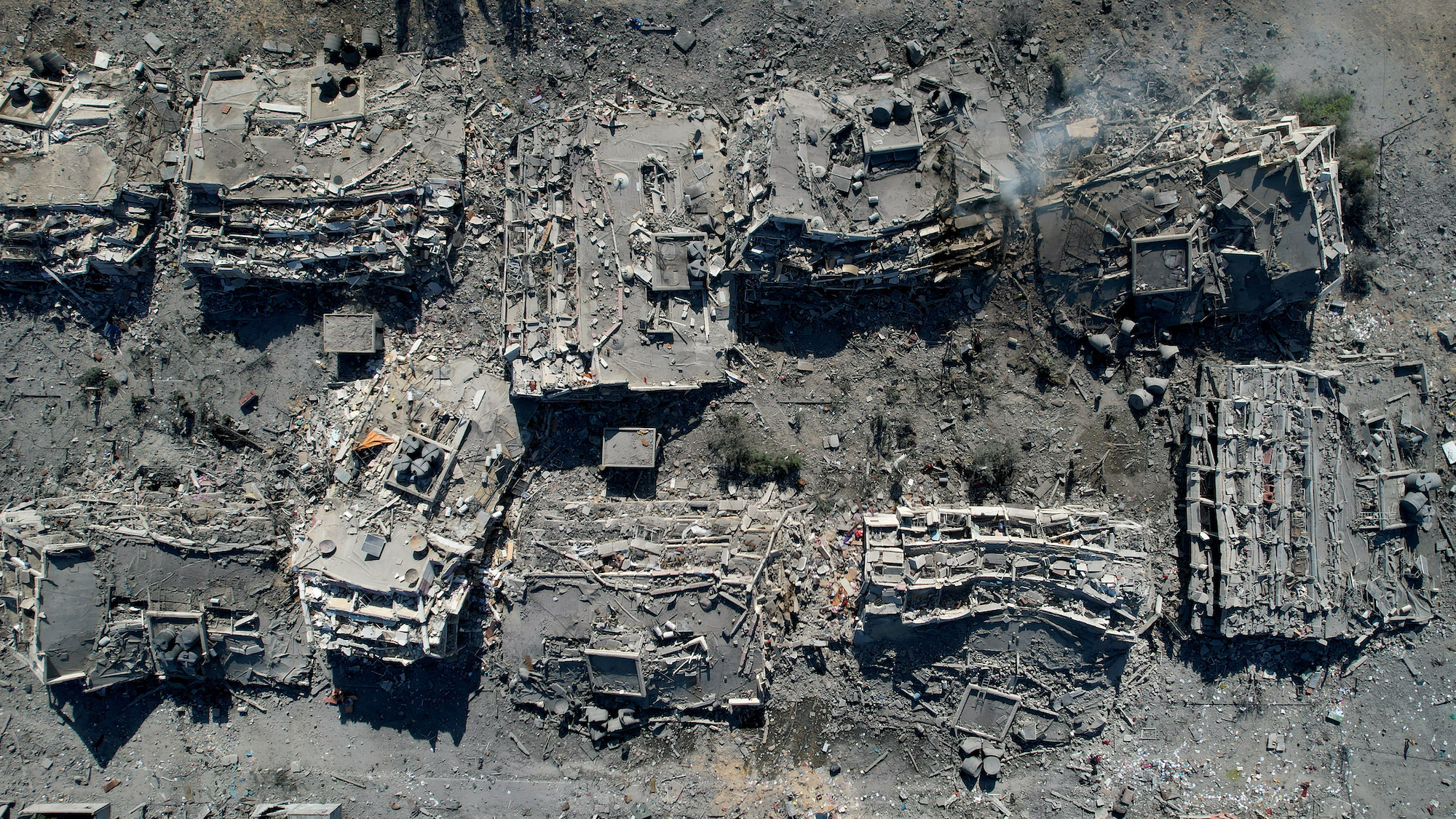
The Sinai solution: ‘Pacifying’ Gaza between 1967-1973
Re-expelling Palestinian refugees to Egypt, and particularly Sinai, is an old colonial fantasy.
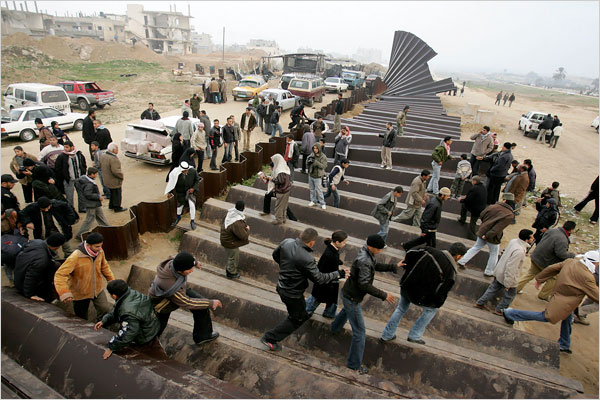
Egypt’s difficult questions in the Gaza war
Sources identified several main questions facing Egypt right now.
Your support is the only way to ensure independent, progressive journalism survives.
You have a right to access accurate information, be stimulated by innovative and nuanced reporting, and be moved by compelling storytelling. Subscribe now to become part of the growing community of members who help us maintain our editorial independence.
Join us