
The Sinai solution: ‘Pacifying’ Gaza between 1967-1973
This article is the second installment of a three-part series on the history of Israeli efforts to re-expel Palestinians from Gaza to Egypt.
Recent reports that the United States seeks a “humanitarian corridor” for Palestinians trapped inside the besieged and bombarded Gaza Strip to leave for Egypt have triggered alarms. Many critics fear that Israel may exploit the opportunity to enact mass expulsions of a kind not seen in over a half-century. Even as Egypt has publicly rejected such an outcome, the Joe Biden administration’s US$106 billion emergency funding request to Congress explicitly fantasizes about such a scenario.
These concerns are not unfounded: Re-expelling Palestinian refugees to Egypt, and particularly Sinai, is an old colonial fantasy.
The existence of the Gaza Strip reflects a paradox of the Zionist victory in 1948. On the one hand, Zionist colonists successfully removed the majority of the indigenous Arab population from the land, scattering them in all directions. On the other hand, surrounding countries did not all contain geographies that were hospitable for the reception of large inflows of Palestinians. While refugees on the northern and eastern fronts streamed into neighboring lands, to the west, the Sinai desert formed a natural impediment to long-distance mass migration. Instead, refugees mostly gathered in a tiny slice of historic Palestine that remained under Egyptian administration.
This area, henceforth known as the Gaza Strip, famously became one of the most densely populated places on earth and the heart of Palestinian resistance.
For this reason, since its occupation of Arab and Palestinian lands after the 1967 War, Israel has entertained notions of “thinning out” Gaza’s population density through transfers to other parts of the region. In the immediate aftermath of the war, Menachem Begin (then a cabinet minister) proposed transferring Palestinians to Sinai, as did Israel’s deputy prime minister at the time, Yigal Allon. Allon’s broader plan of land and population transfers, which was eventually presented to the Israeli cabinet as a basis for discussions with Jordan, served as an important vision document for understanding the demographic and territorial logic behind Zionist policies for the next few decades.
The Allon Plan — which went through successive drafts between 1967 and 1970 — originally envisioned an Israeli annexation of the Gaza Strip. This would be achieved by the transfer of hundreds of thousands of Palestinians from Gaza to Sinai and the West Bank, the reduction of the strip’s population to “manageable proportions,” and the ultimate incorporation of the small territory into Israel. But this would prove to be a fanciful endeavor.
Although the Israeli army conquered Gaza in a matter of days, Palestinians in the strip mounted some of their most sustained and widespread armed resistance for the next five years. In response, Israeli general (and later prime minister) Ariel Sharon was sent to Gaza to carry out a pacification plan. Between 1971 and 1972, the Israeli military established its control over the strip, detained or killed hundreds of Palestinian guerrilla fighters, and deported thousands of civilians while making space for the construction of new Jewish settlements. Sharon’s efforts culminated with the killing of Popular Front for the Liberation of Palestine (PFLP) leader Mohamed al-Aswad (known as “Guevara of Gaza”), the commander of the front’s military action in the strip, which marked the end of the armed resistance.
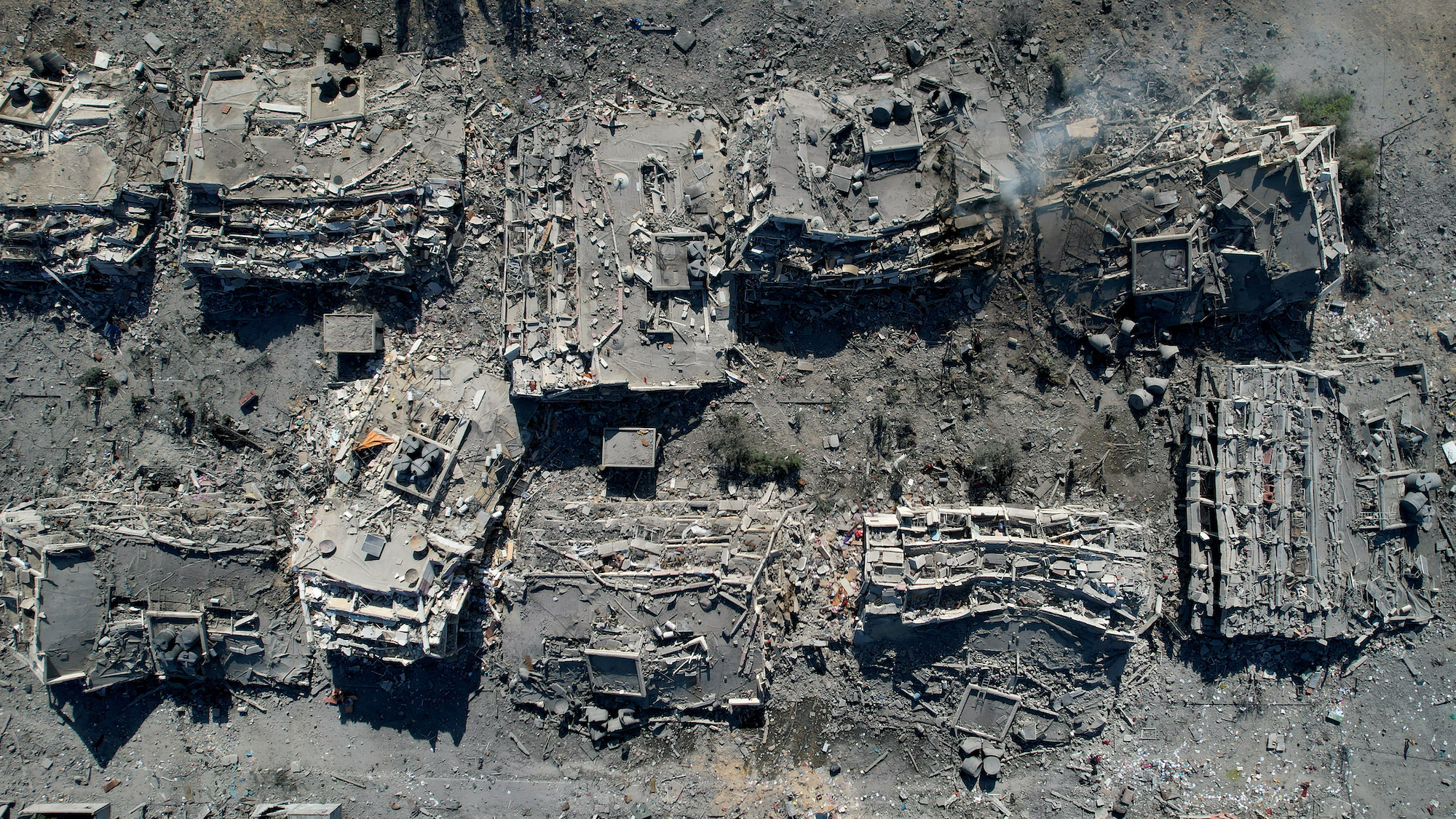
While the Allon Plan was never fully realized, a smaller-scale expulsion of Palestinians by the Israeli army did take place on the ground — which has been detailed in Sara Roy’s indispensable The Gaza Strip: The Political Economy of De-Development. Sharon demolished thousands of homes in the Gaza Strip refugee camps. This was a counterrevolution through urban planning: Bulldozers plowed through the densely built-up camps to create wider roads that would ease the movement of soldiers and military vehicles. Moreover, according to Roy, “12,000 relatives of suspected guerrillas were deported to detention camps in the Sinai desert.”
The “humane” side of this ethnic cleansing involved the construction of alternative housing for the twice-over refugees. In 1972, some displaced families were moved to a new housing project on the Egyptian side of the Gaza Strip’s southern border. It came to be known as Canada Camp, as it was located on the former site of a Canadian UN peacekeeping contingent.
The program of resettlement and annexation initially outlined by the Allon plan was eventually abandoned by the middle of the 1970s. Under the Camp David treaty, the families in Canada Camp were to be allowed to return — not to their original lands inside the Green Line of course, but back to their first place of exile, in the Gaza Strip. Israel dragged its feet on permitting the returns. Despite international pressure and foreign governments footing the bill, it took around 20 years for the families to come back to Gaza. There, they were placed in another housing project — built on a grid pattern with wide, tank-friendly roads — in the Tal al-Sultan area of Rafah.
Even this minor success in partially reversing expulsions from Palestine, however, was bittersweet. Soon thereafter the Al-Aqsa Intifada broke out and, in May 2004, the Israeli army re-invaded Tal al-Sultan, where it killed dozens of Palestinians and conducted mass house demolitions, dispossessing dozens of families for the third time.
And so the saga of perennial dispossession inflicted by Israel upon Palestinians in Gaza continued and still extends into the present.
تقارير ذات صلة

Gaza’s phase two arrives. Kind of …
Consensus over key questions lags behind the United States' announcement of progress.

Gaza’s child amputees

Israel finally approves Egypt’s gas deal after nail-biting battle
In an unexpected move, Israeli Prime Minister Benjamin Netanyahu announced on Wednesday Israel’s final approval of a controversial gas export deal with Egypt, months after Israeli hesitation following the initial…
Your support is the only way to ensure independent, progressive journalism survives.
You have a right to access accurate information, be stimulated by innovative and nuanced reporting, and be moved by compelling storytelling. Subscribe now to become part of the growing community of members who help us maintain our editorial independence.
Join us