
Editor’s note: We’re interested in where food comes from and how we can enjoy it. In February, we started publishing A Cairene Cook, who brings a new recipe every Thursday. That series is ongoing, but we also wanted to expand our kitchen to include different people’s experiences and approaches to cooking. We’re very happy to start off with this recipe from Parastou Hassouri, whose dinner parties many of us have heard about, and some have been lucky enough to be invited to. If you would like to send in a recipe yourself, please write to [email protected]
I recently read a review comparing the old standard cookbooks used in Iran to more recent cookbooks written by Iranians in the diaspora, and it made me think a lot about my own relationship with Iranian food and cooking.
My parents immigrated to the United States from Iran when I was a teenager, and like many immigrant children growing up in the US, the food I ate at home (and occasionally took with me to school) was entirely different from the food of my peers. This made it the subject of curiosity, discussion and occasional mockery (both for its impossible pronunciations and the occasionally less-than-appealing visuals). As much as I secretly hoped my mother would pack peanut butter and jelly sandwiches for me like the other kids, she persisted in preparing stews and pilafs that would fill the school cafeteria with the fragrance of fenugreek, turmeric and saffron.
I didn’t quite grasp at that time the role that food plays in connecting immigrants to their homeland and to each other. My mother is a great cook, and I grew up taking for granted good food and its mysterious ability to appear just at the moments when I was hungriest. Though my younger sister would sometimes help my mother in the kitchen, cooking didn’t interest me — I preferred to bury my nose in a book or to play the piano.
It was only later in real adulthood, once I was done with my studies and living in my own apartment, with my own kitchen, that I began to think about cooking and realized that I didn’t really know how to do it. Thankfully my mother was a phone call away, and by this point, the diaspora chefs had begun producing cookbooks.
Women like my mother didn’t really consult cookbooks to prepare the food that they grew up eating. The knowledge of how to create these dishes was passed down within families or among friends, mostly orally. If my mom ever consulted cookbooks when I was growing up (which she did at times), it was to prepare non-Iranian dishes. This is where the diaspora cookbooks came in – many including lovely pictures and little anecdotes describing the dishes and their significance to the authors or in Iranian culture more broadly.
In the many years since, through a combination of phone consultations and cookbook and cooking blog references, I have developed some skills and knowledge in the kitchen. I am not by any means the best cook in my family (my mom is one of six sisters and some of my aunts and cousins are excellent cooks), but I manage to reproduce — for the most part — those flavors with which I grew up.
I have done the most cooking in the years that I have spent living in Cairo, as I discovered that I truly enjoy introducing the food of Iran to my friends here. Although there are some shared characteristics, the overall flavor palate of Iranian food is distinct and different from Egyptian cuisine. In particular, the food of northern Iran (where my mom is from), which heavily incorporates fresh fruits and herbs into savory dishes is unfamiliar to my Egyptian friends.
The concept of “nafas” in cooking is that there is a spirit, or breath, that somehow manifests itself as certain people prepare food, making it exceptionally tasty. Some believe it is innate, and some believe it can come with skill and experience. I believe it must come from a deep love of cooking and feeding others.
I feel this because in the more than one year of pandemic, since I last hosted a dinner party, I have come to see that cooking just to feed myself (and my partner) is not nearly as pleasurable as when I cook for others. I cannot wait to host again.
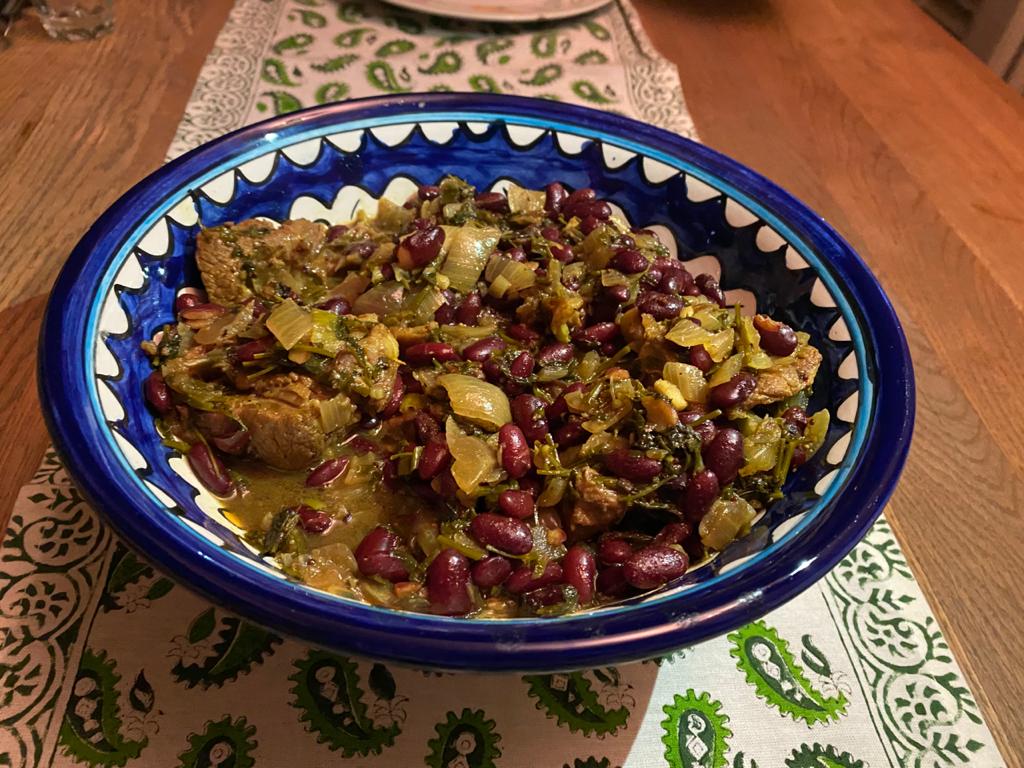
In the meantime, I will share this recipe for a classic Iranian dish called “Ghormeh Sabzi.” Iranians are famous for eating a lot of rice, and much of this rice is served with hearty stews/braises poured over it so it can soak up all the flavors. Ghormeh Sabzi, which is eaten all over Iran (though there are slight regional variations), is a stew of braised lamb or beef (the “ghormeh”) with a mix of herbs (the “sabzi”) and kidney beans (in some parts of Iran they used black-eyed peas), flavored primarily with turmeric, dried limes, and fenugreek leaves.
To make Ghormeh Sabzi from scratch is quite labor-intensive, due to the large quantity of herbs required (in Iran, one may have the luxury of buying the greens pre-done). So, to make someone this dish is often seen as a real expression of love.
The fragrance of Ghormeh Sabzi is very distinct and unmistakable. My sister lives in Los Angeles, where there is a very large Iranian community. When she first moved there, she briefly lived in an apartment complex, and sometimes upon entering it, you could tell if someone was preparing Ghormeh Sabzi by the smells wafting in the corridors. In Farsi, we even have an old expression: “his head smells of Ghormeh Sabzi,” which is often used to describe a person who is seen to be looking for trouble. I have yet to come across a good explanation of the saying, but it is an indication of how standard and inextricable to the culture this dish is.
The recipe that follows is not an exact one, because I tend not to follow exact recipes. But it should get you there, and the good thing about Ghormeh Sabzi is that though labor-intensive, it is forgiving — there is room for flexibility to make adjustments as you go along and it always tastes better the next day, after the flavors have had a chance to meld.

Ingredients: (for four)
1 kilogram beef or lamb (I prefer beef) cut into cubes
2 onions
3-4 cloves of garlic (or more)
3-4 dried limes*
3-4 lemons
2-3 bunches of parsley
2 bunches of cilantro/coriander
Approximately half a cup of chopped garlic chives or spring onion tails if chives not available.
2 cans of red kidney beans, strained (you can also use dried kidney beans that you cook yourself).
3-4 teaspoons of dried fenugreek leaves*
2 teaspoons of turmeric
1 teaspoon ground coriander
Salt and pepper to taste
*I usually bring dried limes and fenugreek from Iran or California with me to Cairo, but both should be available at local spice shops. Yellow mustard seeds can be substituted for the fenugreek leaves if necessary.
Steps:
The first step is to braise the meat.
Season the beef/lamb with a bit of salt and pepper and set aside.
Chop the onions and mince the garlic. Fry the onions in some oil (I prefer olive oil) until they are soft and translucent and then add the garlic. Add the meat, turmeric and ground coriander. After stirring the meat until it has seared some, add the dried limes (poke holes into one side of them with a fork) and the juice of 2-3 lemons, mix and then add some water — not enough to cover the meat, but to keep it from drying out and burning. Cover and let the meat cook separately. Since the meat has to cook for a while, make sure that the liquid doesn’t evaporate and the meat doesn’t dry out; so you will want to stir occasionally and add liquid.
The other step is to prepare the greens.
You will take the parsley and coriander leaves and chop them (it is preferable to chop by hand) and then add the chopped chives/spring onion tails to the mix, and lightly sauté the greens in some oil. When the greens are wilted and cooked somewhat, also add the fenugreek, stir for a minute or two, and then remove from the heat.
The meat should cook for at least an hour and a half, then you can add the greens and the kidney beans (make sure to strain them so that no liquid is added). Allow the whole mix to simmer for at least 30 minutes, and add salt and pepper to taste. The meat should become tender and easy to cut into with a fork.
Of course, if you have never had Ghormeh Sabzi, it may be hard to know if you’ve gotten it right, but the stew should have a lemony, tangy taste, herby and even an ever so slight pungent flavor that comes from the combination of dried limes, fenugreek and turmeric.
Ideally, Ghormeh Sabzi is served with saffron rice, or plain long-grained rice like Basmati.


Parastou Hassouri
Parastou Hassouri, who has been based in Cairo since September 2005, is a consultant focusing on migration and refugee law. She has worked with the UNHCR, as well as NGOs…
تقارير ذات صلة
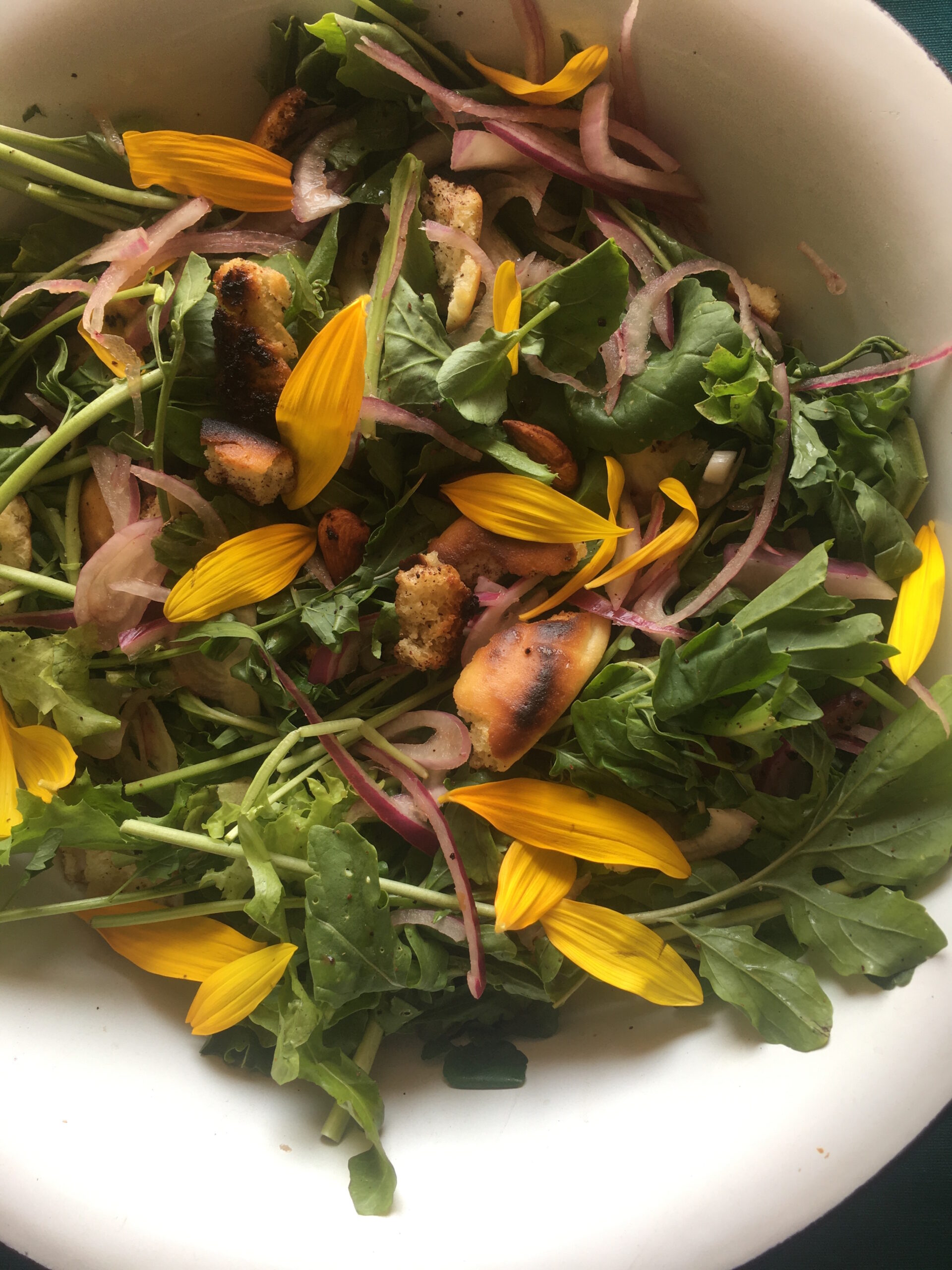
What to cook when it’s 40 degrees
Now that the heat is here to stay, I tried to think of a few easy and fuss-free dishes.
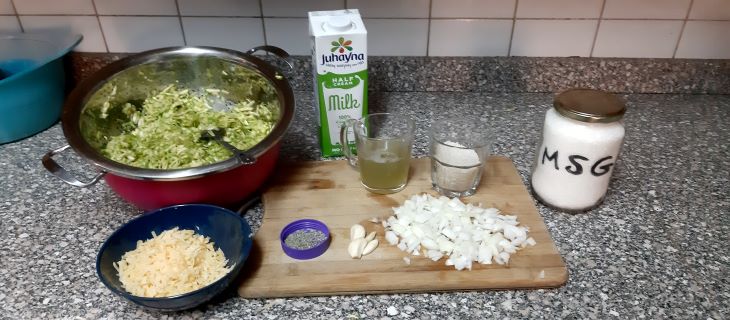
Zucchini and Rice Tian
A comforting, risotto-like dish that will absolutely make you come off like a chic tante
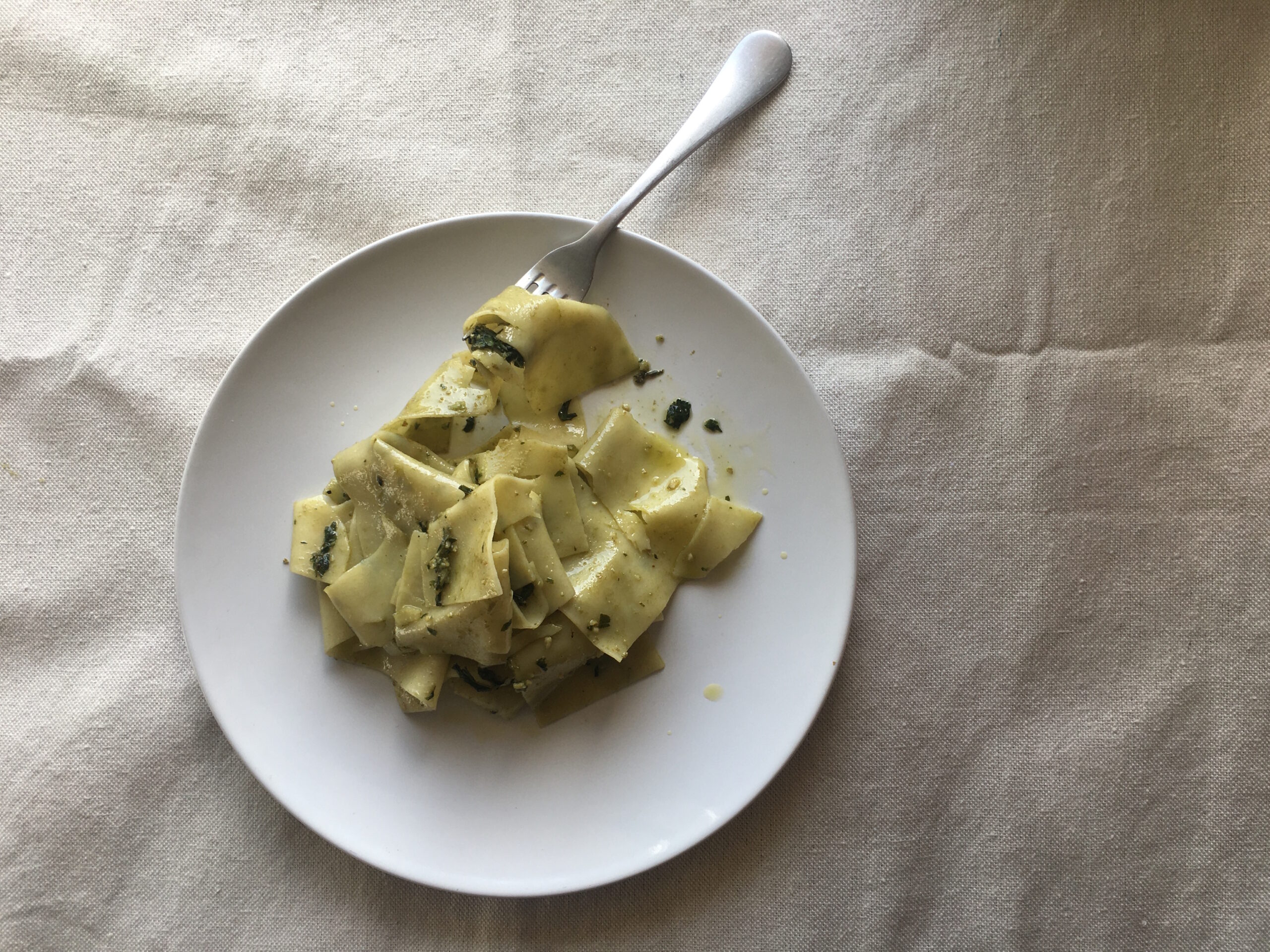
An instant favorite
This pasta is traditional to the Ligurian coast in Italy
Your support is the only way to ensure independent, progressive journalism survives.
You have a right to access accurate information, be stimulated by innovative and nuanced reporting, and be moved by compelling storytelling. Subscribe now to become part of the growing community of members who help us maintain our editorial independence.
Join us