
Raging online: Egypt’s young metalheads take to the Internet to reach fans
Despite metal's sinister reputation in Egypt, and the proliferation of more popular and widely accepted music genres, local metalheads are still finding ways to persevere.
Today, around 20 to 25 metal bands are active across the country. Though their concerts are increasingly rare and their audiences small, the fans they do have are passionate about the music.
“I was a metalhead since I was born,” says Sherif Tarek, 24. “I’m a very hardcore metalhead.”
Tarek founded Origin, one of only three bands that play oriental metal — a genre unique to Egypt — in 2010. He started listening to metal when he was 15, and then began educating himself in Arabic music before deciding to combine the two. Origin did as well as a metal band could in Egypt.
“Three years ago I was living metal in Egypt,” Tarek says. “I used to play four or five times a month.”
“It’s like a frustration outlet. It just works in a society like Egypt, with lots of cars and people on the street shouting,” says 29-year-old musician Sherine Amr. “I think it’s very healthy, to listen to how loud it is and the anger and just react to it and afterwards just feel calm — just let it out. It’s amazing.”
But the rebellious anger and loudness that draws Egyptians to metal is also partly why the genre has attracted bad publicity.
Metal came to Egypt in the 1980s through radio. Local metal bands soon formed, and found their heyday in the 1990s — the decade of rock music across the globe.
But since metal emerged in the United Kingdom and the United States in the late 1960s, the lyrics, costumes and names of some bands triggered rumors associating the music with devil worship and strange rituals.
In 1997, nearly 100 people were arrested and many homes were raided when a local media campaign led to accusations that metal bands and their fans were practicing satanism. Police detained people they considered to have a satanic "look." Black make-up and T-shirts bearing the logos of metal bands were confiscated as evidence.
Although a second generation of new metal bands has emerged since then — such as Crescent (1999), Enraged (2005), Scarab (2006) and Ahl Sina (2009) — and the 2011 revolution seemed to open up a freer space for self-expression, metal has still proved an easy target.
For example, a Muslim Brotherhood member went to a concert by SinProphecy, Destiny in Chains, Anarchy, Mephostophilis and Origin at Cairo’s El Sawy Culture Wheel on August 31, 2012. He made a recording, took it to a local police station and unsuccessfully attempted to shut down the event. A case was later filed against El Sawy and the concert's organizers.
Although it didn’t go to court due to lack of evidence, the case is still open, says Sayed Ragai, SinProphecy vocalist and one of the organizers named in the complaint.
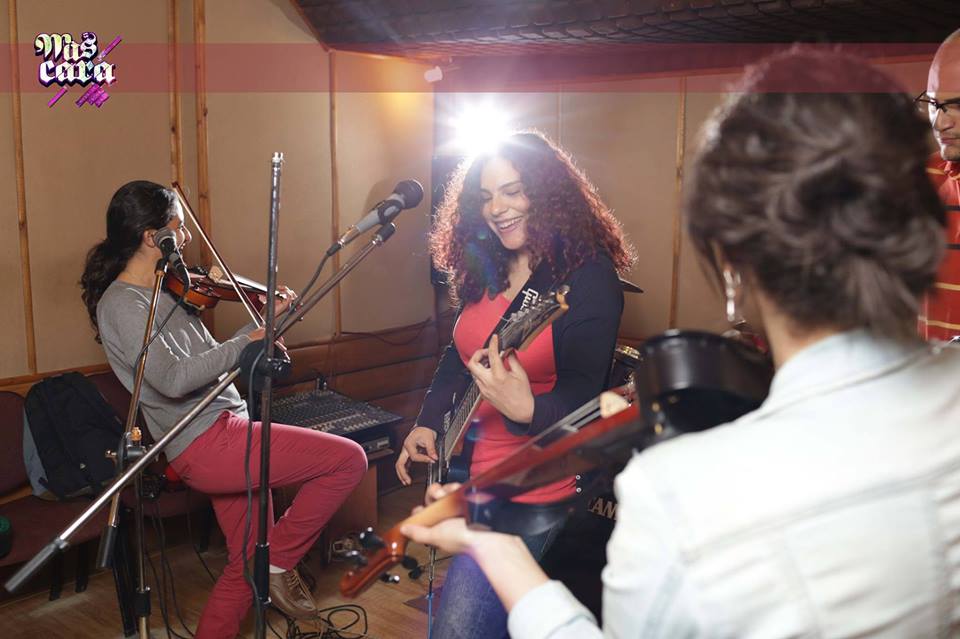
Amr, lead guitarist and vocalist for Massive Scar Era (aka Maskara), thinks the government uses lurid headlines about satanism and metal bands to draw attention away from political issues, just as it does with other crackdowns that invoke morality.
“There were elections then, and the government wanted to distract the public with any stupid topic,” she says of the 1990s incidents. “And every now and then the media doesn’t have anything to talk about, so they bring back old stories.”
While music — from older, classic Arabic forms through to cheesy pop, folk, mahraganat, home-grown hip-hop and electronic music — is an extremely popular art form in Egypt, metal’s reputation puts off the public, recording studios and venues.
What’s more, lyrics are almost always in English, and the bands’ aesthetics and instrumentation tend to closely resemble their American and European counterparts.
“It is not mainstream music that will get you a lot of audience and money if you are the owner of a venue,” says Ragai, 25. “We’re barely covering our expenses.”
Because there are so few metal bands, he says, concerts are often very similar, with the same bands playing the same sets over and over again.
There are now only three venues for metal in Egypt, all of which are in Cairo: El Sawy (next concert on November 8), and more rarely the Geneina theater in Al-Azhar park and the Townhouse Rawabet theater downtown.
“I don’t think we have an audience here,” says Amr.
Ragai says there’s a metal scene in Alexandria — where Maskara started in 2005 — but no venues. And as with many other types of culture, fans who grow up outside the two biggest cities have to travel for hours to experience it in real life. Ragai says a young fan told him he traveled from Luxor for 12 hours to get to a concert.
Ragai also says there are no Egyptian record labels producing metal, and only very few bands, including Maskara and Scarab, have played abroad.
Foreign labels take risks when investing in Egyptian musicians, adds Amr. In 2010 Maskara had plane tickets bought for them by a label to play at a festival in Sweden, and at the very last minute their visas were refused.
But Amr believes the future of metal in Egypt is not in local concerts.
“If bands understood the power of the Internet, then we might have an online market for the Egyptian scene,” Amr says. “We can reach somewhere if we focus on putting our music online.”
In recent years, other types of indie musicians have had success with online-only releases in Egypt, and the Internet has brought fame to video bloggers and social media commentators.
With diminishing audiences, few venues and limited travel opportunities, the Internet offers bands a way to connect with a wider and more international audience, to escape the dangers and inconveniences of the physical world and to take control of their work.
With Internet usage in Egypt having risen exponentially since 2000, more and more fans can listen without having to travel for hours. International audiences can potentially to listen to Egyptian metal much more easily.
Metal has always been a DIY activity in Egypt, and Internet distribution fits this approach. As well as SoundCloud and YouTube, most bands have Facebook pages which they regularly update, engaging directly with fans.
“Online is everything. You can do miracles, you can go viral with a video, you can go international,” Amr adds. “You don’t have to go physically anymore, you can do it from your studio, from your home. You can be famous.”
But shifting to the Internet has drawbacks. Due to the scene’s small size most musicians know each other, and they know their fans from seeing them at concert after concert. The sense of community fostered online is different.
Part of the experience of going to a metal concert is the head banging and the jostling of the crowd. The connection between musician and audience is impossible to replicate through videos or streaming music — no matter how good the songs might be.
The experience of listening to music live is also completely different than finding a song in digital format online: In person, the sounds are richer and visceral, and the rage more palpable.
“The live show’s more awesome. It’s really more awesome than listening to a record,” said Ragai. “I just love live shows, but at the same time I have to record my album.”
Amr, meanwhile, points out that many younger metal musicians are learning new techniques from the Internet, resulting in a marked improvement in quality.
“They have more YouTube videos to learn the music from. Ten years ago we had to do it the old-fashioned way — get a teacher to learn the guitar, the vocals,” she says. “Now everything is on the Internet, so I think the new generations are getting better.”
“Now sometimes you get into the studio and you hear kick-ass music, and you open the studio and you find an 18-year-old’s band.”
And in terms of performance, there's room for experimentation. Maskara is planning a concert that will be live streamed from the apartment of Nancy Mounir, another band member, on November 30.
"This time all our fans will be able to attend this show," says the Facebook page for the event. "Whether from your computer, laptop or even from your phone, you will be able to catch our performance and interact with us because INTERNET RULES!!!!"

Pesha Magid
Pesha Magid is a reporter at Mada Masr. She has previously published work at Egyptian Streets, Tunisia Live, Your Middle East and Egypt Today. She is graduate of the University of…
تقارير ذات صلة
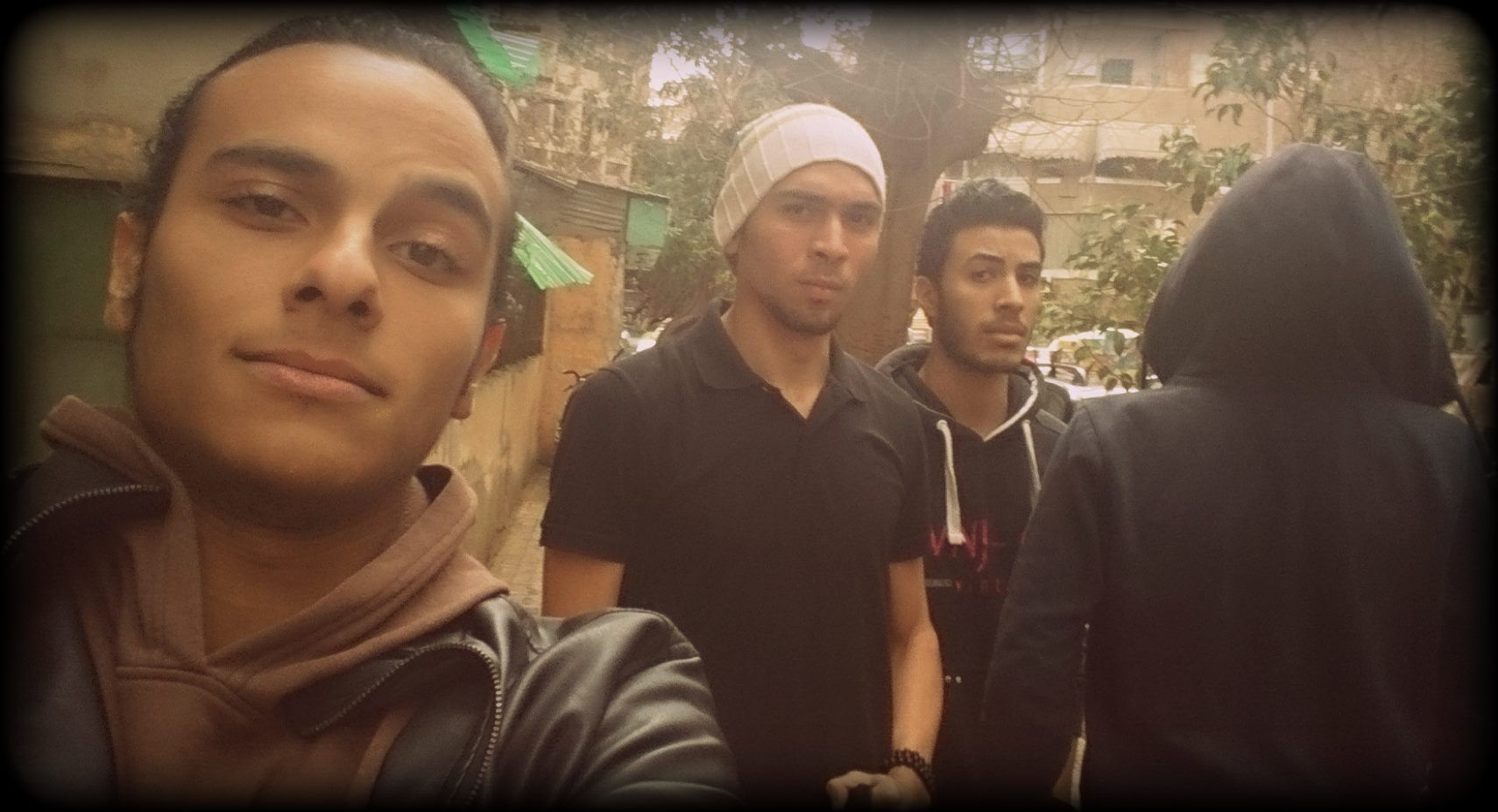
Mada Mix: On student heavy metal band Worsens
A new Cairo band synthesizes a classical German poem with quintessential heavy metal sounds for their debut album
Musicians Syndicate moves against ‘Satanist’ metal concerts
Syndicate head Hany Shaker said the musicians are part of a Western conspiracy aiming to spread “chaos and immorality” among young Egyptians.
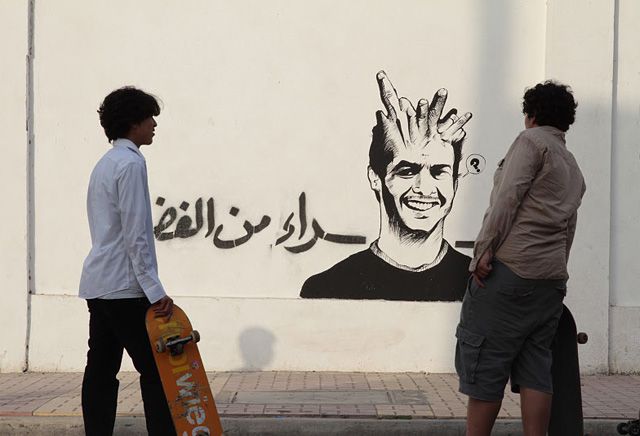
What musical repression?
MF Kalfat takes an in-depth, critical look at Ahmad Abdallah's film Microphone and its treatment of Egyptian music.
Your support is the only way to ensure independent, progressive journalism survives.
You have a right to access accurate information, be stimulated by innovative and nuanced reporting, and be moved by compelling storytelling. Subscribe now to become part of the growing community of members who help us maintain our editorial independence.
Join us