
Mada Mix: On student heavy metal band Worsens
A new Cairo band synthesizes a classical German poem with quintessential heavy metal sounds for their debut album
Johann Wolfgang von Goethe’s The Erlking (1781) is one of the poems that generations of German schoolchildren were forced to learn by heart. A horror story about the death of a child at the hands of a supernatural being, it probably caused many sleepless nights. I was lucky to be born too late — in my school it wasn’t mandatory to learn it — but my father remembers that his whole generation had to memorize every verse.
Who rides, so late, through night and wind?
It is the father with his child.
He has the boy well in his arm
He holds him safely, he keeps him warm.
This first verse sets the mood, situating the story somewhere in Germany on a stormy night. The predatory creature in The Erlking is unidentified and only the child sees it. As they seem to be pursued, the father rides as fast as he can, but he finds his child dead when they finally arrive home.
In Arabic, Goethe is not a new phenomenon. Several of his works have been translated, most notably by Lebanese-Syrian poet Fuad Rifka (1930-2011), who won the Goethe Medal for his efforts. At the 50th anniversary of the Goethe Institut in Lebanon in 2006, The Erlking was recited in translation by Abou El Eid Doudou.
The Erlking has also proved rich pickings for the world of music — apparently more than 130 musical versions of the poem exist. Long before Franz Schubert’s famous version, which was composed in 1815 and released in 1821, Corona Schröter (1751-1802) composed music for the poem just one year after Goethe published it. Her version, with its strikingly memorable melody, sounds like a folk song. Schubert’s composition is dark, and the voice adds to the tpoem’s haunting atmosphere.
In more recent times, however, a symbiosis has emerged between Goethe’s gothic romanticism and the sounds that have come to shape heavy metal music. Hope Lies Within, an American power metal band, tried their luck working with the poem in 2012. They recorded two versions, one English and one German, forging a relationship between the poem and their heavy guitar riffs and drum solos. The song maintains the same harmonic progression as Schubert’s version, though bits and pieces are added.
Now Worsens, a heavy metal student band from Cairo, has taken The Erlking and Schubert’s composition for their debut album Ta7t al-Talab (Beneath the Demand), which will be released on May 1 as a two-CD set. Worsens also keeps the same series of chord changes, and sing the piece in its original language -- though I would have liked to have heard a Arabic heavy metal version.
The song is not yet finished — the vocals are still being finalized — but the sample I heard meshes the classical music source with quintessential heavy metal sounds. It is very fast, with operatic guitar chords and riffs. Worsens’ tack is to convert Schubert’s notes and song structure exactly to the guitar. “We didn’t add anything to the style of the song, we just converted it into a metal version,” says 21-year-old Magdy Hanafy, the band’s lead vocalist and drummer. “I admire the poem and Schubert’s magnificent music. It was mind-blowing when I was converting the piano notes into three guitars and adding the drums.”
Like Schubert’s version, the track will be just over four minutes long, with no additional solos or melodies. The band invited Hanafy’s friend Ahmed Adel Shams, a 28-year-old singer in an a cappella group at the Cairo Opera House, to sing the lyrics.
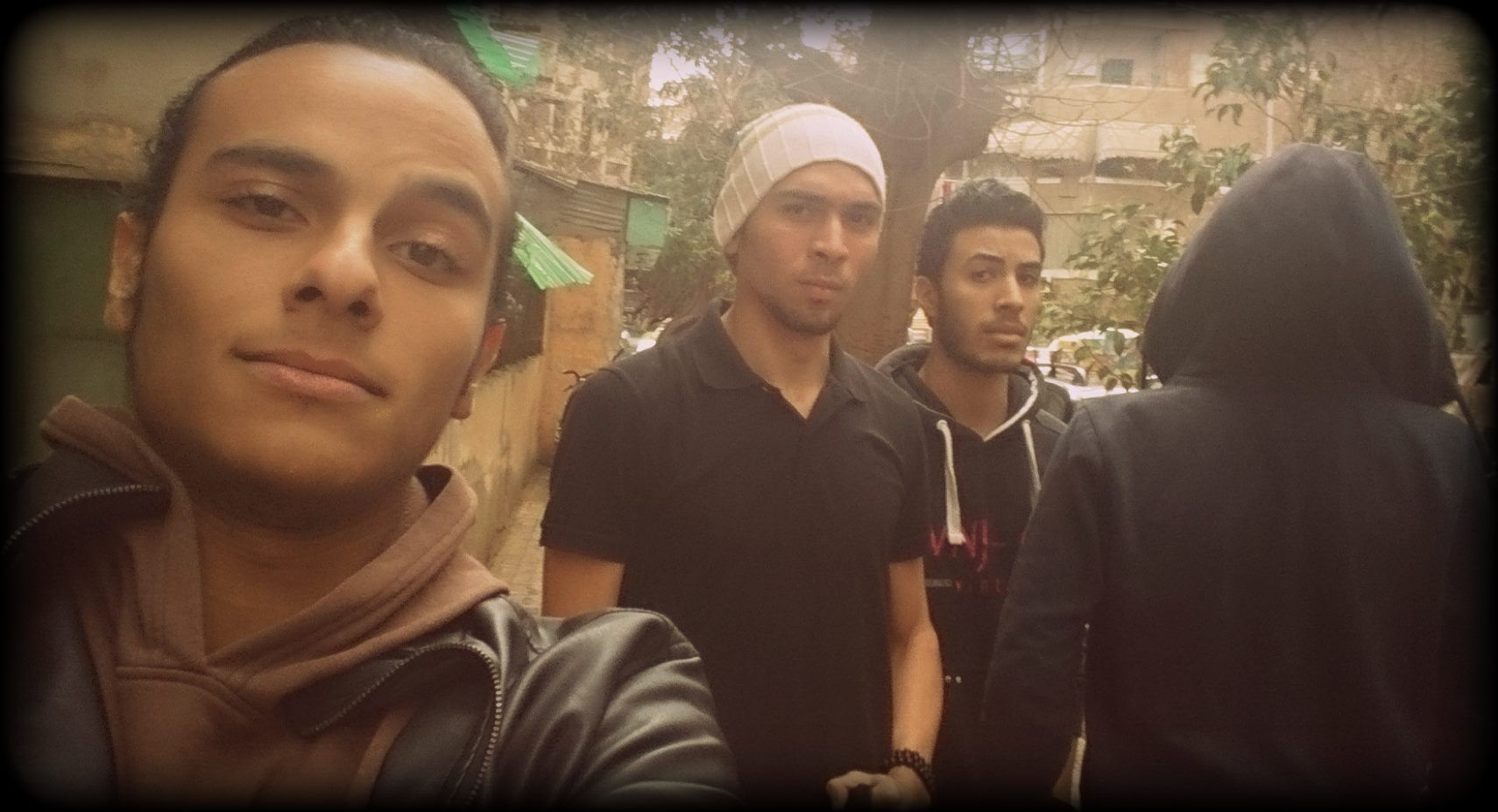
Worsens, which otherwise sings in Arabic, was started in 2014 by Hanafy, 24-year-old Ahmed Ali and Ahmed Soliman, 23 years old, all former members of the now disbanded Ta3leem Maggany, initially formed in 2013. Hanafy studies music at Helwan University’s faculty of music education in Zamalek, and Soliman (lead guitar) studies mechanical power engineering. Ali has since left the band, and two other Helwan students, Mohamed Abdelfattah (bass) and Ahmed Sokkar (rhythm guitar, vocals) have recently joined. The members say they picked the name Worsens because of society’s fearful view of heavy metal.
Magdy says they are mostly influenced by US bands such as Slayer, Metallica and Draconian. “There are no heavy metal bands in Arabic that have influenced my music,” he explains, “maybe because there are not many metal bands who write their lyrics in Arabic.” Two exceptions are Darwasha Project, founded by Mohamed Darwish in 2012 to use “the essence of theater musicals to introduce a new fusion of Arabic progressive rock/metal, and electronic music,” according to their social media accounts, and Kato Hafez, a solo musician with a heavy metal focus.
Worsens’ 14-song debut album was financed completely by Magdy and took two and a half years to write, record and produce. Most of the songs are about personal, real-life experiences, but some could be interpreted as political, such as Mayiet, their fourth and last single before the album release. Uploaded to Soundcloud four days before the sixth anniversary of the January 25 revolution, it refers to lost hope and suggests that happiness is no longer possible. You clearly hear the influence of 1990s US heavy metal bands, but its music and lyrics are distinctive, dark and strong.
https://soundcloud.com/worsens/mayiet
The days are passing, I am still in the same place, I am the same
I thought the world would be full of colors but it is just black and white (…)
My prison for me is life. [my translation]
In addition to The Erlking, another poem is used on Worsens’ album: Labayke al-Nada by Ibn Hani al-Andalusi al-Azdi (born c. 936), a celebrated Andalusian poet of the Fatimid era. The poem’s title is tricky to translate into English, but Magdy suggests “For the Sake of the Dew.” Its narrative deals with war and the weapons of that era. Azdi’s descriptions of the battles of the Fatimid made him famous, but he met a bloody end himself at only 36.
“The revolution has changed music in Egypt a lot,” Magdy says. “People gave themselves the opportunity to listen to and hear every kind of music, including heavy metal. But playing live is not a stable aspect.” Indeed, Worsens have never played live, but they hope to give a concert once the album is released, both on bandcamp and as a physical CD. The band communicates with listeners online, mostly through Facebook and Instagram – its Facebook fans have doubled in the past month to a quite respectable 1,250. Despite the genre having a strong fan base in Egypt, young heavy metal bands like Worsens struggle to keep afloat. I hope the release of their debut album will boost their popularity and get them more attention in the local scene.
تقارير ذات صلة
Creating a history mixtape: A conversation with Andrew Simon
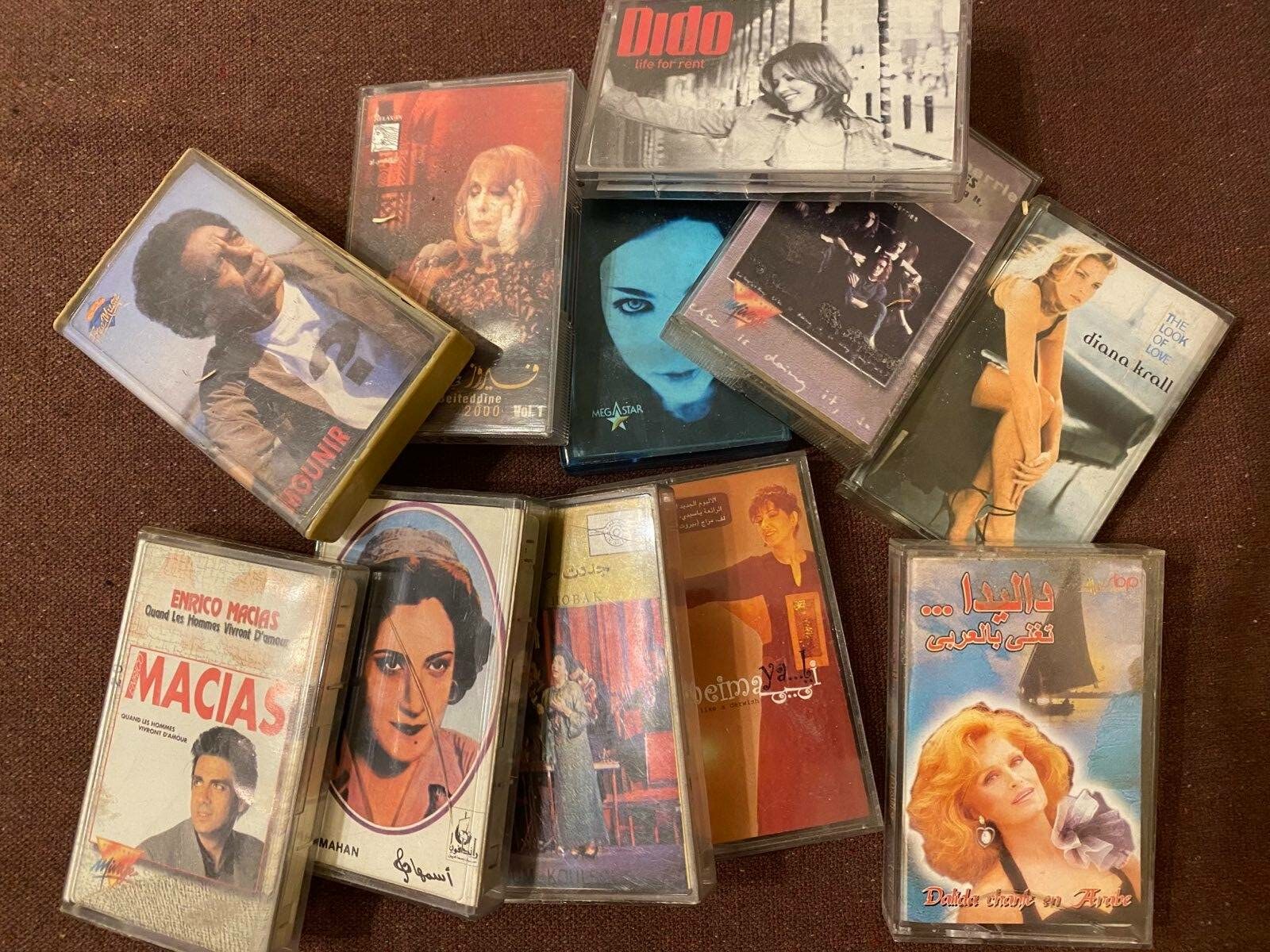
Cassettes decentralized state-controlled Egyptian media long before the invention of the internet
Detox | The music in the background
I ended my journey among the ruins of the fallen Cassette Kingdom
Detox | ‘Everything’s gonna be alright’
Well, we all know what’s up, and it’s not pretty.
Your support is the only way to ensure independent, progressive journalism survives.
You have a right to access accurate information, be stimulated by innovative and nuanced reporting, and be moved by compelling storytelling. Subscribe now to become part of the growing community of members who help us maintain our editorial independence.
Join us