
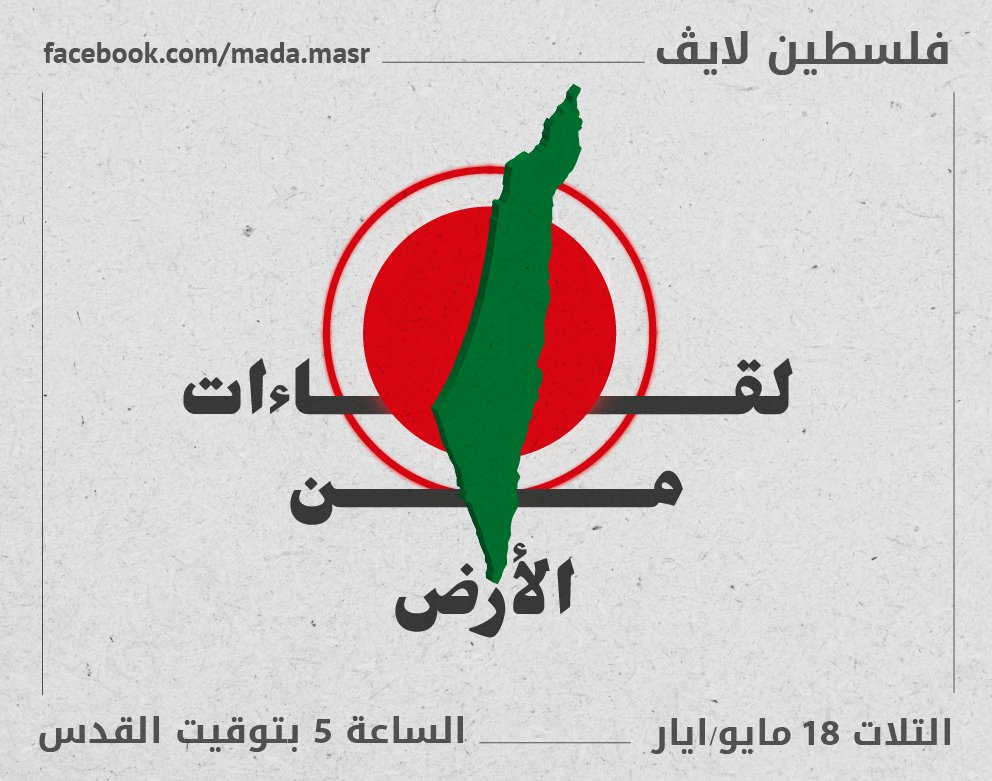
Palestine on strike | Mada live from Sheikh Jarrah, Ramallah
As tens of thousands of Palestinians went on strike against the Israeli occupation on Tuesday, both in areas that Israel annexed in 1948 and in the occupied West Bank, Mada Masr invited activists and journalists from across historic Palestine to participate in a roundtable discussion as an attempt to document some of what is happening.
The discussion, which focused on several cities across Palestine, took place as over 64,000 Palestinian construction workers went on strike, according to Israeli news sources, which noted that for every day the construction sector is shut down, Israel loses 130 million Israeli shekels (around USD$39.8 million). Rights organizations identified at least 48 West Bank residents who were fired from their jobs for participating in the strike.
The strike was paired with demonstrations across several cities, which were met with violence by Israeli security forces. At least four Palestinians were killed in Ramallah and Khalil, where Israeli security forces opened fire at protesters using live ammunition as well as rubber bullets and tear gas.
Yesterday’s casualties brought the total number of those killed in the West Bank since clashes began two weeks ago up to 26, with at least 5,164 injured, according to the Health Ministry in Ramallah.
In the ‘48 areas, at least 58 Palestinian citizens of Israel were arrested, while at least 23 Palestinians were arrested across Ramallah, Khalil, Bethlehem, Nablus and Tubas.
Before the protests were over on Tuesday, Yasmeen Daher, a projects director at Febrayer, and Lina Attalah, Mada Masr’s editor in chief, spoke with activists Tahreer Araj and Beesan Ramadan from Ramallah and with Hanady Quwasmi from Sheikh Jarrah.
Yasmeen Daher: Palestine and all its neighborhoods have been witnessing popular revolt for nearly two weeks. As independent media outlets in the Arab world, most of which were birthed from revolutionary moments, we feel compelled to document in an organic and spontaneous manner some of what is happening now in Palestine.
So, we’ve decided to do this live broadcast of interviews and meetings with a group of journalists and activists across Palestine, as a joint initiative across several media outlets,to get a sense of what’s happening as Palestine revolts against Israeli occupation.
Today, in particular, there’s a call for a general strike: the Strike for Dignity. And it appears to have been a successful effort. During this live broadcast, we will speak with people in different areas across Palestine to get a sense of what’s happening in each, as well as to get an idea of what’s happening on the ground. In addition to the strike, there’s also been a series of protests, marches and public acts of revolt, including graffiti murals and music coming out of different areas.
We would like to start by reading the statement which has been released today in attempts to unify the position of the intifada, or the Palestinian popular uprising, and an understanding of the context in which this uprising is taking place.
The Manifesto Dignity and Hope
People of Palestine,
Here we are, writing a new chapter of courage and pride, in which we tell a story of justice and of the truth that no level of Israeli colonial repression can erase, however cruel and brutal that repression may be.
The story of truth is a simple one in our land: the truth is that Palestinians are one people, one society. Zionist gangs forced out most of our people. It stole our homes and destroyed our villages. Then, Zionism decided to shred what remained of Palestine, isolating us and separating us in small strips of our land. They tried to turn us into different societies, each living apart, each in its own separate prison. That is how Zionism has sought to control us. That is how they worked to fragment our political will and to prevent a united struggle in the face of racist settler colonialism in all of Palestine.
This is how Israel imprisoned us in prisons of isolation. Some us caged in the “Oslo prison” in the West Bank, some in the “citizen prison” in the part of Palestine occupied in 1948, some of us isolated by the monstrous siege and ongoing, devastating assault on the “Gaza prison,” some of us isolated under the systematic Judaization campaigns in the “Jerusalem prison,” and some isolated from Palestine altogether, dispersed across all corners of the globe.
It is now time for this tragedy to end.
In these days, we write a new chapter, a chapter of a united intifada, that seeks our one and only goal: reunited Palestinian society in all of its different parts, reuniting our political will, and our means of struggle to confront Zionism throughout Palestine.
This long intifada is, at its heart, an intifada of consciousness. It is an intifada to overthrow the filth of quietude and defeatism. Because of it, the brave generations to come will have been raised, once again, on the fundamental principle of our unity. It will stand in the face of all the elites working to deepen and entrench the divisions in and between our communities. This intifada will be a long one in the streets of Palestine and in the streets around the world, an intifada that fights the hand of injustice wherever it tries to reach, that fights the batons of cruel regimes wherever they try to strike.
This is an intifada of bared chests and foreheads held high, armed with revolutionary goals, deep knowledge and understanding and the organizational toil and commitment of every individual and collective in the face of the bullets of the Israeli occupation wherever they are fired.
Long live a united Palestine. Long live the intifada of unity.
Lina Attalah: To start, Tahreer, can you tell us a bit about the protests you were just taking part in?
[wonderplugin_video iframe="https://www.youtube.com/watch?v=77CfYylorqE" lightbox=0 lightboxsize=1 lightboxwidth=960 lightboxheight=540 autoopen=0 autoopendelay=0 autoclose=0 lightboxtitle="" lightboxgroup="" lightboxshownavigation=0 showimage="" lightboxoptions="" videowidth=600 videoheight=400 keepaspectratio=1 autoplay=0 loop=0 videocss="position:relative;display:block;background-color:#000;overflow:hidden;max-width:100%;margin:0 auto;" playbutton="https://www.madamasr.com/wp-content/plugins/wonderplugin-video-embed/engine/playvideo-64-64-0.png"]
Tahreer Araj: The protest has moved to the barrier between the Beit El settlement and Ramallah. There have been clashes between young people and occupation soldiers on the outskirts of Ramallah, which remain ongoing as we speak. There’s been dozens wounded by live ammunition, rubber bullets and tear gas fired by Israeli soldiers at protesters.
Usually, protests are led by young men and women. However, today, hundreds of families are taking part, hundreds of families with their children in tow and carrying flags are taking part, heading to the site of the protest.
It’s a very special moment to see Palestinians on multiple fronts protesting and resisting. We are one people from the river to the sea.
It is time for the international community to break its silence on Israel war crimes, for Israel to be held accountable for the crimes committed against Palestinians and their lands.
Beesan Ramadan: As Tahreer mentioned, the protest began in Manara Square, bringing together thousands of people of all ages: families, children and university students.
There was a call to head to the home of the martyr Shaher Abu Khadija in Kafr Aqab. It’s quite a difficult area to access, as it is located between Ramallah and Jerusalem. It’s officially part of Jerusalem Municipality, but it’s located outside the wall, the annexation and expansion wall. Some of the young people wanted to head there to offer their condolences to the martyr’s family. The protest is now headed to the border that surrounds the Beit El settlement. Clashes are ongoing and there’s news that someone has been martyred in the clashes. We can’t verify the identity of the martyr yet. But I think there will be an escalation in the clashes.
BR: To Hanady, from Sheikh Jarrah, where the situation is also quite difficult.
Hanady Quwasmi: I’m currently in Sheikh Jarrah but have managed to get away from the epicenter of the clashes because the protests are being heavily suppressed.
To give you a quick overview of the situation in Jerusalem today, the city has joined the call for the general strike. For the first time in years, we are witnessing a collective strike over all of Palestine despite the geographical barriers imposed by the occupation. We have strikes in the West Bank, in the interior [areas annexed by Israel in 1948] and in Jerusalem.
There have been two levels of participation in the strike. All the markets and bazaars have closed their doors. Shops owned by Palestinians are closed. Parents are not sending their kids to school.
The other level of participation comes as hundreds of Palestinians who are employed in the Israeli workforce have gone on strike. It’s quite well known that many public sector facilities in occupied West Jerusalem depend on Palestinian labor. This is a more effective type of strike. Rather than just closing down our own businesses, it sends a message that we, as Palestinians, are united in our resistance against the oppression we face daily.
There have been calls for public protests to convene at the Damascus Gate, one of the main gates of the Old City. The protest was set to start at 3 pm, but it was immediately quashed by Israeli security forces. The protesters then moved in the direction of Sheikh Jarrah. For context, Sheikh Jarrah is a five-minute walk from the Damascus Gate, so attempts to evict Palestinians from the neighborhood serve to tighten the Israeli stronghold on the Old City.
Sheikh Jarrah, in which several Palestinian families face forced evictions, has been completely blockaded with cement blocks and barbed wire manned by Israeli security forces. Palestinians that do not have Sheikh Jarrah listed as their place of residence on their IDs are banned from entering the neighborhood. So people protested at the barricades to show solidarity with the neighborhood.
A sit-in at the barricade started at 4 pm. Security forces immediately tried to disperse protesters using multiple methods. First, they fire water cannons containing foul-smelling organic material, known in the west as skunk cannons, Israel is the prime producer and exporter of skunk cannons for crowd control. Every street corner in Jerusalem now smells of skunk. They were deployed by the Israeli military at all protests in Al-Aqsa, Sheikh Jarrah, Damascus Gate and other neighborhoods in Jerusalem.
They also used stun grenades and rubber bullets, which are not as benign as the name suggests. They can cause serious injuries. The security forces often shoot to maim, aiming their “rubber bullets” at the face and upper limbs. Many protesters have lost their eyesight in the past few days in the West Bank, in the interior and in Jerusalem.
After the violent dispersal of the protests at the Damascus Gate and Sheikh Jarrah, many young people have engaged in skirmishes with the security forces, throwing rocks.
There’s also been several arrests in another attempt to scare people into submission.
There’s been new units deployed to suppress the protests. With every new unit deployed, they’ve had more violent means at their disposal. Today we’ve seen the Yamam, a particularly violent unit within the occupation's police force.
That’s the situation in Jerusalem now where there’s been an attempt to escalate the strike to a site of protest, solidarity and unification among Palestinians.
Without wishing to sound sentimental, it's very special and unprecedented to see Palestinians in different cities engaging in protests against the occupation. The interior, the post-48 cities, the West Bank are all engaged in protest simultaneously. There’s a sense of unity, and solidarity.
What started as a movement to protest the forced displacement of Palestinians from Sheikh Jarrah and to protect Al-Aqsa Mosque has blossomed into a unification and renewed solidarity among Palestinians in all territories and in the diaspora, with worldwide expressions of solidarity, as well as Arab and Islamic solidarity.
Most Palestinians cannot actually visit Al-Aqsa Mosque due to the policies on the restriction of movement of Palestinians within the occupied territories, so it’s extremely hard to visit without undergoing lengthy bureaucratic processes and applying for permits, etc.
Only Palestinians within post-48 borders and inhabitants of Jerusalem can access the mosque. For Palestinian Jerusalemites — if I may take the liberty of transferring how people feel about Al-Aqsa —it’s their home. Their houses, markets, playgrounds are all adjacent to Al-Aqsa, and, for many people, it seems like the last Islamic Palestinian site remaining that belongs to them in Jerusalem.
Jerusalem has been occupied. Old houses are being demolished. People are being forced out of their homes. There are arrests. Local organizations have been shut down. Any attempt to celebrate things like Mother’s Day or Women’s Day without a permit from the Israeli security forces is impossible. They constantly try to clamp down on any attempts from people to self-organize. And so Palestinian Jerusalemites really do feel like it’s the last place standing after every other place in Jerusalem has been suppressed and shut down.
This is why I feel that it’s become a symbol for Palestinian presence in Jerusalem and why people are so adamant about defending their right to assemble there.
LA: I’d like to hear from Beesan. Can you tell us what’s new in the scene of Ramallah?
BR: My baby is two years old. It’s his first time to live through teargas. They just brought us this onion to sniff. That’s new to me. I didn’t expect it. Seriously, I have been a mother for two years, and motherhood has made everything new to me, especially in how careful I have to be when out in the streets. I feel I have acquired a sense of fear, especially for someone, like me, who naturally should be more active in the streets.
I must admit that there’s a sense of duty for everyone to be in the streets, from the youngest child to mothers of five children. Today I have been thinking of single mothers. Those who don’t have partners, and take care of their kids on their own. I think of them and their confusion at what to do. The mothers who wonder, “Where do I go and what do I do with this baby if I want to join the march in Ramallah?” It made me think of popular initiatives during the first intifada, such as kindergartens and child care, which sprang up when the community was confronted with the needs of mothers whose partners are detained and still have children to take care of while they participate in the protests. Today, we are in need of such a community project that would take care of babies and children, while their mothers go to work or join the protests. I therefore send my sincerest respect to mothers in Gaza, now that I can relate to more of what they go through, especially whenever I see boys in Gaza. Now, I think of them as if they’re my own. Actually, if two years ago, I had heard myself saying this, I wouldn’t have taken myself at all seriously.
The other thing, which I would like to add to what the other women here have mentioned, is that the struggle we are engaged in is an existential one. We have a chant that goes, “It’s either us, or us,” [from the proverb “This land will not hold two identities. It’s either us, or us. We are permanent, they are transient”] that comes across more today than ever before. From the river to the sea. Gaza is a powerful point of hope for all of us today. Gaza is engaged in actions that are shaking the occupation’s power the most. The dynamics of the confrontations differ from Yafa to Nablus or Ramallah, and that’s also how each one of us experiences it differently.
What’s really special about this strike is that it was responded to spontaneously and voluntarily. We’re used to strikes. But we’re used to an entity organizing the strike, roaming the city around and calling for it. But this strike today is different. It took only the bare minimum to organize it. The call was out, and people showed they were hungry for something like this. Actually the question that is around now is, well, if we do such a thing and it succeeds, what do we do with it? Is this only for releasing some suppressed energy? Or is it a step of something that will be followed up and escalated? So, yes, today will say a lot. Right now, in Ramallah, there are over 15 points of clashes. There are also calls for marches by 8 pm this evening. And we already have one critical head injury and one martyr. And it’s not that people are just out next to their homes, we have young men commuting to villages to support them in their clashes. Many people smuggled themselves into Jerusalem in the past two weeks, and grandmothers snuck in without securing permission.
YD: What’s special about this current intifada at your end in Sheikh Jarrah, Hanadi?
HQ: Look, what distinguishes this intifada, first of all, is the new classes of people that are joining up in activities of resistance. Over the course of the last month in Jerusalem, we have seen new groups of people, whether of different ages or social classes, joining up in demonstrations at the Damascus Gate and in Sheikh Jarrah. I mean, there’s a significant expansion in the pool of people we always encounter at such events. Today, there are new classes of people, new numbers and new faces joining up and becoming politicized and familiarized with the collective political consciousness.
Secondly, I want to talk about time. As Yara suggested, this intifada is happening now while we live through one of the most excessive colonial attacks against us, whether in Jerusalem, the West Bank, Gaza or the towns occupied by Israel in 1948. Ever since the Second Intifada, the occupation forces have been working hand in hand with their agents, like the Palestinian Authority, to re-engineer the social dynamics of our society by drowning it with consumerism, with loans, and with day-to-day struggles, intensifying all the policies of Judaization in Jerusalem, while suppressing any Palestinian national occasion, maintaining the siege on Gaza for 14 years now, where every young man now must carefully calculate their calorie intake.
Since 2005 and up until now, we’ve been living through ever-escalating modes of colonialism. Every time a confrontation ends, the occupation forces start introducing new measures of oppression. This happens in all of Palestine: in Jerusalem, in the interior, in Gaza, and in the West Bank. Today, we are living in one of the most brutal cycles of oppression in the last 20 years. But there’s some sense of hope floating around. There is a belief that, despite all the aggression and the oppression we grew up under, we’re still able to hold on. The story is simply not over yet, despite Israel’s being more aggressive than ever. The dominance of colonialism cannot deny the existence of a unified Palestine that stands together. I believe this is what distinguishes this intifada and how we feel about it today.
We’ve also lived through numerous disappointments, especially last year, when more Arab states opened up to normalization with Israel. This made us question our capacity for resistance. And now that we’re at this point today, we feel proud that we’re still able to make it, and that perhaps we should contemplate how to keep this spirit alive. Because we know, if the confrontations end, we’ll be subjected to even more brutal oppression.
The transcript has been edited for clarity.

تقارير ذات صلة

‘The camp has grown tighter around us’: Palestinian refugees in Lebanon between war and internal restrictions
In the early hours of Thursday, March 5, an Israeli aircraft struck an apartment near the Khalil al-Rahman Mosque in the Beddawi Palestinian refugee camp in northern Lebanon. The attack…

The quiet power of Gaza’s One More Show
An intimate portrait of Gaza's only circus troupe and their resilience amid Israel's genocide
Your support is the only way to ensure independent, progressive journalism survives.
You have a right to access accurate information, be stimulated by innovative and nuanced reporting, and be moved by compelling storytelling. Subscribe now to become part of the growing community of members who help us maintain our editorial independence.
Join us