
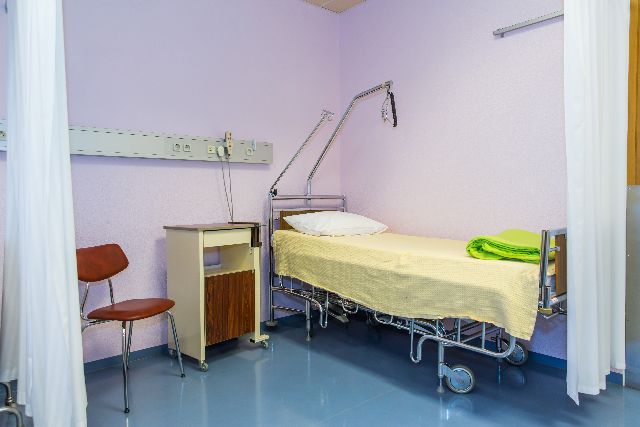
Gastroenterologist Mohamed Hassan recalls an incident at a public hospital in which a man brought his mother in for treatment, but was told by doctors that the hospital wasn’t equipped to deal with her. As this was being debated, the woman’s heart stopped.
While they were arguing, she slipped into a state that required emergency resuscitation, a “code blue” case, Hassan recounts. She died in the intensive care unit (ICU).
“There was a big fight, but it turned out the doctors couldn’t do anything, so he [the son] took her body and left,” Hassan adds.
Such stories have often emerged from emergency rooms in Egypt. The problem is not limited to resources in public hospitals, but involves issues of training and ethics in private facilities too.
Yasmine al-Kholy, the co-manager of the emergency room at the semi-private Qasr al-Aini University Hospital, says her biggest problem is lack of beds. “Every minute, every hour, there are not enough ICU beds. As a result, patients sometimes die or go elsewhere.”
In the past year, there have been intermittent media reports of patients being refused treatment outside emergency rooms due to an alleged lack of space or equipment. The most famous example is a widely-circulated video of a pregnant woman forced to give birth outside a hospital after being turned away.
But less extreme examples of this are fairly common according to Kholy, who says that sometimes patients are sent on a wild goose chase from hospital to hospital, being told at each that there is not enough space for them to be treated.
The system through which patients are assigned to public hospitals from emergency rooms is part of the problem.
According to Hassan, if a patient arrives at the emergency room and the hospital either does not have the equipment to treat them or doesn't have enough beds, they are given a preliminary diagnosis by a doctor and then a hotline is contacted to try to find them care at another facility. “This process can take from one hour to an infinite amount of time,” says Hassan.
While waiting for a call back from the hotline, patients often deteriorate and some die, Hassan asserts, explaining that going from hospital to hospital asking if they have space or the right equipment is often a better option.
According to Deputy Health Minister Hesham Atta, emergency rooms receive around 16 million cases every year. At a recent conference at the Haram Hospital, Atta lauded doctors’ efforts in running emergency rooms, but highlighted the need for coordination between hospitals in order to better facilitate this referral process.
However, weak infrastructure and poor coordination are not the only issues. Often, there are problems with doctors’ training.
Ayman Sabae, a researcher on healthcare rights with the Egyptian Initiative for Personal Rights, says from his experience in medical school, doctors are poorly trained in general. Although he explains, the current ministry is prioritizing improving the state of emergency rooms and is working on developing equipment, as well as training young doctors across the country.
Omar Ayman, a doctor and lecturer at a university public hospital, who is on call for the emergency room, says doctors are chronically overworked.
Shifts in the emergency room usually only last for 12 hours, but doctors often come after working shifts in other areas of the hospital. When asked how many hours doctors typically work per shift, he explains, “It’s not hours, it’s days. People with specialties like general surgery can work for two or three days continuously and only take a few hours break.”
Doctors are paid very little in the public sector, which is part of the reason they work so much. Ahmed, an orthopedic doctor working in the emergency room at Qasr al-Aini public hospital, says he makes around LE250 for each 12-hour shift he works, so he, like most other doctors, also works in a private clinic to pay the bills.
Ahmed is young and single, and says that, because he has few responsibilities, he only works one part-time job and is able to afford not to work on weekends. However, he notes that, “Most people work for 24 hours or 48 hours, take half a day off, and start working again day and night. You cannot be focused at all if you work 12 or 16 hour shifts.”
Sabae argues that the pittance paid to doctors is bad for doctors and patients. The biggest reform the health sector needs, he says, is “to separate the private and public sectors.”
“People work in the public system, but then also work in the private sector because they need money,” he explains. “Once they are working in the private sector, they don’t care about the conditions of public hospitals.”
Private hospitals, meanwhile, are not without their own problems. Sabae says that, while there is usually space and better equipment in private hospitals, there is not necessarily quick treatment.
Neil Hussein, a 31-year-old masters student, rushed his friend to the Dar al-Salam private hospital emergency room on the Maadi corniche after she woke up in the early hours of the morning with severe stomach pain.
Once they got there, his friend was quickly given an x-ray and sonogram, and it became apparent that she was suffering from appendicitis. However, instead of immediately taking his friend into surgery, hospital staff directed them to the emergency room and told them that the surgeon would come.
“Half an hour later,” Hussein says, “the surgeon was ‘on the stairs.’ An hour and a half later they were calling the surgeon urgently, and she was getting worse and worse.”
After they performed an operation on Hussein’s friend, the doctor admitted it was fortunate that they got her into the operating room when they did, saying it might have been only a few minutes before her appendix burst.
Another patient recounts how he had to do several electocardiography (ECG) tests at the emergency room of a private hospital, because the results were deemed inaccurate, to the surprise of his father, a doctor himself, who did not believe that repeating the test was justified. In the span of a few hours, the patient underwent multiple ECGs.
Sabae says this type of treatment is very common. “The doctor decides what kind of services the patient gets and there is an incentive to misuse this power.” The only way to fix these practices, he believes, is through regulation.
According to Sabae, the ministerial decree by Prime Minister Ibrahim Mehleb — in July 2014, in which he declared that the first 48 hours of care in an emergency room, whether public or private, would be free for the patient — is a step in the right direction. However, the decree did not come with strong regulations and, Sabae points out, is yet to be implemented.

Pesha Magid
Pesha Magid is a reporter at Mada Masr. She has previously published work at Egyptian Streets, Tunisia Live, Your Middle East and Egypt Today. She is graduate of the University of…
تقارير ذات صلة
Health official fired after submitting status report on presidential program to shorten surgical waiting lists
The official had voiced concerns over the program's management in recent months, said a source
Coronavirus in Sinai: Fear and negligence as cases rise. Governor: ‘Expected and not disturbing’
The surge coincided with end-of-year high school exams.

Daily COVID-19 roundup: June 14
Cabinet is considering a gradual return to congregational prayer at mosques and churches from July 1
Your support is the only way to ensure independent, progressive journalism survives.
You have a right to access accurate information, be stimulated by innovative and nuanced reporting, and be moved by compelling storytelling. Subscribe now to become part of the growing community of members who help us maintain our editorial independence.
Join us