
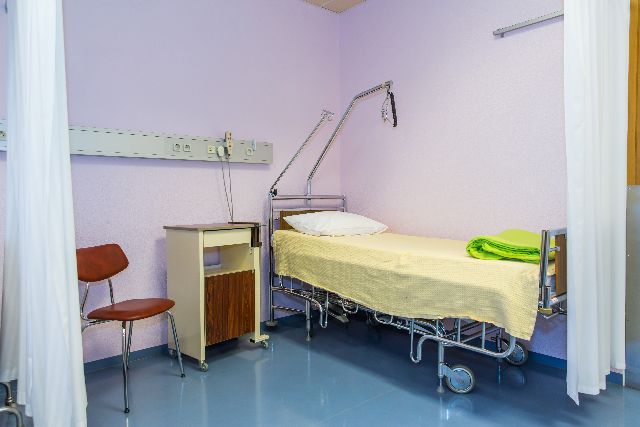
Health official fired after submitting status report on presidential program to shorten surgical waiting lists
A Health Ministry official has been fired after producing a report on progress within a presidential program to end surgical patient waiting lists that showed major shortcomings, a source from the ministry told Mada Masr.
The three-year and over-LE1 billion presidential program to end surgical waiting lists was launched in July 2018 and aimed to ensure that patients needing certain surgeries — including cardiac surgery, eye surgeries, neurosurgery and liver transplants, among others — should be treated within six months and free of charge.
Dr. Karim Sallam, a Health Ministry undersecretary for Cairo who was appointed to oversee the implementation of the program, was dismissed on Wednesday by acting Health Minister Khaled Abdel Ghaffar, who is also minister for higher education and research.
No reason was given for Sallam’s dismissal, but the ministry source told Mada Masr that Sallam’s service was terminated shortly after he submitted the status report and that over the past two months, he had voiced numerous complaints about the program’s management.
Sallam’s recommendations for the program, which were ultimately approved by the presidency, also implicated in particular underperformance at university hospitals affiliated with the Higher Education Ministry.
Four days after approval from the president's office came through, a second Health Ministry source told Mada Masr on condition of anonymity, Sallam was dismissed. The second source said the timing of Sallam’s dismissal suggests it is likely he was fired as a result of the report he had prepared on the program.
Sallam was commissioned to produce the report following a December request to the acting health minister from the Cabinet for a status report on the implementation of the presidential program, the first source said.
The report, of which Mada Masr obtained a copy, showed that 28,614 patients remain on surgical waiting lists. Difficulties in shortening waiting lists were attributed to severe staffing shortages and a deficit in crucial supplies.
In one example, just over a fifth of the donor tissue needed for corneal transplants has been available on average, while in October, under a tenth was available.
Supply shortages impacted the percentage of curative care hospitals in the system that were able to perform critical surgeries, said the report, including cardiac catheterization, open-heart surgery, tumor surgeries and liver and kidney transplants.
University hospitals were also underachieving, said the report, given the available staff and capacity, in performing open-heart surgery, neurosurgery, particularly pediatric neurosurgery and catheterization surgeries.
Sallam’s report also showed that Higher Education Ministry hospitals had the longest patient waitlists, with around 37 percent of patients required to wait over 14 days, while health insurance authority hospitals came in second with 18 percent of patients experiencing similar wait times.
The report included two recommendations for the program: that Higher Education Ministry hospitals should increase their completion rates “in line with its available capabilities and human resources,” and that the Health Ministry’s financial and administrative affairs department should create incentives for those working on the program at Health Ministry hospitals.
تقارير ذات صلة

Piled-up debts, missing medicines: Sisi cuts back powers of Unified Procurement Authority
UPA’s debt crisis has led to severe drug shortages and higher out-of-pocket costs for patients
No prescriptions, no appointments: Cancer patients at Hermel Hospital hit by treatment crisis after private sector take over
The waiting area of Dar al-Salam Hermel Cancer Hospital was crowded earlier this month with patients and their families who had come for the treatment they are accustomed to receiving…

New legislation paves route for private sector to take over public hospitals
The House of Representatives passed government-proposed legislation on Monday to allow the private sector to establish and manage public healthcare facilities. This legislation reflects a vision President Abdel Fattah al-Sisi…
Your support is the only way to ensure independent, progressive journalism survives.
You have a right to access accurate information, be stimulated by innovative and nuanced reporting, and be moved by compelling storytelling. Subscribe now to become part of the growing community of members who help us maintain our editorial independence.
Join us