
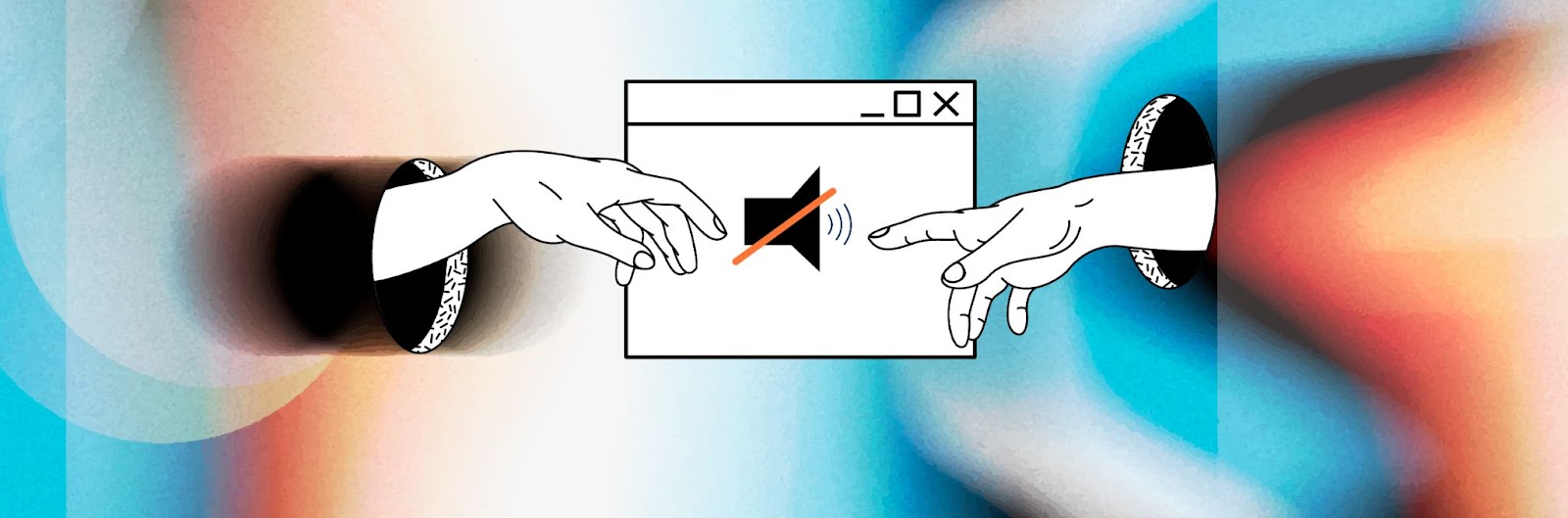
In Other Words | A Very Social Distance by Amr Ezzat
Amr Ezzat has written many essays, a beautiful memoir that I have had the pleasure of translating, and he has also written heavily about his dreams. Reading his work, I have often found myself reflecting on the literary nature of dreams: In what realm do they reside? Are dreams fiction, seeing as they don’t take place in the physical reality we inhabit from day to day? Or — since they do take place, albeit on a different (but arguably equally real) plane of consciousness — do they fall under the label of nonfiction?
“A Very Social Distance” reads like a dream, or multiple ones threaded together, but it is not introduced as such, and this is what makes it so delightful: it boldly — almost audaciously — prompts the reader to imagine a reality where such a bizarre sequence of events and such a fluidity of distance and time are possible. As it straddles the space between seemingly irreconcilable territories (fiction and nonfiction: the dreamed and the real), the resulting tension drives the narrative forward, coupled with Amr’s wry humor and even hand at detailing its twists and turns. His protagonist is baffled at times, annoyed at others, but mostly he is just amused, playing along with a spirit of “positive nihilism” — a term I’ve often heard the author use to encapsulate his mantra: without hope nor despair.
Through it all one can’t help but wonder: is the absurdity that permeates the story truly that far-fetched? It feels foreign, yes, but also uncannily familiar, particularly to someone living in this particular place at this particular time. “A Very Social Distance” isn’t only an engaging and wildly unpredictable read, but also a deeper commentary on the current moment; how surreal life has become, on more than one front.
When I heard the violent knocking at the door, I thought they’d finally come for me.
On my way to the door, I wondered whether there was a way out through the ceiling of my apartment onto the roof that I could use to escape. But the knocking wasn’t coming from the direction of the door, it was actually coming from an opening in the ceiling that I was seeing for the first time. I stood there, looking upwards, at the large square of wood that covered the opening. I could escape through the door, then. I stood beneath the opening in the ceiling and yelled out: “Who is it?”
The square of wood opened and I saw Abu Sahar’s face apologizing for the inconvenience then disappearing. Before I could ask him what was happening he had returned and asked me to help him hold the ladder, and before I could ask what ladder, the ladder was already making its way slowly down into the apartment. I held it until it landed on the floor, then Abu Sahar said: “Take your time, hajja, there’s no rush,” and before I could ask what hajja, the sole of her slipper appeared. Abu Sahar said that the lady, Um Mounir, couldn’t find a place to stay, and so he had told her that I lived alone in a spacious apartment and that I was a chivalrous man, originally from Imbaba, just like her, and that I wouldn’t hesitate to host her for the night until God found another solution. Before I could think of anything to say, I had to step aside so that Um Mounir’s behind would not slam right into my head.
Um Mounir descended the ladder, fixed the black veil covering her head and dusted her abaya: “Thank you so much, sir,” she told me, looking at the floor, one palm covering the other against her stomach. Behind her, Abu Sahar was coming down the ladder himself, saying that people must be there for each other, especially in times like these. Then he carried the ladder and asked me to open the door for him.
I left Um Mounir to rest and went out for a run, thinking about what I was going to do. The streets were entirely empty, and twenty minutes later I grew tired and started walking, catching my breath. A Jeep with blacked-out windows stopped near me, one of them slid open and Bassam’s laughing face appeared. He motioned me to get in, I couldn’t speak because I was still out of breath. I made a questioning gesture with my hand, and he motioned me to get in once more, nodding swiftly to persuade me. Persuaded, I got in, still panting, Bassam still laughing.
We drove for a few minutes, I looked at him with narrowed eyes and made the same questioning gesture with my hand. He laughed and continued nodding, as though promising that I’ll understand later; so I waited. He stopped and motioned me to step out of the car, I gestured questioningly yet again, then he stepped out himself and motioned me to follow, again with multiple persuasive nods. Persuaded once more, I stepped out. He walked ahead of me toward a building and climbed the stairs with me in his tracks, trying to catch up, still panting and coughing. We reached the third floor and we heard a noise, as though there was some kind of bustling market at the end of the hall. Bassam rang the bell of the first apartment by the stairs, and by the time I arrived the door had opened and a man appeared, looking with Bassam toward the end of the hall where the noise was coming from and shaking his head sorrowfully. When he saw me he studied me skeptically then signaled for us to enter. We didn’t shake hands. He was moving his lips but I wasn’t hearing anything.
We followed him inside, he sat on one of the gold-framed armchairs in the reception and we sat across from him. On a low table between us were masks and disinfectants and sprays and water bottles and rolls of toilet paper. He was moving his lips again, his facial muscles constricting, and he was waving his hands, but I still couldn’t hear anything. I looked at Bassam and found that he, too, was staring at the man with a steady expression, saying nothing; perhaps he couldn’t hear him either. Moments later Bassam started nodding, agreeing to whatever the man was saying, or perhaps merely trying to show him that we were listening. It appeared the man believed we were, because he continued talking soundlessly, while we remained silent.
I reached out and took a water bottle from in front of him, knocking over another bottle next to it. I heard it fall against the table, and the man stopped moving for a moment, looking at the bottle and at me, then he looked back at Bassam as though to ask him who I was. Bassam closed his eyes and nodded, the same persuasive nods he’d directed at me earlier, but the man once again eyed me with suspicion. His expressions started to show anger, as though he was raising his voice, and Bassam started to shake his head as though trying to assure the man that what he was saying wasn’t true. The man finally stopped his soundless tirade, then continued speaking normally, but still soundlessly. Minutes later, Bassam motioned to the man that we were leaving, and the man nodded.
We went out of the apartment, Bassam looked at me, shaking his head and shrugging in sorrow. The same noise was still coming from down the hall. I followed him out of the building, I saw that Doaa was in the driver’s seat of the car now. Bassam hurried to the car and climbed in next to her, I walked slowly toward them and slipped into the backseat. Doaa turned around and gave me a reproachful glare, perhaps because I was late. Then she looked at Bassam with an indignant expression on her face and shook her head slowly in disapproval. She placed her hands on the steering wheel and started drumming against it with her fingernails as though waiting for something. Bassam looked at me, pursing his lips in embarrassment, and I understood. I opened the door and stepped out. They drove off.
I thought of running home, as I had regained some of my energy. I looked around, trying to figure out exactly where I was so I could determine which way to go. I noticed the man we had just visited standing on the balcony, both his hands on the railing, silently looking at me. He raised his right hand and pointed somewhere, again speaking soundlessly. I didn’t understand whether he was trying to help me or kicking me off the street. I waved goodbye to him and took off running in the direction he’d pointed.
I wasn’t yet tired from running, but the sky had begun to darken, it didn’t seem like the street lights were coming on and the few stores that were open were starting to close their doors. There were still 15 minutes until the curfew and two kilometers left in my run. I changed my direction toward home, hoping the elevator in my building wouldn’t be broken.
The elevator was broken. I turned on the light switch in the stairwell using my key chain. I was on the first floor and almost up the stairs to the second when I noticed a noise coming from down the hall, so I headed toward it. The hall stretched endlessly, lined with open shops and restaurants and cafes, their occupied chairs overflowing onto the hall. Families were strolling in beach attire, their swimsuits showing underneath. That was also the case on the second floor, and the third, and on the fourth floor where I lived. My fingers instinctively singled out the key to my apartment among the other keys on my keychain. But where was the door?
I walked a little through the hall looking for a door. I tried my key in the first one I found, which opened onto a shallow pool of water in an average-sized room with dimly lit corners and no windows. There was absolutely no space to stand on the edge of the pool, it took up the entirety of the space. Um Mounir was swimming across the pool on her back, fully dressed in her black abaya and veil. The thought of a swim was refreshing after my one-hour run, but I was too shy to share the pool with Um Mounir and I told myself I needed a cup of tea and a cigarette in order to think about what I was going to do and where I was going to spend the night.
I closed the door and went back to the hall. I found a cafe that didn’t look too crowded and sat down. The waiter came and I ordered two cups of tea with extra sugar. He asked if anyone was joining me; I said no.
I saw a friend sitting inside in his swimsuit, a still-wet towel on his shoulder, smoking his shisha in obvious boredom. I went over to him and said hi, he asked how I was, I said all was good, he whined about the virus, I whined about the curfew, we wondered what the hell was going on and when it will all be over, and then I asked: “Want to play some backgammon?” and he said of course he did. I asked the waiter to bring a backgammon board and put the two cups of tea at my friend’s table then asked him where the urinal was and he pointed toward the cafe next door.
On my way to the urinal the Major General who headed the Owners Union of my building was coming out of the elevator, Abu Sahar behind him. The Major General looked disdainfully at the shops and the cafes down the hall then turned to Abu Sahar and back again to the hall, his hands moving rapidly as he ordered things and forbade things, none of which I could hear.
On my way back from the urinal I didn’t see either of them, but back in the cafe I found Abu Sahar in my seat, playing backgammon with my friend and drinking one of the cups of tea I had ordered. I sat next to him and asked how he was, he said he was fine and asked how I was, I asked what the Major General had wanted, he said the Major General was a son of a bitch, I asked if the elevator was working yet, he said the elevator was a son of a bitch, I said never mind and then I asked: “Do you have a cigarette?” so he gave me one and I lit it and took a sip of the other cup of tea, then told them I’ll play against the winner.
I looked at my phone and started scrolling through my feed in search of news about my friends in jail, then I remembered I had no place to stay so I texted my neighbor that I needed somewhere to spend the night and looked at her new display picture as I waited for her to respond. It was a photo of her legs; they were raised up, heels resting against the windowsill, her short dress drawn back. The sun reaching up to her knee created a separator between the glowing brown of her legs in the light and the dim brown of her thighs in the shadows.
I realized that Abu Sahar was looking at my screen, studying the picture along with me. He winked, then his eyes darted anxiously toward the hall. The Major General was passing by, a grim expression on his face, and he was holding the hand of a little girl in a red swimsuit. The girl carried a yellow floatie shaped like a duck on her shoulder, the duck’s wide eyes looking up beyond the girl’s head at the Major General’s face.
I decided to go to my neighbor’s place anyway, but an officer stopped me for breaking the curfew. I ran and he started chasing me. I entered her building and he followed me inside; I ran up the stairs and he ran up behind me. I reached the third floor where my neighbor lived, I continued running and so did he — amid the cafes and the stores and the swimming pools and the passersby in beach attire on both sides of the hall — until I finally reached the door and started banging at it furiously.
Um Mounir opened the door with an angry expression on her face that swiftly dissipated as soon as she recognized me. I pushed the door and entered, telling her that the police were after me, and she slammed the door quickly in the face of the officer who had just made it to the apartment. He started to bang ceaselessly at the door, she ignored him and led me to a room, saying my neighbor had prepared it for me but that she couldn’t meet me herself because she hasn’t been leaving her room since the virus.
Um Mounir left and locked the door behind her. I texted my neighbor to thank her. She said she knew about the situation in my apartment from Um Mounir and that I should make myself at home and that there was food in the kitchen and a guest bathroom I should feel free to use, and I thanked her once again. I tried to remember the last time I saw her, apart from her pictures; it was years ago, when I’d run into her by chance in Beirut.
Just then I got a call from Amal, my Palestinian friend who I’d only met once in Beirut; I put on my headphones and picked up. As soon as I said hello she playfully started singing about the end of the world: “The world is coming to an end and all that I want is far away … The world is coming to an end and there is no postman around...”
I waited until she finished then told her I had no idea whether it was the end of the world, neither did I really know what I wanted, but that she wouldn’t believe what had happened to me or where I was now. She asked me to wait because our mutual friend — who I’d never met and who lived in Dubai — was with her and wanted to say hi. As I waited I went through Amal’s photos, thinking maybe I’d find a picture there of our mutual friend.
The door to the room opened and Amal walked in holding her phone, also wearing her headphones. She apologized for being late, and the voice coming out of her mouth came two seconds later than her voice on the phone. Our mutual friend followed her into the room. They were both dressed in identical pajamas with yellow duck prints, the ducks’ wide eyes looking everywhere at once. Our mutual friend greeted me enthusiastically, saying she didn’t mean to disturb me but only wanted to say hello. I asked her how things were in Dubai, she said they were the same as Cairo, and the same as Beirut where Amal lived — no difference. We wished each other well, each of us expressing the hope that we would actually meet one day instead of exchanging hellos this way across three different cities.
After they both left, one of them locking the door from outside, I picked up my phone and once again started to look for news about my friends in jail. Instead I found news of other friends being jailed. I decided to sleep. I received a message from Amal wondering about the constant loud knocking at the door throughout our conversation. I realized then that the knocking was ongoing, but I had faith in Um Mounir.
I woke up to the sound of more loud knocks at the door, but this time the person was knocking right at the door to my room at my neighbor’s, not the apartment door. I heard the voice of a man saying that this wasn’t appropriate; that the officer had approached him at the cafe and told him that his daughter was harboring a criminal who had broken curfew. Then I heard my neighbor’s voice as she implored her father, explaining that I was her friend and that we were staying in separate rooms, and then Um Mounir joined in, arguing that I hadn’t been out of the room in three days, so how could I have broken curfew?
In the end, my neighbor’s father said he would take me with him to Alexandria where I would work with him at his car dealership, and that if I did well he would allow me and his daughter to get married, and perhaps then it would be better if we stayed with him in Alexandria, away from all the noise and gossip in Cairo. I looked out the window, working out an escape plan. It overlooked a narrow passage between the building and an old church, and in the window of the adjacent room I saw my neighbor’s feet, still resting there in the sunlight.
As I entered the church through the inner gate beyond the courtyard I saw a small crowd eyeing my outfit, and I remembered I was still in sports attire after my run. A man who looked like Youssef Chahine — or perhaps it was him — sat near the altar. Around him a few chairs were scattered, covering half the space under the massive, ornately decorated dome of the church. Sitting across from Youssef were six, seven people, or something like that; I couldn’t turn around to count accurately. I sat on the chair farthest from the man who looked like Youssef Chahine, or perhaps was him. He looked at me and uttered a warning—I assumed he was repeating it for my sake—not to take any pictures of our meeting or of the church and not to post anything about this anywhere, since this gathering was illegal due to the circumstances we were all aware of. Then he went on furiously, as he lit a cigarette, saying they had no right to prohibit meetings in this church because it was an independent church, and that this is why we were meeting after all: to assert this independence and put an end to the current plan aiming to annex it to the Orthodox Church.
A young woman, also in sportswear, said we had to continue these secret meetings in order to recruit the biggest number of individuals possible to create a sect solid enough to stand in the face of the state and the church, and that we shall call it the Sect of the Free, and this was, therefore, the Church of the Free, and we were all Free to do whatever we wanted in it. An Alexandrian snort rolled off of Youssef Chahine’s nose — it was undoubtedly him — and he yelled: “Free my ass! This church belongs to me and my sister, we will do whatever we want with it, and you are all here to help us, nothing more!” Then he scoffed and repeated: “Free! Free my ass!”
A snort even more powerful than Youssef’s echoed through the church, and I noticed that the source of it was the man I’d visited with Bassam who had spoken soundlessly through the evening. We all looked at him, but this time, too, he was mute. The girl in sportswear took courage from the man’s objection, and she spoke indignantly in what seemed to be an extension of his snort, or as though she were speaking in the mute man’s tongue: “Belongs to you and your sister?!”
“Yes, the church belongs to me and my sister!” Youssef retorted in flagrant defiance.
The girl snorted—a delicate snort, it seemed to be her first—and she was followed by snorts from the dignified lady sitting behind her, then a man in a formal suit on the right, then an unsuccessful attempt from the boy sitting next to the dignified lady, then Abu Sahar let out a magnificent Upper Egyptian snort. I snorted through my surreptitious laughter, a snort nobody else heard, as I looked at the wall behind Youssef with the huge mural of Christ, his index finger raised to his mouth.
Youssef then cursed all of us and started hollering at us to get out.
The meeting started to break up with the exit of the dignified lady and the boy, followed by the man in the formal suit, then the man who was mute, as Youssef continued shouting at us to leave, declaring that he was going to defend the church on his own. Abu Sahar approached him and we heard Youssef yell out again that of course he wasn’t going to pay a tip for coming to the church that belonged to him and his sister.
I waited for the girl in sportswear and asked her where she was running to next, and she said to Fayoum.
I carried the mattress out of my room in the hotel the girl in sportswear owned in Fayoum, put the mattress in the hallway then lay down. The girl — still in sportswear — came out of her room and looked at me with astonishment. Then she shrugged and said whatever; it was okay because I was the only guest at the hotel right now. She told me that dinner was ready if I wanted to eat together, and that “together” — along with the information that I was the only guest at the hotel — revived a certain idea that had visited me during the church meeting.
We sat together at a large low table in the hotel restaurant: me, her, and four members of the hotel staff, including Um Mounir. The idea that had visited me in the church meeting and that had just been revived was immediately quelled. I finished my dinner quickly and went back to my mattress to find an old childhood friend lying down on it.
I yelled in excitement. He yelled too and got off the mattress; I was about to hug him but he reminded me of the situation so we stood two meters apart with our arms wide open, marveling at the coincidence. I told him I couldn’t believe it and asked what he was doing there, he asked how long I was staying, and I said I thought I was the only one at the hotel and he said he’d thought the same thing but truly what a marvelous coincidence it was.
He asked where my room was, I told him I was sleeping on that mattress. He said it was his and that he’d brought it out of his room himself to sleep on it in the hallway. Just then I remembered how annoying he’d always been and how he’d always lie and cling to things ever since we were children. I also remembered how I’d always let him off the hook, and I told him there was no way I would let him get away with things the way I used to. As was his habit, he grew more stubborn — but I stood my ground. He insulted me so I insulted him, he grabbed me, I grabbed him. We started to spar and eventually we were rolling on top of each other on the floor, fighting, until we found our heads right next to the sneakers the girl was still wearing along with the rest of her sportswear. She was staring at us, surprised, but her arms were also wide open like ours had been only moments ago, and she snorted.
The girl in sportswear told us to leave and to move the mattress from the hallway. She didn’t tell us where to put it, in his room or mine, so we both agreed to steal it. My childhood friend and I each carried an opposite end of the mattress, and I recalled the beautiful memories that we shared, most of which were of us getting punished and ultimately forgetting who had wronged whom.
My friend suggested that we head to the student dorms to spend the night, since they were close. We made our way through the streets with the mattress, taking turns to walk backward, and through it all he made no objections. I remembered how he’d always been nicer once I’d responded to his pettiness with more pettiness of my own.
We arrived at the dorms and crossed a fence into a large courtyard then a huge marble building. At the information desk an employee in a face mask told us that there were no vacant rooms but that the library was open for everyone.
As we walked in search of the library we came across a lecture hall; we placed the mattress outside and walked in to watch. It was completely full. Those who were sitting in the front rows were asleep, and those who were sitting at the back were all engaged in boisterous side talks. The podium was empty, and behind it was a large screen on which the man who talks soundlessly was immersed in a silent monologue. When he saw me he stopped talking for a minute, studying my face skeptically, then he dismissively turned away and continued his soundless lecture.
We entered the library, still carrying the mattress. The wooden bookcases divided the space into makeshift rooms where students who seemed to be from different nationalities had placed their own mattresses and pillows and plaid picnic blankets. Some were reading, others were scrolling through their phones, while others lay on their backs, staring at the ceiling with headphones on their ears.
We put our mattress in an empty space and sat down on it to rest. A dark, slim girl came over to us and started speaking in French. I told her — in English — that we couldn’t speak French, she said something in what I deemed to be Algerian Arabic—also mixed with French—and I told her we still couldn’t understand. She sighed impatiently then pointed at me and my friend with both of her index fingers stuck together, shaking her head, then she pulled one index finger to the left and the other to the right, and we finally understood.
My friend and I looked at each other. He smiled smugly, as though excited to fight over the mattress again, but I was bored with all of that so I just got up and left it to him.
I strolled through the library, looking at the books on the shelves, and through the spaces between them secretly watching the young men and women in their makeshift secluded spaces. I realized then that the Algerian girl — or the girl who I assumed was Algerian — was following me. I smiled at her and she motioned me to follow her.
It seemed that her “room” was in an isolated corner at the end of the hall. She sat on her mattress and smiled. I thought I understood, so I asked whether I could share the mattress with her. She shrugged, absolving herself of any responsibility. I sat next to her and looked at her, keeping still. She rolled her eyes, I shrugged and smiled, absolving myself of any responsibility. Once again she sighed impatiently, then slowly she pushed me by the shoulder so I was lying on my back. She straddled me and started to take off my t-shirt; I placed a hand on her thigh, she removed it and shook her head. She pulled back a little bit and started to take off my shorts; I reached out and touched her hair, once again she shook her head violently. Then she said something in French that I couldn’t understand, but I made out the word “non” and another word that sounded like “consent.”
She took off my shorts and when I was in my boxers she straddled me once more then leaned in towards me. Her lips touched mine, and when my mouth responded she stopped, raised her head and slapped me across the face, a light but angry slap. Her anger seemed contrived. She pointed at herself and nodded, then pointed at me and shook her head. Then she continued kissing me.
I gave in for a few seconds, but then I was annoyed and I shoved her off. She fell on her side and started cursing me in French, then she got up, snatched my t-shirt and shorts and stormed off, really angry this time.
I stood up, flustered, and hid behind the bookshelves. Through the books I tried to see where she’d gone with my clothes, but just then I found Abu Sahar standing there with a smile, holding an outfit on a hanger wrapped in a plastic bag with the logo of the laundry he usually takes my clothes to.
I got dressed — also in shorts and a t-shirt — and faced Abu Sahar’s smile with a stern look. I told him I had a meeting that I needed to get to right now, he objected that everyone was working from home, I told him that our boss was indeed working from home and that we were all expected to join him there, to work together from his home.
At the boss’s house I was met by a secretary in an evening gown. She led me through a hallway where we had to step over a mattress on the floor, then we stopped in front of a room. She knocked twice then opened the door and signaled for me to enter.
The boss, who looked like Albert Cossery — or perhaps it was him — was lying in bed, fully dressed in a suit and shiny leather dress shoes. All around the spacious bedroom were girls in evening gowns, I didn’t recognize any of them except for Sara.
The boss clapped and gestured for us to approach. The girls climbed onto the bed, daintily fixing their dresses as they settled around Albert. I walked toward the bed too, embarrassed at what I was wearing — embarrassed in general — but Sara encouraged me with a playful smile. I sat at the edge of the bed near Sara, and watched as they all handed him files through which he started flipping deliberately, grimly. I picked up a file and waited for my turn. The pages inside my file were all blank, so I wrote down what had happened between me and the Algerian girl. When it was my turn I gave the boss my file, he read it with a solemn look on his face, then he looked at me angrily and said some things in French. Sara laughed, then she leaned in towards me and told me he was saying that I was nothing but a stiff, stupid male.
Albert continued on his tirade, while Sara continued laughing and told me that he was kicking me out, and that he said I had ruined the flow of sheer femininity filling the room. She spoke to him in French and pointed towards the door, he nodded and waved us off, so I understood that she was asking him if she could walk me outside.
She walked out with me and once again we stepped over the mattress in the hallway, and when we were out of the apartment she asked me when I’d last been to the barber.
In front of the barber camp, which was set up in an elementary school, army soldiers in face masks were organizing a large swarm of men — most of them in galabiyas and turbans—in a line, making sure there was enough space between each of them. Sara and I stood in line. She was still laughing from time to time, while the men’s eyes kept darting from her dress to my sports attire.
When it was our turn, we followed a soldier in a mask up the stairs then stopped in front of a huge banner where he asked for my ID. He examined it and searched for a number in a list he was holding, then looked at us and said: “Committee Number 27.”
The soldier led us to Committee Number 27 and asked Sara to wait outside, so she sat on a bench at the end of the hall. The soldier took me to a table on which several ballot boxes were lined up. Behind the table stood an officer who asked me to sign a form and dip my finger into the phosphoric ink, then he pointed towards a curtain. Behind the curtain I was met with another soldier in a mask who sat me down in a swivel chair. I thought about telling him how I usually like my haircut, but he gripped me by the neck before I could say anything and shaved off my entire head, and my beard and mustache too. I snorted at him. He yanked me by the collar of my t-shirt and threw me out beyond the curtain, where I was met by the officer who had chased me to my neighbor’s house. He handcuffed me and dragged me outside.
As soon as Sara saw me she gasped, but then she tilted her head backward and started laughing, covering her mouth with her hands. I assumed it was because of how I looked so I smiled sheepishly, then I waved goodbye using both of my cuffed hands and she waved back, still laughing.
The prosecutor sprayed my face and clothes with a few spurts from a bottle, then ordered me to sit down next to him, which I did. At the other side of his desk sat the Major General—the head of the Owners Union — glaring at me. He was still holding his daughter’s hand, and she was still in the swimsuit and carrying the yellow duck floatie, with the wide eyes looking up beyond her head at the Major General’s face.
On two couches at the end of the room I saw the girl in sportswear, the Algerian girl, my neighbor in her short dress, her father, my childhood friend who fought with me over the mattress, my other friend who’d been smoking shisha in his swimsuit, Amal, our mutual friend, Sara in her evening gown, and the man who spoke soundlessly (it seemed to me now that he looked like Mahmoud Yassin, or perhaps it was him). Next to them Abu Sahar stood smoking, Um Mounir was sobbing, Bassam was nodding with his eyes closed, and Doaa was shaking her head and patting her chest as though trying to apologize for something.
The prosecutor placed a paper and a pen in front of me, and dictated that I should write the following: I hereby confess that I sat at an unlicensed cafe, broke curfew, resisted the authorities, incited Um Mounir to slam the door in the face of an officer, helped a Palestinian friend and a mutual friend enter the country without a visa, stayed in my neighbor’s apartment without her father’s permission, eluded a marriage proposal, attempted suicide by jumping out of my neighbor’s window, took part in a secret meeting by an unlawful sect, colluded with the late filmmaker Youssef Chahine to take over a church then abandoned him and refused to help, ran to Fayoum with a girl in sportswear, fought with a childhood friend and stole a mattress from a hotel then sat next to said friend on said mattress thereby defying Health Ministry safety regulations, harrassed an Algerian girl, provoked the wrath of the late author Albert Cossery as a result of refusing to surrender to the desires of said Algerian girl, took a girl in an evening gown to the barber camp, insulted the soldier-barber and snorted without a permit.
The prosecutor leaned in towards me to make sure I had written everything, then dictated his decision to release me on the recognizance of the Major General, the head of the Owners Union.
I stopped writing, surprised, and looked at the prosecutor then at the Major General. The latter was still glaring at me. And so instead of my release, I wrote down that it was decided I would be detained for four days pending investigation, open to renewal.
Abu Sahar reached his left hand out to me with a pack of cigarettes. I took a cigarette out using my right hand. His right hand was cuffed to my left. He asked why I was suddenly so happy, I didn’t respond. I took the entire pack, he took out a cigarette, then I offered the pack to the soldier accompanying us, who in turn took two and gave one to the driver holding the reins of the horse pulling our prison wagon. Then the soldier took out a lighter and lit all of our cigarettes before lighting his own.
I asked Abu Sahar what he had done, he told me — his head bobbing with the movement of the wagon in time with the horse’s hooves — that the soldier-barber had tried to shave off his mustache, so he had smashed his head in.
In the prison cell I found all of my furniture, and Ziad was lying on my red couch. When he saw me he waved at me with absolutely no surprise on his face, as though I’d just been with them or as if he’d known I was coming. Later, when he got up, he came over to me casually and said: “What brought you here, you bastard? Are they arresting people who write down their dreams now, too?”
I laughed and — dragging Abu Sahar with me — I started to hug Ziad with one arm, then I remembered. I hesitated, but he hugged me tightly with both arms, saying hugs weren’t prohibited here; and he hugged Abu Sahar too. He said they had organized a prison-wide strike so the authorities had to give in to their demands and allow hugs between current inmates and newcomers, in addition to another demand they hadn’t dreamed would ever be considered.
Ziad led me, along with Abu Sahar, to a dark corner in front of a large screen on which a projector was displaying various memes. In the dim light of the projector I recognized the faces of many friends, watching the memes, laughing and snorting in between. My eyes filled with tears of joy, while Abu Sahar sat next to me, gaping at the screen, trying to figure out what it was that was so funny but laughing with us nonetheless—or perhaps at us.
As I wiped the tears off my face I saw Patrick standing behind the projector, laughing as he changed the memes on the laptop in front of him. He waved at me with a smile.
I slept long and deep for the first time since Abu Sahar knocked at my door. I dreamt that I returned to my building exhausted after a long run, and was waiting for the elevator with a big crowd of people. The elevator arrived and the doors opened and everyone including me stepped back, except for one man, who took a step forward and entered. Everyone warned him to come back out, then they started saying things in Italian. He turned to us, puzzled. Suddenly, the floor disappeared from underneath him and he fell screaming into the pit, and everyone else screamed too. I was disturbed, but I didn’t scream, and they all looked at me indignantly, thinking I seemed too calm and indifferent.
The doors closed and the empty elevator went up, then it returned a few minutes later; the doors opened and it was filled with people. The people waiting with me started yelling warnings in all languages, but nobody walked out. Everyone started to quiet down, but then I saw my mother inside the elevator and this time I screamed hysterically, begging her to come out, and I burst into tears. Once more they looked at me indignantly. My mother had a calm smile on her face, but she was upset when she saw me crying, so she took out her phone from her purse and waved it at me, then she called me and her voice on the phone said: “Everything’s going to be okay, darling.”
I tried to stop crying and wiped away my tears, but then I started coughing violently. Reprimanding, my mother reminded me of my promise to smoke less. I gradually managed to control the cough, and we were silent for a few moments. Then I heard her own weak cough, and she laughed and said she’ll try to smoke less, too.
I woke up laughing and wiping the tears off my face with my right hand, my left still tied to Abu Sahar’s right one. His loud snores rumbled amidst the snoring of my friends, scattered across the cell. I remembered the last time we all slept so close together. The noise of their snoring filled my heart with a mirthful warmth, and I gave in to my tears as I laughed at them and wept in excessive joy.
In Other Words is a series of translated excerpts from contemporary Arabic literary works, by emerging or established authors, published in English for the first time. For a long time, the process of selecting works written in Arabic for translation, which gives them the opportunity to reach a wider audience and to potentially join the ever-expanding canon of “world literature” (as problematic as that term is), has been largely confined to a designated community of “gatekeepers” — mostly made up of Western publishers and translators — who decide which narratives they deem most “representative” of the region and are therefore worthy of traversing cultural borders and crossing over to other parts of the world.
By offering translated glimpses of works that we believe are significant — in their language, format, or thematic resonance — we are attempting, at least in part, to perhaps effect that selection process by bringing more attention to stories that we think deserve to travel far and wide. We hope to create more space for diverse voices from the region to be heard elsewhere, not for what they “represent,” but for the unique, singular vision each of them provides

Amr Ezzat
Amr Ezzat is a columnist for Al-Masry Al-Youm and a human rights activist.
تقارير ذات صلة
In Other Words | The Musk of the Hill by Sahar El Mougy
I took a breath, and a second, and a third, as if I were shoving away the heaviness on my heart
In Other Words | Sorrow in My Heart by Hilal Chouman
“There is no pleasure for me without sorrow,” I once told Adrian, my psychotherapist.
In Other Words | Mr. Fahmi Rides the Metro by Haytham El Wardany
“Where are your papers? Where have you come from?"
Your support is the only way to ensure independent, progressive journalism survives.
You have a right to access accurate information, be stimulated by innovative and nuanced reporting, and be moved by compelling storytelling. Subscribe now to become part of the growing community of members who help us maintain our editorial independence.
Join us