
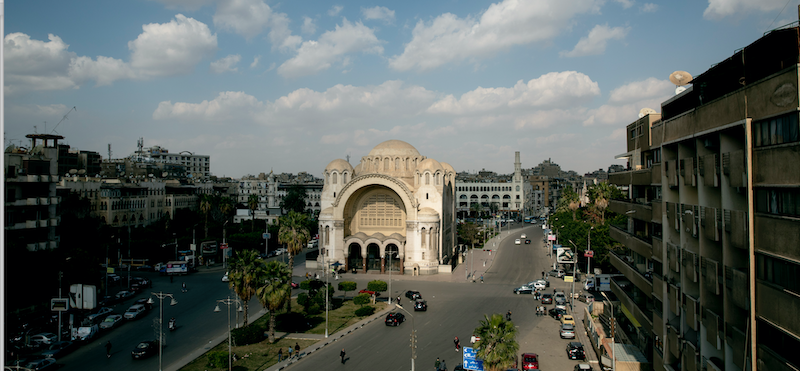
Heliopolis: A brave new city
A colonial economic history of an urban development venture
Editor’s note: This piece was originally written in 2005 with the Egyptian Business History Research Center at the American University in Cairo.
“A metro that moves with electricity, smoothly, no noise, no smoke; a wonder,” says Mahmoud Abu Selim*, as he remembers his old Heliopolis. “Metro” is the keyword that transports Heliopolitans to their old neighborhood — the moving lifeline cutting across the neighborhood from south to north.
For Abu Selim and his family, the metro was a special experience. The Arab Bedouins, or al-Urban, the original inhabitants of Heliopolis when it was a desert, enjoyed special treatment and status: “Anyone who got into the metro wearing Bedouin clothes never paid a fare.”
The reason behind this goes back to the time when Baron Édouard Empain (1852-1929) started developing the land he had just claimed to the east of Cairo around 1906. As the work commenced, clashes occurred between the company workers and the Bedouins, who would confiscate construction machines to halt operations. Abu Selim told us that, at some point, the Baron had to meet some of the Bedouin leaders to explain his urban development plan and lure them onboard. Greeted with hospitable feasts, the meeting became an annual custom solidifying a relationship between the inhabitants of the land and the wily entrepreneur who was about to take it over.

Bedouins from the Howeitat tribe were then given the duty of guarding the company's establishments, such as the horse race track, the palaces and the power stations. Abu Selim also mentioned that whenever the development was to encroach farther into the desert, the Heliopolis Oasis Company would inform the Bedouin sheikhs and, by virtue of an agreement, the company would extend water pipes further into the desert where the Bedouins would re-settle.
Born in a colonial context that granted privileges to foreign investors amid a building boom in Cairo, the history of Heliopolis, this “ brave new city,” and the colonial business endeavor behind its urban development, is worth revisiting in the present moment.
A context for the business of Heliopolis
Baron Empain, like others, seized the golden opportunity that Egypt had offered at a certain time to foreigners and their businesses in the 19th and early 20th centuries. In his attempt to foster trade and integration into the world capitalist system, Mohamed Ali Pasha (1769–1849) cast Egypt as a land of opportunities for foreign businesses. This was manifest in a system of privileges granted to foreign investors that expanded and took various forms throughout the reigns of the pasha’s descendants. Foreign entrepreneurs in Egypt were often specialists: For Belgian companies, including that of Baron Empain, the railway industry seemed to be a forte.
Howard Shakespeare, who published a list of Belgian businesses in Egypt active in 1907, shows that five Belgian railway companies were established between 1895 and 1909. Empain’s Cairo Electric Railways and Heliopolis Oasis Company was preceded by a set of Belgian-dominated tramway operations spread across Egypt. Baron Édouard Empain and his brother Baron François Empain were the directors of S.A. des Tramways du Caire, which was founded in 1895 and operated a network of electric tram services around Cairo. The company also initiated in 1899 a separate line on the west bank of the Nile that extended to the Pyramids area. In 1896, the S.A. des Chemins de Fer de la Basse-Egypte was established to operate one major line from Mansoura to Matareya, with the Empain brothers serving again as directors. Afterward, the S.A. des Tramways d’Alexandrie was established in 1897 to operate a network in Alexandria. Another Belgian company, the S.A. Belge des Wagon-Lits et des Grands Express Européens, operated the sleeping and dining cars on the Cairo-Luxor and Cairo-Port Said lines.
Belgian companies’ specialization in these fields became a monopoly. According to Robert Vitalis, a political scientist of Middle East economic history and of Egypt in particular, "[i]n the interwar period, the Belgians would fight hard to prevent Egyptian investors from breaking the monopoly on the Cairo transportation and power markets. At best, local capital acted on the periphery of the Empain group's urban fiefdom at least until the end of WWII."
Baron Empain’s venture of creating Heliopolis took place amid a building boom that, according to Middle East historian Roger Owen, was fueled by the “growth in the number of foreigners, both residents and tourists, and the great enlargement of government activity.” The boom reached its peak in the period between 1897 and 1907 when “the value of the cotton harvest doubled, Europeans invested almost as much money in Egyptian companies as they had lent to [Khedive] Ismail, while the number of foreigners living in Cairo rose from 35,385 to 55,987. The result was a huge and ever-growing demand for shops and offices, flats and hotels, which pushed land values up to astronomical heights.”
Max Rodenbeck, a journalist and author of Cairo: The City Victorious, additionally attributes the boom to the completion of the Aswan Low Dam in 1902, which led to “a storm of property development [that] transformed Cairo … as the banks of the Nile became stable enough for construction.”
How it all started: Baron Empain and the Heliopolis Oasis Company
Baron Empain accumulated a repertoire of financial and industrial achievements before arriving in Egypt. In Belgium, he launched La Banque Empain, whose mandate was to finance various enterprises, some of which he founded, as recorded by Thierry Denoel in his work Le Nouveau Dictionnaire des Belges. Historian Robert Ilbert, who thoroughly studied the enterprise behind the creation of Heliopolis, points to how Baron Empain changed the role of banking from a subsidiary involved in scanty commercial operations to a more participatory role in industry through his partnership with the Banque Industrielle Belge (the Heliopolis Oasis Company’s financial regulator).
According to Ilbert, while Baron Empain inaugurated his business venture by creating and developing railway operations in France, he expanded his business to Russia, China and Spain, pursuing innovation in the sector such as the “new technique of urban electric tramways, which was incontestably crowned by the realization of the Métropolitain de Paris.” Ilbert adds that he worked closely with King Leopold II in the Congo (during the king’s genocidal rubber venture there) before arriving in Egypt, securing the title of “Baron” in 1907 for his Congo business success.

In Twentieth Century Impressions of Egypt, an account dating to 1909, we find the following insight on the beginnings of the Heliopolis urban project:
“The bold project for creating this new suburb owes its conception to the imaginative genius of Baron Empain, one of the financiers of Belgium with the cooperation of H.E. Boghos Noubar Pasha and several other important financiers. He acquired from the Egyptian government some 6,000 feddans of land at a price of LE1 per feddan, under contract dated May 23, 1905, and in the following January formed an Egyptian company for the purpose of developing the scheme.”

The company then obtained concessions to construct four electric tramways, three of which connected the Oasis to Bab al-Hadid, Abbaseya and Qubba Palace stations. The fourth electric tramway, however, was to connect Bulaq Street to Bab al-Hadid. Thus, with the purchase of the project’s land at a rather cheap price and enjoying the concessions of the electric tramways that would link the suburb to the heart of the city, Heliopolis was responding to the huge demand of the building boom, armed by competitive housing prices compared to the heart of the city. In addition, a rather efficient system was devised to both facilitate the building on the land and resale by purchasers as reflected in the statement below, quoted from the same Twentieth Century Impressions of Egypt:
“The real objective of the company, which has an authorized capital of 50,000,000 francs is to dispose of the land in their possession for building purposes … The company is ready to sell the houses, which it is erecting by a system of annual installments.”

According to Ilbert, the project was facing an important challenge, as evident in a report submitted by Egypt’s British Consul-General Lord Cromer, who warned investors of the dangers of speculation. This was in the aftermath of a recurring game played by many entrepreneurs who would raise their companies’ stakes to the maximum, and then liquefy them.
Another challenge is the Heliopolis Oasis Company becoming a site for colonial rivalry. Ilbert explains how the company was caught in the geopolitical European rivalry of the early 20th century. In 1912, Germany attempted to purchase the company’s shares through the Deutsche Orientbank and the Dresdner Bank, and in a letter, the French ambassador in Egypt wrote how “[t]his would be unfortunate. The Germans would immediately transform the city of Heliopolis into an active center for Germanic propaganda.”

These nationalist sentiments were not a mere export from the broader situation in the country into the Heliopolis Oasis Company. Ilbert explains that in 1908, among the 65 company employees, 20 were recruited in Europe and occupied upper management positions. Almost all engineers came from abroad and this policy went on till the 1950s. Only five people held local names: two drivers and three office boys. Ilbert describes that "it is very possible to define the administrative structure of the company to two unequal blocs, one made of workers and the other of employees; the two are strictly hierarchical, according to a system that belongs to both a colonial and an industrial enterprise.”
Ilbert alludes to how the company was affected by emerging nationalist voices and anti-imperialist sentiment in Egypt in 1919. Tensions and clashes erupted within the company between senior, European employees and lower-level, Egyptian workers, and also between Christian and Muslim employees, Ilbert writes. The “nationalist fever,” as Ilbert referred to it, had reached the company, as it had reached many other professional sites, and translated into frequent workers’ strikes. “The period from 1919 to 1920 was marked by an increase in violence, which was not spared to any enterprise,” he wrote.
The strikes, which were frequently staged by tramway workers, would not last longer than 10 days due to the company’s capacity to mitigate them, Ilbert explains. The company made concessions and agreed to the workers’ demands for decreasing working hours and facilitating life insurance and sick leave. It traded these concessions for a guarantee that the newly formed transport workers syndicate would not interfere with the administration.
Other than these challenges reflected in the colonial hierarchical nature of the company, workers outnumbered administrators, especially with the company’s maintenance of a miscellany of public works, including water, electricity, cleanliness and the tramways, according to Ilbert. The HOC wages, according to Ilbert, fared better compared to the average pay of plumbers, blacksmiths and laborers, and also when compared with salaries offered by other big companies, such as the Egyptian State Railways and Telegraph. Ilbert explains, for example, that despite the company’s prudent attitude towards employment, it could not economize on its dependency on doormen. The function of building guards was deemed according to the company particularly relevant to the country’s culture. “It is impossible to reduce the number of ghaffirs [watchmen] and bawabs [doormen], given the disposal of buildings and the country’s traditions,” Ilbert writes of the company policy.

Ilbert expounds on the marketing and pricing operations of the company. Other than advertisements published in La Bourse Egyptienne, Les Pyramides and Le Progrès, the company organized celebrations, concerts, receptions and sport events. Real estate prices in Heliopolis, according to Ilbert, were quite low in comparison with the central Cairo rates. For example, a square meter in Heliopolis would cost between 65 and 250 piastres, compared to no less than LE3 in central Cairo, a disparity that extended to rents.
The clientele would hence be the middle class, who found the relatively lower-priced real estate of Heliopolis to be a good investment opportunity. The Greek Catholic Church of St. Cyrille, built in 1912, describes the first dwellers of the city: “Ingenious ways were devised by the new company to lure Cairo inhabitants to dwell in Heliopolis. Soon the Greek Catholic notables originating from Syria and from Lebanon started to move from the Cairo districts of Shobra and of Faggalah to Heliopolis. One of them, civil engineer Habib Ayrouth, was recruited by Baron Empain to collaborate with his Belgian civil works team.”
“Everyone called him insane,” writes novelist and former Heliopolis resident Robert Solé about Baron Empain. “How many people would want to exile themselves ten kilometers northeast of Cairo for the sake of clean air and low rents? Would an electric train linking Heliopolis with the capital be sufficient to attract the crowds?”
The answer turned out to be yes.
Even though according to many narratives, Baron Empain’s main target was Maadi, the concession to which he lost to the Egyptian Delta Land and Investment Company, Vitalis highlights that “[the] various urban real estate ventures paled, however, beside the development scheme promoted by Empain and allied European financiers.” The population of Heliopolis, Vitalis tells us, “reached 24,000 by 1928, and Empain’s various companies controlled transport, power, utilities and 18,000 feddans worth of commercial and private real estate by mid-century.
The City of On, a brave new city
In a letter by visionary French visionary Jesuit and philosopher Pierre Teilhard de Chardin from 1906, he describes the new suburb: “I just passed through the huge construction works of the ‘Oasis’. This is the name of these two small model cities that an important Belgian entrepreneur is building in the middle of the desert, on the outskirts of Cairo, circa halfway through Matareya. Houses there will all have gardens and should realize certain sanitary and esthetic conditions.”
Accounts of the new neighborhood didn’t shy away from the romanticization and nostalgia that are all-too-common tropes in the collective memory and remembrance of Egypt’s imagined heyday at the turn of the 20th century.
In Les Barons Empain, journalist Yvon Toussaint imagines a conversation between Baron Empain and Marcel-Henri Jaspar, one of the main Heliopolis architects who coincidently happened to be in Egypt on holiday when he met the baron for the first time. The conversation read,
“What are you doing here?’ asked Empain. ‘Nothing,’ said Jaspar. ‘Can you ride a horse?’, ‘Yes.’ ‘Come here early tomorrow morning. I want to show you a corner of the desert in which I am interested.’ The next morning, as the sun was rising, the two men rode up to a stretch of desert. There was nothing but an expanse of sand on the horizon. ‘I want to build a city here,’ said Empain. It will be called Heliopolis.”

Publisher Anne Van Loo writes that Baron Empain himself wanted to accord some mystic undertones to his project to make it more attractive. Accordingly, he ordered the performance of some excavations on the site, in hope of finding remains of the ancient city of Heliopolis.
The romanticization would extend to the early residents of Heliopolis, and it would come out in their nostalgic reminiscing about its early days.
As Solé, who spent the first 17 years of his life in Heliopolis, tells us in a conversation in his family’s town home that was built by Empain’s Company:
“It is a city that was originally intended to be a luxurious oasis, and that turned out to be a mixed city, where different social classes came to settle down. It was even a cosmopolitan city where people of different national origins, religions and languages came and established themselves. It was a new beautiful and intelligent city.”
This is how Solé describes Heliopolis in his first novel, Le Tarbouche:
“Khalil had developed a passion for this pale-yellow town (its color was prescribed by the company), which derived from no architectural textbook and adhered to no accepted style. European buildings were juxtaposed with all kinds of ornamental features: minarets, domes, mashrabiya incongruously located on balconies. The purists squawked, Khalil exulted.”
The newness of Heliopolis was attractive to the so-called cosmopolitan middle class; mainly Levantines and Europeans. Unlike the mainstream Egyptian residents who would prefer sticking to the city center to be close to their extended families, the new Heliopolitans were thought to have been adventurous.
For Marie Youssef*, who has lived in Heliopolis since 1939, a mention of the Heliopolis Palace Hotel would remind her of the dances she used to attend there. The same palace would be described in Solé’s novel, with its “giant elevators, its billiard rooms and Turkish baths, and the panoramic terrace that afforded a distant view of the pyramids.”

For Youssef, Heliopolis also attracted the wealthy to the races at Merryland on Sundays. While the racecourse was exclusive to the upper class, people from everywhere used to come and watch it from outside.
Mohamed Marei*, who has lived in Heliopolis since 1947, shares this visual memory of crowds of onlookers standing outside of the course, as they could not afford the tickets. Marei tells us how in the early 1950s and especially following the Cairo fire and riots of 1952, races were stopped as they were a significant spectacle of class inequality.
Going to the movies was also on the schedules of Heliopolitans, with an assortment of options, including the open Normandy summer cinema, where a ticket would cost half a piastre, and the more dandy winter cinema, right next to the former in the hub street Avenue des Pyramides (now al-Ahram). According to Marei, there was also the huge open-air Cinema Roxy, or the Oasis Cinema, or the more deluxe Heliopolis Palace Hotel cinema.
The shopping area was nothing other than the Korba, an area architecturally exposed to Cairo’s sunny weather, and hence protected by the bawaki, or arches, which would keep the pedestrians shaded as they shopped.
For Michel Manoukian*, who has lived in Heliopolis since 1948, the highlight of Baron Empain’s urban endeavor is the tram, known as the metro. “The main point of success in urbanization is to guarantee a means of transportation. People came and settled on the two sides of the metro and beyond,” he says.
Manoukian describes the tramway that linked Heliopolis and Emad Eddin Street in downtown Cairo as a vital link. “Emad Eddin street was one of the biggest commercial avenues where you can find all shops you need. It was a business center. It was also the main street of theatres and showplaces.” According to him, every two years, an extension to the metro would take place, until it reached St. Fatima Square in the late 1950s, and also diverted to include another two lines, the Abdel Aziz Fahmy line at the beginning of the 1960s and the Mirghani line, which departs from the Roxy intersection station.
"The centerpiece of the new Heliopolis was an ancient one, a house of worship. But this time it was to be a neo-Byzantine basilica. The obligatory mosque was far more modest, and set amid the third-class housing of Heliopolis' 'servants' quarter," Rodenbeck writes. The original plan of the company was to create two separate districts or "oasis." The first, according to Abdel Tayeb Megahed, in his article in the Amkenah journal, was for the middle and upper-middle classes; centered by two main perpendicular streets: Al-Ahram and Ramsis. The second was for the economic housing and craftsmanship area north of the first district with Gamea Square at its center. In practice, this hierarchical categorization was not that rigid and the two areas where linked together, yet their class composition mostly remained as designed, at least for some time.
This is how the company's chairman; Boghos Noubar, put it in a speech in quoted by Megahed:
"Our aim was to create a city in the middle of the desert, whose atmosphere is dry and all the necessities of life and entertainment exist … fast railways and tramways connect it to [central] Cairo in a few minutes. The rights of the poor are preserved in this city, since residential buildings are built for the workers."
Mohsen Abdallah* lives right behind Gamea Square, where the oldest mosque of Heliopolis still stands, exists a place called Ezbet al-Muslimin (mansion of the Muslims). The mansion consists of alleys, very close to the popular houses in various relatively poor neighborhoods of Cairo. In the small electronic repair store, Abdallah has run since his retirement from the army, he tells us the story of the place.
Ezbet al-Muslimin was the workers’ bloc; four streets that were closed by gates were dedicated to the workers of the HOC. Each house consisted of six or seven rooms, a bathroom and a kitchen as described by Abdallah, who said he saw them before they were destroyed. The workers in HOC's water, metro and power companies, were almost all foreigners, as he re-iterates: Greeks, British, South Africans and other British allies. He mentions that it was protected by a British military camp that was situated right behind the bloc. The old name of the bloc was the Heliopolis Oasis Company workers’ camp. Calling the place “the Muslims' mansion” came later. When the British left, the gates to the area were opened and Egyptians came to live in it, most of whom were Muslims, which was the reason behind the new moniker.
Abdallah further explains the hierarchical structure of the district of Heliopolis: Upper management near the basilica; middle management in areas further away towards the mosque, such as Giza and Gabary streets and finally third-class housing in the bloc. Ilbert further states that "each ethnic group tended to collect either around its place of worship or around residential buildings corresponding to the social level of the group as a whole."
A changing city of On

Standing in Haret al-Furn where Abdallah’s shop is located, he shows us where the gates of the bloc once stood. With a triumphant voice, he then explains how Gamal Abdel Nasser “opened the gates”, how he nationalized the foreign companies and brought them to the people, how Egypt was now only for the Egyptians. The company was nationalized, the Belgians left and the place changed.
On the nationalized Heliopolis Oasis Company, Abdallah says that it provided job opportunities accessible to the new Egyptian residents of Heliopolis.
Abdallah also remembers the race track. Located in front of his school, the race track was closed by Nasser's government. “It does not coincide with our tradition,” he says, “it is gambling. In 1967, Egypt was in dire economic conditions and the race track was not appropriate, thus, it was turned into a park under the auspices of the nationalized company.”
Renowned Egyptian writer and Heliopolis resident Sonallah Ibrahim, describes this change in his essay, Cairo from Edge to Edge, published in 1998.
“By the time I arrived in Heliopolis, the White Tram had disappeared, the British had left, and internal migration had increased. The neighborhood began to expand in three directions, with three new tramway lines now known as the Metro. During the succeeding years I followed with horror, the constant assault on the gardens and the sidewalks that made way for small commodity stands or parking lots for the increasing number of cars. The ground floors of the distinguished, old, spacious buildings were transformed into all kinds of shops: hairdressers, interior designers, dry cleaners. With trepidation, I watched this uncontrollable hurricane as it slowly approached my immediate neighborhood.
In an interview with engineer Mahmoud Shebl, he states that after the nationalization, the quality of life in the suburb regressed. Construction expanded to the empty spots, increasing the density of buildings. The zones that were supposed to be only residential became occupied with commercial entities. There existed a change in vision after nationalization. Unlike Empain whose focus was mainly residential, the nationalized company's vision divided Heliopolis into zones, each centering around a commercial spot where businesses and services sprawled.
According to a document on suburban communities in Egypt published by the Ain Shams Faculty of Engineering, the company's policy between 1961 and 1966 was to decrease the price of land and interest, which led to the increase in investment. The activities of the company, thus, revolved around economic building to “serve the masses.” This has contributed to the change of the urban outlook of Heliopolis, instead of the rather luxurious early architecture that married the European and Arabic styles, the focus was given to the "socialist" style of architecture. In the 1970s and 1980s, however, a boom in real estate accompanied Egypt’s infitah, the economic open-door policy spearheaded by president Anwar al-Sadat. During this period, the company expanded activities beyond the sale of land, but by the end of the 1980s, the more profitable venture of selling housing units became the company’s primary focus.
A study published by the nationalized Heliopolis Company for Housing and Development in 1997 traces socioeconomic changes that had directly influenced its new vision of urban development. An increasing population, estimated at 16 million people in 2000, headed the list of indicators influencing the changing approach to urban development. Subsequently, an urban expansion in Greater Cairo at an annual rate of 2.4 percent followed. This expansion into agricultural land was most pronounced in the 1980s, as 45 percent of this expansion had been pursued at the expense of agricultural land, where most houses built were allocated to low-income citizens. With such rapidly expanding urbanization, further surges in population density were expected. The product was a general policy aiming at attracting people away from the conventional urban centers through the creation of new “self-sufficient” conglomerates, amongst a few other crisis' containment policies. According to the study, in the 1980s, these strategies started to keep at their core two main objectives: economic development through the preservation of agricultural land from urban expansion, and the improvement of living conditions in the new conglomerates.
Today’s Heliopolis Company for Housing and Development’s officials recognize a difference between their present strategies today and those of the founding company. According to engineer Mansour Atrebi*, the municipal powers enjoyed in the company’s heyday are no longer permissible with the introduction of new laws that gave the Housing Ministry more authority over the affairs of the suburb. Moreover, the official municipal authority, Cairo Governorate, took over many of the company’s functions, including the authority to give construction permits to land purchasers as of 1992, according to Atrebi. In 1990, the administration of water, electricity and the metro were removed from the company’s authority and passed on to their respective marafiq (public utility administrations).
“Today the company’s function is limited to dividing the land and selling it. It no longer has any executive authority,” says Atrebi.
As an urban development venture today, Heliopolis no longer encompasses three closely connected elements that were once bases for its existence, namely: a place, a business and a people.
* Pseudonyms
Works cited:
Al-Tayeb, Megahed. "Dahiyat Misr al-Gadida" Amkinah. Moataz Press House, Alexandria: December 2004.
Denoel, Thierry. “Le Nouveau Dictionnaire des Belges”, Le Cri. 1992.
<http://users.skynet.be/chst/empain.htm> October 14, 2005.
“Edouard Empain (1852 - 1929) Industriel et financier” Portrait Fédéral, Les Belges Célébres. <http://www.belgium.be/> October 14, 2005.
"Evaluation of Suburban Communities in Cairo, Their Impact on the City Core, Case
Study: Heliopolis and Awqaf City." The Academy for research and Technology, Faculty of Engineering, Ein Shams University. June, 1995
“Extrait d’une Lettre de Pierre Teilhard de Chardin à ses Parents.”
EzzelArab, AbdelAziz. European Control and Egypt’s Traditional Elites – A Case Study in Elite Economic Nationalism. The Edwin Mellen Press: New York, 2002.
Hassan, Fayza. “The Wonderful Wizard of On”, Al-Ahram Weekly Online, Issue No. 385, 9-15 July 1998.
Hassan, Fayza. "The Setting of Sun City", Al-Ahram Weekly Online, Issue No. 541 5-11 July 2001.
Ibrahim, Sonallah and Jean Pierre Ribière. Cairo from Edge to Edge, American University Press: Cairo, 1998.
Ilbert, Robert, Héliopolis: le Caire, 1905-1922: Genèse d’une Ville, Editions du Centre National de la Recherche Scientifique: Paris, 1981.
Owen, Roger, “The Cairo Building Industry and the Building Boom of 1897 to 1907" in Colloque International sur l'Histoire du Caire: 27 March -5 April 1969. Ministère de la Culture: Cairo, 1972.
Raafat, Samir. “The Belgians of Egypt” Egypt Mail, May 13th, 1995.
Raymond, André, "Cairo", Harvard University Press: Cambridge, 2000.
Rodenbeck, Max. Cairo: The City Victorious. Picador: London, 1998.
Shakespeare, Howard. “Belgian Companies in Egypt” Journal of the International Bond & Share Society, August 1998.
Solé, Robert. Le Tarbouche, Editions du Seuil: Paris, 1992.
"Twentieth Century Impressions of Egypt, its History, People, Commerce, Industries and Resources"(Eds), Lloyd's Greater Britain Publishing Co., LTD: London, 1909.
Vitalis, Robert, When Capitalists Collide, University of California Press: London, 1995.


تقارير ذات صلة
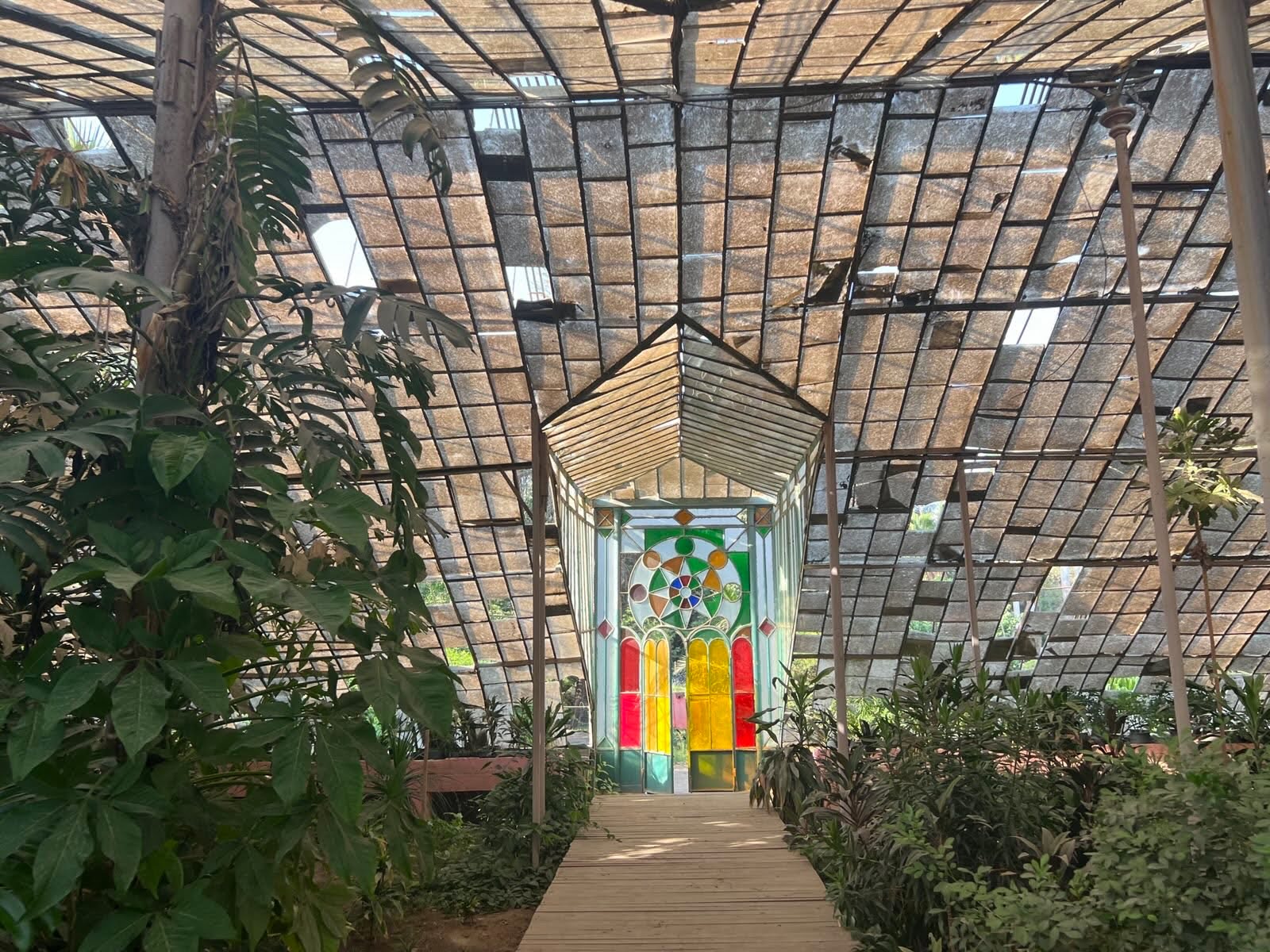
Surprise in the making: The little we know of what will become of Zohriya
Talk of the state's plans to "redevelop" the garden has circulated since 2021
Where next for world heritage after Egypt finally wins top UNESCO position?
Conservationists express skepticism about Enany given the new UNESCO head's checkered past

The never-ending nightmare of Giza Zoo’s animals
The public-private consortium renovating Giza zoo has shown little regard for animal welfare
Your support is the only way to ensure independent, progressive journalism survives.
You have a right to access accurate information, be stimulated by innovative and nuanced reporting, and be moved by compelling storytelling. Subscribe now to become part of the growing community of members who help us maintain our editorial independence.
Join us