
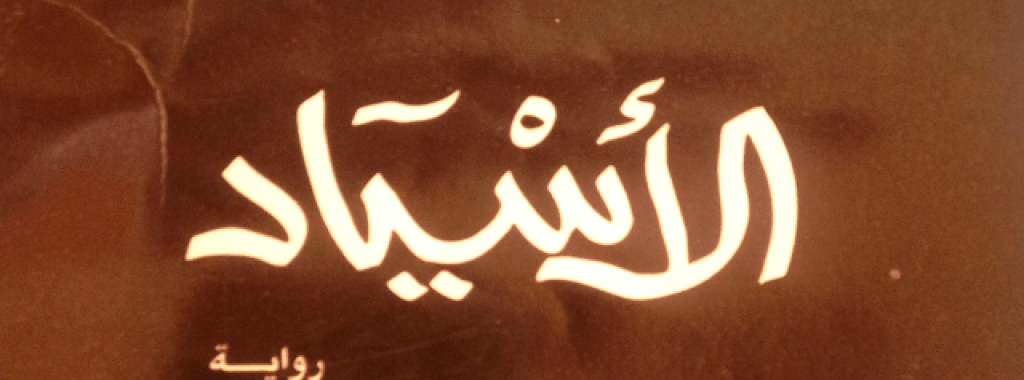
Hassan Kamal’s The Masters: A parable on authoritarian power
“Make them regard you as a god and seek your satisfaction, instead of regarding you as a sheikh and waiting for your actions. Keep them shut off from the outside world. Everyone who comes from outside spreading new words shall be a traitor until he is silenced or departs. Besiege them with fear and hold their safety in your hands. Create dumb and greedy enemies who will do anything you provoke them to do. […] And beware of entirely eliminating your enemies, as they will always remain the spark for you to set your fire aflame.”
Thus reads the will of the grandfather of Beshir, the likably clumsy protagonist of Hassan Kamal’s novel Al-Asyad (The Masters, 2015).
Ever since Koshary Masr (Koshary Egypt, 2008), his first short story collection, sports medicine physician and Egyptian Medical Olympic Committee head Kamal (born 1975) has been considered one of the shooting stars on Egypt’s literary scene. His potential was cemented by further short story collections: Ladaghat Akareb al-Saaa (Stings of the Spider’s Clock, 2010) and We kan Feroun Taieban (And He was a Good Pharaoh, 2012). His first novel, Al-Marhoum (The Deceased, 2013), was highly praised by well-known writer Alaa al-Aswani.
Over the past five years dystopian landscapes have pervaded Egyptian literature, a clear sign of the recent political turmoil. Prominent examples are Ezzedine Choukri Fishere’s Bab al-Khoroug (Exit Door, 2012), Basma Abdel Aziz’s Al-Tabour (The Queue, 2013, translated by Melville House in 2016) and Mohamed Rabie’s IPAF-shortlisted Otared (2015). Sharing apocalyptic settings, these novels gloomily explore the anarchy and violence that despotic regimes set in motion.
Perhaps this trend is why Kamal chose to eschew the genre entirely. Although The Masters has dystopian elements, the emphasis is more on magical realism. It is set in our present time in an Upper Egyptian fictional village named Daga, which, the narrator tells us, cannot be found on any Egyptian map. Daga is not subject to any municipal or government control, lacks a police station and is governed by its own customary laws, not unlike the Upper Egyptian reconciliation sessions often lamented by civil rights organizations for failing to provide justice.
In his allegorical novel Kamal lays down the power mechanisms that regulate authoritarian rule, where seizing power becomes an existential act of survival. Power here lies in the hands of the dominant Sahalik, who are said to descend from Daga’s founder, and they repress an underclass known as the Agwash. Daga’s sheikh-making formula entails ensuring that the ruler fears and distrusts the people, lashing out as a result, and becoming entangled in a vindictive cycle of violence.
“This one bewitched you,” advisor Shahly tells Beshir. “This one is from the Sahalik but he dislikes your dynasty. This one would love to kill you if he could, because there was a vendetta between him and your grandfather.”
We meet Beshir on a train, early in the novel, and the narrator tells us that he's the son of current ruler, Sheikh Aruka. Beshir, studying philosophy at Cairo University, has been summoned back home to become the Sheikh's successor, who he finds visibly aged and being manipulated by elderly advisor Shahly. Since Beshir's absence has made him an outsider we are inducted through his point of view to the dark secrets surrounding Daga’s origins. Like an Ahmad Mourad character, who must counter superior and dark forces with wit and cunning, he rebels against the power relations of Daga and ends up putting his life on the line.
Sheikh Aruka, it turns out, is Beshir’s mother, who his sonless grandfather designated as his successor. Consequently Aruka was stripped of her femininity, and everyone in the village, including her two sons, address her as a man. Aruka’s rival is her sister Uda, who controls the Agwash and incites Beshir’s younger brother Nando against him. Although Daga appears superficially to be a matriarchal society, Aruka — who is portrayed essentially as a hermaphrodite — is abandoned by male family members and as such, the book suggests, is corrupted by power and goes insane.
Whereas in The Queue, Basma Abdel Aziz illustrates the repression enacted by an intricately grand and bureaucratic regime, the Pharaoh-like sheikh in Daga mosre simplistically holds absolute power. Kamal plays with the notion of superiority, calling to mind Nietzsche’s ideal “Übermensch” of the future and Fanon’s revision of Hegel’s slave-master dialectic. Yet he only scratches the surface of philosophical questions about repression and identity, and some of his reflections on domination and subjugation appear over-literary and hackneyed, such as the involvement of foreign powers who conspire to destabilize Daga using the “divide and rule” maxim.
Another weakness is that while Kamel gives the plot a worthy ending, some passages near the conclusion wrap up too quickly, as though he were in a rush to finish.
What makes The Masters worthwhile are the original allegories Kamal comes up with as subplots. Wild monkeys, trained by the Agwash to steal, symbolize the subjugation of man, while the subservient and depressive first inhabitants of Daga develop a high suicide rate because religion and identity have been taken from them, and they only idolize their rulers. At one point Beshir wonders why God did not destine nations to die like humans, suggesting that national identity, once it is devoid of humanistic values, becomes a blurred and multilayered concept, appropriated by numerous warring factions.
Kamal also excels in his portrayal of Daga, which brings to mind Gabriel Garcia Marquez’s Macondo. Daga is an original hybrid of Egyptian, Sudanese and Nubian cultures, and possesses distinct traditions, such as strange marriage customs, a strict housing system and a bizarre ruling charta. It is cut off from the rest of Egypt — mobile phones and television sets are prohibited — and its inhabitants have become enmeshed in sorcery and superstition, believing their founder descended from jinn. Shahly carries out exorcisms to inflict excruciating pain on his opponents. Beshir is the only educated person, as the inhabitants are deliberately held in ignorance and backwardness, but Kamal turns the tables and describes Cairo as being affected by Daga’s superstitions.
While Kamal was writing The Masters, tragic violence erupted in early 2014 between the Dabodeya and Hilail clans in Aswan which left 28 people dead after police forces withdrew. Although Kamal told me in an interview that he avoids writing about factual events, the infighting between the fictitious Sahalik and Agwash evoke glaring parallels with that reality. However Kamal's novel does not place the blame entirely on flawed tribal laws, but also on people's complicity with despotic regimes, exemplified by the Agwash who spend their days cramming horse feces and animal blood into bags the for black magic purposes, attributing their shortcomings to conspirators and “third parties.”
Despite its flaws and its gloominess, The Masters is an exhilarating read, full of funny and shrewd dialogues. Kamal offers a fast-moving plot and a colorful palette of rotating dialogues, atmospheres and inner monologues. Like fellow physician Anton Chekhov, who advised aspiring writers to make the reader constantly wonder as if walking through a castle and introduce new characters to refresh attention, Kamal unravels his plot with apparent ease. I can only hope that with such writing skill, in the future Kamal does not punch below his weight.

Sherif Abdel Samad
Sherif Abdel Samad holds a PhD in American Studies from the Free University of Berlin. He wrote his dissertation on "Non-violence in the Civil Rights Movement in the United States…
تقارير ذات صلة
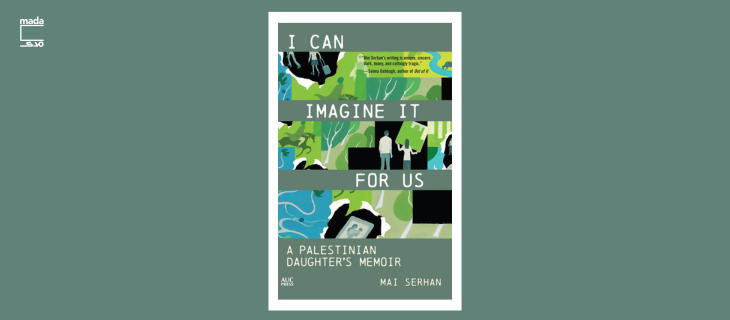
Mai Serhan imagines Palestine and recounts life after for us
"I have never been to the place where I am from, but I can imagine it for us, Baba, for you and me." This opening line of Mai Serhan's I…
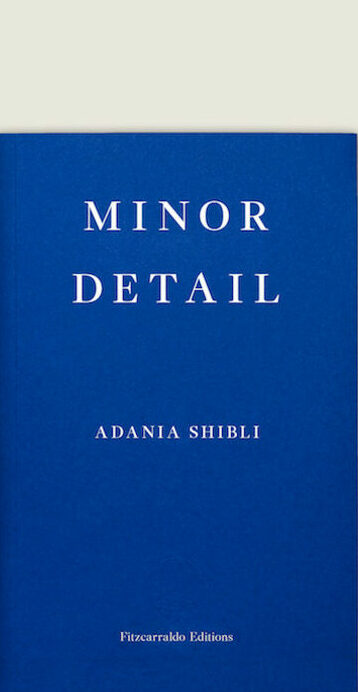
Who’s Afraid of (a) Minor Detail?
Adania Shibli and Specters of the Disaster on Literature and the Body
A conversation with Shady Lewis Botros on the genealogy of literary refusal
The writer discusses his decision to turn down the Sawiris Cultural Award for his recent novel
Your support is the only way to ensure independent, progressive journalism survives.
You have a right to access accurate information, be stimulated by innovative and nuanced reporting, and be moved by compelling storytelling. Subscribe now to become part of the growing community of members who help us maintain our editorial independence.
Join us