
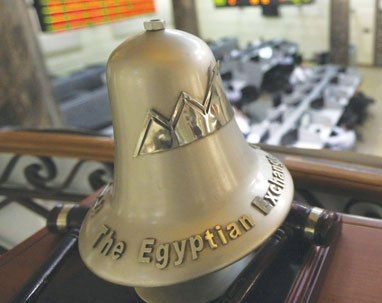
Going to market
Following an initial public offering (IPO) that was over-subscribed by 18.5 times, Arabian Cement saw its stock price jump from LE9 per share to LE10.39 per share on Sunday, its first day of trading. On Monday, share price inched up further to LE10.41, indicating a healthy appetite for the stock.
“I think it reflects two things. One, the re-establishment of confidence in the Egyptian economy in general. It is also testament to the quality of the asset itself,” says Hesham Gohar, managing director for investment banking at CI Capital, which served as an advisor for the IPO.
The cement industry has been hit hard by recent fuel shortages, which have caused production and revenue to drop. But analysts say Arabian Cement is in a strong position now that the Cabinet has agreed to allow the cement industry to import coal.
According to Gohar, Arabian Cement is one of the first companies to prepare for the transition from natural gas to solid fuel, and will be ready to use pet coke and coal as soon as a regulatory framework is put in place.
The demand for shares in Arabian Cement reflects the resilience of the cement trade, says Gohar, and “it also demonstrates a renewed investor confidence and improved sentiment.”
The company’s IPO saw 460.5 million purchase orders for around 24.9 million shares, with prices set at LE9 per share.
Altogether, the IPO raised US$110 million, about 70 percent of that from institutional investors, says Gohar.
“It shows that investors generally are willing to buy into Egyptian assets,” says Mohamed Abu Basha, an economist at EFG-Hermes, which also served as an advisor for the Arabian Cement IPO.
Arabian Cement was the Egyptian Exchange’s first IPO since November 2010, but Gohar expects there will be more coming in the near future.
“Arabian Cement has proved the IPO market has returned,” he says. “We are expecting at least one more IPO this year, and a few slated for 2015.”
Ultimately, Gohar expects Egypt’s IPO schedule to return to 2005-2010 rates, which saw two to three companies offering shares on the stock market each year.
Although the economy is still limping along more than three years after the January 25 revolution, the stock market has seen an almost uninterrupted rally since the military ousted former President Mohamed Morsi from power in July 2013.
“Generally, what you have after June 30 is a decent reduction in the macro risk,” says Abu Basha. The key factor was aid from the Arab Gulf, he says, which has forestalled the threat of a currency crisis or inflation shocks.
The cushion of Gulf cash also allowed the Central Bank of Egypt (CBE) to lower interest rates, which increased liquidity in the currency, and made the stock market an attractive destination for investors.
Investor sentiment has also been driven by political events, says Abu Basha.
“The market was excited about Sisi running for president, believing that he is a strong man who will help the economy recover,” he says.
Some of the interim government's most controversial decisions have proved positive for the stock market. In addition to allowing coal imports, Abu Basha points to the new Investment Law — which severely limits third parties' ability to contest contracts between the government and private investors — as a decision that has helped the stock market rise.
IPO fever seems to be hitting other quarters as well. Earlier this month, during a conference on initial public offerings, Prime Minister Ibrahim Mehleb announced that public sector companies will also be looking to the stock market to raise cash.
Although the news has not been confirmed, it suggests that the government is looking for novel solutions to restructure ailing public companies.
“I think the idea is good. Implementation is a different story,” says Gohar. “We will be seeking to explore advising on some of the transactions.”
The government does have a few good assets, according to Gohar. The most attractive investments are likely to be relatively new companies, or strategic projects such as the Suez Canal redevelopment.
However, “at this stage, it’s very difficult to tell how realistic these ideas are,” he cautions.
While EGX rallies, EGP keeps tanking
The Egyptian Exchange aside, the economy as a whole is still having a hard time. Last week, the official exchange rate for the Egyptian pound hit a record low of LE7.095 to the US dollar at a CBE auction on May 14.
And the pound dropped even lower at auction on Monday, to LE7.1068 to the dollar. Prior to the 2011 revolution, the exchange rate stood at around LE5.8 to the dollar.
The CBE, which effectively controls the official exchange rate via its currency auctions, has not issued any statements on the decision to allow the pound to weaken. Abu Basha attributes the decision to rising demand for foreign currency, due in part to the time of year and to the approach of Ramadan.
“Fundamentally, balance of payments is in a weak position,” adds Abu Basha. Despite the influx of aid from the Gulf Cooperation Council (GCC) countries, the pound has been under pressure due to weak performance of the tourist industry and increasing demand for energy imports, and “the CBE is allowing some of that pressure to be reflected.”

Isabel Esterman
Isabel Esterman holds Master's degrees in Journalism and Asian Studies from the University of California, Berkeley. Before somehow winding up in Egypt in 2011, she worked and studied in Indonesia,…
تقارير ذات صلة
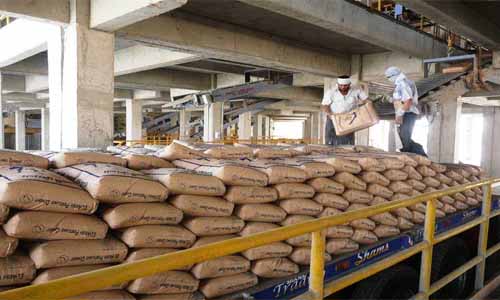
Egypt’s cement industry disrupted by entry of military as major new market player
The additional supply forced companies to lower their prices an average of 15% in the past year

Govt’s launch of ‘Citizen Bonds’ challenges domestic banks, sources say
The Finance Ministry’s new “Citizen Bond” is being rolled out today, available for individuals exclusively through Egypt Post branches. The 18-month savings and investment instrument offers a fixed annual return…

Queuing for gold
Gold remains a trusted option for people looking to invest their savings despite a volatile market
Your support is the only way to ensure independent, progressive journalism survives.
You have a right to access accurate information, be stimulated by innovative and nuanced reporting, and be moved by compelling storytelling. Subscribe now to become part of the growing community of members who help us maintain our editorial independence.
Join us