

Future of Egypt’s film festivals still in the air
While the cancellation of the 36th Cairo Film Festival sent a ripple of concern through Egypt’s film community, if all goes as planned local film events may prove more resilient that most give them credit for.
The Ismailia International Film Festival for Documentaries and Shorts haphazardly took place in June, while the Luxor African Film Festival produced its second edition in March — both were free of any major catastrophes.
The annual Alexandria Film Festival has been pushed from September to October, and if the country manages to keep its bearings the European Film Panorama should kick off as scheduled in November.
But unless you are film buff, creator or critic it is a bit unclear what the purpose of all these festivals really is — particularly when, year after year, they get bashed by media and attendees alike.
According to Joseph Fahim, an Egyptian film critic and curator, while each local festival began with seemingly good intentions, their execution is emblematic of the overall failure of cultural management in Egypt. Most run into the same problems as the Cairo International Film Festival (CIFF).
In 1998 John Malkovich headed the CIFF jury. He wrote afterwards that “the movies we saw were not terribly good.” Since then, Egypt’s largest film festival has only gone downhill. And now, for the second time in three years, it has been cancelled: In August, the board of directors postponed this year’s festival until 2014, “in light of current events in Egypt.”
The festival was also cancelled in 2011 following the January 25 uprising, and made a weak comeback at the Cairo Opera House in November last year. It had very poor attendance due to mass protests in nearby Tahrir Square against the contentious November 22 Constitutional Declaration issued by then-President Mohamed Morsi.
“Last year’s edition was highly controversial for several reasons,” explains Fahim. “The Ministry of Culture chose to organize it single-handedly, because the organization originally assigned to put up the fest refused to work under the umbrella of the ministry.”
In a last-ditch effort to salvage the festival, the board appointed Marianne Khoury — founder of the European Film Panorama and director of Youssef Chahine’s Misr International Films — as artistic director. Fahim says she was one of the best things about that edition, thanks to her decision to screen all the films in one venue, rather than scattered around town.
The ministry justified its decision to go ahead with the event regardless of the protests by pointing out that it could be dropped by the FIAPF (Fédération Internationale des Associations de Producteurs de Films), which regulates leading international film festivals.
Fahim wonders, however, whether the FIAPF still has any worth for Cairo’s festival. It has done nothing to help CIFF compete with Gulf film festivals such as Dubai, Abu Dhabi and Doha Tribeca.
Like many filmmakers, aficionados and critics, Fahim believes CIFF can't simply be excused as a victim of political circumstances and potential FIAPF eviction. For years it has been mismanaged, poorly organized, and corrupted by the Culture Ministry’s bureaucracy and managers.
“For years, the main problem with the CIFF has been its organization,” says Fahim. “And I mean really simple things, such as the website, which is only updated with the schedule about a week before the opening. If you’re a serious film person or international critic, how can you plan accordingly if the schedule is only listed a week prior to the events?”
The CIFF has major problems with film distributors due to years of mismanaged reels and flagrant corruption. Often films are screened out of order or lack subtitles, and almost all reels are mistreated to the point of irrevocable damage, says Fahim.
Due to corruption and budget mismanagement, it also struggles to secure prominent Arab premieres. Top-tier Arab films go through the far more lucrative and well-known Gulf festivals, while CIFF collects the crumbs.
But for Fahim, the recent appointment of influential critic Samir Farid as CIFF president is a good sign.
“Farid was the first artistic director in the Abu Dhabi festival, when it first started in 2004,” explains Fahim. “He is also an artistic advisor for the Abu Dhabi Festival for Environmental Films, which was launched this year — in short, he has the right cache, experience and the contacts.”
Hope in the governorates
In March, the Luxor African Film Festival celebrated its second edition with grand closing ceremony hosted by organizers Sayed Fouad and Azza al-Housseini. Among many awards given, Tunisian filmmaker Nouri Bouzid won best long film for “Hidden Beauties,” while Egyptian filmmaker Hala Lotfy landed a special certificate from the jury for the heart-wrenching, brilliant art-house film “Coming Forth by Day.”
According to Sherif Awad, a critic, editor and curator and an artistic advisor to the Luxor African festival, it has been relatively successful since kicking off in February 2012.
“First of all, it succeeded in promoting African cinema and promoting the African side of Egypt — I mean politically, artistically and culturally,” he says. “Secondly, it succeeded in realizing aims and initiatives that other local festivals were unable to. For example, the Luxor African fest succeeded in translating some books to Arabic, which benefits both industry professionals and those generally interested in African cinema.”
This year’s festival also included a workshop headed by Haile Gerima, a highly renowned Ethiopian film director, who worked with close to 20 African film students on scriptwriting and directing for a ten-day period.
The Luxor Egyptian and European Film Festival (LEEFE), however, scheduled to hold its second edition later this month, was recently cancelled.
In Luxor there are no cinemas, says Fahim, so the festivals were created with the intention of building a film culture there. However, both have received bad press and been exceedingly disorganized, he says.
But for Awad, the LEEFE has merely attempted to take advantage of the work and infrastructure built by the Luxor African fest. There are many other cities in Egypt deeply in need of film festivals and film culture, so there should not be two in Luxor, he says.
The Ismailia International Film Festival for Documentaries and Shorts also managed to have its 16th edition in June. Launched in 1991, it is one of the oldest film festivals in Egypt, and is exclusively dedicated to documentaries and shorts. Previous editions also included sections for experimental film and animation competitions.
Unlike CIFF, this year’s Ismailia fest secured several world premieres, including the documentaries “Space Metropoliz” (Italy), “Electro Chaabi” (Egypt), “24/7” (Serbia), “52/52” (Egypt), and “Diary of an Ordinary Citizen” (Tunisia). There were also two world premieres in the animation competition, including “Randa” (Lebanon) and “Why Not Kill A Fly?” (Iran), while an Egyptian film, “Fardy,” debuted in the short film competition.
Spearheaded by Kamal Abdel Aziz, director of the National Cinema Center, and recently-appointed festival director Mohamed Hefzy, this year’s festival reportedly had slight improvements on previous year — but there were still organizational issues in the scheduling and subtitling of the presented films.
The 29th Alexandria Film Festival is slated to kick-off in October, and Fahim says the outcome will be a big indicator for the future of the local festival circuit.
According to Awad — a member of the Egyptian Association of Films, Writers, and Critics which helps manage the festival — while the Alex festival is blighted by mismanagement, a limited budget and no website, it benefits the local community because film events typically take place in Cairo.
However, the festival has already incurred a backlash for pulling the Turkish film “Night of Silence” from this year’s program. With tensions running high between Turkey and Egypt, some critics fear that the film was pulled not for its content but for political reasons.
“It is my interpretation that the festival’s president, Amir Abaza, is trying to make a splash across the media so that international news wires pick up on it, and bring attention to the festival,” Awad says.
Fahim agrees: “They did a despicable thing by pulling the Turkish film — and this could indicate a possible direction for festivals.”
But both Fahim and Awad still believe in Egypt’s reviving film culture, partly because younger generations are becoming more involved in film. The industry, the market and the movies themselves depend on a collective effort between creators, curators, civil society and, of course, the ministry.
In terms of CIFF, Fahim says, “The best hope now is to have very clear and incisive curating to get the real hidden gems and highlight them in the festival. We also have to secure Arab premieres. I also truly think the selection should be decreased by at least a quarter, if not half of what it is now. The best thing the CIFF can do is to organize a good, well-managed community festival — because even the Gulf circuit cannot rival the Cairo audience.”

Maha ElNabawi
After graduating from the American University in Washington, DC with a Bachelors degree in Business, Maha began her publishing career in NYC with indie pop culture magazines, the likes of…
تقارير ذات صلة
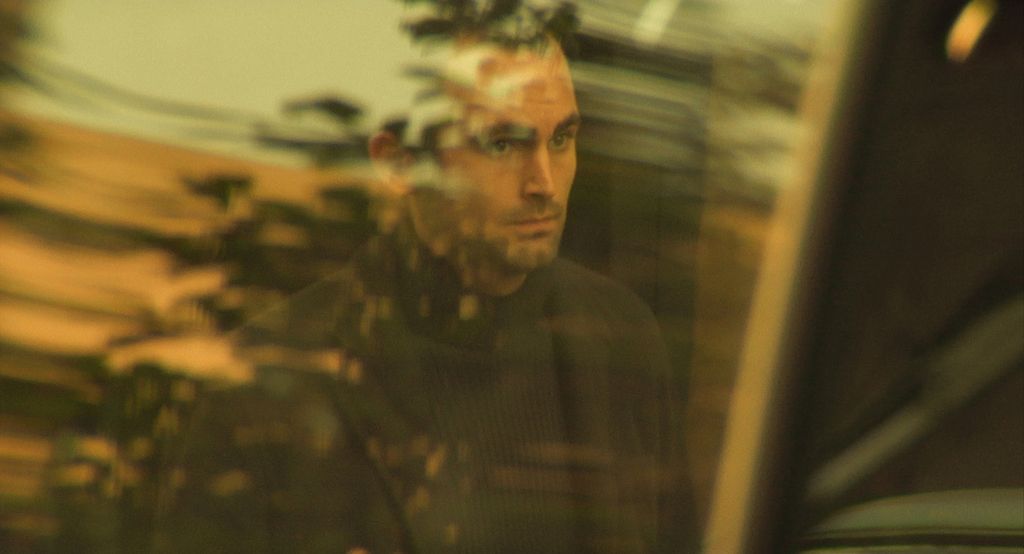
Whose narrative are we writing?
Tamer El Said on censorship, the Cairo International Film Festival and his film’s leak
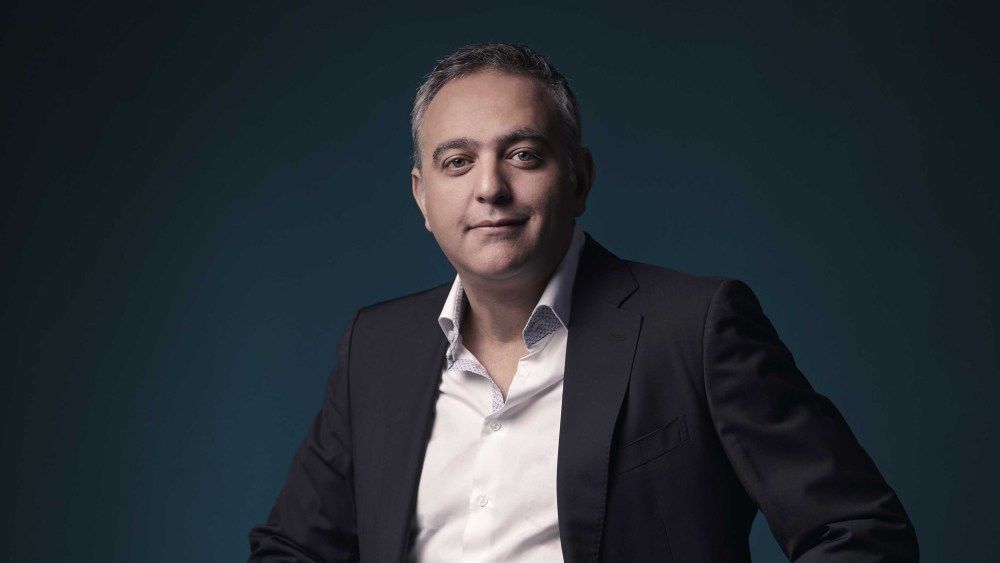
Is it really possible to avoid politics in a place like Egypt? A conversation with Mohamed Hefzy
Can writer and producer Mohamed Hefzy evade political confrontations and compromises?
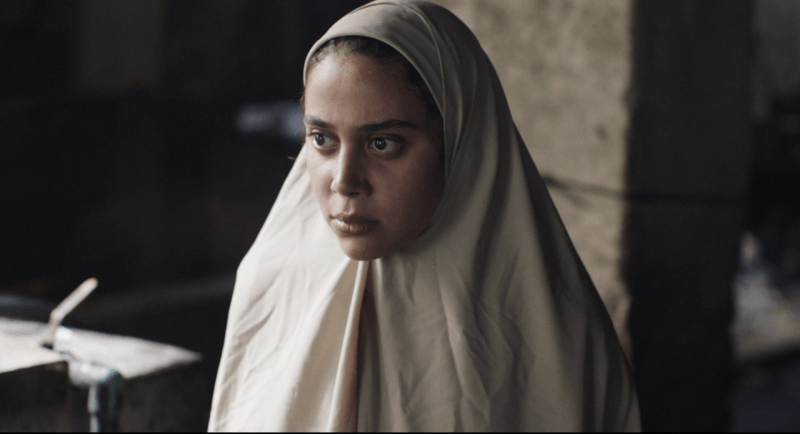
Poison into medicine: On watching Poisonous Roses
Ismail Fayed reviews Ahmed Fawzi Saleh’s debut feature film, Poisonous Roses
Your support is the only way to ensure independent, progressive journalism survives.
You have a right to access accurate information, be stimulated by innovative and nuanced reporting, and be moved by compelling storytelling. Subscribe now to become part of the growing community of members who help us maintain our editorial independence.
Join us