
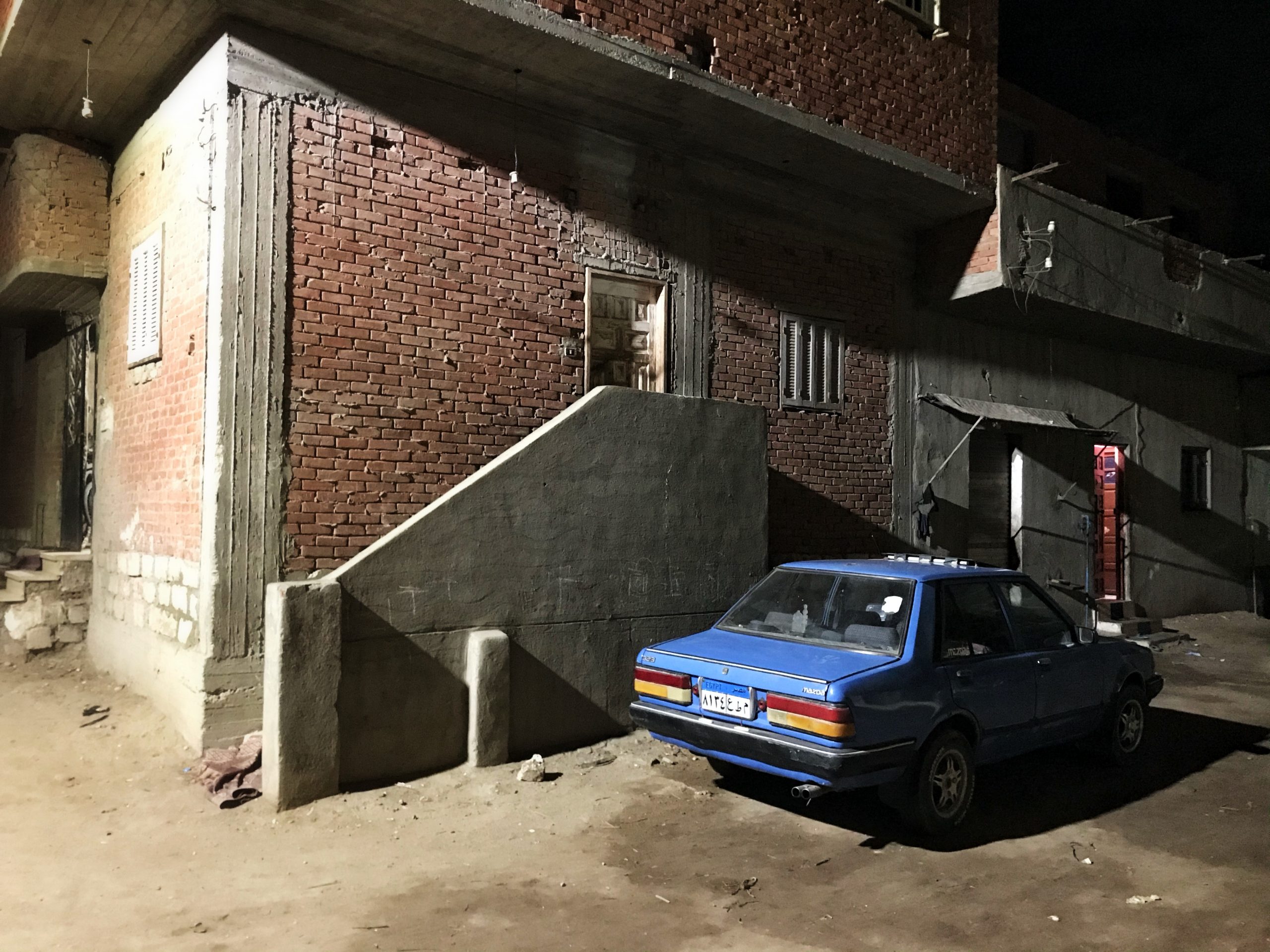
Form 10: Climbing the bureaucratic ladder to legalize homes in Egypt’s countryside
Following the ratification of the building violation reconciliation law by President Abdel Fattah al-Sisi in April 2019, the government called on citizens to pay fines to reconcile with the state over building violations. The government initially gave those seeking to settle violations a six-month deadline to complete the reconciliation process, but has extended the deadline more than once.
In the quiet village of Khatatba in the western Delta, factory worker Khaled Abdel Wahab Owaida was one of the first to respond to the government.
According to the reconciliation law, the process of settling building violations entails going through a burdensome exchange of official paperwork and inspections in order to finally settle with the state. The process starts with Form 1, which the applicant submits to an administrative agency, and ends with Form 10, which the administrative agency issues to the applicant.
In October, after an ordeal that lasted nearly a year, Owaida finally managed to obtain the coveted Form 10 — the final government certificate approving the legalization of his building.
Owaida is part of a Facebook group called “The reconciliation law for building violations” where over 100,000 members discuss the law and the reconciliation process. When Owaida shared an image of the Form 10 that he had obtained, it was treated as a rare phenomenon, sparking hundreds of comments.
One commenter asked whether Form 10 meant Owaida had indeed received final reconciliation approval. Another appeared flustered: “I’ve been at this for six months and I’ve only gotten to Form 3 and you’re talking to me about Form 10? ... I was there yesterday and they’ve only reached number 3,000, and I’m number 10,000. An employee told me that I’ll have to wait for another four or five months.” Another commenter asked Owaida to walk him through the necessary steps after Form 3.
Although nearly two years have passed since the ratification of the reconciliation law, most of the citizens applying to reconcile their building violations have not managed to progress beyond Form 3 and remain stuck in a bureaucratic maze which only a few have managed to complete, Owaida among them.
In his fifties, Owaida works at a textile-dyeing factory in the Sadat region where he rotates his three shifts every week. The factory provides a bus to transport him from Khatatba, which has been enough of a reason for Owaida to continue working there for 25 years. Aside from his work commute, Owaida does not leave his village except occasionally for family events.
A village of some 41,000, Khatatba overlooks the Rosetta tributary of the Nile River and falls under the authority of the Sadat administrative region. The region was established by presidential decree after the completion of Sadat City in the late 1970s in the desert hinterland with the aim of limiting migration to Cairo and reducing population density in governorates across the western Delta.
While the Sadat region initially fell under the authority of the governorate of Beheira, it joined the governorate of Monufiya in the early 1990s by presidential decree. “The village of Khatatba was lucky to join Monufiya,” Owaida says. “Government services in Monufiya are definitely better, we were at the outer edge of Beheira.” But that good fortune did not extend to sanitation services, which the village has yet to receive.
Like many villages in the countryside, the government does not maintain a sewage network in Khatatba. According to the 2017 census issued by the government statistics agency CAPMAS, more than a third of residential buildings in the Egyptian countryside are not connected to the official sewage network. During a parliamentary hearing in February 2018 to discuss the reconciliation law, Prime Minister Mostafa Madbuly said he did not consider the sewage system a priority when asked about the mismanagement of sanitation services in rural villages and cited “towns in America that still use septic tanks instead of sanitation.”
As a result, residents of Khatatba have been forced to construct bathroom-sized trenches beneath their homes to collect waste. When the trench fills up, homeowners call in someone to remove and dispose of the waste. “Most trenches on farms are dug three meters deep and laid with concrete,” Owaida says. “I swear, farmhouses are swimming in a river of shit.”
Owaida considered moving to Sadat City to get away from the many difficulties of village life and to be closer to work, but real estate costs in the city were prohibitively expensive.
Owaida and his brother inherited the land their house is on from their father, though they were unaware that the land did not actually belong to the family. After Egypt was declared a republic in June 1953, the government imposed restrictions on individual ownership of lands within 50 meters of the river bank. Through a series of amendments to irrigation and sanitation laws, lands overlooking the Nile and its tributaries became government property as long as residents did not have proof of ownership.
Under these amendments, the residents of Khatatba, most of whom did not have title deeds to the lands on which they lived, had essentially become squatters. They also owed taxes after the passage of the proceeds law, which imposed taxes on citizens for using government land.
In 2006, the government awarded itself the right to sell these lands through a decree by the prime minister. In Monufiya, local administrative units announced they were prepared to receive requests from anyone who wanted to legalize their ownership of built homes. Residents faced a choice between reconciliation or being considered illegal squatters subject to punishment in the form of a fine or prison and repossession of the land.
For years, Owaida and his brother were unable to afford the cost of legalizing their ownership of the land. But as his salary at the factory increased following the 2011 revolution, Owaida and his brother went to the Sadat region’s local administration to buy back their land.
The local administrative unit estimated a price of LE80 per square meter amounting to a total of LE12,000 for the entire plot. Owaida and his brother arranged to pay 10 percent up front, with the remaining amount to be paid in installments over 10 years. In exchange, they received a title deed to the land from the local administrative unit. Finally, Owaida and his brother had become the official owners of their land.
The elected local council, which was a witness to the sales contract, had assisted Owaida in expediting the process. According to the local administration law, local councils are considered a link between citizens and the state’s administrative apparatus and they are supposed to represent citizens and their interests in projects proposed by the government.
Yet in September 2011, the ruling military council issued a decree to dissolve all elected councils based on a ruling by an administrative court in June of that year and delegated to the Cabinet the power to form temporary councils for a year or elect new ones, whichever came first. It never happened. The 2014 Constitution stipulates that the government is obligated to hold local council elections within five years of the Constitution’s promulgation. But for five years, Parliament did not finish drafting a new local administration law. Over that period, Egypt held two presidential elections, a referendum to amend the Constitution, and Senate elections followed by elections for a new House of Representatives, all without any significant progress toward holding new local council elections.
Meanwhile, Owaida had split the land evenly with his brother, leaving him with 76 square meters upon which he built a one-story house where he married and raised four children. In preparation for his eldest son, who graduated in 2017, to have the means to marry, Owaida secured him a job at the factory where he works and added a second floor to the house for him.
Owaida was not aware at the time that building a second floor was a violation of the unified building law, which requires landowners to contract a private engineering firm to file a request on their behalf in order to obtain a permit from the local administrative unit. The law allows for construction in the event the local administrative unit does not respond within 30 days.
The local administrative unit that Owaida should have applied to was located in the Sadat region nearly 70 kilometers away, since the unit in the village of Khatatba does not have any engineers to oversee a field inspection of the site in order to grant the construction permit.
According to the Local Development Minister, there is a shortage of engineers throughout the country which severely hinders the construction permit process. As a result, residents often don’t even bother to try getting a permit, according to Owaida. “We don’t usually file requests for construction permits when it’s for our own homes,” he says. “Adding a floor to my house doesn’t need to be this complicated.”
However a building monitor who works at the local administrative unit in Khatatba thought otherwise. In January 2019, they saw the second floor addition to Owaida’s house and wrote up a violation ticket for building without a permit. The employee sent a letter to the local unit in the Sadat region requesting an engineer be assigned to inspect the violation. He said they could tear down the second floor if the inspector issued a decision to remove it.
Owaida’s case is just one among many thousands that are a direct result of urban development policies and rapid population growth.
A new wave of construction in villages across Egypt coincided with the passage of new rent laws in 1996 that dramatically increased rents, making living in the city prohibitively expensive for many newcomers as well as existing residents. As the state failed to provide affordable housing alternatives, unofficial construction in rural areas along the Nile Valley began to climb, with residents building houses in their home villages and commuting to the cities for work. The state did not intervene as buildings without permits sprung up across tracts of agricultural land.
Meanwhile, the government built new cities in the desert to deal with an influx of migrants from rural areas, yet the new cities absorbed only 15 percent of the population increase in Cairo between 1996 and 2006, whereas informal urban development absorbed 79 percent of the population increase over the same period.
Former President Hosni Mubarak touted a social housing program in his last electoral platform in which he pledged to provide affordable housing to low-income families in new urban communities. The government collaborated with major real estate companies and offered lands for smaller contractors to build on. However, the project failed to meet the needs of many Delta residents, whose limited financial resources cut them out of the process.
After the 2011 revolution, an even larger wave of unofficial residential construction swept the countryside to meet the increasing demand of citizens who could not afford the new units being built by private real estate developers. Prime Minister Madbuly claimed that “Egypt lost 400,000 fedans of the finest land in the world, 90,000 since 2011 alone.”
The end result was that 10 years after the unified building law was issued, more than a quarter of a million residential units have been built in the countryside, according to the CAPMAS census. The government says that most of them were built in violation of the law, with Sisi blaming the state of “lawlessness” following the 2011 revolution for the vast amount of unpermitted construction.
In an attempt to overcome this, President Sisi ratified the reconciliation law in April 2019 and its executive bylaws were issued three months later, in July. The law allocates 25 percent of any funds collected from reconciliation to the Housing Ministry’s budget for social housing and development projects in cities and villages. The law allocates another 39 percent to infrastructure, with a priority to sanitation services and drinking water.
The government expected to collect up to LE100 billion through the reconciliation process. But the actual figure has fallen well short, with the government only managing to collect around LE6.9 billion as of September 2020, as only a small number of property owners filed reconciliation requests.
In January 2020, the government amended the law and extended the deadline to file reconciliation requests for an additional six months. Another amendment in March gave the prime minister the right to renew the reconciliation grace period as he sees fit.
Meanwhile, in a move aimed at pressuring violators, the government expanded its campaign to demolish houses built without a permit, arresting residents and referring them to military court. The government also prohibited construction in neighborhoods across Greater Cairo, Alexandria and provincial capitals until violators applied to reconcile their buildings.
Owaida was way ahead of the game.
In December 2019, just a few months after the executive bylaws were issued, he decided to file a reconciliation request. He hired a lawyer to assist him with the paperwork and they filled out Form 1, the first rung in the reconciliation ladder.
The lawyer told him that he would need an engineer to help in preparing the paperwork and completing Form 2 — the certificate attesting to the safety of the building, which the law stipulates must be prepared by an engineer or an engineering firm. They ended up striking a deal with an engineer for LE5,000. Then, with the engineer in tow, Owaida submitted his paperwork for Form 1 to the technical secretariat. He also submitted the engineering report that attested to the fact that the violation had not affected the building’s safety, which is in Form 2. In return, the employee gave them Form 3, which certifies that the reconciliation request has been received. Owaida waited two weeks for the employee at the local unit to look over his paperwork, which is the timeframe established by the law.
Every local unit has a technical secretariat, composed of a director of the engineering department, a director of management and an engineer for the area. The technical secretariat is responsible for notifying the applicant if any documentation is missing through Form 4, or for sending their completed applications to the technical committee through Form 5. The technical committee is a department above the technical secretariat and is composed of three engineers with a minimum of five years of experience each, in addition to a representative from the Interior Ministry’s civil protection department. But as luck would have it, Owaida’s paperwork was complete when he first filed his reconciliation request in December 2019.
The technical committee is charged with conducting field inspections to verify that the buildings and the types of violations match the information provided by applicants in their paperwork. In cases where the paperwork does not match the field inspection, the technical committee sends Form 6 to the applicant, requesting them to adjust and complete their paperwork within two months. If the applicant does not complete the paperwork, the committee rejects their reconciliation request and notifies the applicant through Form 7.
Eight months after filing his request, Owaida was surprised to find cars stopping in front of his house. When he went outside, he found the engineer with whom he filed the paperwork accompanied by members of the technical committee, who had come to verify that his paperwork matched his building violation. But one of them eventually told him that the committee was approving his request and that he should prepare to pay to complete the reconciliation process.
The law compels the technical committee to conclude its work only after it finalizes all applications it received during the six-month grace period stipulated in the law, which the prime minister extended several times. In Khatatba, residents filed 200 applications during this time period. The technical committee submitted its report to the governor approving Owaids’s application (number 177), which he had submitted through Form 8. It then notified Owaida to pay a certain sum for reconciliation through Form 9.
The committee approved the request and assessed Owaida a fine of LE7,600 for adding a second floor to his house. Owaida paid the fine and obtained the last certificate, Form 10. In October, after 10 months of bureaucratic procedures, Owaida was finally able to reconcile with the state for building a second floor on his house. At last, his home is his own.
تقارير ذات صلة
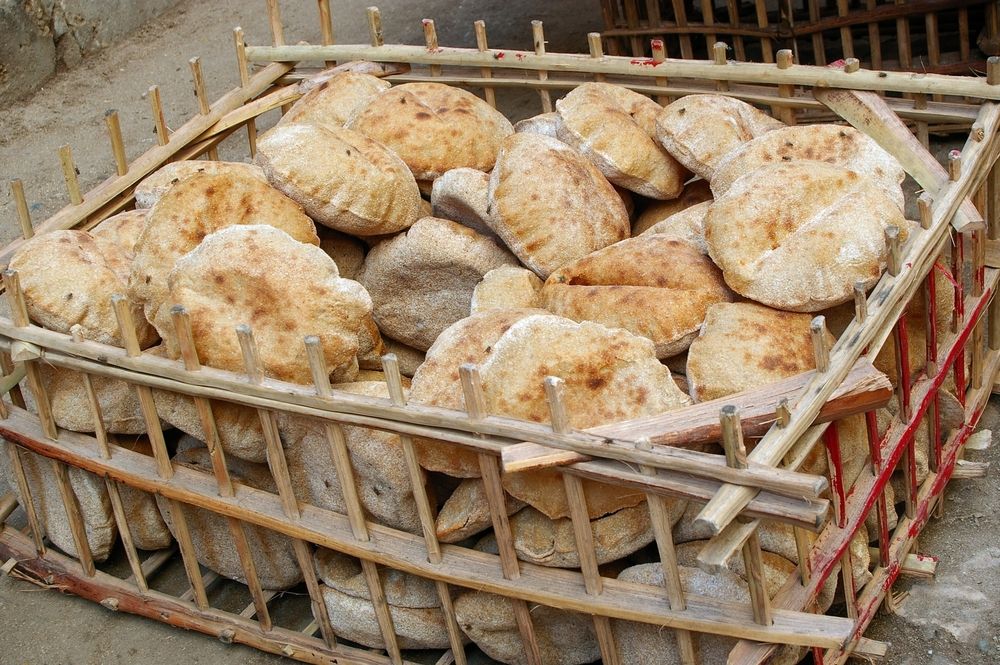
Do not rest assured: People in need are still not getting their food subsidies
The announcement came two days after Sisi wrote on his Facebook page about the food program cuts
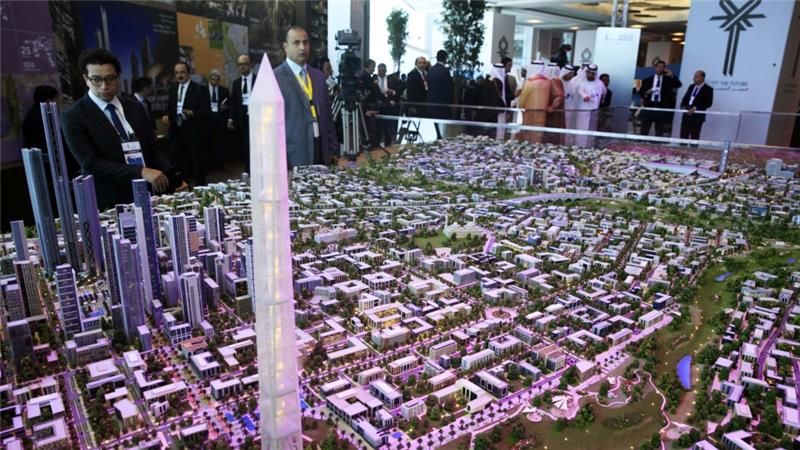
The new administrative capital: Outside the state budget or outside public accountability?
The project’s finances are not subject to any public oversight or accountability
Is the government building a parallel bureaucracy?
Power is concentrated in the presidency and military at the expense of other state institutions
Your support is the only way to ensure independent, progressive journalism survives.
You have a right to access accurate information, be stimulated by innovative and nuanced reporting, and be moved by compelling storytelling. Subscribe now to become part of the growing community of members who help us maintain our editorial independence.
Join us