
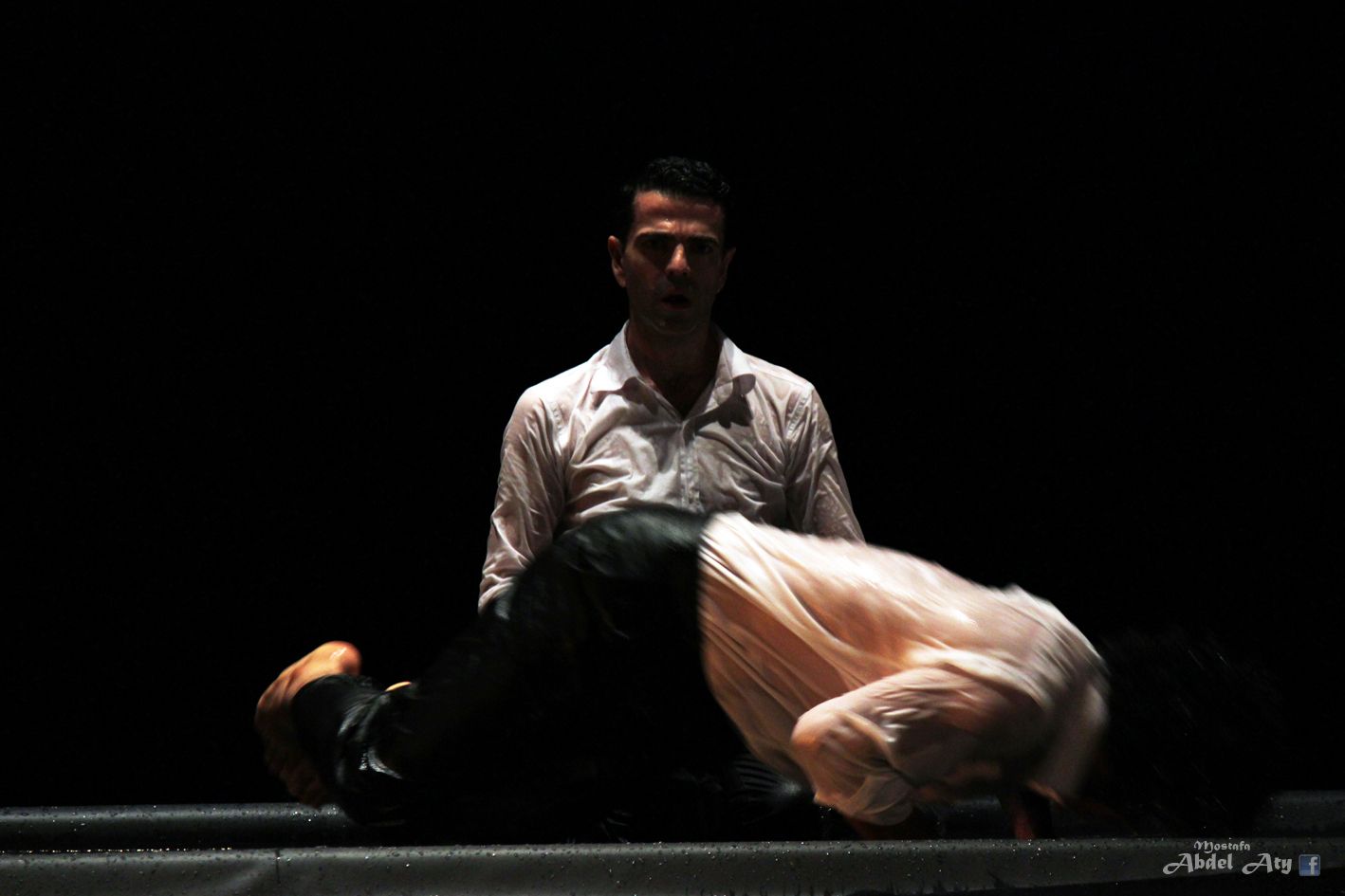
Flesh and air: Learning how to act at Studio Emad Eddin
Boredom can often be a great entry point for experimentation.
A couple of months ago, some friends and I were in Sahel, oppressed by the gloomy overcast post-summer season. Rather than reading anti-socially, we decided to film a horror movie on our iPhones. The setting was perfect: two young women alone in an empty house, a recently abandoned beach compound, a looming thunderstorm and ominous wind rustling through the palm trees and chattering against the shutters. The director had vision. But sadly the acting of my friend and I was terrible.
Acting is one of those things you think you could do well until you actually try it. To be fair, horror flicks have some of the worst acting of any movies. But even bad acting requires some craft.
In our film, The Only Ones There, my friend and I are stiff as death. Instead of jolts of fear, it looks like I have a weird inexplicable twitch. What’s worse is that every time I screamed I was actually unconsciously smiling. It’s not scary.
Some weeks later, through Mada Masr’s media partnership with Studio Emad Eddin’s training program — which is running courses in everything from playwrighting to tabla through December — I signed up for Marco Magoa’s acting workshop. His “The Actor — Air and Flesh” course, costing LE200, looked like it might be the next step if I ever wanted to get in front of a camera again with any dignity.
With a background as a comic operatic tenor, playwright and theater director, Magoa has created eight plays with his company teatro4m and acted in 12 TV soap operas. A Spaniard living in Egypt for several years now, he's directed five plays here, most recently Right Where the Soul Breaks, which debuted at Falaki Theater to mixed reviews. What’s impressive is that he conducts his local plays and workshops in Arabic (both dialect and classical).
Over the course of the week-long workshop — three hours per day — Magoa’s broad experience shaped the lessons: We focused on operatic vocal training, breathing, mental focus and body control. We quickly learned that acting is less about what your face does and more about every minute movement of your body, the storage of your breath, and accessing enough mental focus to gain distance from yourself.
“One of the difficulties facing actors is how to materialize feelings using the words that someone else has written,” says Magoa, “how to use their body and voice to make those words real.”
He sought to show us that understanding our bodies and the way we breathe our feelings is key.
Each day started with yoga-like stretching and breathing exercises. We learnt to breathe through our diaphragms, storing air in our guts to recite long lines through inhalation and controlled exhalation. As you inhale you expand the area below your ribs, placing hands on hips to feel the gut’s circumference stretching outward.
Later, we’d identify a focal point across from us, like an invisible dart board. Breathing in, we threw an invisible dart with a “pow!” sound. This moved us to the vocal techniques that kept us busy for most of the first hour each day — breathing in and drawing an invisible line across the wall while exhaling air with a constant hissing sound. The idea was to hold enough air to complete the line without it wavering off like a deflating helium balloon.
Magoa took his time to guide each of the 10 participants towards the proper practice.
“In reciting,” he said, “the breaths between the words and sentences are crucial, and often determine much of the believability of your lines.”
From there, we’d move onto acting out emotions. Magoa believes there are five: happiness/laughter, fear/shock, anger/violence, sadness/crying, and love. The rest are a result of overlaps between them. Sadness involves inhaling breath to cry, while laughing expels your breath. Anger requires a tightening of the lips, and love a gaping mouth and dreamy eyes.
Mental focus and confidence were crucial at this point because without them you’d just feel silly, fake crying in a stranger’s face, or pretending to fall in love with the older dude in front of you.
The really awkward moments came during the operatic interpretive dance segments. I later found out that they are a technique developed by Polish theater practitioner Jerzy Grotowski (1933–1999). For about 45 minutes, we’d split the class in two, taking turns watching each other dance in slow motion to Schubert operas and stopping momentarily to pose like ancient Greek statues. In the first days, many of us struggled to take ourselves seriously, but by the end we looked like quasi-legit opera dancers.
The class would typically end with us reading monologues from Right Where the Soul Breaks. By the end of the course, this static reading was built on by pairing two individuals to improvise character types developed by Magoa and the class. The underlying technique here was the Stanislavski system, also famously known as “The Method.” It requires actors to draw on their own feelings and experiences to connect with their characters. This was the most fun part, when we felt like we were really acting.
Every day the exercises expanded on each other slightly, but for the most part you knew what to expect. It was all based on a few techniques. Actors aren’t formed over night, after all, and rigorous, slightly tedious practice makes for good craft. The lessons frequently intertwined with each other, reinforcing Magoa’s theme of connectivity between body and mind, air and flesh.
A charismatic and engaging instructor, Magoa runs a fun, fluid and well-organized course, with a dynamic group of participants coming with a range of acting experience. By the end, friendships were forged — how could they not be after we pretended to fall in love with one other and cried in each other’s arms? Magoa is soon heading back to his home country, but intends to return next year to run the course again.
At times the course lacked context, which for me was a shortcoming. It would have been nice to learn a little more about the techniques being taught, enabling us to pursue the ideas outside of class.
I found out online that Grotowski devised experimental theater techniques like “poor theater,” which rejects the spectacles of film’s lavish costumes, make-up and sets — instead an emphasis is placed on the actor’s physical movement and direct confrontation with the audience. With that “total act,” Grotowski wrote, the performer “commits an act of sincerity when he unveils himself, opens and gives himself, in an extreme, solemn gesture and does not hold back.”
As for me, at least I know the next time my friends and I are feeling experimental, we can create something a little bit better than before.

Maha ElNabawi
After graduating from the American University in Washington, DC with a Bachelors degree in Business, Maha began her publishing career in NYC with indie pop culture magazines, the likes of…
تقارير ذات صلة
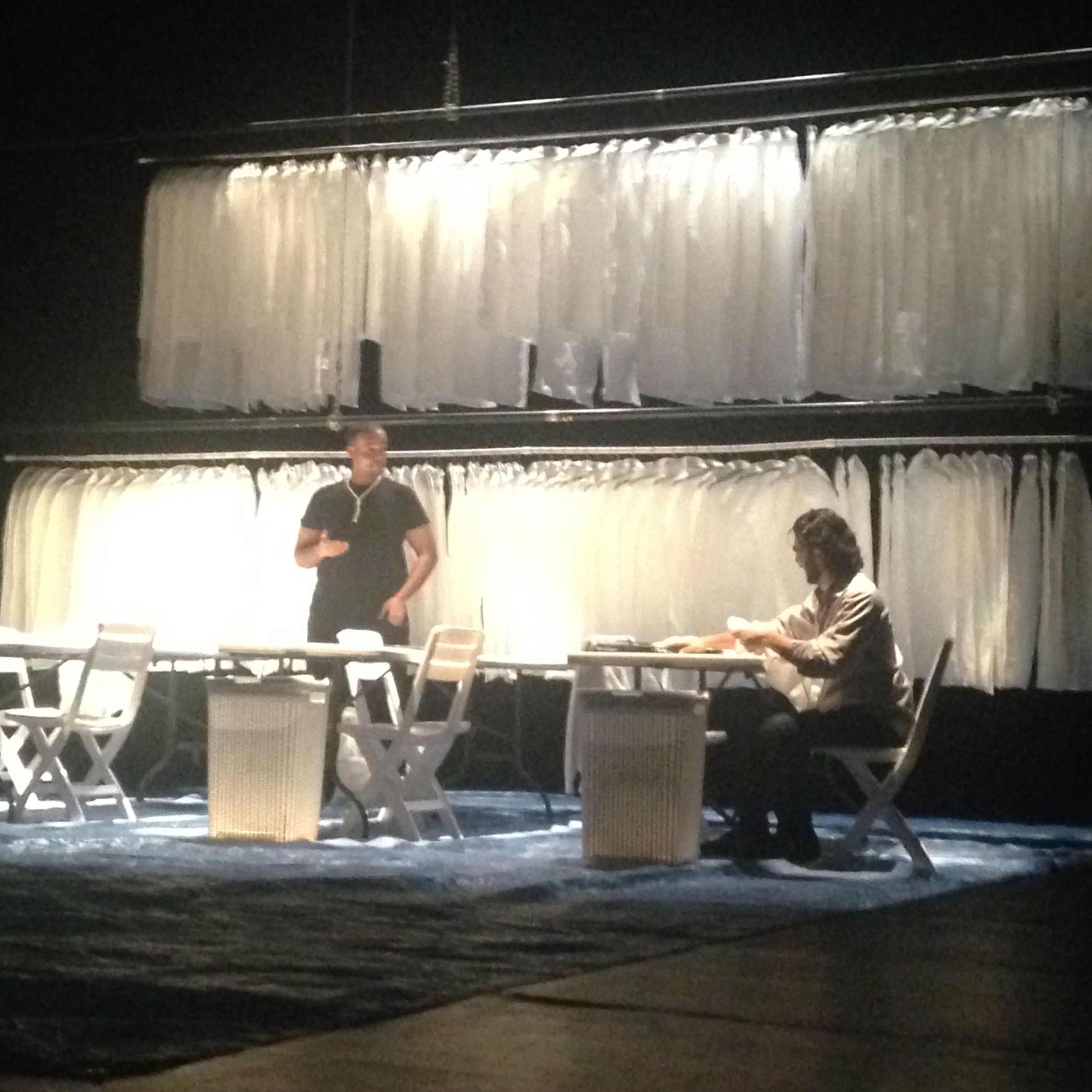
Right Where the Soul Breaks: The story of unlived dreams
When Nehad Selaiha attends a play, it’s quite the event for an entire cast and crew. She arrives on time, sits in the first row and quietly leaves right after…
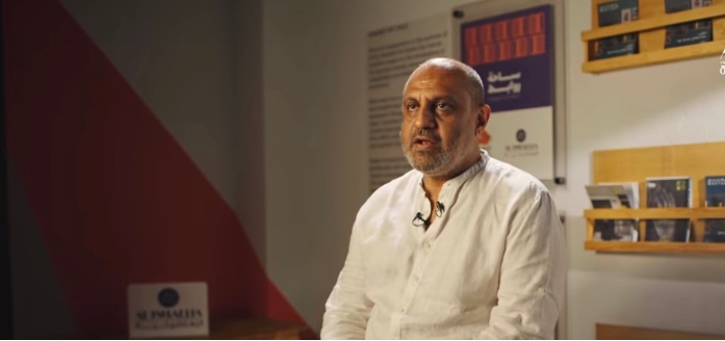
‘Now it’s a theater’: Ahmed El Attar on the new Rawabet Art Space
Orient for Film and Theatre Productions reopened the art space with a new strategy in 2021
Your support is the only way to ensure independent, progressive journalism survives.
You have a right to access accurate information, be stimulated by innovative and nuanced reporting, and be moved by compelling storytelling. Subscribe now to become part of the growing community of members who help us maintain our editorial independence.
Join us