
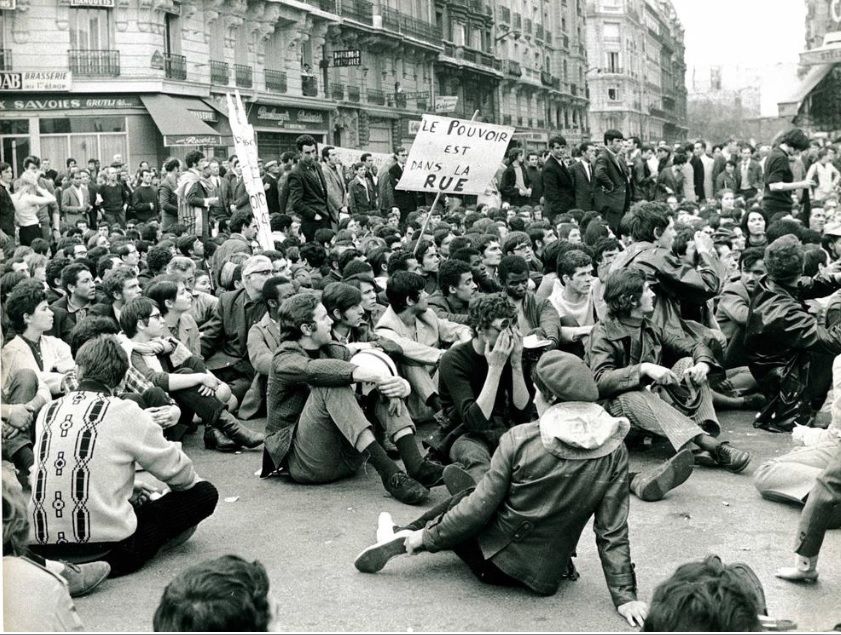
Far from the Parisian center: The lesser known side of May 1968
What remains of mass social movements when they fade out? How does taking part in these relatively rare events in history influence the lives of participants? Are mass protest waves triggered by the “youthful recklessness” of people who quickly forget the grand slogans and seek stability, falling in line and profiting from the rules of capitalist society?
Every decade since 1968, as the May-June events are commemorated on a large scale, such questions arise. Marking a rebellion that involved students and workers, together with union and party activists, waging a general strike against capitalism, imperialism and prevalent traditions and bringing the entire country to a halt, the May-June upheaval was definitely one of the most significant political events in contemporary French history. And this year’s commemoration is, in a way, a bit different. Indeed, since the beginning of 2018, it has become virtually impossible to walk the streets of Paris without noticing that this year marks the 50th anniversary. Half a century later, embarking on a somewhat "objective" or "neutral" study of these events, albeit always relatively so, is perhaps more possible now than ever before.
While the May 1968 events were undoubtedly a turning point in France's contemporary political, social and cultural history, they have faced a great deal of accusations from certain intellectuals and politicians over the past few decades — perhaps most notably the 2007 call by former President Nicolas Sarkozy to “liquidate” the legacy of May 1968.
Mada Masr interviewed Isabelle Sommier, a professor of political sociology and director of the Sorbonne Center for Political Research. Along with around 30 researchers, she has examined the “68 years” from a fresh perspective, focusing on different provincial parts of France, far from the Parisian center of the rebellion. Ironically, we were forced to change the location of our encounter, initially set to take place at the famous Sorbonne building, the heart of the 1968 student movement, to meet in the 15th arrondissement instead, as the police had shut down the university and removed students occupying the campus as part of the current student movement.
Over the course of her career, Sommier has studied the 1970s’ far-left movements in Italy and France, especially those that chose to engage in armed struggle in order to accelerate the coming of the revolution. In her attempt to analyze the dynamics underlying recourse to political violence, she studied the shifts in patterns of political activism and engagement in European protest movements, as well as the biographical ramifications of activism — meaning how political involvement affects the long-term life trajectories of individuals. In that regard, Sommier and a group of researchers — led by Olivier Fillieule, a professor at the University of Lausanne — conducted a collective research effort to evaluate the May 1968 experience by studying ordinary participants, shifting away from the more famous figures who dominated the narrative of this event.

Mada Masr: What was the impetus behind this new research?
Isabelle Sommier: Our starting point was the fact that no research has ever been conducted on ordinary activists who took part in May 1968. With each of the past four decennial celebrations, a certain image of May 1968 activists was further consolidated, formed mainly by a group of people, mostly Maoists, who came from bourgeois families, installed themselves as leaders of the movement and later had success in their lives. This somewhat cropped picture depicts May 1968 activists as exclusively students, and even exclusively Sorbonne alumni, from the Latin Quarter*. They are, therefore, bourgeois students from Paris who later moved on to assume their predestined social positions after giving vent to that youthful energy.
So, we had this stereotypical image of the heir(ess) activists. These people were born into the bourgeoisie and returned to take their rightful places within it, having success in their lives like the American yuppies. These people dominated arenas of political power — especially within the Socialist Party, for instance, as well as media and communications circles, making them renegades, one way or another. This takes us to the political lesson inspired by the general perception of these former activists, the one that essentially says: You can rebel all you want, then return to claim your positions; rebellion and revolutions are futile.
In turn, we decided to shift the focus of our research in order to recover the ordinary activists. To that end, we decided not to work in Paris. Instead, we focused on five provincial cities and towns: Marseille, Lyon, Lille, Rennes and Nantes, which have different economic and political histories.
Our second concern was to expand the research scope to include leftists in general, not only far-left activists. We included trade unionists, since May 1968 was the largest worker strike, involving 10 million workers. Of course, we also extended the circle to include the feminist movement, which emerged shortly after, around 1970.
This shift in focus produced a radically different picture from the one depicted in conventional literature. The reason why earlier studies tended to follow the same methodology, focused on Parisian leading figures, was mainly because it is challenging to find ordinary activists who were not members of any particular political party but who still took part in the social movements. They were mostly members of banned far-left groups and, therefore, did not hold membership cards that would help researchers to find them. It was not easy for us. We met with local leaders and activists who gave us access to their address books. We also used personal and institutional archives. We searched the General Intelligence (renseignements généraux) archive records that we were able to declassify. This approach enabled us to map local activist spaces and identify the forces at play.
We compiled a list of nearly 4,000 names. We then selected approximately 400 activists to interview and used the innovative life history calendar technique, which enables quantitative analysis of qualitative content.
MM: As head of the Marseille section of this study, how different did you find the picture of May 1968 in other regions of France from the widely known, dominant image from Paris?
IS: The picture we uncovered was at extreme odds with the one we know, which former (Parisian) activists continue to promote. I hope they read this study one day so that they may change their viewpoint.
Researching provincial regions is particularly significant because May 1968 activists do not belong to one only generation. There are at least three generations: The older generation are trade unionists who began their activism in the early 1960s. Naturally, their principal motive was the Algerian Independence War. The second generation includes leftists who became politically active between 1966 and 1968. Their motive was the Vietnam War. The younger activists are mostly members of the feminist movement who first started their activism between 1968 and 1974.
With the exception of trade unionists, most of these activists hold university degrees, as this period was marked by a massive surge in university enrollments. Unlike the common perception projected by literature depicting May 1968, however, only 20 percent of students can be described as heirs/heiresses who were born into the bourgeoisie. Most of them were the first to receive university-level education in their families. Here, their activism served as a means to navigate this inner contradiction: how to remain faithful to your original class while experiencing upward social mobility. Later, they were faced with a world that was completely unfamiliar to them. So, they were not heiresses/heirs.
The second observation we found was that the vast majority of those we interviewed were not renegades. Complete disengagement from the cause was not the most common case. We saw activists who remained engaged throughout the rest of their lives, but not necessarily within the same political groups [they were originally part of]. Political organizations suffered the most, but activists abandoned leftist organizations in the mid-to-late-1970s to continue their engagement through trade unions, among other types of organizations.
This applies to the feminist movement as well — many feminists started as members of the leftist movement and changed course to become exclusively feminist activists. This was partly due to the dominant misogyny in several leftist movements and the general tendency within these movements to trivialize feminist struggles in favor of issues of the working class.
Since the late 1990s and early 2000s, some activists have also resumed their political engagement through newer waves of activism, such as the emergence of the Zones to Defend (Zone à Défendre - ZAD), which are the product of a youth-based movement to build alternatives to consumerism, combat the cancellation of social gains by consecutive governments and develop new forms of social solidarity.
The third finding was that these activists have suffered as a result of their struggle, but they are not the least bit regretful. On the contrary, they have a thoroughly positive view [of that time.] They believe they were lucky to have lived these years. The struggle even built their characters. Their activism did, however, have a negative impact on their professional and personal lives. Their careers paths were either delayed or cut short and this has caused some of them to experience problems with retirement pensions. The issue stems from the fact that they either focused on activism and neglected their careers, or were averse to advancing to higher social positions — this, for example, was the case for les établis: the Maoists who went on to work on factory assembly lines.
On the personal front, fewer of them got married, more of them got divorced, and they had fewer children. This was found to be particularly true for the women.
We also have a clear figure that enables us to compare what has become of their lives against what has become of the lives of other people from their generation. We will not compare them to the general population, only to their generation within the general population. These years were a time of upward social mobility in general. It was les Trente Glorieuses: the 30 years of economic boom, following World War II, between 1945 and 1975. During that time, only a four percent rate of downward social mobility was observed among workers, compared to the general public. For activists, however, the rate was 26 percent for men, and approximately 30 percent for women. These figures demonstrate that the notion of May 1968 revolutionaries as “golden boys” is unfounded.

MM: Do you think this type of research is only motivated by scientific reasons, or is it also connected to a certain political reality or rhetoric, especially in the current context in France?
IS: This study faced three challenges: a purely scientific challenge, a historiographical challenge — as it is consequential in bringing what remains of May 1968 to the fore — and a political challenge. The political challenge was brought on, at least in my opinion, as some of the other co-authors might not concur with me, by the fact that the legacy of May 1968 has been exploited since the 1980s. Sarkozy’s 2007 call to “liquidate” it is an example. For him, and many others, it was entirely to blame for the modern tendency toward individualism, the deterioration of schools, the demise of family, the faded [sense of] authority and the lack of respect thereof.
For this reason, I hope this work is passed on beyond scientific circles and I hope this study does justice to that political commitment that was rooted in a sense of solidarity and an awareness of the need for equality. This is something which, as I explained, activists have paid the price for. Nevertheless, they have remained faithful to their principles, demonstrating that it is indeed possible for one to remain committed to one’s beliefs and — while engaging differently, or even being critical towards what they believed in in 1968 — still help change the world.
--
* The Latin Quarter of Paris was home to most educational institutions, especially pre-1968. It is therefore known for being a student quarter.
You can find a link to a general presentation of the research project and the book’s introduction in English here

Youssef El Chazli
Youssef El Chazli is a political sociologist and a postdoctoral researcher at the French National Center for Scientific Research (CNRS). He holds a PhD in political science from the universities of…
تقارير ذات صلة
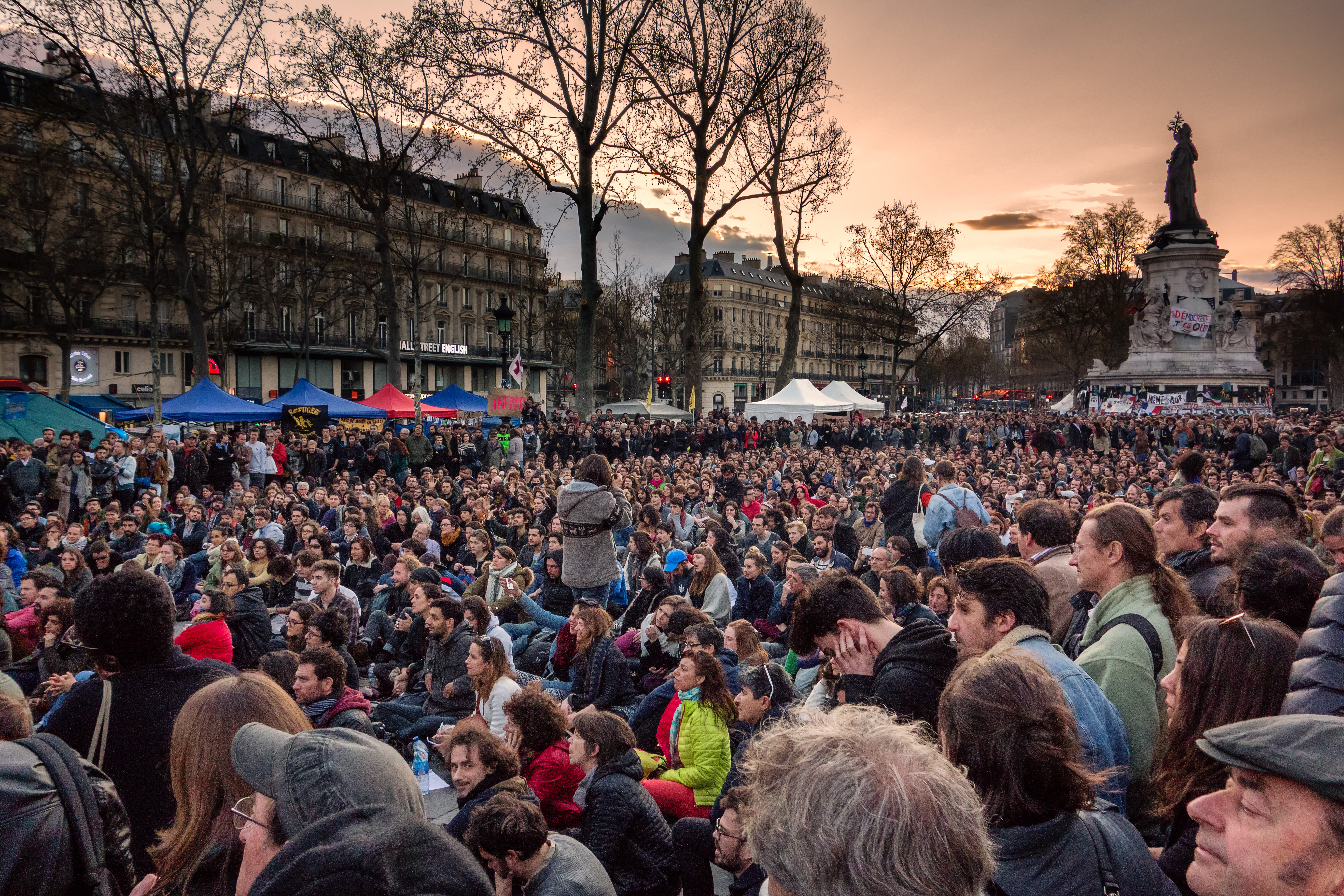
France’s Nuit Debout awakens the politics of the streets
According to the Nuit Debout calendar, it was "March 45." It was 3:30 pm. Clamor. Shouting. Shots. Riot police were moving. People were running. Others just stepped aside. I poured…

Islam in France
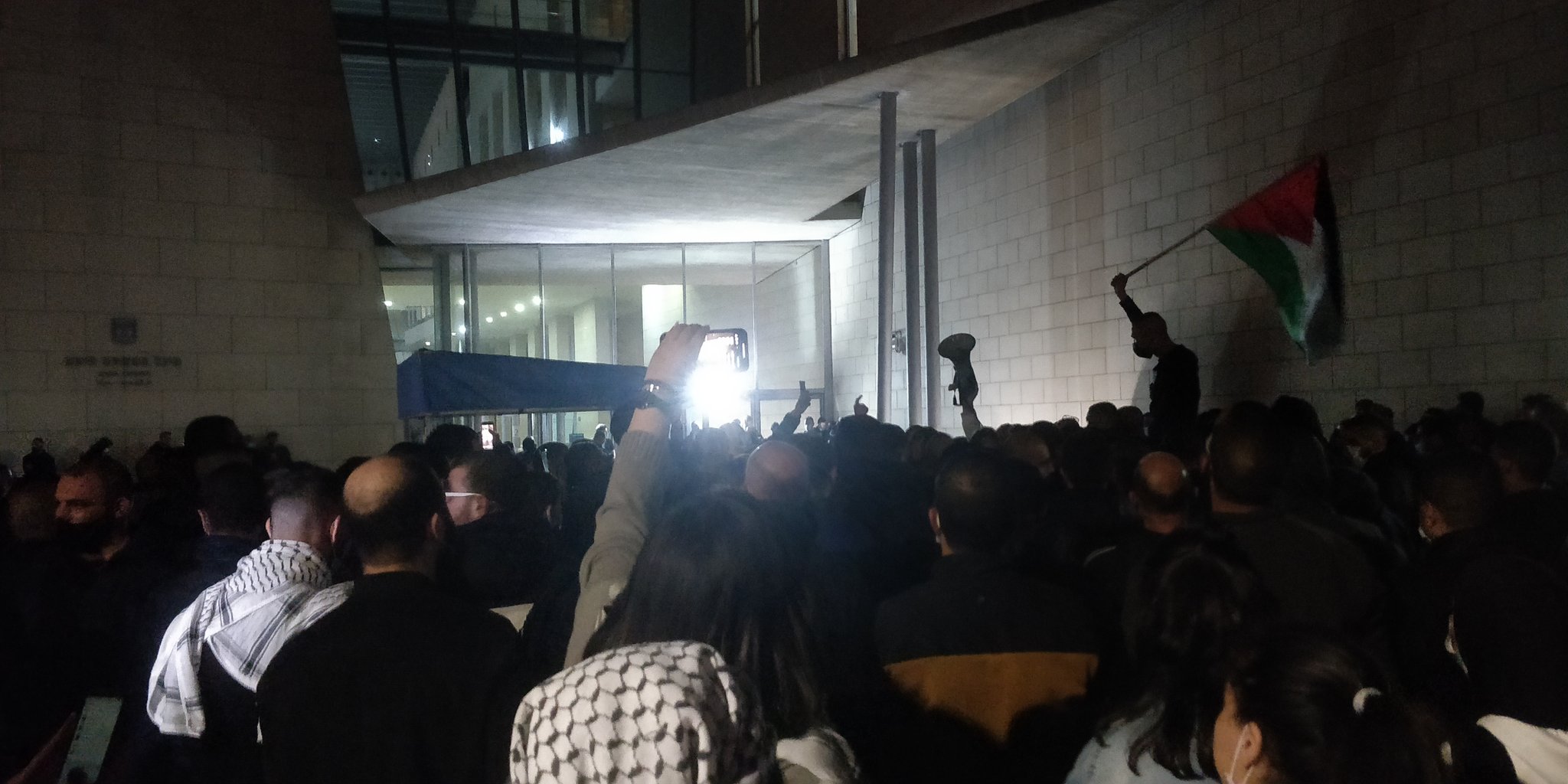
‘It reveals the failure of the occupation:’ Q&A with writer Majd Kayyal on Palestine’s mobilization
This kind of solidarity is unprecedented, even during the Second Intifada
Your support is the only way to ensure independent, progressive journalism survives.
You have a right to access accurate information, be stimulated by innovative and nuanced reporting, and be moved by compelling storytelling. Subscribe now to become part of the growing community of members who help us maintain our editorial independence.
Join us